One leg longer or shorter after a child's femur fracture: what we monitor over time
One leg may appear longer or shorter after a fracture. Assessment helps establish the difference: pelvic position and stiffness can alter its appearance. 1
Early follow-up for a femur fracture in a child checks that the bone maintains an acceptable position and heals. In the following months, growth and limb length may also need monitoring. 2
The fracture's site and features, treatment, age, remaining growth and findings over time guide the plan. 5
Why leg length can change
A fracture of the shaft, the central part of the femur, may heal with some shortening. Children can also develop additional growth of the injured bone, known as overgrowth. Understanding the final difference between the legs means considering this growth alongside shortening at the fracture site. In the multicentre study by Kim and colleagues, additional growth and the final difference were separate measurements. 3
Later growth does not guarantee that the legs will reach the same length. A historical study that followed children to skeletal maturity documented most additional growth in the first 18 months, although its duration varied. This finding cannot predict how much an individual child's femur will grow or determine when follow-up should end. 4
A fracture involving the growth plate, where the bone grows in length, can slow or stop local growth. It therefore needs separate consideration from a shaft fracture. 5
What is assessed at the appointment?
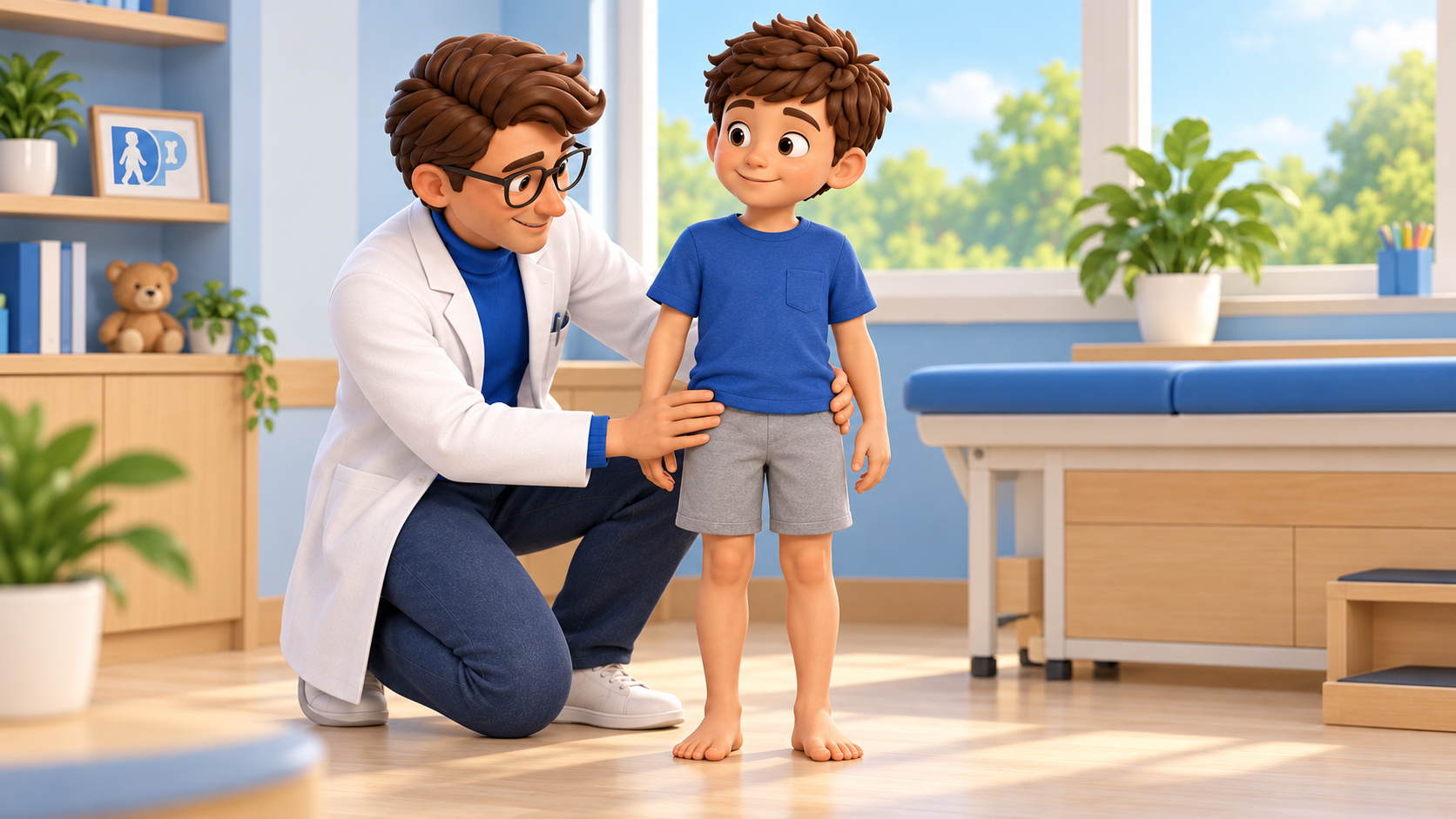
The orthopaedic clinician assesses walking, pelvic position and joint movement, distinguishing a difference in bone length from an apparent difference. Clinical measurements and, when indicated, X-rays help clarify it. 1
A limb length discrepancy that stays stable and one that increases need to be assessed differently. Bring previous X-rays and treatment records to appointments so the course of recovery can be reviewed without relying on home measurements taken in different positions.
A limp soon after cast removal does not, by itself, prove that one leg has become shorter: stiffness and weakness can contribute to an unsettled walking pattern. Contact the treating team if the limp worsens, pain increases or recovery is not following the guidance given. 6
When might treatment be needed?
Observation, a possible shoe lift and surgery in selected cases depend on the length difference, symptoms, cause and remaining growth. One measurement or the appearance of the legs is not enough to choose a correction. 5
If the child is still in a cast, severe uncontrolled pain or toes that remain pale, blue, numb or difficult to move need urgent medical attention. 6
Growth may still need monitoring after the fracture has healed. Ask the clinician what the next appointment will assess: bone healing, recovery of movement or growth of the limb.
This is general information. Follow-up schedules and treatment must be decided for the individual child.
Sources
- POSNA — Leg Length Discrepancy (LLD).
- Royal Children's Hospital Melbourne — Femoral shaft fractures: fracture clinics.
- Kim TG et al., 2021 — Leg-length discrepancy and associated risk factors after paediatric femur shaft…. Journal of Children's Orthopaedics, 15(3):215–222. DOI: 10.1302/1863-2548.15.200252.
- Shapiro F, 1981 — Fractures of the femoral shaft in children. The overgrowth phenomenon. Acta Orthopaedica Scandinavica, 52(6):649–655. DOI: 10.3109/17453678108992162.
- AAOS OrthoInfo, reviewed by POSNA — Lower Limb Length Discrepancy.
- Royal Children's Hospital Melbourne — Fracture care: leg.