Back to all videos
    Spine2 min

    Video Explanation: Scoliosis – What Parents Need to Know

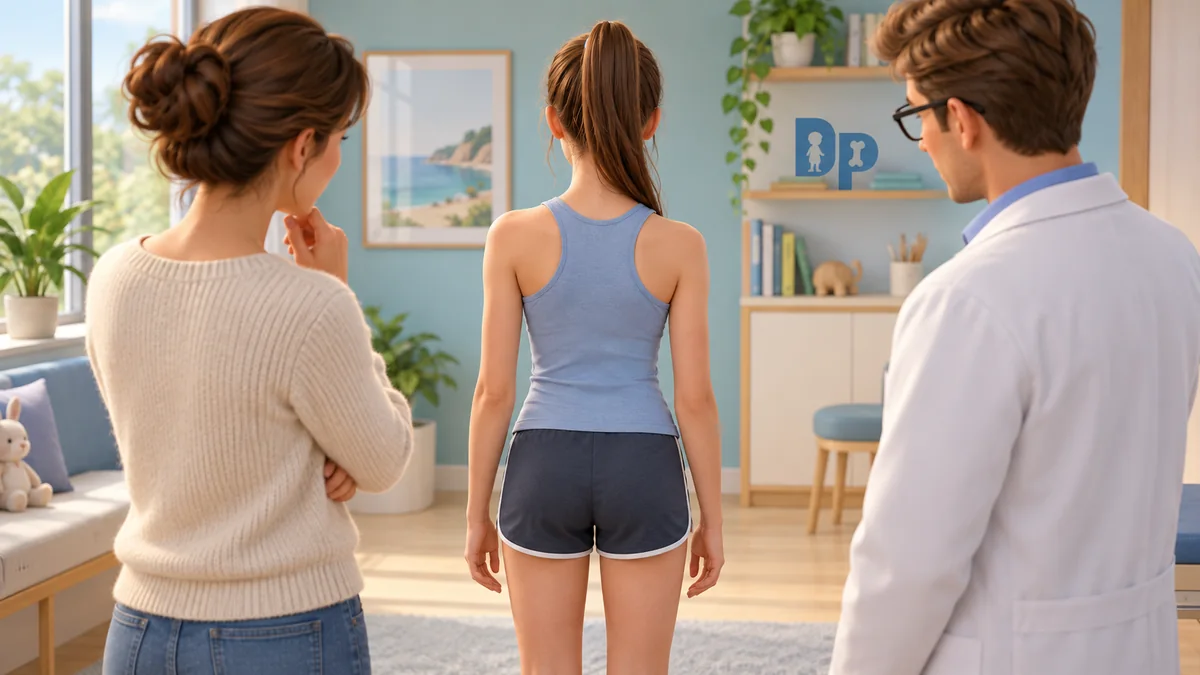
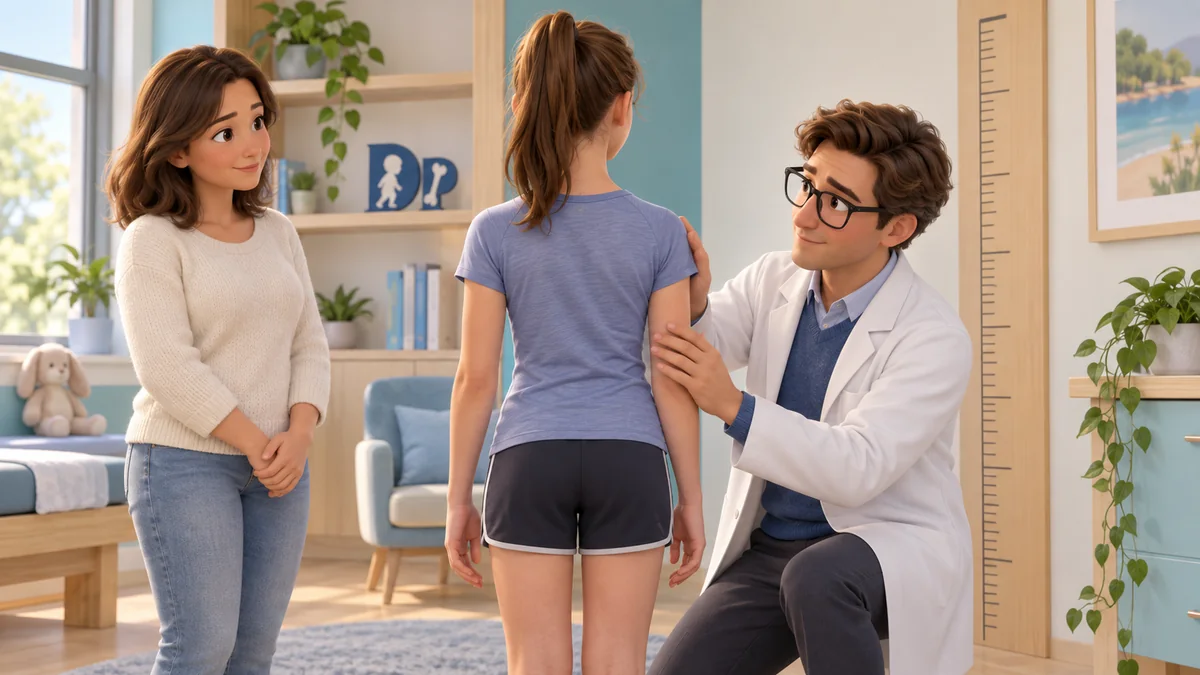
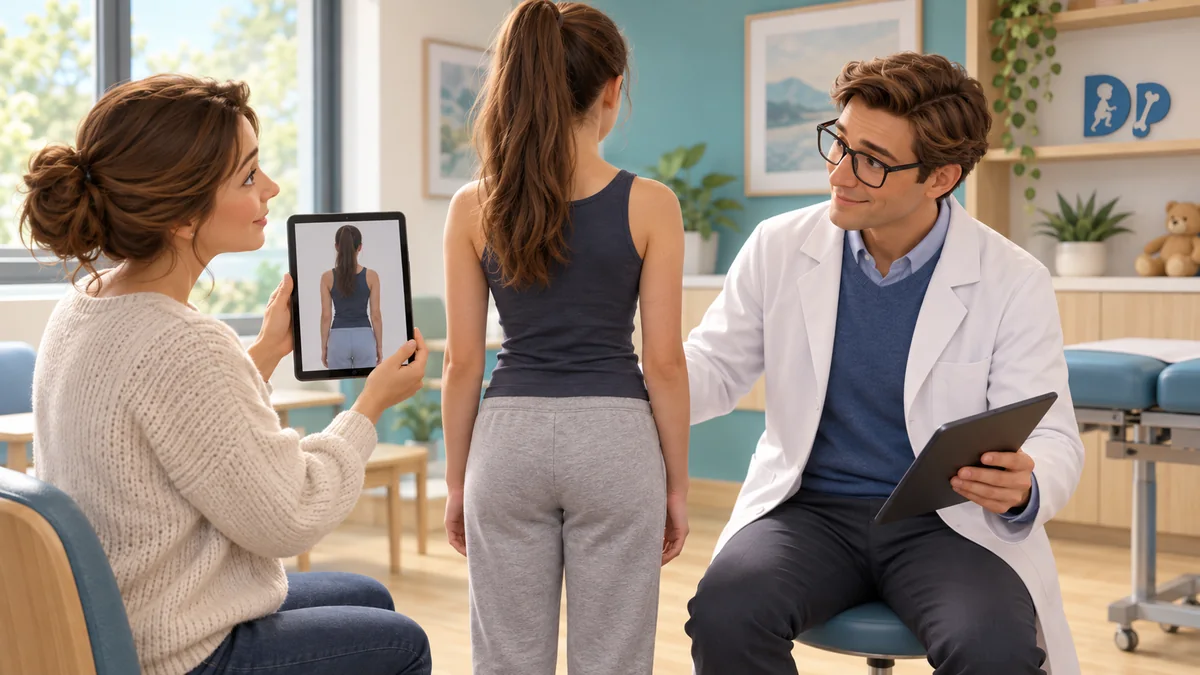
    Watch this video to learn the Adams forward bend test and other visual checks you can do at home to spot possible scoliosis early.

    Press play to watch the video. Use controls to enable audio.

    In-Depth Explanation

    Scoliosis is a three-dimensional deformity of the spine characterized by a lateral curvature greater than 10 degrees (measured with the Cobb angle on X-ray). It's not simply a "crooked back" or poor posture: it's a structural condition involving the vertebrae that can progress during growth. There are several types of scoliosis. The most common in children and adolescents is **idiopathic scoliosis**, meaning "of unknown cause," representing about 80% of cases. It typically appears between ages 10 and 16, more frequently in females. Other forms include congenital scoliosis (present from birth) and neuromuscular scoliosis (linked to conditions like cerebral palsy). **How does it develop?** During growth, vertebrae can develop asymmetrically, creating a rotation that leads to lateral curvature. This process is faster during the pubertal "growth spurt," which is why monitoring during this phase is crucial. **The good news:** Most mild scoliosis cases (under 20 degrees) don't require active treatment, just observation. Moderate curves (20-40 degrees) may benefit from bracing, while surgery is reserved for severe or rapidly progressing cases. **School or home screening** can identify scoliosis early. The Adams forward bend test (bending forward with arms hanging) reveals any trunk asymmetries. If you notice something unusual, don't panic: a specialist evaluation will clarify the situation.

    3 Warning Signs to Watch For

    • 1Asymmetric shoulders or hips (one shoulder higher than the other)
    • 2Visible rib hump when the child bends forward
    • 3Clothes that don't hang straight or a skirt that rotates

    Why a Specialist Visit Matters

    Only a specialist can distinguish between scoliotic posture (postural, correctable) and true structural scoliosis. Clinical evaluation, possibly supplemented by X-rays, helps establish severity, progression risk, and the most appropriate treatment for each specific case.

    Need a specialist evaluation?

    Book an appointment at Istituto Gaetano Pini or CTO Milan.

    We use technical cookies and, with your consent, aggregated statistics (Google Analytics, anonymized IP, no profiling/remarketing). Privacy Policy