Pectus carinatum in young people: exercises, bracing and treatment choices
Pectus carinatum in young people: exercises, bracing, sport and follow-up. Decisions depend on chest flexibility, symptoms and growth.
Pectus carinatum: assessment and bracing
Video · 57 seconds · English audio and subtitles
Illustrated video with a synthetic voice. Press Play to load the YouTube player. Open on YouTube
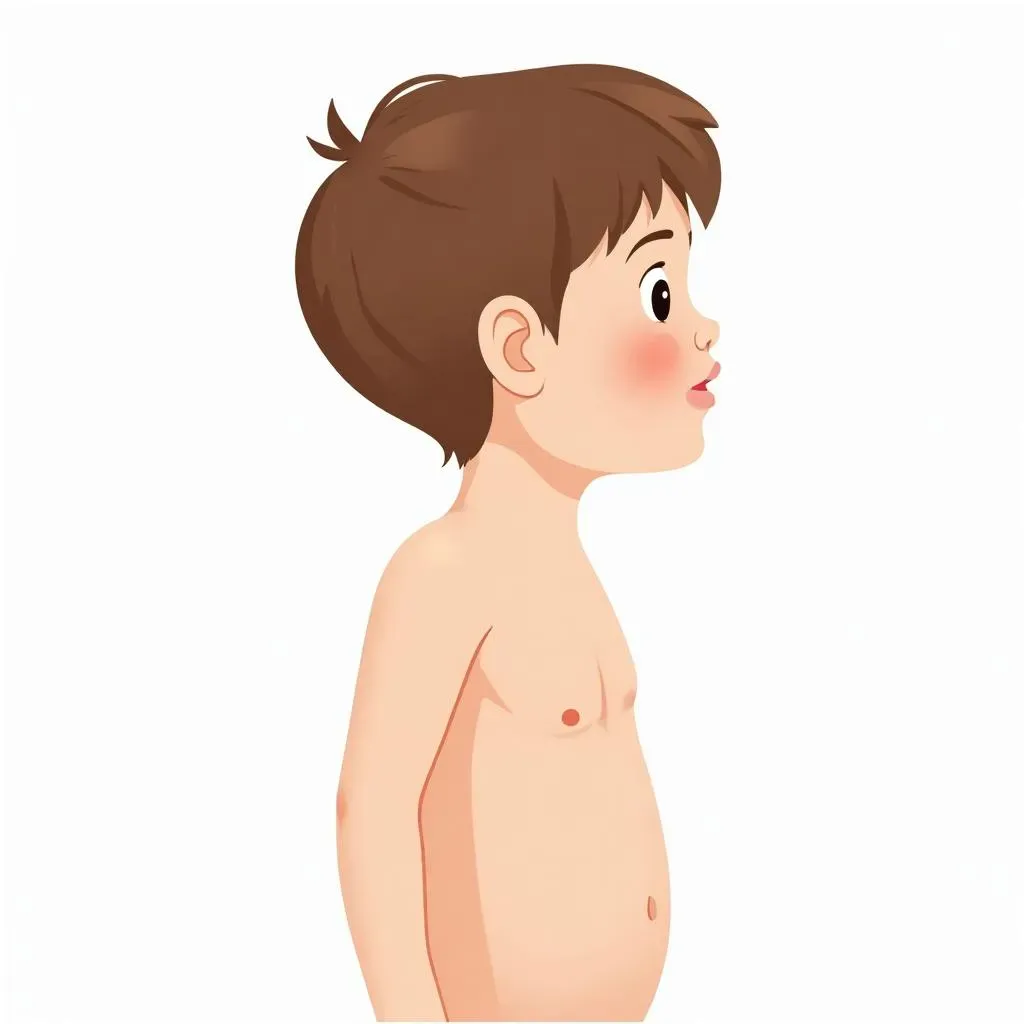
Pectus carinatum is a chest wall shape in which the breastbone and nearby cartilage project forwards. It often becomes more noticeable during pubertal growth. Most young people do not have major heart or breathing problems as a result, but it can affect body image and daily life. Choosing between observation, bracing and other options depends on the shape and flexibility of the chest and the young person's needs. [1, 2]
Is a prominent breastbone dangerous?
A prominent breastbone does not automatically indicate heart or lung disease. An examination is still needed to confirm pectus carinatum and assess any associated conditions: chest asymmetries do not all have the same explanation. [1, 2]
Breathlessness, chest pain or reduced exercise tolerance should be discussed with a clinician rather than automatically attributed to the chest shape. Significant breathing difficulty, sudden severe chest pain or chest pain with fainting requires urgent assessment, not a wait for a brace appointment. [2, 6]
Distress about changing clothes, swimming or taking part in sport also deserves attention. Treatment should not be imposed solely because adults are concerned about appearance: the young person should be able to express their own priorities.
Can exercises correct it?
Exercises can support posture, mobility, breathing and physical conditioning, but they have not been shown to replace bracing on their own when chest wall correction is needed. Swimming, press-ups or strengthening the chest muscles should not be presented as a reliable cure for a prominent breastbone. [1, 3]
A small randomised study compared bracing alone with bracing plus physiotherapy, with results favouring the combination for some outcomes. It did not test exercises as an alternative to bracing and does not establish long-term results. Any programme should therefore be selected following an assessment, without promising that a standard exercise sheet will remove the deformity. [3]
When is bracing appropriate?
A compression brace is an important option when the chest remains sufficiently flexible, particularly during growth. A team experienced in chest wall deformities assesses whether the prominence can be corrected. Age, shape, asymmetry, flexibility and the practical ability to follow treatment all contribute to the decision. [1]
Treatment requires follow-up: the device, pressure and wearing hours should not be selected independently. Programmes may include correction and maintenance phases, adjusted to response and growth. No duration is guaranteed for everyone; variation between protocols and treatment discontinuation complicate the interpretation of reported success rates. [1, 4, 5]
Daily life requires practical instructions compatible with school and other activities. Pain, irritation or skin damage should prompt contact with the team supervising the brace. Tightening it further to speed up correction can make treatment harder to tolerate. [4, 5]
Can my child play sport?
Pectus carinatum alone does not require a general ban on sport. Activities should nevertheless be agreed in light of symptoms, any associated conditions and the bracing programme. Do not assume every sport can be undertaken while wearing a rigid device: training, contact activities and competitions require specific advice from the treating team. [4]
The aim is sustainable participation, rather than achieving a target number of brace hours while overlooking pain, skin problems, sleep or the young person's activities.
Is treatment always needed? When is surgery considered?
A mild form with little impact and no associated problems may be observed. Assessment during growth helps families understand the options while the chest is more adaptable; it does not commit them to starting a brace. [1, 2]
When the chest is very rigid, the shape is complex, or conservative treatment is unsuitable or has not achieved a satisfactory result, discussion with a thoracic surgeon experienced in chest wall conditions may be appropriate. Reaching adulthood is not, by itself, an indication for surgery. Expected benefits, risks and preferences should be discussed individually. [1]
Surgery for pectus carinatum is the responsibility of a thoracic surgeon and is not part of my surgical practice. When a surgical assessment is needed, I work with thoracic surgeons as part of the young person's care.
What investigations should we bring to the appointment?
Assessment starts with the history and clinical examination. Bring any available previous investigations and assessments; there is no need to arrange a CT or MRI solely because the chest projects forwards. Further investigations depend on symptoms, examination findings and any treatment plan. [1, 2]
A paediatric orthopaedic consultation in Milan can assess musculoskeletal aspects and, when necessary, guide referral to a dedicated chest wall team.
This information does not replace an individual medical assessment.
Assessment and treatment
When to seek evaluation
- A chest prominence or asymmetry that needs assessment
- Questions about exercises, bracing or changes during growth
- Distress affecting the young person's daily life or sport
- Significant breathing difficulty, sudden severe chest pain or chest pain with fainting: urgent assessment
What is evaluated
- Shape, asymmetry, flexibility and stage of growth
- Symptoms, associated conditions and the young person's priorities
- Practical ability to follow a bracing programme
- Existing assessments and tests; further investigations only when indicated
Treatment options
- Observation for mild forms with little impact and no associated problems
- Bracing for a sufficiently flexible chest, with checks of fit, pressure and schedule
- Individual exercises as part of care, without promising correction through exercise alone
- A chest wall team assessment for rigid or complex forms or an unsatisfactory response
Frequently Asked Questions
Is a prominent breastbone dangerous?▼
Breathlessness, chest pain or reduced exercise tolerance should be discussed with a clinician rather than automatically attributed to the chest shape. Significant breathing difficulty, sudden severe chest pain or chest pain with fainting requires urgent assessment, not a wait for a brace appointment. [2, 6]
Can exercises correct it?▼
A small randomised study compared bracing alone with bracing plus physiotherapy, with results favouring the combination for some outcomes. It did not test exercises as an alternative to bracing and does not establish long-term results. Any programme should therefore be selected following an assessment, without promising that a standard exercise sheet will remove the deformity. [3]
When is bracing appropriate?▼
Treatment requires follow-up: the device, pressure and wearing hours should not be selected independently. Programmes may include correction and maintenance phases, adjusted to response and growth. No duration is guaranteed for everyone; variation between protocols and treatment discontinuation complicate the interpretation of reported success rates. [1, 4, 5]
Can my child play sport?▼
The aim is sustainable participation, rather than achieving a target number of brace hours while overlooking pain, skin problems, sleep or the young person's activities.
Is treatment always needed? When is surgery considered?▼
When the chest is very rigid, the shape is complex, or conservative treatment is unsuitable or has not achieved a satisfactory result, discussion with a thoracic surgeon experienced in chest wall conditions may be appropriate. Reaching adulthood is not, by itself, an indication for surgery. Expected benefits, risks and preferences should be discussed individually. [1]
Surgery for pectus carinatum is the responsibility of a thoracic surgeon and is not part of my surgical practice. When a surgical assessment is needed, I work with thoracic surgeons as part of the young person's care.
Important Notice: The information on this page is for educational and informational purposes only and does not constitute medical advice. Each clinical case is unique: the appropriate treatment is determined during the specialist consultation, based on a thorough clinical examination and, where necessary, diagnostic imaging. For any doubts or concerns, please consult a specialist.
Scientific references
- Dunning J et al. The pectus care guidelines: best practice consensus guidelines from the joint specialist societies SCTS/MF/CWIG/BOA/BAPS for the treatment of patients with pectus abnormalities. 2024. Linee guida, DOI 10.1093/ejcts/ezae166. PubMed, PMID 38964837.
- Children's Hospital of Philadelphia. Pectus carinatum.
- Alaca N, Alaca İ, Yüksel M. Does physiotherapy applied in conjunction with compression brace treatment in patients with pectus carinatum have efficacy? A preliminary randomized-controlled study. 2020. PubMed, PMID 32424499. DOI: 10.1007/s00383-020-04675-3.
- Royal Children's Hospital Melbourne. Pectus carinatum — Kids Health Info. Revisione maggio 2021.
- Scottish Health Technologies Group. Chest wall bracing for children and young people with pectus carinatum. Valutazione 2022.
- Royal Children's Hospital Melbourne. Chest pain — Clinical Practice Guideline. Indicazioni sui segnali d'allarme, non specifiche del petto carenato.