Posture Evaluation
Assessment of posture and postural defects in developmental age.
Quick Answers
Is my teenager's 'closed' posture a serious problem?
When does posture suggest a real scoliosis?
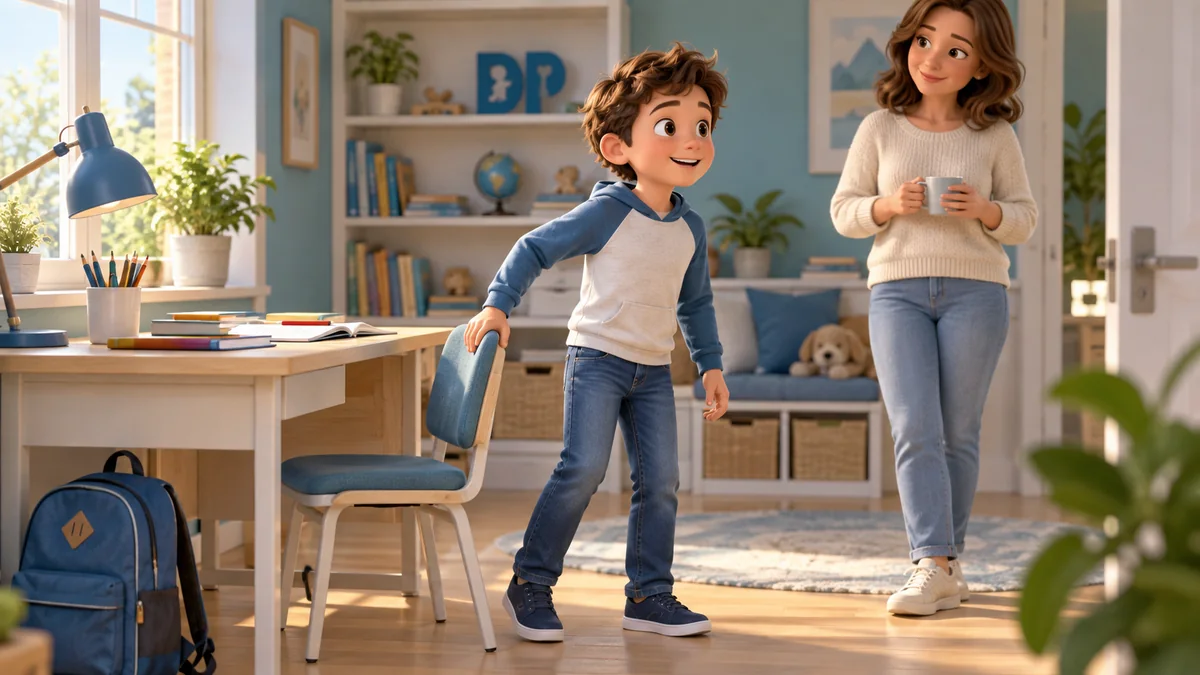
Posture changes
One position does not define a disease. Persistent asymmetry, pain and changes over time matter.
Read all the illustrated explanations →Postural assessment in children and adolescents mainly helps distinguish a flexible posture from a true structural change in the spine or limbs. One shoulder sitting higher, a rounded posture or the way a young person sits does not automatically mean scoliosis or an orthopaedic condition.
During the appointment, we observe the child standing and moving, shoulder and pelvic symmetry, spinal flexibility and any structural signs. Daily habits, sedentary behaviour, sport and study workstations may affect comfort, fatigue and sitting posture, but should not automatically be treated as causes of spinal deformity.
Fixed asymmetry, a rib hump, stiffness, persistent pain or progression during growth warrant further assessment. Otherwise, the aim is to avoid both overlooking a real sign and medicalising normal variation in posture.

🎒Beyond the Heavy Backpack
Children's posture is influenced by many factors: rapid growth, hours sitting at school, electronic device use. Before worrying, an evaluation to rule out structural problems is useful. Often, practical advice and a targeted exercise program are enough to improve body awareness.
Assessment and treatment
When to seek evaluation
- Hunched or asymmetric posture
- Back pain in children/adolescents
- Long screen time habits
- Heavy backpack use concerns
- Before or during growth spurt
What is evaluated
- Standing and sitting posture
- Spine alignment on multiple planes
- Shoulder and pelvis symmetry
- Head position
- Muscle flexibility evaluation
Treatment options
- Postural education
- Specific strengthening and stretching exercises
- Ergonomic advice
- Treatment of any structural problems found
Frequently Asked Questions
Is my teenager's 'closed' posture a serious problem?▼
When does posture suggest a real scoliosis?▼
Does postural exercise really help?▼
Important Notice: The information on this page is for educational and informational purposes only and does not constitute medical advice. Each clinical case is unique: the appropriate treatment is determined during the specialist consultation, based on a thorough clinical examination and, where necessary, diagnostic imaging. For any doubts or concerns, please consult a specialist.