Paediatric Orthopaedic Specialist
Iselin disease (active management)
Home Exercise Program
Not every exercise listed here is suitable for every child: the selection is individual and is defined during the consultation.
For whom: After diagnosis of Iselin apophysitis. Peroneal strengthening and stretching can load the fifth metatarsal base: introduce them only in the authorised phase without local pain.
Dose and frequency: Perform only the exercises selected during the visit. The listed dosages are examples to adapt: follow the dose, frequency, rest and progression prescribed for age, symptoms and phase. Do not automatically perform the whole list.
Equipment and supervision: A stable, clear surface, comfortable clothing and a secure support. Check resistance-band anchors. Adult supervision; avoid marbles and small objects if the child may put them in their mouth, using a towel instead.
Avoid: Forcing a painful or unauthorised movement; Increasing load, resistance or frequency without the agreed rest periods; Doing balance exercises without stable support or supervision.
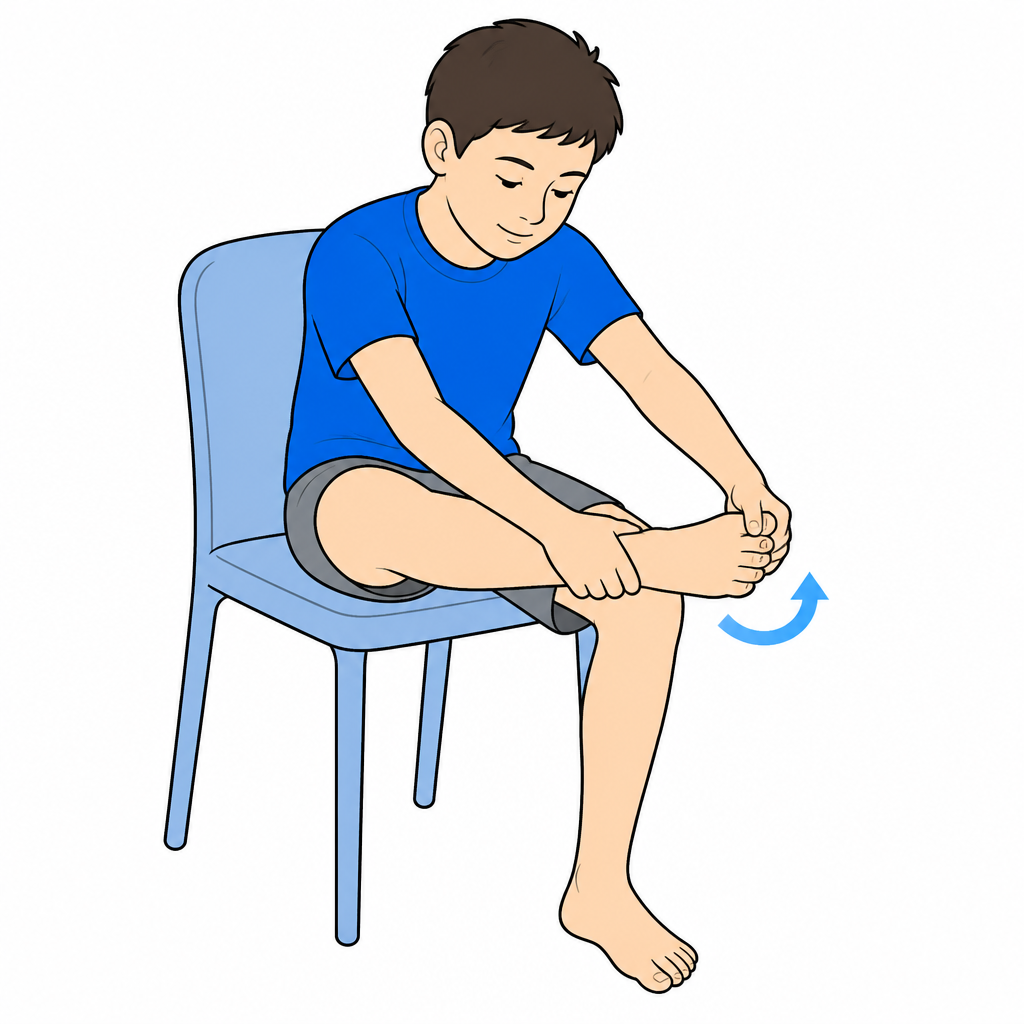
1.Peroneal stretch (evertors)
Individually prescribed mobility; stretching introduced too early can aggravate symptoms.
Do not stretch a painful apophysis. If the physiotherapist has prescribed this movement, gently guide the foot into inversion while sitting: the sole turns inwards and the medial border rises relative to the lateral border. Do not bend only the forefoot or pull on the base of the fifth metatarsal. Stop before pain and use only the demonstrated range.
3 × 20-30 seconds per foot, twice daily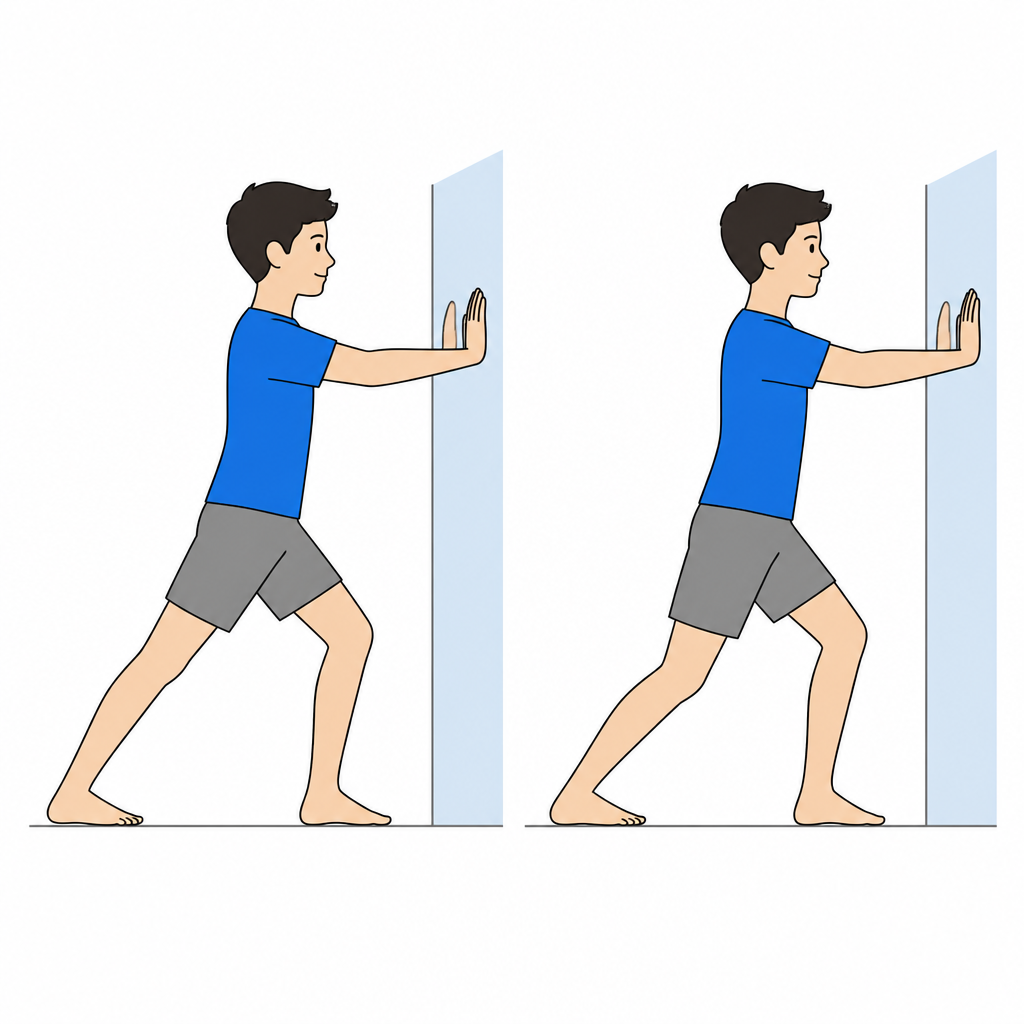
2.Calf stretch (gastrocnemius and soleus)
Reduces overall tension on lateral foot chain
Facing wall, leg to stretch behind with heel on ground. Straight knee for gastrocnemius, bent for soleus. Push hips forward. A tight calf can contribute to overloading lateral foot border during walking and running.
3 × 30 seconds per position, per leg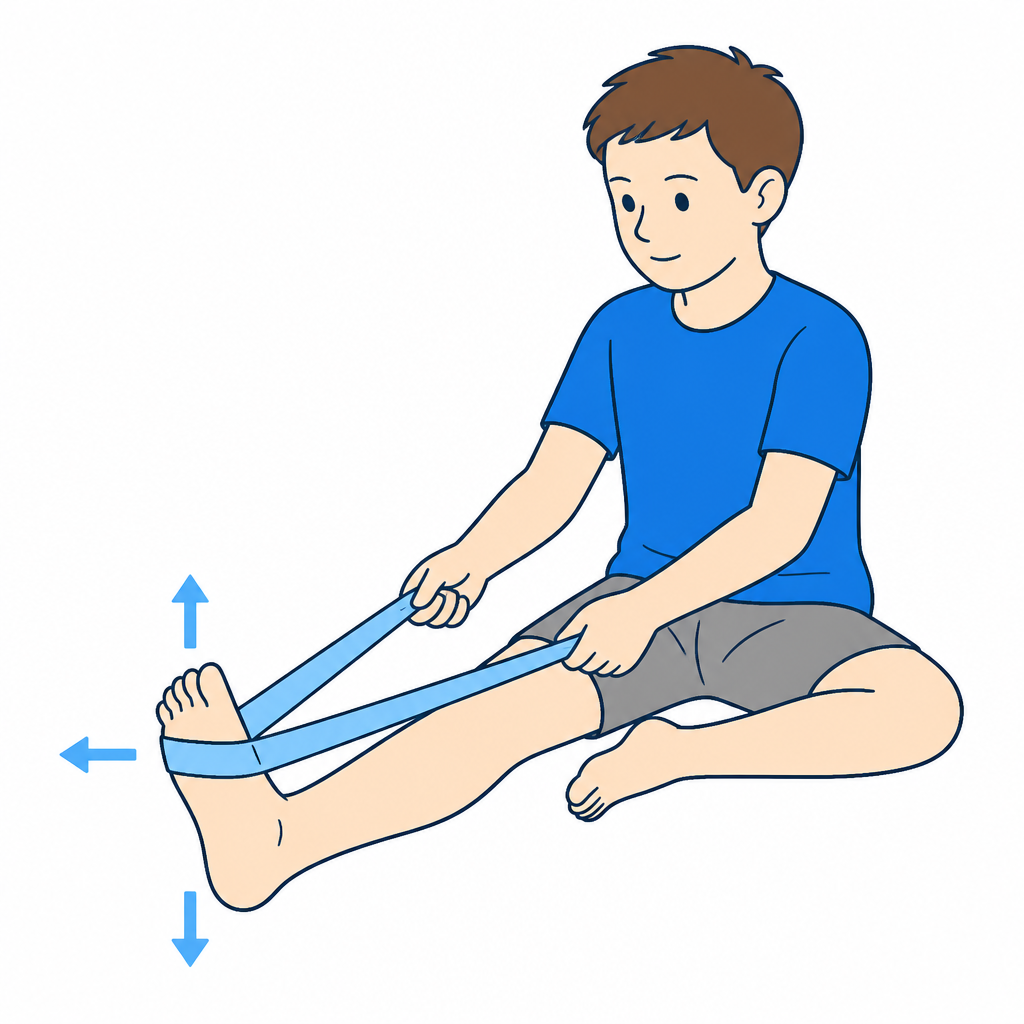
3.Ankle strengthening with band (non-weight bearing)
Maintains balanced ankle strength during relative rest phase
Seated with band around foot. Perform all 4 movements: dorsiflexion, plantarflexion, inversion, eversion. Eversion should be done with caution: use light resistance because it's the peroneal muscle (evertor) that pulls on the 5th metatarsal apophysis. Goal is to maintain strength, not overload.
3 × 12 each direction, light resistance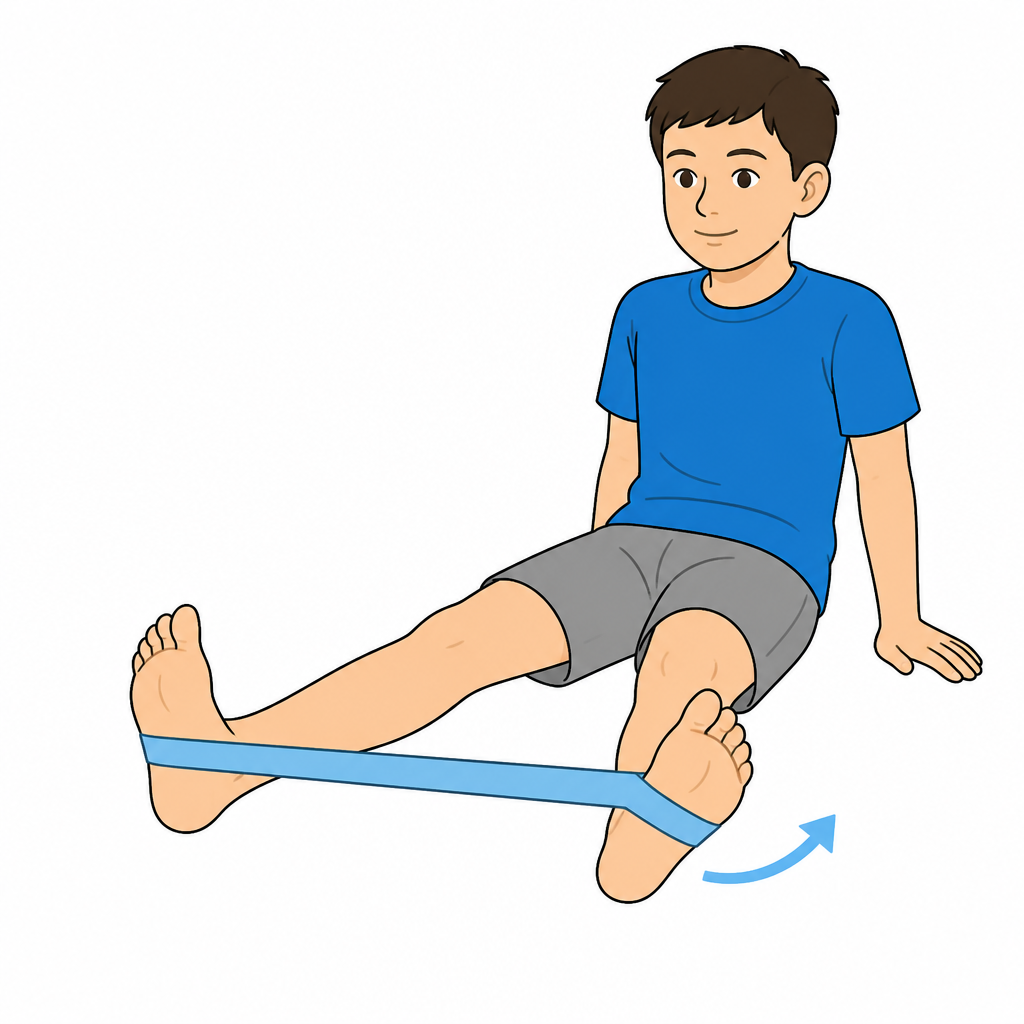
4.Progressive evertor strengthening
Strengthens the peroneals with graded load on the apophysis
PHASE 1 (isometric): push the outer border of the foot against a wall or a parent's hand, without movement, 5 seconds. PHASE 2 (with band): eversion against light resistance, slow outward movement and controlled return. Increase resistance only when the exercise has been pain-free for at least a week.
3 × 10 reps (or 10 × 5-second isometric holds), once daily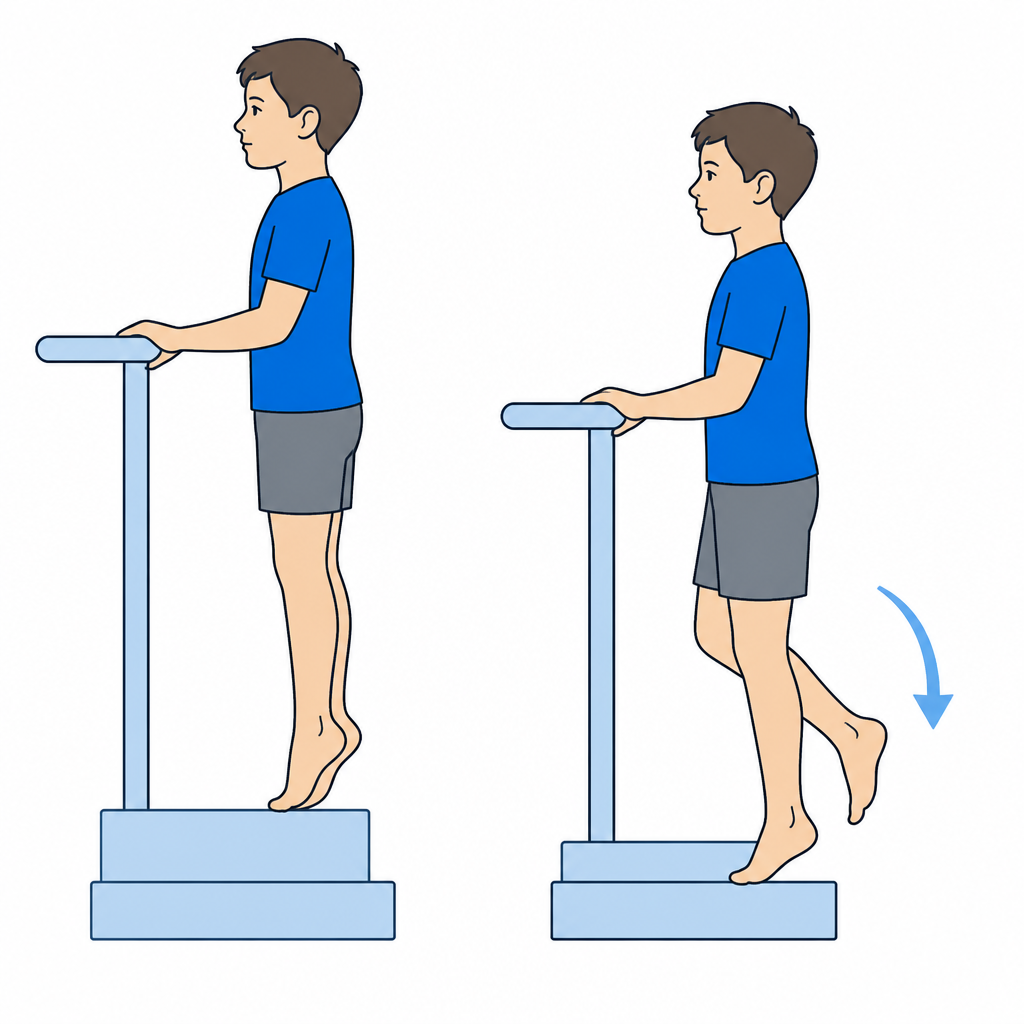
5.Eccentric calf raises
Improves load tolerance of the whole posterior and lateral chain
Standing, hands on the wall. Rise onto the toes with both legs (2 seconds), then lower slowly (4 seconds) controlling the movement and keeping the ankle aligned, without letting the foot roll outward. Start on the floor; when pain-free, progress to the edge of a step.
3 × 12 reps, once daily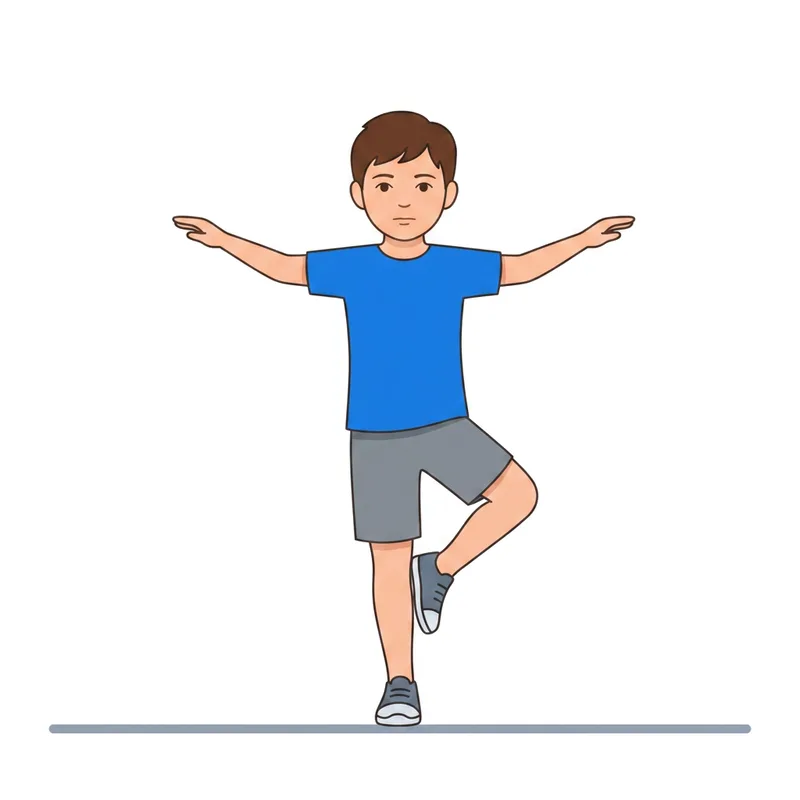
6.Balance and proprioception
Restores ankle control and reduces lateral border overload
After clearance for weight bearing, start on firm ground with eyes open, next to a secure support and with adult supervision. Place the other foot down before losing balance. Progress to an unstable surface or eyes-closed work only under direct professional supervision; do not add these challenges independently. Stop for pain or instability.
3 × 30 seconds per leg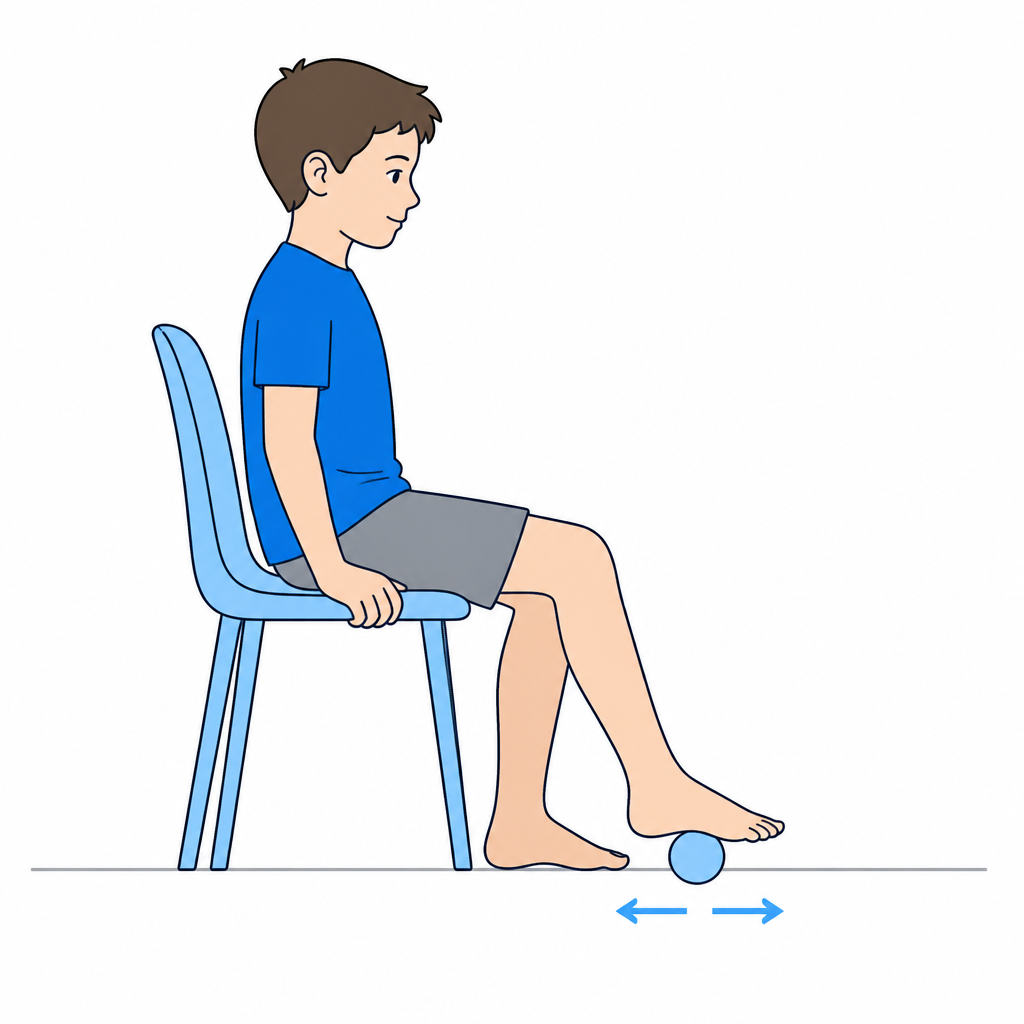
7.Ball release of the lateral border
Reduces the muscle tension pulling on the apophysis
Seated, roll a ball under the sole along the outer border, AVOIDING direct pressure on the tender point at the 5th metatarsal base. The lateral calf (peroneals) can also be massaged with a roller or by hand. Tolerable pressure, never painful.
2-3 minutes, once daily
8.Gradual return to running
Staged progression to return to the field without relapse
1) Pain-free brisk walking for 20 minutes. 2) Run-walk intervals in a straight line (1 minute run / 1 minute walk × 10). 3) Light continuous running. 4) Running with accelerations. 5) Direction changes and jumps. Move to the next stage only after two pain-free sessions, including the following 24 hours.
One stage every 3-5 days, as tolerated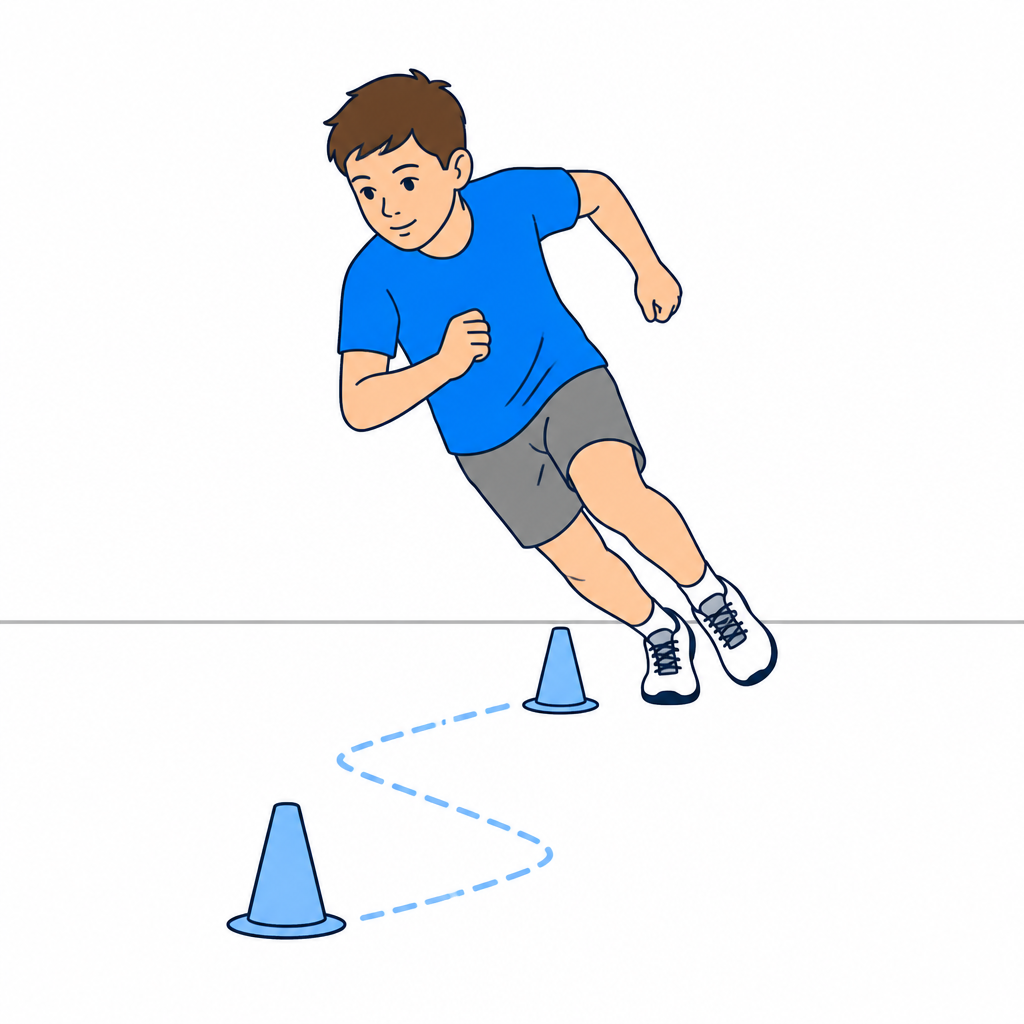
9.Sports load management
Activity modification to protect area during healing
ACUTE PHASE: reduce running, jumping, direction changes. Ice after activity for 10-15 min. Lateral heel pad or insole with 5th metatarsal offloading. RECOVERY PHASE: gradual resumption, starting with straight-line activities before reintroducing direction changes. Shoes with good lateral support.
Gradual progression, personalized guidance during visit
RED FLAGS - When to stop and contact the doctor immediately
Stop the exercises immediately and contact the specialist (or go to the emergency department if severe) if any of the following occur:
- Acute or sudden pain during exercise
- Significant swelling after exercises
- Pain that progressively worsens over days
- Fever or general malaise
- Difficulty walking or using the limb after exercises
- Any neurological symptoms (tingling, numbness, sudden weakness)
- A red or hot joint, or inability to bear weight: seek prompt assessment; use emergency care if severe.
In case of doubt, always prefer a check-up over continuing the exercises.
Dott. Daniele Priano
Paediatric Orthopaedics - ASST Gaetano Pini-CTO
Content version: 9 September 2026
ortopediaevolutiva.com • Printed: 13/09/2026
 Web version
 Google
 MioDottore
Prepare the visit handout
Use the condition and phase indicated by your clinician. You can leave out individual exercises; instructions, illustrations and safety advice remain together.
Exclude exercises if needed
9 of 9 exercise cards included
The full web page remains available. Your selection is not saved or shared.
Before You Start
Who is this guide for?
After diagnosis of Iselin apophysitis. Peroneal strengthening and stretching can load the fifth metatarsal base: introduce them only in the authorised phase without local pain.
What you need
A stable, clear surface, comfortable clothing and a secure support. Check resistance-band anchors. Adult supervision; avoid marbles and small objects if the child may put them in their mouth, using a towel instead.
Suggested frequency
Perform only the exercises selected during the visit. The listed dosages are examples to adapt: follow the dose, frequency, rest and progression prescribed for age, symptoms and phase. Do not automatically perform the whole list.
Common mistakes to avoid
- •Forcing a painful or unauthorised movement
- •Increasing load, resistance or frequency without the agreed rest periods
- •Doing balance exercises without stable support or supervision
⚠️ Red flags — when to stop and contact the doctor immediately
Stop exercises immediately and contact the specialist if any of the following occur:
- Acute or sudden pain during exercise
- Significant swelling after exercises
- Pain that progressively worsens over days
- Fever or general malaise
- Difficulty walking or using the limb after exercises
- Any neurological symptoms (tingling, numbness, sudden weakness)
- A red or hot joint, or inability to bear weight: seek prompt assessment; use emergency care if severe.
Detailed Exercises
- 1
Peroneal stretch (evertors)
Individually prescribed mobility; stretching introduced too early can aggravate symptoms.
Do not stretch a painful apophysis. If the physiotherapist has prescribed this movement, gently guide the foot into inversion while sitting: the sole turns inwards and the medial border rises relative to the lateral border. Do not bend only the forefoot or pull on the base of the fifth metatarsal. Stop before pain and use only the demonstrated range.
3 × 20-30 seconds per foot, twice daily - 2
Calf stretch (gastrocnemius and soleus)
Reduces overall tension on lateral foot chain
Facing wall, leg to stretch behind with heel on ground. Straight knee for gastrocnemius, bent for soleus. Push hips forward. A tight calf can contribute to overloading lateral foot border during walking and running.
3 × 30 seconds per position, per leg - 3
Ankle strengthening with band (non-weight bearing)
Maintains balanced ankle strength during relative rest phase
Seated with band around foot. Perform all 4 movements: dorsiflexion, plantarflexion, inversion, eversion. Eversion should be done with caution: use light resistance because it's the peroneal muscle (evertor) that pulls on the 5th metatarsal apophysis. Goal is to maintain strength, not overload.
3 × 12 each direction, light resistance - 4
Progressive evertor strengthening
Strengthens the peroneals with graded load on the apophysis
PHASE 1 (isometric): push the outer border of the foot against a wall or a parent's hand, without movement, 5 seconds. PHASE 2 (with band): eversion against light resistance, slow outward movement and controlled return. Increase resistance only when the exercise has been pain-free for at least a week.
3 × 10 reps (or 10 × 5-second isometric holds), once daily - 5
Eccentric calf raises
Improves load tolerance of the whole posterior and lateral chain
Standing, hands on the wall. Rise onto the toes with both legs (2 seconds), then lower slowly (4 seconds) controlling the movement and keeping the ankle aligned, without letting the foot roll outward. Start on the floor; when pain-free, progress to the edge of a step.
3 × 12 reps, once daily - 6
Balance and proprioception
Restores ankle control and reduces lateral border overload
After clearance for weight bearing, start on firm ground with eyes open, next to a secure support and with adult supervision. Place the other foot down before losing balance. Progress to an unstable surface or eyes-closed work only under direct professional supervision; do not add these challenges independently. Stop for pain or instability.
3 × 30 seconds per leg - 7
Ball release of the lateral border
Reduces the muscle tension pulling on the apophysis
Seated, roll a ball under the sole along the outer border, AVOIDING direct pressure on the tender point at the 5th metatarsal base. The lateral calf (peroneals) can also be massaged with a roller or by hand. Tolerable pressure, never painful.
2-3 minutes, once daily - 8
Gradual return to running
Staged progression to return to the field without relapse
1) Pain-free brisk walking for 20 minutes. 2) Run-walk intervals in a straight line (1 minute run / 1 minute walk × 10). 3) Light continuous running. 4) Running with accelerations. 5) Direction changes and jumps. Move to the next stage only after two pain-free sessions, including the following 24 hours.
One stage every 3-5 days, as tolerated - 9
Sports load management
Activity modification to protect area during healing
ACUTE PHASE: reduce running, jumping, direction changes. Ice after activity for 10-15 min. Lateral heel pad or insole with 5th metatarsal offloading. RECOVERY PHASE: gradual resumption, starting with straight-line activities before reintroducing direction changes. Shoes with good lateral support.
Gradual progression, personalized guidance during visit
Frequently Asked Questions
Does Iselin disease heal on its own?
Yes, like all traction osteochondroses, it resolves spontaneously when the apophysis at the base of the 5th metatarsal closes. Load management and stretching control symptoms during the active phase. Full recovery generally occurs in 2-4 months.