Back to all videos
Spine2 min
Video Explanation: Kyphosis – What Parents Need to Know
Does your teen always slouch? Learn the difference between postural kyphosis and Scheuermann's disease, and when treatment is needed.
Press play to watch the video. Use controls to enable audio.
In-Depth Explanation
Kyphosis is the physiological curvature of the thoracic spine (the upper back), normally between 20° and 45°. When this curvature is excessive, it's called hyperkyphosis or "round back," a condition frequently seen especially in adolescents.
**Postural vs structural kyphosis:** The distinction is crucial. Postural kyphosis is linked to incorrect habits (prolonged sitting, smartphone use, heavy backpack) and is completely correctable with exercises and postural correction. Structural kyphosis (like Scheuermann's disease) involves vertebral alterations and requires more structured treatment.
**Scheuermann's disease:** This is the most common form of structural kyphosis in adolescents. The thoracic vertebrae take on a "wedge" shape instead of rectangular, causing a permanent increase in the curve. It appears during the pubertal growth spurt and is more frequent in males.
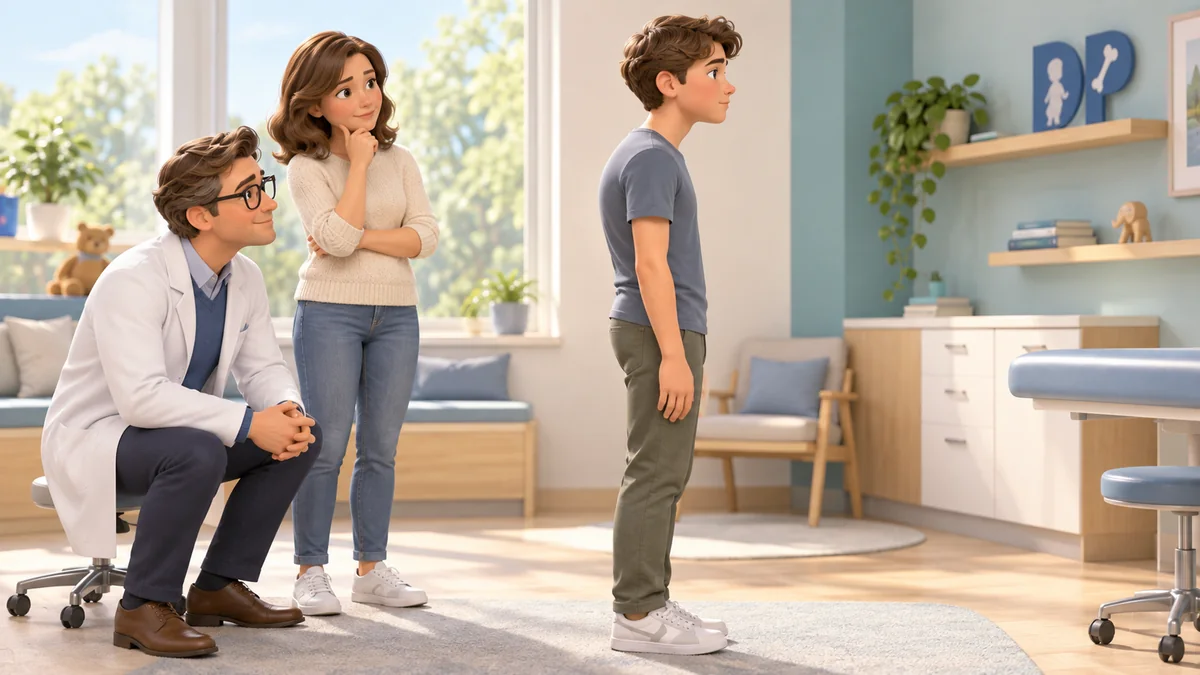
**How to recognize it:** The simplest test is observing the teenager bent forward: if the thoracic "hump" is pronounced and doesn't correct with voluntary effort to straighten up, it could be structural kyphosis.
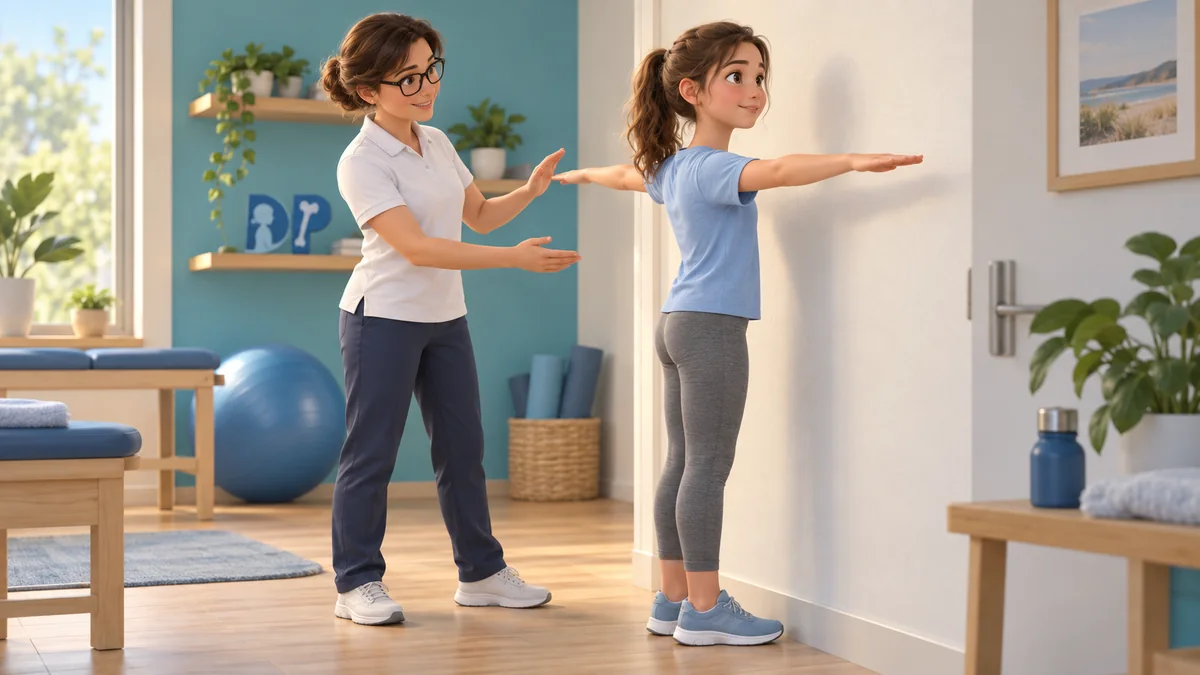
**Treatment:** Postural kyphosis responds well to physical therapy, paraspinal muscle strengthening exercises, and pectoral stretching. Moderate Scheuermann's disease may require bracing, while severe cases (rare) may need surgery.
3 Warning Signs to Watch For
- 1Back curvature that doesn't correct when the teenager tries to straighten up
- 2Back pain associated with the curved posture
- 3Thoracic spine stiffness with difficulty extending the back
Why a Specialist Visit Matters
Only specialist evaluation with possible X-ray can distinguish postural from structural kyphosis. This is crucial because treatment is completely different: exercises for the first, potentially bracing for the second.
Prefer reading the complete medical information sheet?
Go to Curved Back in Teens: Posture or Disease? (Video) Information SheetNeed a specialist evaluation?
Book an appointment at Istituto Gaetano Pini or CTO Milan.