Back to all videos
Growth2 min
Video Explanation: Limb Torsion – What Parents Need to Know
Do your child's legs seem rotated inward or outward? Learn what limb torsions are and how they affect walking.
Press play to watch the video. Use controls to enable audio.
In-Depth Explanation
Lower limb torsions are physiological rotations that bones (femur and tibia) undergo during development. These torsions determine how feet orient during walking and are often the cause of in-toeing or out-toeing.
**What is torsion?** Every long bone has a certain degree of "twisting" on itself. In the femur, we speak of anteversion (forward rotation) or retroversion (backward rotation). In the tibia, of internal or external torsion.
**Normal evolution:**
- **At birth:** Newborns have femoral anteversion of about 40° and slight internal tibial torsion.
- **During growth:** Femoral anteversion gradually decreases to 15-20° in adults. The tibia "derotates" outward.
- **Final result:** Adults have alignment that allows feet to point slightly outward (10-15°) during walking.
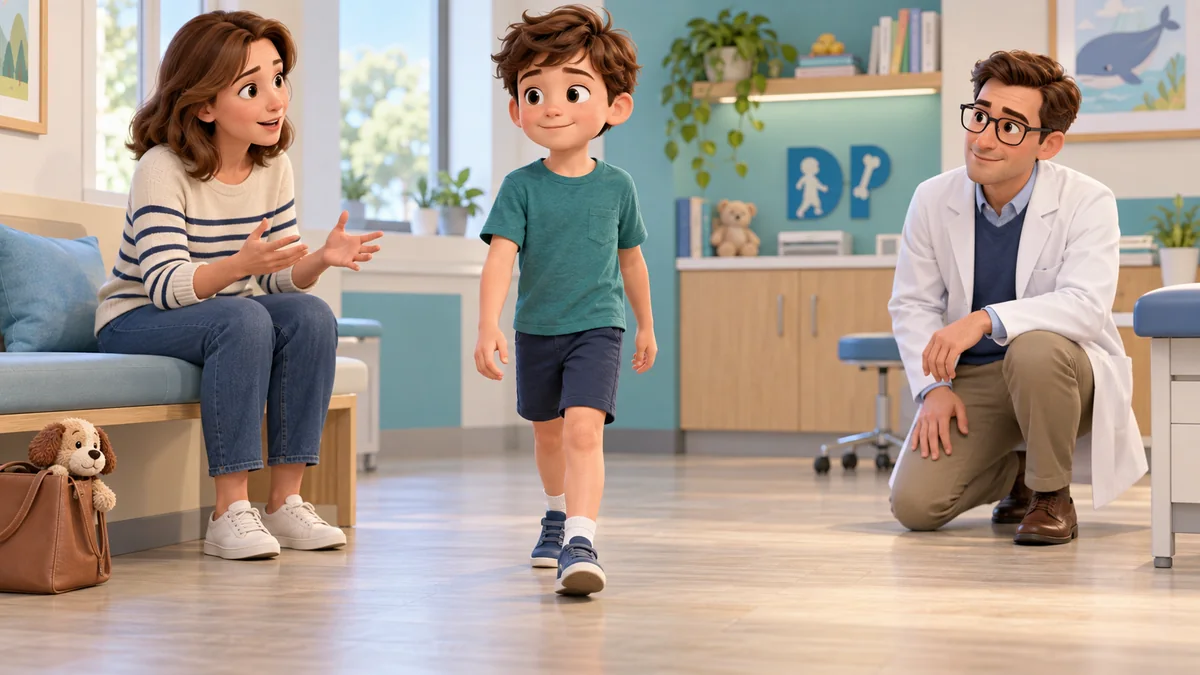
**When torsions are excessive:** If femoral anteversion remains high (persistent anteversion), the child will walk with feet turned inward. If it's reduced (retroversion), they'll walk with feet turned outward. The same applies to the tibia.
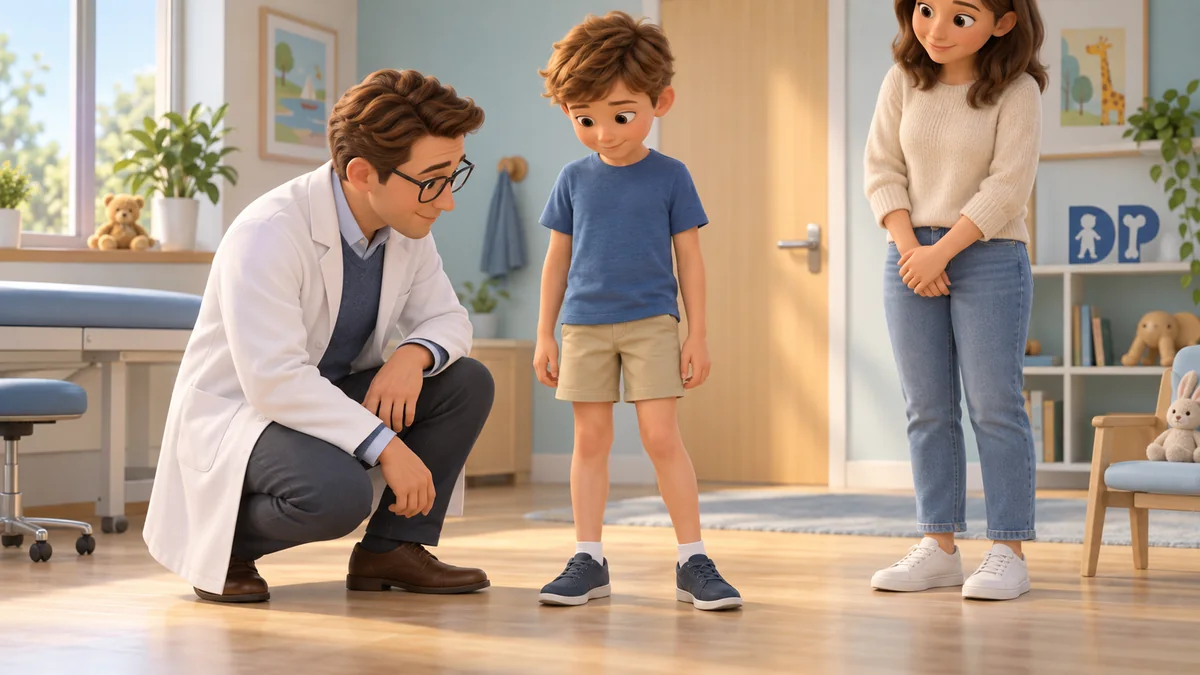
**How they're measured:** The orthopaedist performs specific clinical maneuvers to assess the degree of internal and external rotation of hip and tibia. X-rays or CT scans are rarely needed.
**Treatment:** In the vast majority of cases, torsions normalize spontaneously with growth. Braces and special shoes haven't proven effective. Surgery (derotational osteotomy) is reserved for rare cases of severe, symptomatic deformity persisting after skeletal maturity.
3 Warning Signs to Watch For
- 1Frequent tripping or difficulty running due to in-toeing
- 2Pain in hips, knees, or feet during activity
- 3Deformity not improving or worsening despite growth
Why a Specialist Visit Matters
The pediatric orthopaedist precisely measures torsions, monitors evolution over time, and can reassure parents about the normality of the picture or, if necessary, plan a corrective intervention.
Prefer reading the complete medical information sheet?
Go to Twisted Legs in Children: Femoral and Tibial Torsion (Video) Information SheetNeed a specialist evaluation?
Book an appointment at Istituto Gaetano Pini or CTO Milan.