Back to all videos
Growth2 min
Video Explanation: Toe Walking – What Parents Need to Know
Does your child always walk on tiptoes without touching heels? Learn about toe walking causes and when neurological evaluation is needed.
Press play to watch the video. Use controls to enable audio.
In-Depth Explanation
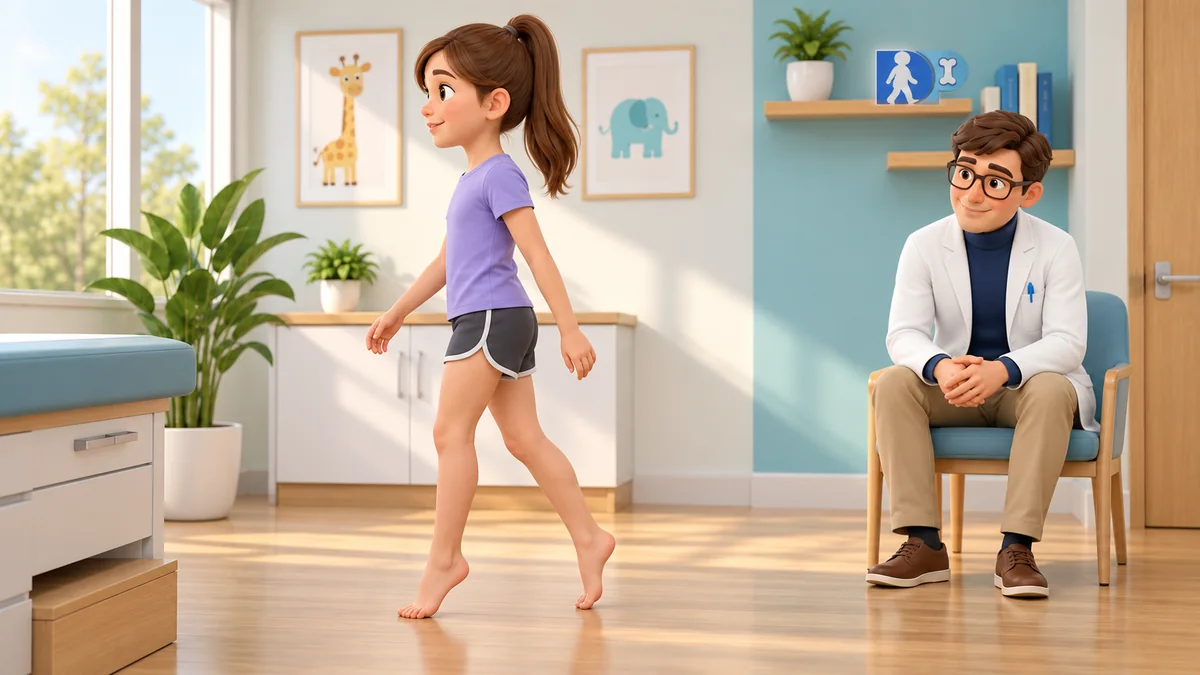
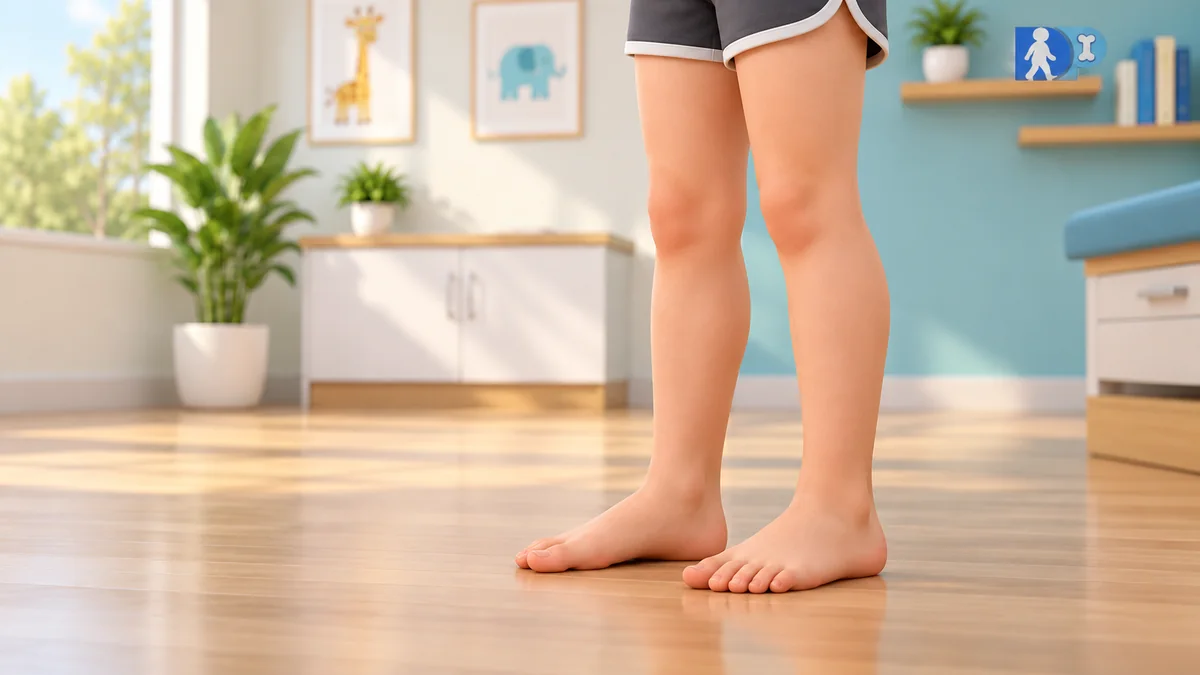
Toe walking (tip toe walking) is a walking pattern where the child only contacts the forefoot, without bringing the heel down. It's common in children between 2 and 3 years who are perfecting their gait, but when it persists beyond this age it requires attention.
**Idiopathic toe walking:** This is the most common form (over 50% of cases). The child walks on tiptoes out of "habit," without an identifiable neurological or muscular cause. It's often intermittent: the child walks normally when reminded or runs barefoot.
**Causes to rule out:**
- **Achilles tendon shortness:** The calf is shortened and the child physically cannot bring the heel down.
- **Neuromuscular disorders:** Cerebral palsy, muscular dystrophies. These children often have other neurological signs.
- **Autism spectrum disorders:** Toe walking is more frequent in children with ASD, although not all toe-walking children have ASD.
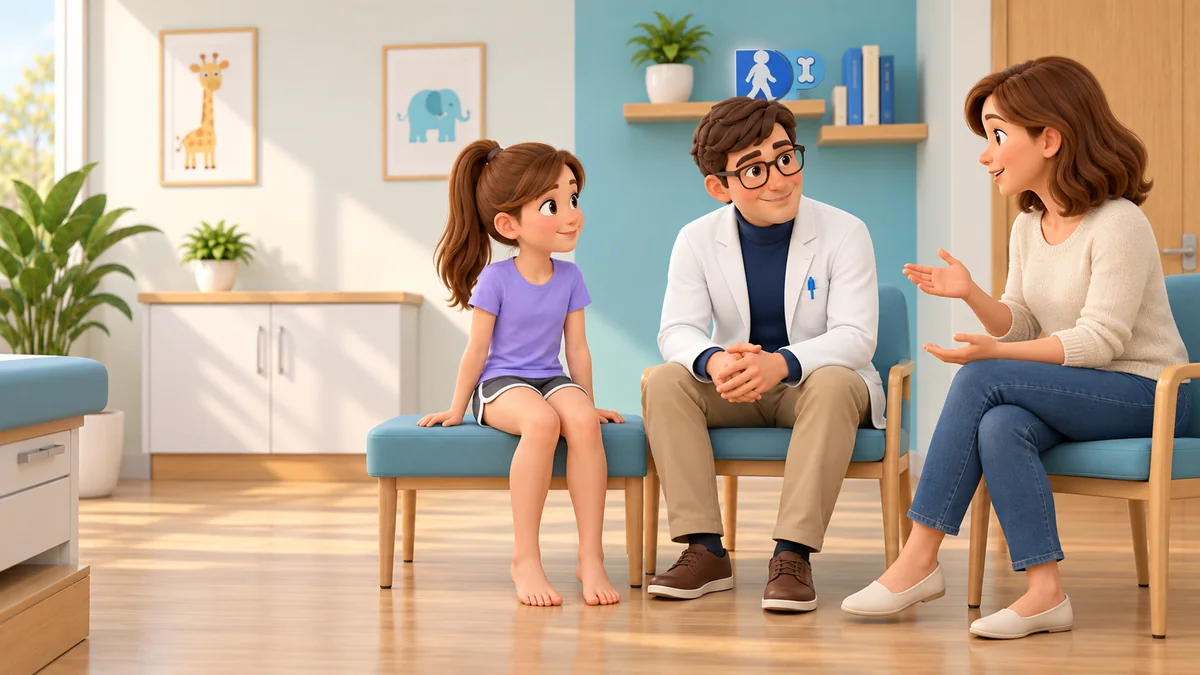
**Clinical examination:** The orthopaedist evaluates ankle mobility (dorsiflexion), basic neurological examination, muscle strength, and observes the gait. If the child can bring the heel down and has a normal neurological exam, the prognosis is generally good.
**Treatment:** For the idiopathic form, calf stretching, observation, and reassurance are often sufficient. In persistent cases with tendon shortness, night splints, serial casting, or rarely surgical lengthening may be helpful.
3 Warning Signs to Watch For
- 1Toe walking persisting constantly beyond age 3
- 2Inability to put heel down even when asked
- 3Language delay, social difficulties, or other signs of atypical development
Why a Specialist Visit Matters
Specialist evaluation distinguishes the idiopathic form (benign) from those secondary to neurological or muscular causes. An early examination allows identification of any underlying problems and timely initiation of stretching and monitoring.
Prefer reading the complete medical information sheet?
Go to Toe Walking: When to Worry? (Video) Information SheetNeed a specialist evaluation?
Book an appointment at Istituto Gaetano Pini or CTO Milan.