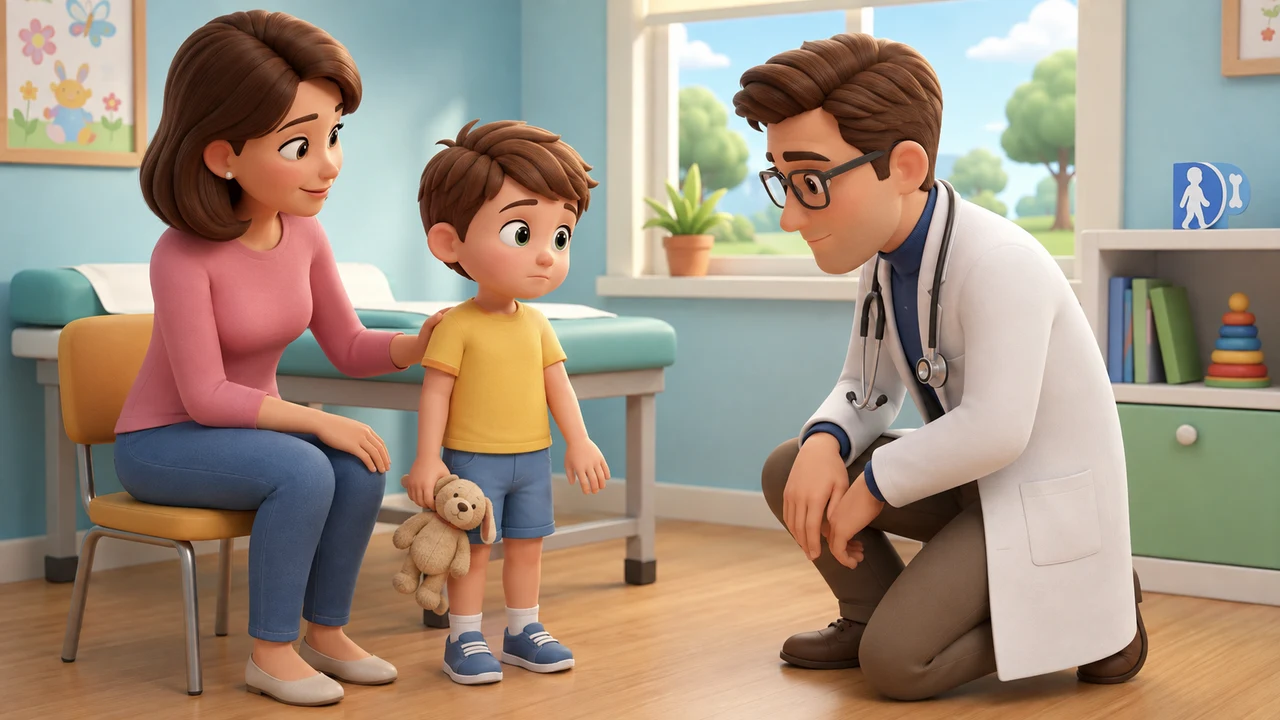
A young child who suddenly stops using an arm may have a pulled elbow, also called nursemaid's elbow. It often follows a pull on the hand or wrist, although the incident may go unnoticed. Prompt assessment is needed: at home, this condition cannot reliably be distinguished from a fracture or another cause of pain. [1, 2]
Can it resolve on its own? What should I do meanwhile?
If your child continues to keep the arm still, do not wait for it to resolve on its own. Seek a service that can assess and treat the child promptly. Let the arm rest in the most comfortable position without forcing movement. Even after a previous episode, do not attempt a reduction using videos or online instructions. [3]
Significant pain, swelling, bruising, deformity, fever or a child who appears unwell require urgent assessment. A cold or pale hand, or altered sensation, is another warning sign. These symptoms should not automatically be attributed to a pulled elbow; an acute problem should not wait for a routine appointment. [2]
What happens at the elbow?
A pulled elbow is a subluxation of the radial head, involving the annular ligament that holds it in position. It typically affects young children, particularly those aged 1–4 years. It is different from a complete elbow dislocation. [1, 4]
The child tends to avoid using the arm and holds the forearm with the palm turned downwards. This posture helps guide the examination but does not establish the diagnosis: a fracture may also occur without obvious swelling. [2]
When is an X-ray needed?
In a typical presentation, the diagnosis is clinical and an X-ray is not always necessary. The clinician considers how the incident happened and examines the whole arm, from the collarbone to the hand. A fall, localised bony tenderness, swelling or an unusual course may require X-rays or other investigations. The absence of a remembered pulling incident does not, on its own, exclude a pulled elbow. [1, 2]
Reduction and recovery time
Reduction is performed by an experienced healthcare professional after checking that the findings fit the diagnosis. Different techniques are available. A recent meta-analysis favours hyperpronation for first-attempt success, but also reports limitations in the quality of the studies. It does not guarantee immediate success in every child and does not justify attempting the manoeuvre at home. [5]
After a successful reduction, many children start using the arm again within a few minutes. Recovery of comfortable movement matters more than simply feeling a “click”. If pain or reluctance to use the arm persists, promptly contact the service that treated your child: the diagnosis and treatment may need to be reassessed. [1, 3]
Recovery can take longer when the incident happened many hours earlier. Any observation at home must follow an examination and a clear follow-up plan; this is not a reason to delay the initial assessment. [1]
Once movement has returned
With a confirmed diagnosis, successful reduction and full recovery, a cast or physiotherapy is usually unnecessary. Follow the discharge instructions. Contact the clinician again if pain returns or your child stops using the arm. [3, 4]
To reduce recurrence, lift your child by supporting them under the armpits and avoid pulling or swinging them by the hands or wrists. Share this advice with other caregivers. Some children are nevertheless prone to further episodes: a new episode needs assessment rather than an assumption that it is identical to the previous one. [3, 4]
The pulled elbow condition page covers further questions about the condition. For an acute episode, follow the prompt assessment advice above.
This information does not replace an individual medical assessment.
Sources
- Royal Children's Hospital Melbourne. Pulled elbow — Clinical Practice Guideline. Updated May 2023.
- Royal Children's Hospital Melbourne. Upper limb non-use — Clinical Practice Guideline. Updated July 2023.
- Royal Children's Hospital Melbourne. Pulled elbow — Kids Health Info. Reviewed March 2018; the page states that routine review is pending.
- American Academy of Orthopaedic Surgeons. Nursemaid's elbow. Information for families, reviewed with POSNA.
- Aksel G et al. Comparative effectiveness of supination-flexion and hyperpronation maneuvers in radial head subluxation: A systematic review and meta-analysis. 2025. PubMed, PMID 40086092. DOI: 10.1016/j.ajem.2025.03.011.