
Back to the paediatric injuries and fractures guide
    After the ERInformation page for parents

    Elbow fractures in children

    The elbow is one of the most delicate areas of paediatric traumatology. After a fall on the hand, sports trauma or a dislocation, the child may have pain, swelling, limited motion or difficulty using the arm.

    If the ER suggested a paediatric orthopaedic check-up

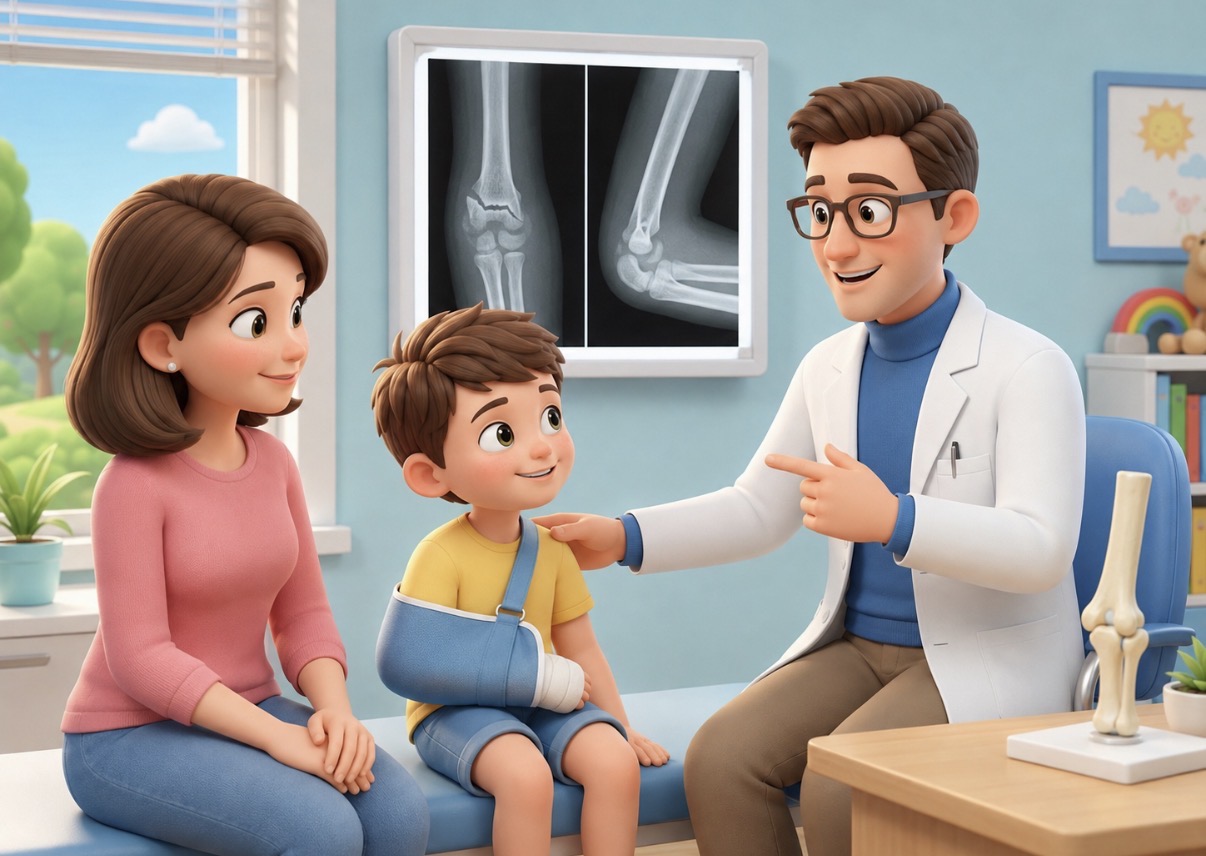
    It is a frequent and reasonable indication. After the first urgent assessment, a paediatric orthopaedic visit helps to read the X-rays together, understand what was seen, plan any follow-ups and answer the questions that come up at home — about the cast, sleep, school, sport and the next steps.

    You are not alone in this: bringing the ER paperwork and the X-rays is already a good start.

    Paediatric elbow fractures are not all alike. Some involve the distal humerus, others the proximal radius, others the apophyses or growth plates. Interpreting paediatric elbow X-rays can be complex because ossifications change with age.

    In case of visible deformity, severe uncontrolled pain, cold or pale fingers, sensory changes, open wounds or major trauma, urgent ER care is required.

    Dott. Daniele Priano - Ortopedico Pediatrico

    🩺Clinical note

    In paediatric fractures it is not only about whether a bone is broken: site of the lesion, growth plate involvement, the child's age and remodelling potential all shape the follow-up plan.

    The most frequent fractures

    Lesions to consider include supracondylar humerus fractures, typical of school age; lateral condyle fractures; medial epicondyle fractures or avulsions, more frequent in older children and adolescents; radial head or neck fractures; elbow dislocations with possibly associated fragments; and nursemaid's elbow, which is not a fracture but may enter the differential diagnosis of a young child who is not using the arm.
    Why it deserves careful evaluation

    The paediatric elbow deserves attention because some fractures may be subtle at first, some can shift on follow-up and others involve the joint or nearby structures such as nerves and vessels. Adequate evaluation helps to clarify the type of lesion, the relationship with growth and the appropriate follow-up pathway.

    Possible aspects to check

    • fracture location
    • significant swelling
    • elbow mobility
    • relation to the joint
    • any neurological or vascular signs
    • possible associated dislocation
    • correct interpretation of paediatric X-rays

    Aspects assessed during a paediatric orthopaedic visit. They are not self-management criteria.

    Paediatric orthopaedic check-up after trauma or fracture

    Dr. Daniele Priano sees children and adolescents in Milan. The visit can be useful after the ER, X-rays, a cast, sports trauma or questions about the follow-up pathway.

    Content for general informational purposes only. It does not replace a medical evaluation.

    We use technical cookies and, with your consent, aggregated statistics (Google Analytics, anonymized IP, no profiling/remarketing). Privacy Policy