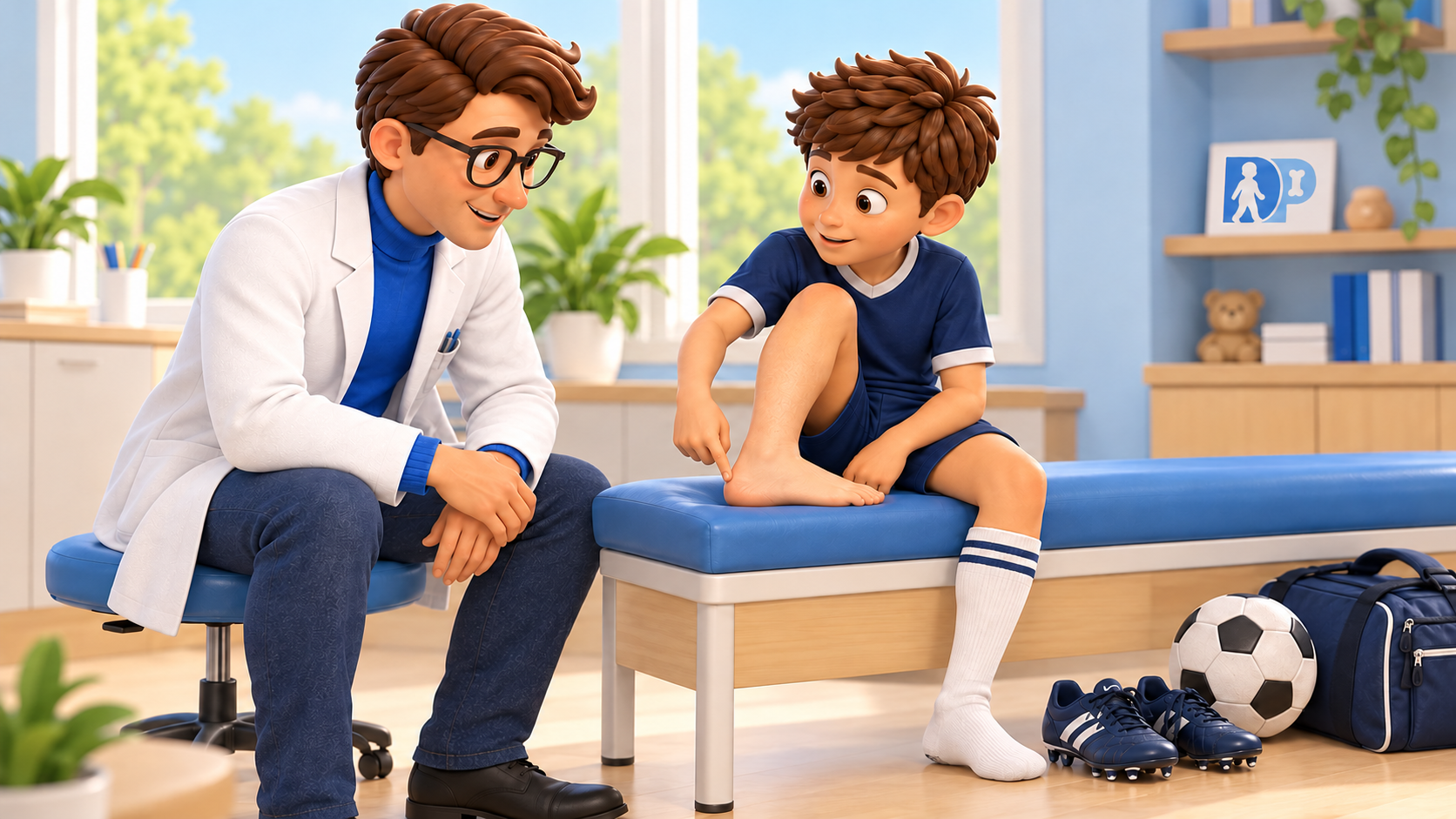
Heel pain in young footballers: planning the return to play
The weekend match is approaching, but the heel still hurts. After a Sever's disease diagnosis, returning to play depends on recovery: being able to move and play without pain matters more than the number of days that have passed. 1
Sever's disease affects the growing area of the heel bone, or calcaneus, which can become painful with running and jumping. Heel pain can have other causes, which clinical assessment helps distinguish. 2
Agreeing a plan with the coach
Once the diagnosis is clear, the family, coach and PE teacher should have the same guidance. Ask the clinician which activities can continue, which need reducing and when to review recovery.
If there is no significant pain or limp, some adapted activity may be possible. When symptoms interfere with movement, the load should be reduced in line with the advice given. Returning to a full match requires an assessment of recovery, even when some activities are already allowed. 2
Start with a specific question for the coach: “Can they join the whole training session today, or only certain activities?”
From everyday activities to a match
A full return to sport involves assessing pain-free ankle movement, walking, running and more demanding movements. Progression should be tailored to the child and agreed with those caring for them: one successful hop at home is not enough to show they are ready to play. 1
At the review, describe when pain occurs: while walking, during training or afterwards? Mention any limp or activities the child has stopped doing. Their eagerness to rejoin the team needs to be considered alongside these signs of recovery.
Recovery times vary. A study at a German youth football academy found wide variation in return to play and longer recovery with recurrent episodes. It was a small, retrospective study in a selected competitive setting: its results do not provide a deadline for an individual child. 3
Where do heel supports and exercises fit in?
Heel supports and physiotherapy may be part of care and should be chosen for the individual child. In a randomised study of 101 children, a wait-and-see approach with advice, a heel lift and physiotherapy all led to improvement, with no clinically relevant differences between groups at the final three-month assessment. This finding concerns those treatments and that follow-up period; it does not make them interchangeable in every situation. 4
Exercises, when appropriate, should also be chosen after assessing the child, with guidance suited to their needs.
Fever or an unusual worsening of pain needs prompt reassessment. If the child suddenly cannot or refuses to bear weight, urgent assessment is needed rather than automatically attributing the problem to Sever's disease. 5
Before the first match, clarify with the clinician whether the young player is ready to play or should continue with adapted training, and when to review progress. Share this guidance with the coach.
This is general information. Advice for an individual child requires a medical assessment.
Sources
- Lurie Children's — Sever Disease (Calcaneal Apophysitis).
- AAOS OrthoInfo, reviewed by POSNA — Sever's Disease.
- Belikan P et al., 2022 — Incidence of calcaneal apophysitis (Sever's disease) and return-to-play in adolescent athletes…. Journal of Orthopaedic Surgery and Research, 17:83.
- Wiegerinck JI et al., 2016 — Treatment of Calcaneal Apophysitis: Wait and See Versus Orthotic Device…. Journal of Pediatric Orthopaedics, 36(2):152–157. DOI: 10.1097/BPO.0000000000000417.
- Royal Children's Hospital Melbourne — The limping or non-weight bearing child.