Heel pain in children: sport, apophysitis and recovery
Heel pain in an active child may be due to apophysitis but must be interpreted alongside an examination. Assessment is useful if pain limits walking or sport, or keeps returning. Load is adjusted to symptoms: pain or limping during an activity is a reason to stop that activity.
Understanding the problem
Heel pain during football, running or jumping may be due to Sever's disease, irritation of the growth area at the back of the heel bone. It is common in growing children, but heel pain is a symptom, not a diagnosis. Only one heel may be affected.
Overuse apophysitis affects areas where a tendon attaches to growing bone. Sever's disease involves the heel; Osgood-Schlatter and Sinding-Larsen-Johansson are distinct conditions around the knee. The site of pain, examination and pattern of symptoms guide management: pain in a young athlete should not automatically be labelled as «growing pains».
When to have the pain assessed
Assessment is useful if pain keeps returning, limits play or changes the way a child walks. There is no need to wait for weeks if a limp develops or symptoms worsen. For mild discomfort that settles after briefly reducing activity, with normal walking, a discussion with the paediatrician can be a starting point.
A child who suddenly cannot put weight through the foot needs urgent assessment. Fever with pain, marked swelling or redness, and feeling unwell call for prompt medical attention. Pain that wakes a child at night or persists at rest should be assessed rather than automatically attributed to sport.
What is assessed at the appointment
The exact location of pain, walking pattern, ankle movement, calf tightness and training load all matter. Sever's disease is mainly a clinical diagnosis. An X-ray may help investigate other causes when appropriate; it cannot establish Sever's disease on its own. Pain when pressing the heel is not a home test for making the diagnosis.
Football and other sports: reducing activity or taking a break
A child should not continue an activity that causes pain or limping. Reducing training and jumping may be enough for mild symptoms; if those activities remain painful, a break from them is needed. Activities that remain comfortable are selected according to the clinical situation.
A full return depends on recovering movement and being able to walk, run and jump without pain. Progression should be gradual: a match should not be the first attempt after a break. If pain returns, reduce the load again and reassess the plan.
Heel supports, physiotherapy and exercises
Suitable footwear and an individually selected support may help. Custom orthoses are not established as necessary for every child with heel pain. A 2026 Cochrane review found that the evidence was generally limited; the comparison of foot orthoses with heel lifts showed little or no short-term difference in pain and function. This does not mean that every device is interchangeable or that no child can benefit.
In a trial involving 101 children, activity management, heel lifts and physiotherapy all produced improvement, without clinically relevant differences between the groups at the final three-month assessment. Treatment remains guided by symptoms and individual needs.
The Sever's disease exercise collection provides options to select with the treating clinician or physiotherapist. The exercises should not all be performed together or forced through pain. The sheet selected at the appointment should identify which exercises to use and when to stop.
For a planned assessment in Milan, see the Gaetano Pini and CTO locations and booking information. Bring any existing investigations and note when the pain appears, the weekly training schedule and the activities that trigger it.
Heel pain in children and sport
Video · 57 seconds · English audio and subtitles
Illustrated video with a synthetic voice. Press Play to load the YouTube player. Open on YouTube
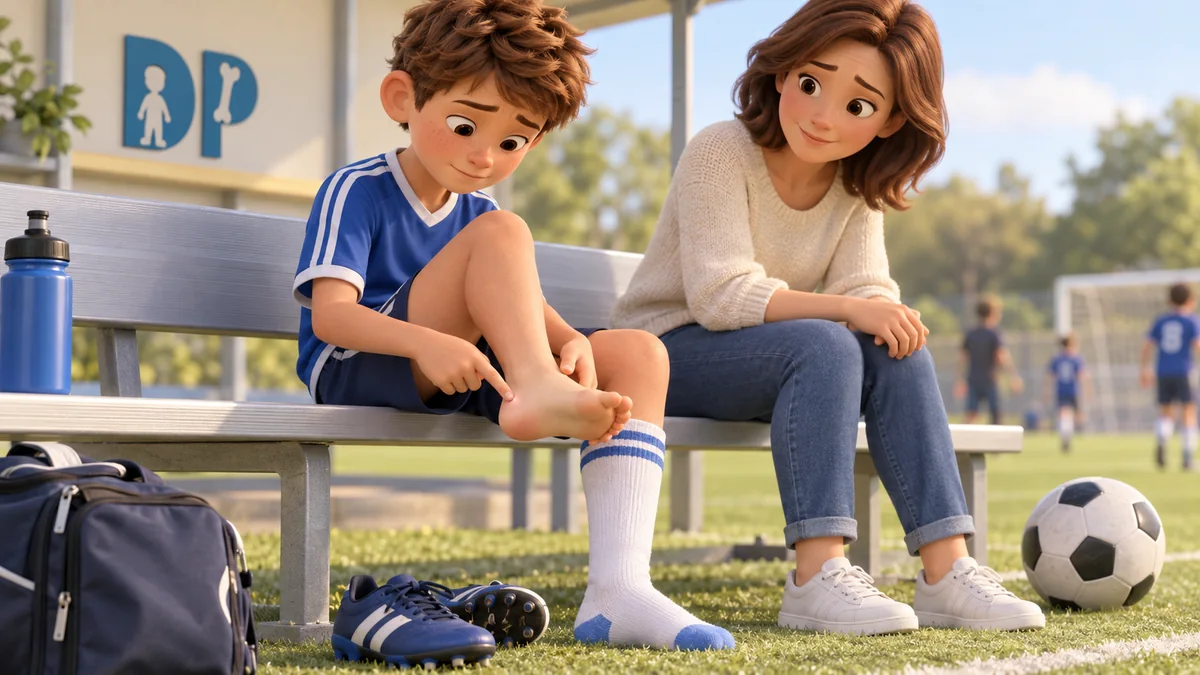
Pain is not a diagnosis
Sever's disease is one possible cause of heel pain. One heel alone may hurt; the clinical context matters.
Read all the illustrated explanations →Assessment and treatment
When to seek evaluation
- Pain that keeps returning, limits play or changes walking
- Limping or worsening symptoms: do not wait for weeks for assessment
- Sudden inability to put weight through the foot: urgent assessment
- Fever with pain, marked swelling or redness, and feeling unwell: prompt assessment
- Pain that wakes the child at night or persists at rest
What is evaluated
- Exact location of pain and pattern of symptoms
- Walking, ankle movement and calf tightness
- Training load and activities that trigger pain
- Heel examination by the clinician: pressure is not a home diagnostic test
- X-ray when appropriate to investigate other causes; it cannot establish Sever’s disease on its own
Treatment options
- Adjust sporting load; take a break from activities that cause pain or limping
- Suitable footwear and supports selected for individual needs
- Exercises selected with the clinician or physiotherapist, without forcing through pain
- Gradual return guided by pain, movement and function
- Reassessment if pain returns or recovery does not progress
Frequently Asked Questions
How long does heel pain last?▼
Could it be Sever's disease if only one heel hurts?▼
Is pain below the kneecap the same condition?▼
Is heel pain in a child the same as in an adult?▼
Can a child continue football if the heel hurts?▼
Important Notice: The information on this page is for educational and informational purposes only and does not constitute medical advice. Each clinical case is unique: the appropriate treatment is determined during the specialist consultation, based on a thorough clinical examination and, where necessary, diagnostic imaging. For any doubts or concerns, please consult a specialist.
Scientific references
- AAOS/POSNA. Sever's disease.
- Williams CM et al. Non-surgical treatment for lower limb apophyseal injuries. Cochrane Database Syst Rev. 2026. PMID 42454655.
- Royal Children's Hospital. The limping or non-weight bearing child.
- Lurie Children's. Sever disease (calcaneal apophysitis).
- Wiegerinck JI et al. Treatment of calcaneal apophysitis: wait and see versus orthotic device versus physical therapy. J Pediatr Orthop. 2016. PMID 25985369.