Paediatric Orthopaedic Specialist
Heel pain / Sever's disease
Home Exercise Program
Not every exercise listed here is suitable for every child: the selection is individual and is defined during the consultation.
For whom: Athletic children (8-14 years) with heel pain from apophysitis (Sever's disease). Essential to reduce activity during acute pain.
Dose and frequency: Perform only the exercises selected during the visit. The listed dosages are examples to adapt: follow the dose, frequency, rest and progression prescribed for age, symptoms and phase. Do not automatically perform the whole list.
Equipment and supervision: A stable, clear surface, comfortable clothing and a secure support. Check resistance-band anchors. Adult supervision; avoid marbles and small objects if the child may put them in their mouth, using a towel instead.
Avoid: Forcing a painful or unauthorised movement; Increasing load, resistance or frequency without the agreed rest periods; Doing balance exercises without stable support or supervision; Continuing intense sports activity during pain; Overly aggressive stretching; Not using recommended heel cushions; Returning to sports too soon.
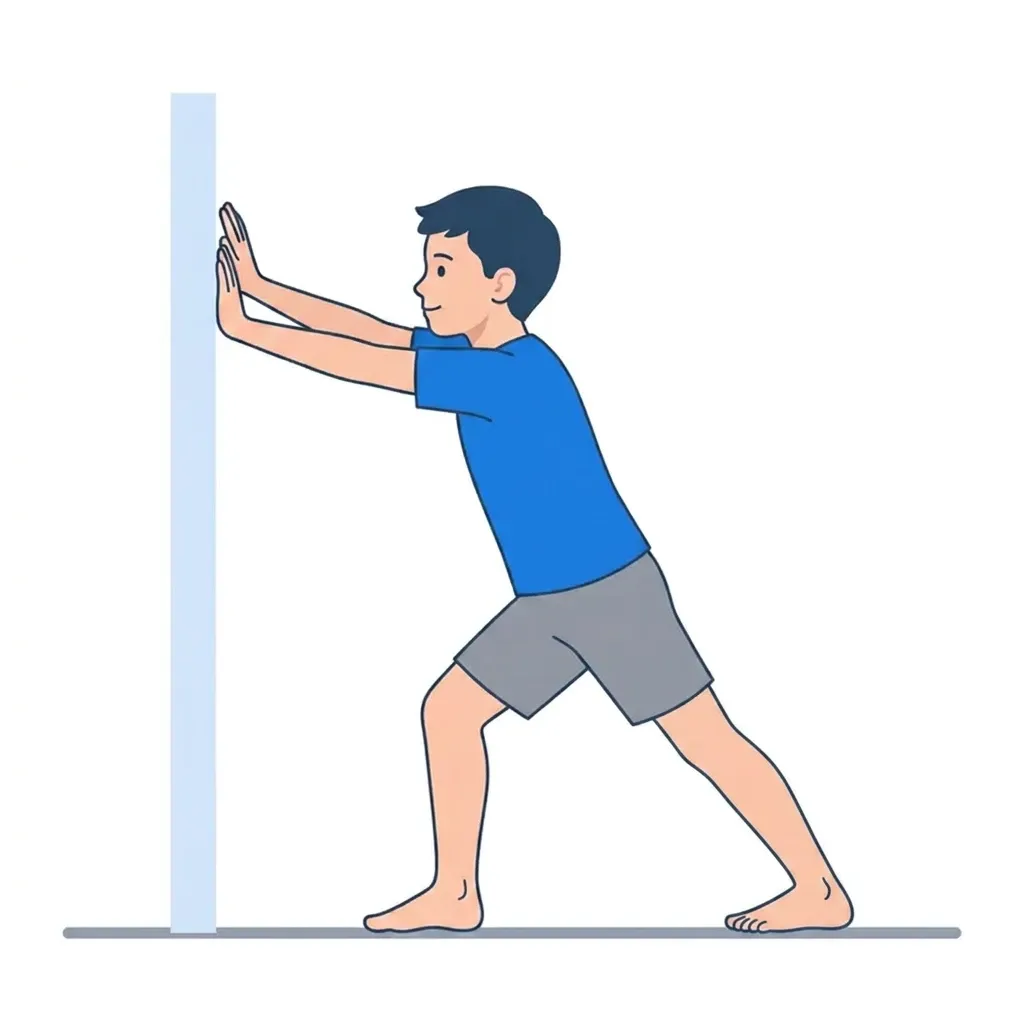
1.Calf stretch, when indicated
May help when the gastrocnemius-soleus complex is tight; it is not mandatory in every case of Sever disease.
GASTROCNEMIUS: Facing wall, back leg with straight knee, heel pressed down. Push hips forward. SOLEUS: Same position but slightly bending back knee. Both positions are important! Stretching should be gentle and never painful - a tight calf "pulls" the Achilles tendon which in turn pulls the heel.
3 × 20-30 seconds, twice daily. Gentle if pain present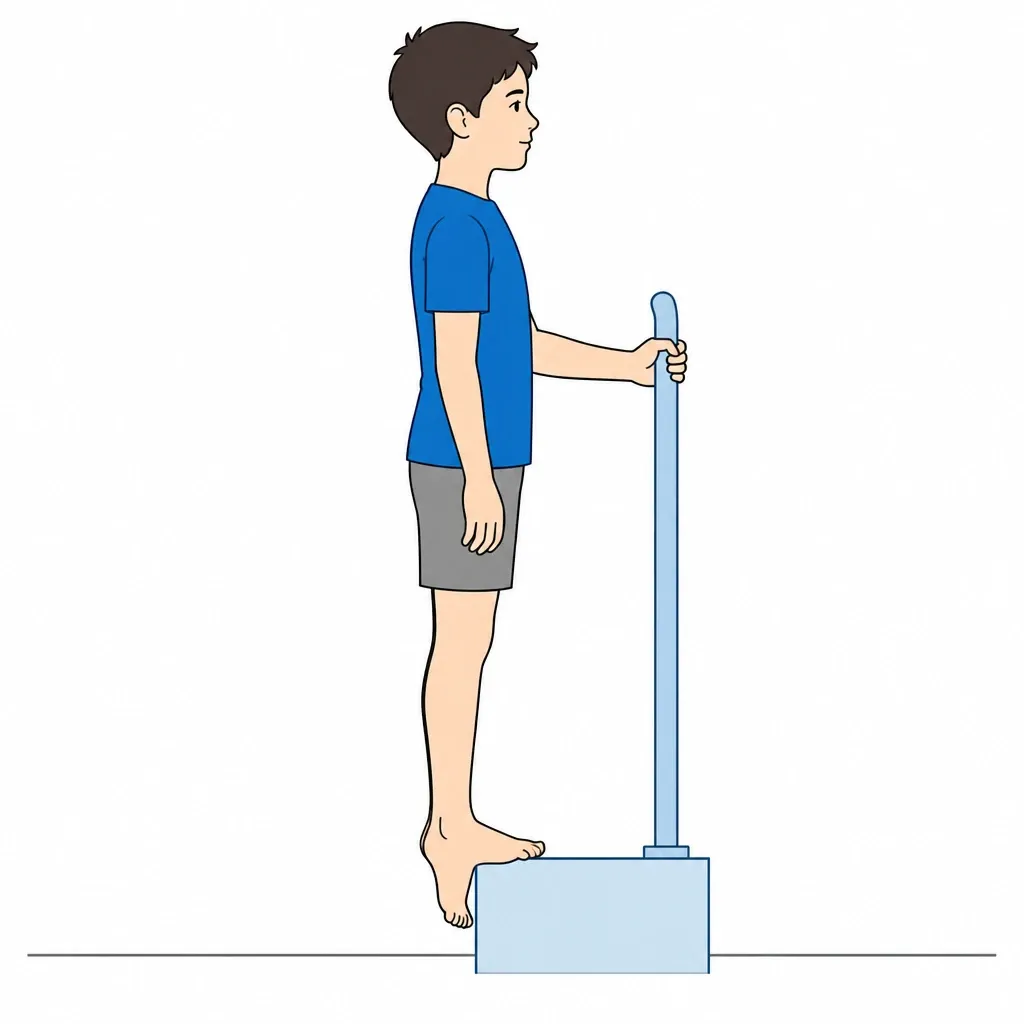
2.Static calf stretch on a step
A held stretch, distinct from strengthening with controlled lowering.
Not during the acutely painful phase. Only if selected and tolerated, place both forefeet on a stable step while holding the railing. Slowly lower the heels within a comfortable range and hold a mild calf stretch without bouncing. Do not seek maximum lowering or persist through heel pain: stop and agree a less intense alternative. This hold is a static stretch, not an eccentric strengthening set.
3 × 20-30 seconds, 1-2 times daily (not in acute phase)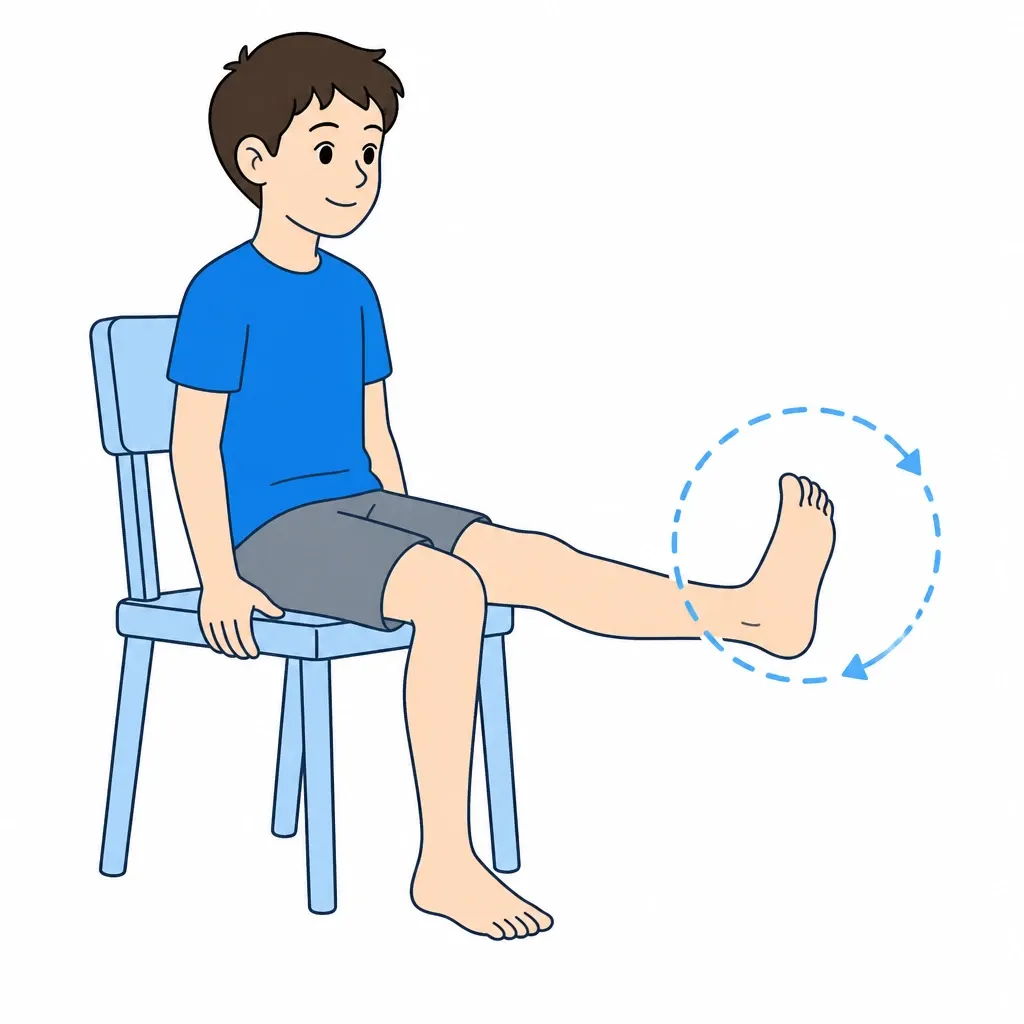
3.Ankle mobility (alphabet, circles)
Maintains joint mobility and improves circulation
Seated, with foot raised off floor. ALPHABET: "Write" alphabet letters in the air using toe tip. CIRCLES: Make complete circles with ankle in both directions. These exercises gently move the ankle without loading the heel.
2-3 minutes of mobility, 2-3 times daily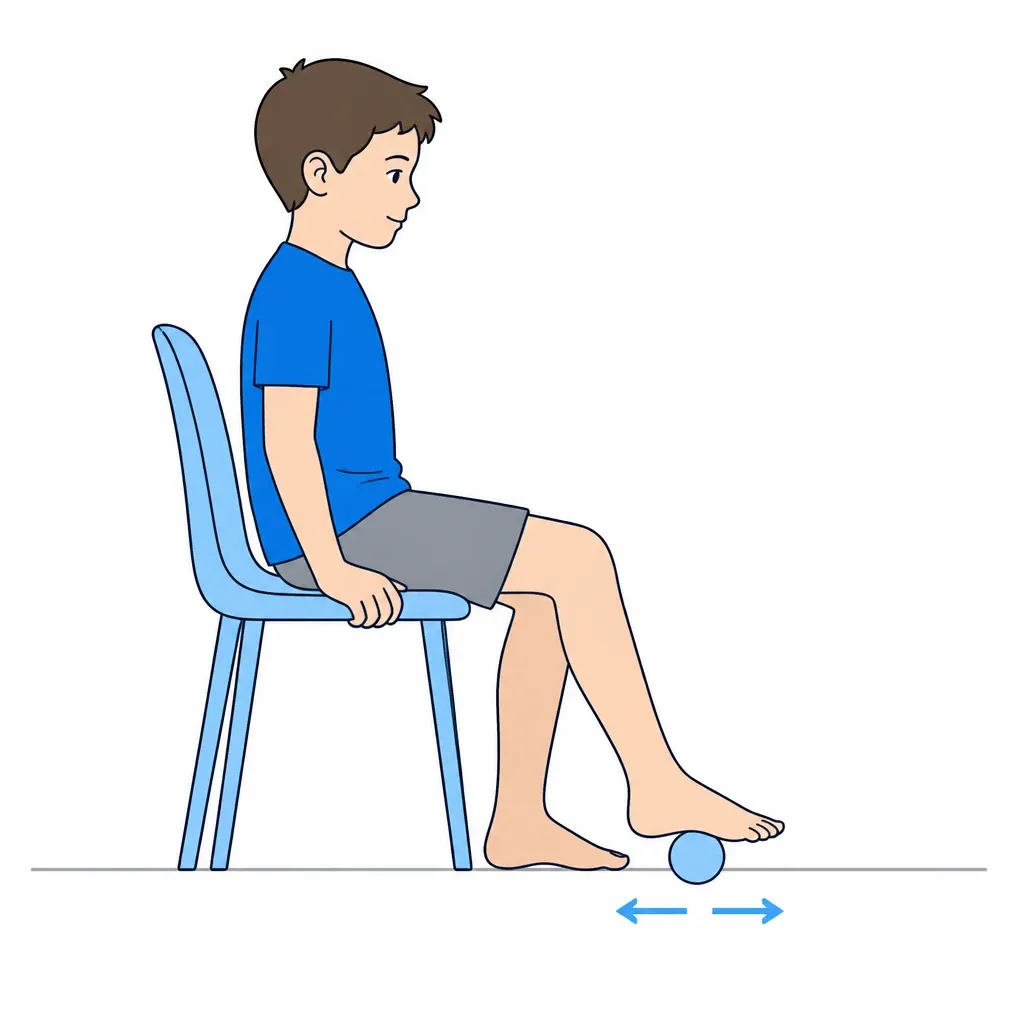
4.Ball massage (foot sole)
Gentle self-massage for soft-tissue comfort; it is not a proven treatment of the apophysis.
Seated, roll tennis ball under entire sole, from arch to heel. Apply moderate pressure. AVOID pressing directly on painful heel spot. A protected cool bottle may provide temporary comfort. Wrap the cold object in a cloth, check the skin frequently and stop for discomfort, numbness or colour change. Avoid cold on skin with impaired sensation or circulation; it is for comfort, not a guaranteed anti-inflammatory treatment.
3-5 minutes per foot, 1-2 times daily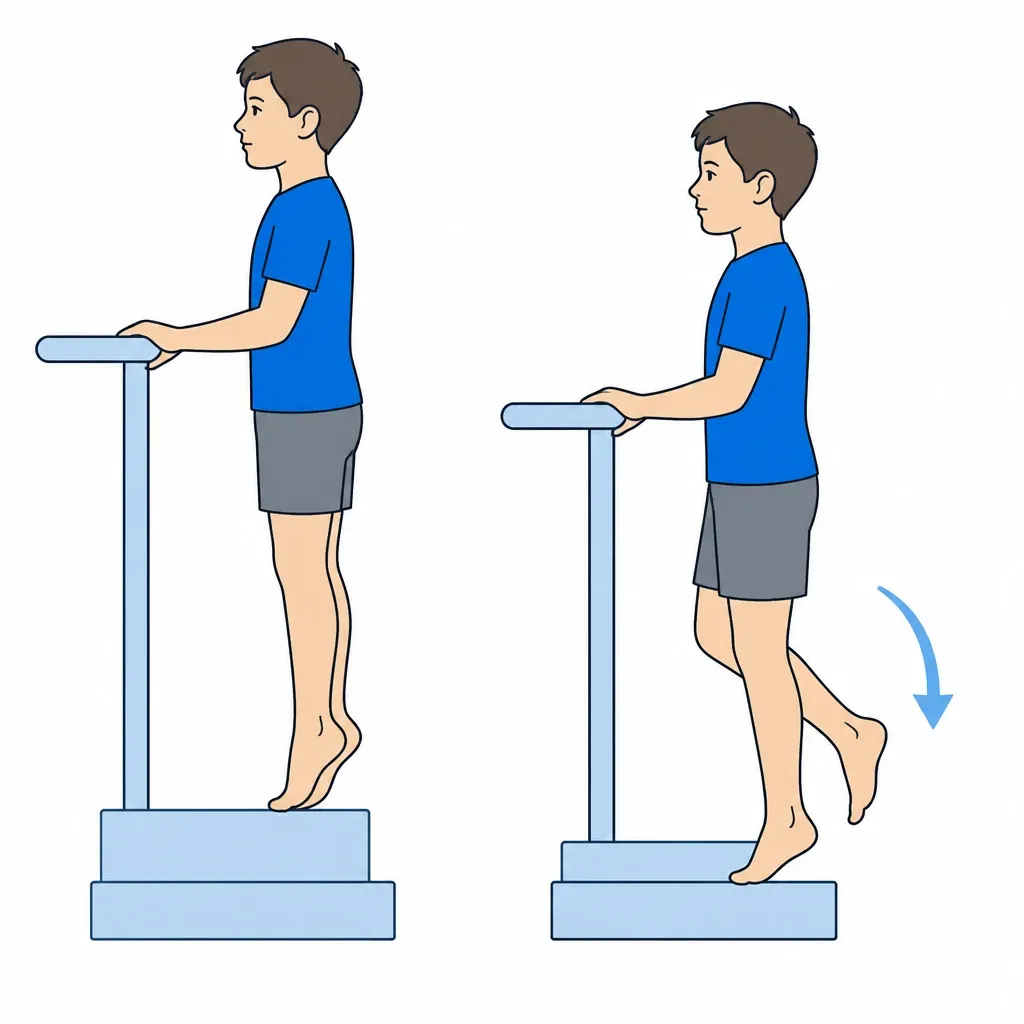
5.Eccentric calf strengthening (pain-free)
Progressive calf strengthening after irritability settles; this single exercise is not proven to prevent recurrence.
ONLY when acute pain has subsided. CALF RAISES: Standing, slowly rise onto toes, then lower. Start with both feet, then progress to single leg. If it causes pain, stop and retry after a few days. Strengthening aims to recover load tolerance when indicated; this exercise does not guarantee prevention of recurrence.
Start with 3 × 10 bilateral, progress to 3 × 15 single leg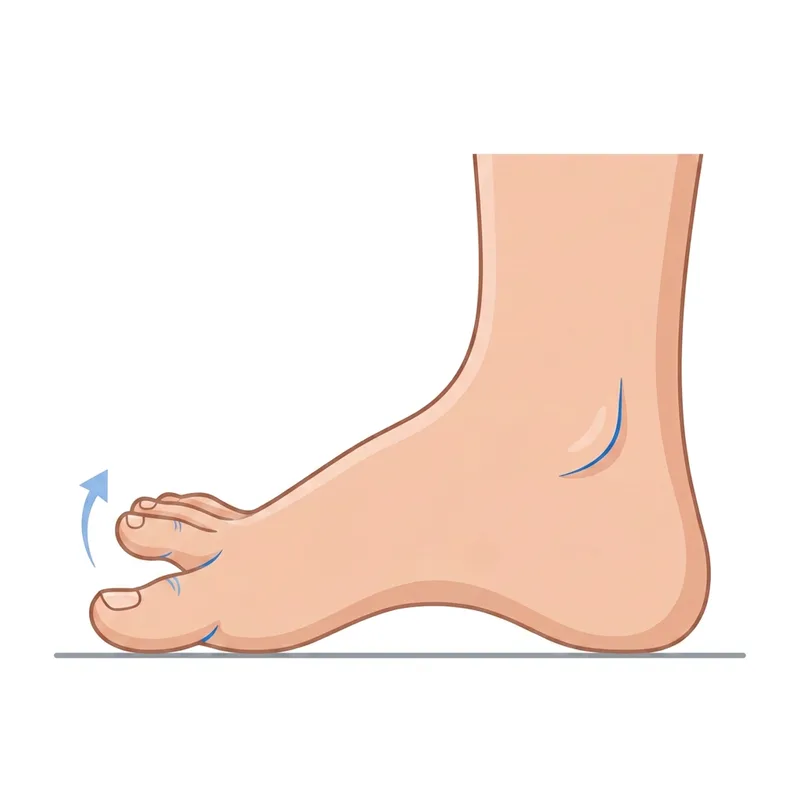
6.Toe yoga and foot control
Improves neuromuscular control of the foot
Start seated, with the foot resting without pressing through the heel. Alternate lifting the big toe while keeping the other toes down and lifting the other four toes. For short-foot, gently lift the arch without curling the toes. Standing involves weight bearing through the heel: use that version only at the indicated stage and if tolerated, not as an unloaded exercise. Stop for pain.
10-15 reps per movement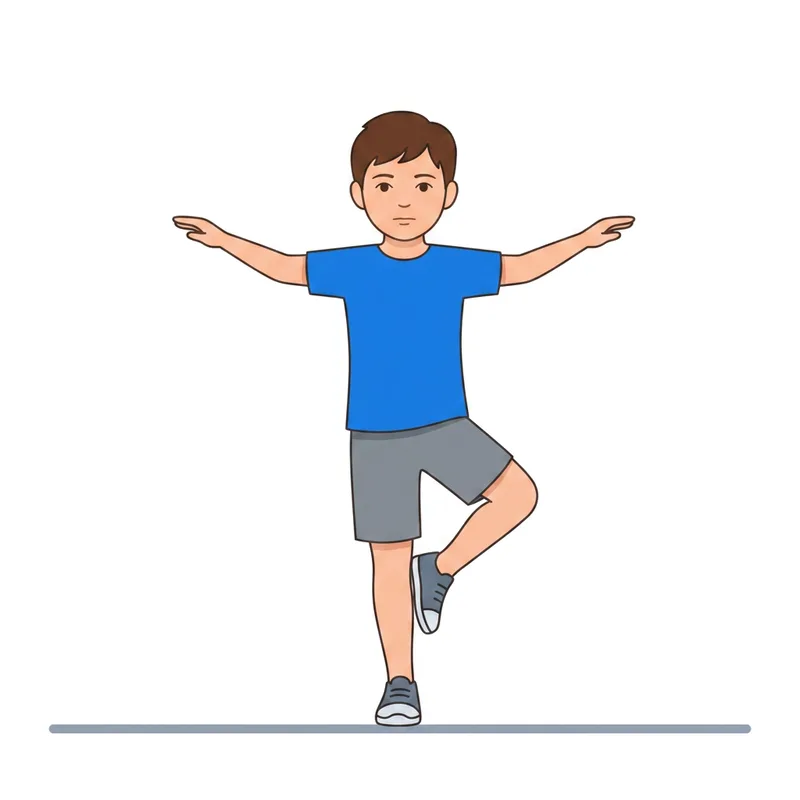
7.Single-leg balance
Improves proprioception and foot stability
After clearance for weight bearing, start on firm ground with eyes open, next to a secure support and with adult supervision. Place the other foot down before losing balance. Progress to an unstable surface or eyes-closed work only under direct professional supervision; do not add these challenges independently. Stop for pain or instability.
3 × 30 seconds per leg, progressing when stable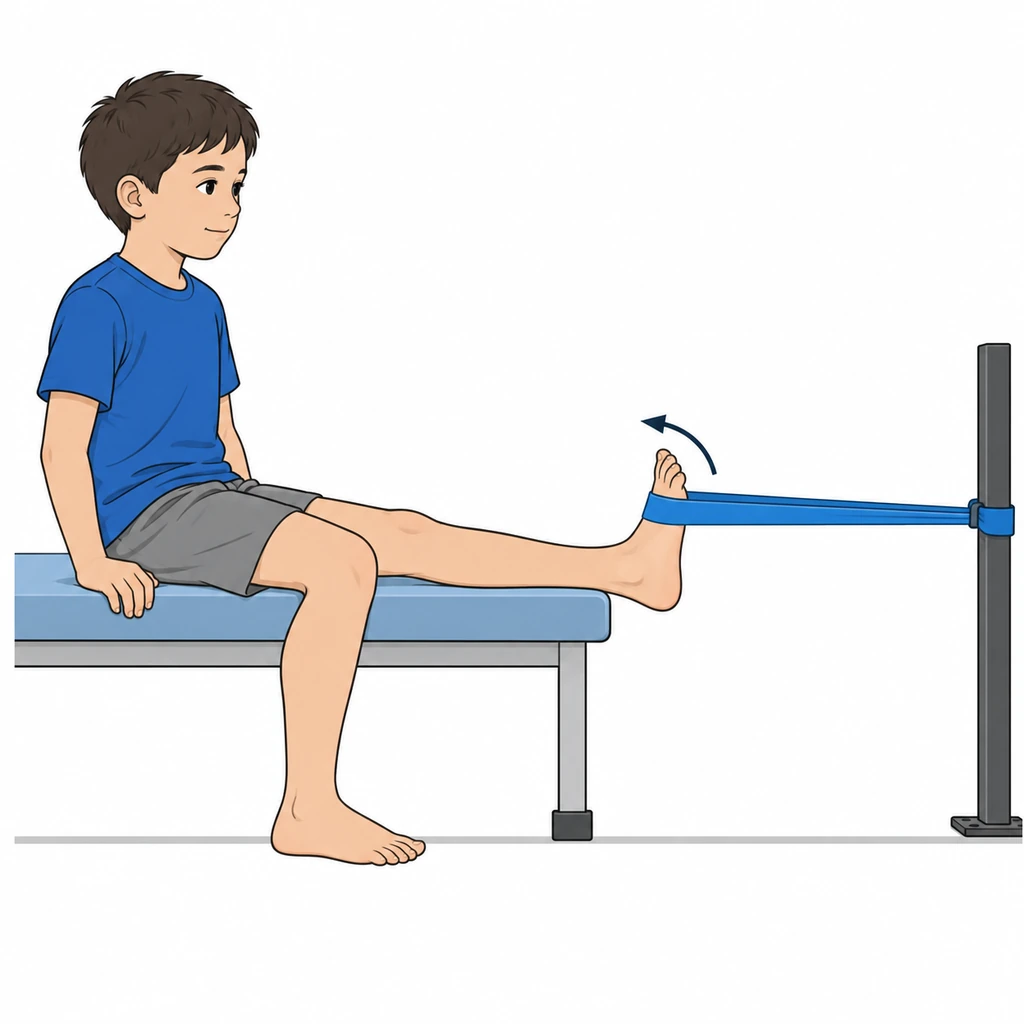
8.Tibialis anterior strengthening (seated with band)
Dorsiflexion strengthening when useful; it does not automatically “balance” Achilles tendon traction.
Seated, use a light band with the anchor demonstrated by the physiotherapist to resist dorsiflexion. Bring the forefoot towards the shin and return slowly without painful pressure on the foot. Sitting reduces body-weight loading but does not eliminate all mechanical stress: stop if heel pain occurs.
3 × 15 reps per foot, 1-2 times daily
RED FLAGS - When to stop and contact the doctor immediately
Stop the exercises immediately and contact the specialist (or go to the emergency department if severe) if any of the following occur:
- Acute or sudden pain during exercise
- Significant swelling after exercises
- Pain that progressively worsens over days
- Fever or general malaise
- Difficulty walking or using the limb after exercises
- Any neurological symptoms (tingling, numbness, sudden weakness)
- A red or hot joint, or inability to bear weight: seek prompt assessment; use emergency care if severe.
- Pain at rest (not only during/after activity)
- Persistent limping
- Visible heel swelling
- Pain not improving after 2 weeks of reduced activity
In case of doubt, always prefer a check-up over continuing the exercises.
Dott. Daniele Priano
Paediatric Orthopaedics - ASST Gaetano Pini-CTO
Content version: 21 September 2026
ortopediaevolutiva.com • Printed: 18/10/2026
 Full sheet and videos
https://ortopediaevolutiva.com/en/parents-kids/exercises/foot-ankle/sever-disease
Prepare the visit handout
Use the condition and phase indicated by your clinician. You can leave out individual exercises; instructions, illustrations and safety advice remain together.
Exclude exercises if needed
8 of 8 exercise cards included
The full web page remains available. Your selection is not saved or shared.
Before You Start
Who is this guide for?
Athletic children (8-14 years) with heel pain from apophysitis (Sever's disease). Essential to reduce activity during acute pain.
What you need
A stable, clear surface, comfortable clothing and a secure support. Check resistance-band anchors. Adult supervision; avoid marbles and small objects if the child may put them in their mouth, using a towel instead.
Suggested frequency
Perform only the exercises selected during the visit. The listed dosages are examples to adapt: follow the dose, frequency, rest and progression prescribed for age, symptoms and phase. Do not automatically perform the whole list.
Common mistakes to avoid
- •Forcing a painful or unauthorised movement
- •Increasing load, resistance or frequency without the agreed rest periods
- •Doing balance exercises without stable support or supervision
- •Continuing intense sports activity during pain
- •Overly aggressive stretching
- •Not using recommended heel cushions
- •Returning to sports too soon
⚠️ Red flags — when to stop and contact the doctor immediately
Stop exercises immediately and contact the specialist if any of the following occur:
- Acute or sudden pain during exercise
- Significant swelling after exercises
- Pain that progressively worsens over days
- Fever or general malaise
- Difficulty walking or using the limb after exercises
- Any neurological symptoms (tingling, numbness, sudden weakness)
- A red or hot joint, or inability to bear weight: seek prompt assessment; use emergency care if severe.
- Pain at rest (not only during/after activity)
- Persistent limping
- Visible heel swelling
- Pain not improving after 2 weeks of reduced activity
Detailed Exercises
- 1
Calf stretch, when indicated
May help when the gastrocnemius-soleus complex is tight; it is not mandatory in every case of Sever disease.
GASTROCNEMIUS: Facing wall, back leg with straight knee, heel pressed down. Push hips forward. SOLEUS: Same position but slightly bending back knee. Both positions are important! Stretching should be gentle and never painful - a tight calf "pulls" the Achilles tendon which in turn pulls the heel.
3 × 20-30 seconds, twice daily. Gentle if pain presentWall calf stretch straight knee
Illustrated video with a synthetic voice and English text in the film. Press Play to load YouTube. Follow the instructions and precautions on this exercise sheet. Open on YouTube
Wall calf stretch bent knee
Illustrated video with a synthetic voice and English text in the film. Press Play to load YouTube. Follow the instructions and precautions on this exercise sheet. Open on YouTube
- 2
Static calf stretch on a step
A held stretch, distinct from strengthening with controlled lowering.
Not during the acutely painful phase. Only if selected and tolerated, place both forefeet on a stable step while holding the railing. Slowly lower the heels within a comfortable range and hold a mild calf stretch without bouncing. Do not seek maximum lowering or persist through heel pain: stop and agree a less intense alternative. This hold is a static stretch, not an eccentric strengthening set.
3 × 20-30 seconds, 1-2 times daily (not in acute phase)Static calf stretch on a step
Illustrated video with a synthetic voice and English text in the film. Press Play to load YouTube. Follow the instructions and precautions on this exercise sheet. Open on YouTube
- 3
Ankle mobility (alphabet, circles)
Maintains joint mobility and improves circulation
Seated, with foot raised off floor. ALPHABET: "Write" alphabet letters in the air using toe tip. CIRCLES: Make complete circles with ankle in both directions. These exercises gently move the ankle without loading the heel.
2-3 minutes of mobility, 2-3 times dailyAnkle circles
Illustrated video with a synthetic voice and English text in the film. Press Play to load YouTube. Follow the instructions and precautions on this exercise sheet. Open on YouTube
- 4
Ball massage (foot sole)
Gentle self-massage for soft-tissue comfort; it is not a proven treatment of the apophysis.
Seated, roll tennis ball under entire sole, from arch to heel. Apply moderate pressure. AVOID pressing directly on painful heel spot. A protected cool bottle may provide temporary comfort. Wrap the cold object in a cloth, check the skin frequently and stop for discomfort, numbness or colour change. Avoid cold on skin with impaired sensation or circulation; it is for comfort, not a guaranteed anti-inflammatory treatment.
3-5 minutes per foot, 1-2 times dailyGentle ball roll under the foot
Illustrated video with a synthetic voice and English text in the film. Press Play to load YouTube. Follow the instructions and precautions on this exercise sheet. Open on YouTube
- 5
Eccentric calf strengthening (pain-free)
Progressive calf strengthening after irritability settles; this single exercise is not proven to prevent recurrence.
ONLY when acute pain has subsided. CALF RAISES: Standing, slowly rise onto toes, then lower. Start with both feet, then progress to single leg. If it causes pain, stop and retry after a few days. Strengthening aims to recover load tolerance when indicated; this exercise does not guarantee prevention of recurrence.
Start with 3 × 10 bilateral, progress to 3 × 15 single legDouble leg heel raises
Illustrated video with a synthetic voice and English text in the film. Press Play to load YouTube. Follow the instructions and precautions on this exercise sheet. Open on YouTube
- 6
Toe yoga and foot control
Improves neuromuscular control of the foot
Start seated, with the foot resting without pressing through the heel. Alternate lifting the big toe while keeping the other toes down and lifting the other four toes. For short-foot, gently lift the arch without curling the toes. Standing involves weight bearing through the heel: use that version only at the indicated stage and if tolerated, not as an unloaded exercise. Stop for pain.
10-15 reps per movementToe yoga
Illustrated video with a synthetic voice and English text in the film. Press Play to load YouTube. Follow the instructions and precautions on this exercise sheet. Open on YouTube
Short foot exercise
Illustrated video with a synthetic voice and English text in the film. Press Play to load YouTube. Follow the instructions and precautions on this exercise sheet. Open on YouTube
- 7
Single-leg balance
Improves proprioception and foot stability
After clearance for weight bearing, start on firm ground with eyes open, next to a secure support and with adult supervision. Place the other foot down before losing balance. Progress to an unstable surface or eyes-closed work only under direct professional supervision; do not add these challenges independently. Stop for pain or instability.
3 × 30 seconds per leg, progressing when stableSingle leg balance
Illustrated video with a synthetic voice and English text in the film. Press Play to load YouTube. Follow the instructions and precautions on this exercise sheet. Open on YouTube
- 8
Tibialis anterior strengthening (seated with band)
Dorsiflexion strengthening when useful; it does not automatically “balance” Achilles tendon traction.
Seated, use a light band with the anchor demonstrated by the physiotherapist to resist dorsiflexion. Bring the forefoot towards the shin and return slowly without painful pressure on the foot. Sitting reduces body-weight loading but does not eliminate all mechanical stress: stop if heel pain occurs.
3 × 15 reps per foot, 1-2 times dailyAnkle dorsiflexion with a resistance band
Illustrated video with a synthetic voice and English text in the film. Press Play to load YouTube. Follow the instructions and precautions on this exercise sheet. Open on YouTube
Frequently Asked Questions
How long does Sever's disease last?
Symptoms can last weeks or months and recur during growth. Sever disease does not persist after maturation of the calcaneal apophysis, but recovery has no universal date. Persistent pain, rest pain or limping requires reassessment rather than automatic attribution to Sever disease.
Can my child continue playing soccer with Sever's disease?
Adapt activity to pain and function. Significant pain or limping calls for reducing or stopping the provoking load and agreeing a return plan. Gentle stretching, when indicated for tightness, and heel cushions may help some children; they are not mandatory for everyone.
Are heel cushions needed for Sever's disease?
Heel cushions may improve comfort in some children. Choice, fit and use depend on symptoms and footwear; they are not automatically needed in every shoe. Stop using them and have them checked if they increase pain or pressure.