Clubfoot
Clubfoot is treated with serial casting using the Ponseti method, percutaneous Achilles tenotomy in most cases and a maintenance brace.
Quick Answers
Can clubfoot be seen before birth?
How long does Ponseti method treatment last?
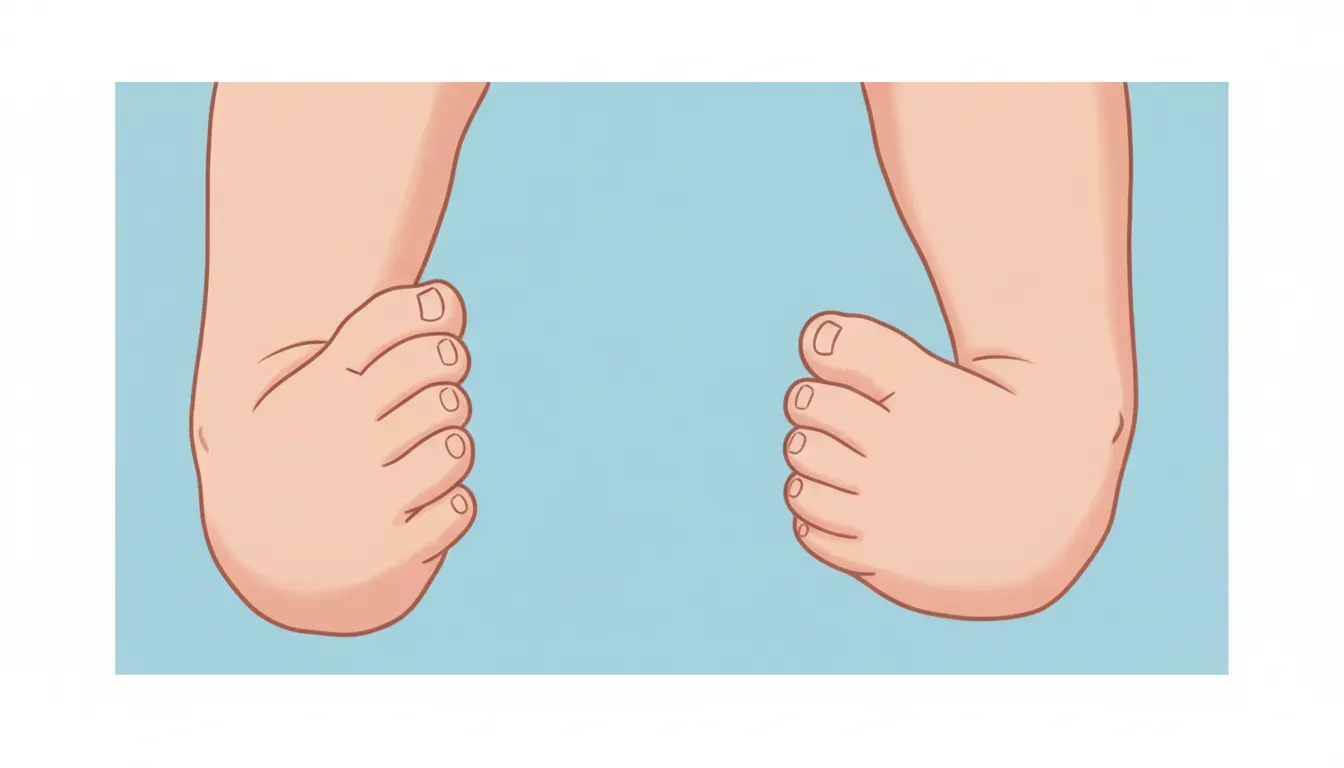
Congenital clubfoot (CTEV — congenital talipes equinovarus) is a deformity involving the bones, joints and soft tissues of the foot. The foot is turned inward and downward, with four combined components: cavus, forefoot adduction, hindfoot varus and equinus.
The Ponseti method is the therapeutic gold standard. It uses gentle manipulations followed by serial casts, usually changed weekly, and corrects most clubfeet without extensive surgery. Percutaneous Achilles tenotomy is a surgical procedure within the Ponseti pathway and is required in most cases to correct residual equinus.
After correction, maintenance with a Denis Browne foot-abduction brace is essential: it is generally worn for 23 hours a day during the first 3 months, then during sleep until 4–5 years of age, according to the treating team's instructions. Following the bracing programme reduces relapse risk, although recurrence can still occur with correct use. Discuss fitting or tolerance problems with the treating team.

✨The Ponseti Method Works
Congenital clubfoot, when treated early with the Ponseti method, has excellent results. Serial casting and night bracing allow achieving a functional foot without major surgery in most cases. Early treatment initiation, in the first weeks of life, is crucial.
Assessment and treatment
When to seek evaluation
- Prenatal diagnosis of clubfoot
- Clubfoot evident at birth
- Foot deformity in newborn
- Foot rigidity in equino-varus-adductus-supinatus
- Follow-up after initial treatment
What is evaluated
- Deformity classification (Pirani score)
- Component reducibility evaluation
- Exclusion of syndromic forms
- Monitoring during treatment
- Long-term result evaluation
Treatment options
- Ponseti method: serial manipulations and casts
- Percutaneous Achilles tendon tenotomy
- Denis Browne brace for maintenance
- Tibialis anterior transfer in recurrences
When Surgery Is Needed
Frequently Asked Questions
Can clubfoot be seen before birth?▼
How long does Ponseti method treatment last?▼
What happens if my child doesn't wear the brace?▼
Will my child operated on for clubfoot be able to play sports?▼
Important Notice: The information on this page is for educational and informational purposes only and does not constitute medical advice. Each clinical case is unique: the appropriate treatment is determined during the specialist consultation, based on a thorough clinical examination and, where necessary, diagnostic imaging. For any doubts or concerns, please consult a specialist.