Juvenile Hallux Valgus: Evaluation and Treatment
Juvenile hallux valgus needs monitoring over time: the choice between observation and surgery depends on severity, symptoms and skeletal maturity.
Quick Answers
Can hallux valgus occur in children?
Does juvenile hallux valgus worsen with growth?
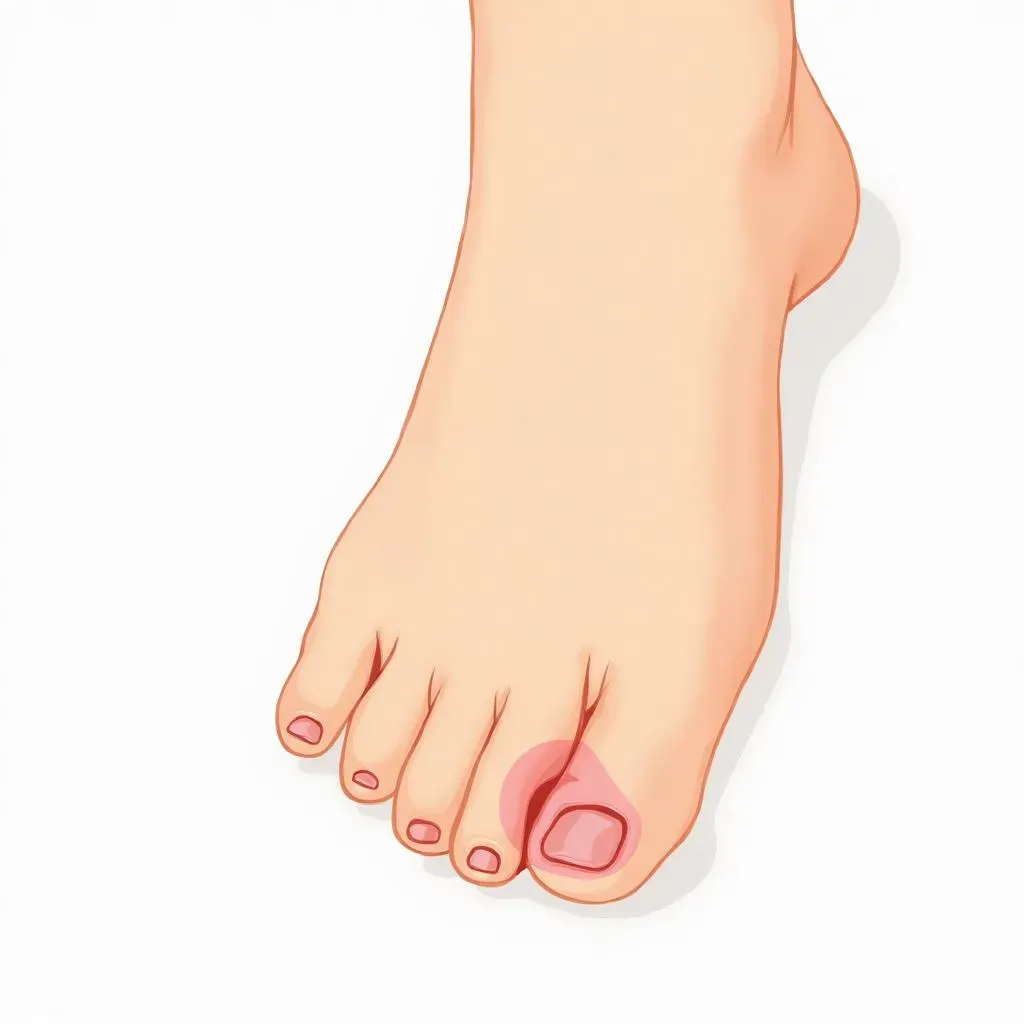
Juvenile hallux valgus (the "bunion") occurs when the big toe deviates toward the other toes while the first metatarsal shifts in the opposite direction, creating the characteristic medial prominence. Several factors contribute, including family history, ligamentous laxity and foot anatomy; flatfoot may coexist. Adult hallux valgus is not simply a degenerative disease.
It usually appears in late childhood or adolescence, more often in girls, and may be bilateral. The initial complaint is rarely pain: families more often notice the cosmetic deformity and difficulty wearing certain shoes. True pain tends to appear later, after long hours on the feet or during sport.
The approach in adolescents is radically different from the adult one: during growth the deformity can still be influenced by the biomechanical context, and surgery is deferred until sufficient skeletal maturity (assessed individually, rather than inferred from a birthday) to reduce the risk of recurrence. In the meantime comfortable footwear is selected; insoles or exercises may be offered for associated symptoms when indicated, but do not permanently straighten the great toe. Surgery is reserved for symptomatic cases that do not respond to conservative management.
Assessment and treatment
When to seek evaluation
- Visible deviation of the big toe toward the other toes
- Painful medial prominence (bunion)
- Difficulty wearing shoes
- Pain during walking or sports activity
- Family history of hallux valgus
- Association with flatfoot
What is evaluated
- Clinical evaluation of deformity and reducibility
- Plantar arch and hindfoot examination
- Ligamentous laxity assessment
- Weight-bearing X-rays with angle measurements
- Gait pattern analysis
- Exclusion of underlying neuromuscular conditions
Treatment options
- Observation for minimally symptomatic deformity, considering progression and real impact on footwear, walking and sport
- Footwear with adequate forefoot room when the prominence is irritated
- Orthoses or physiotherapy may help symptoms or associated conditions but do not by themselves straighten the bony deformity
- Surgery is discussed for significant persistent pain or functional limitation; chronological age and appearance alone are insufficient
When Surgery Is Needed
Frequently Asked Questions
Can hallux valgus occur in children?▼
Does juvenile hallux valgus worsen with growth?▼
When is surgical treatment indicated?▼
Do orthotics correct hallux valgus?▼
Is there a link between juvenile hallux valgus and footwear?▼
Does operating earlier give a more stable result?▼
Important Notice: The information on this page is for educational and informational purposes only and does not constitute medical advice. Each clinical case is unique: the appropriate treatment is determined during the specialist consultation, based on a thorough clinical examination and, where necessary, diagnostic imaging. For any doubts or concerns, please consult a specialist.