Paediatric Orthopaedic Specialist
Juvenile hallux valgus
Home Exercise Program
Not every exercise listed here is suitable for every child: the selection is individual and is defined during the consultation.
For whom: Exercises for foot mobility and control if tolerated. They do not promise correction of bony deformity; avoid pulling the big toe towards the second toe.
Dose and frequency: Perform only the exercises selected during the visit. The listed dosages are examples to adapt: follow the dose, frequency, rest and progression prescribed for age, symptoms and phase. Do not automatically perform the whole list.
Equipment and supervision: A stable, clear surface, comfortable clothing and a secure support. Check resistance-band anchors. Adult supervision; avoid marbles and small objects if the child may put them in their mouth, using a towel instead.
Avoid: Forcing a painful or unauthorised movement; Increasing load, resistance or frequency without the agreed rest periods; Doing balance exercises without stable support or supervision.
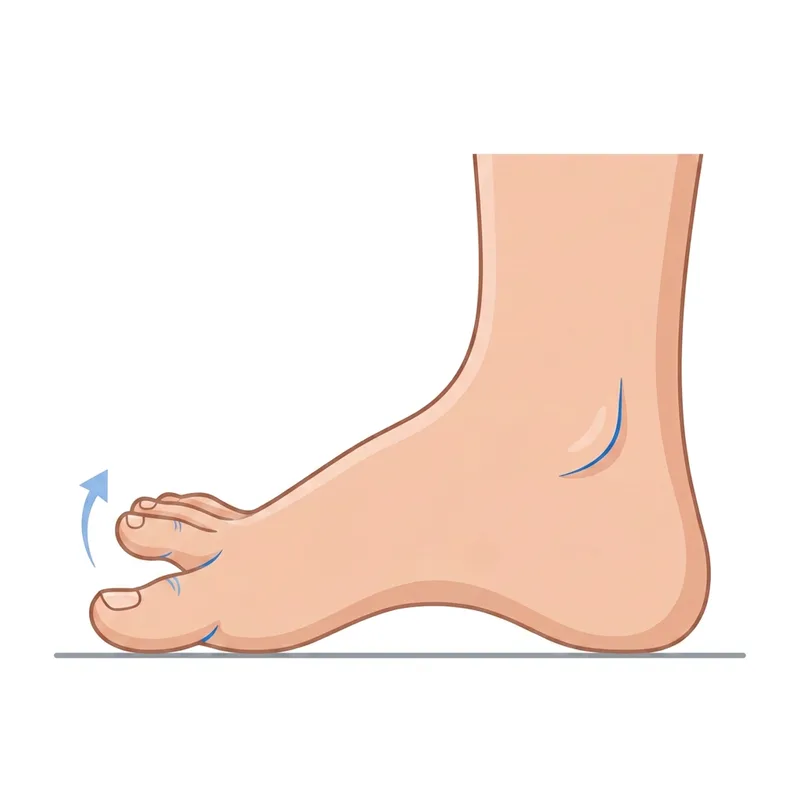
1.Toe yoga (big toe control)
Trains great-toe control; it does not promise to stop deformity progression.
Seated or standing, foot flat on floor. FIRST MOVEMENT: lift ONLY big toe keeping other 4 toes pressed down. SECOND MOVEMENT: lower big toe and lift other 4 toes. Alternate with control. Focus on moving big toe INDEPENDENTLY from other toes.
15 reps per movement, 2-3 times daily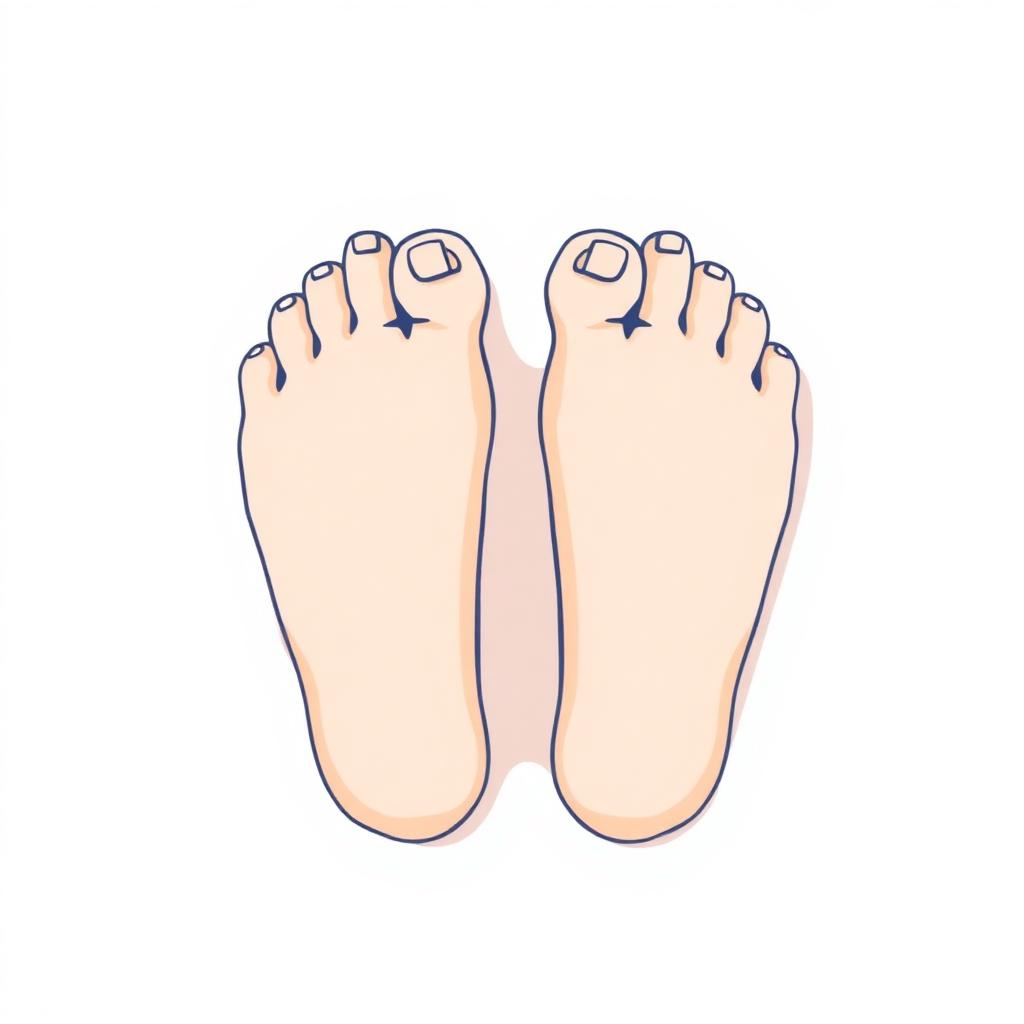
2.Active toe spreading (toe spreads)
Trains active toe abduction; it does not by itself correct bony alignment.
Foot flat on floor. Try to SPREAD all toes as wide as possible, like a fan opening. Then relax. In particular, focus on moving big toe inward (away from other toes). Initially may be very difficult — brain needs to "re-learn" this movement. With consistent practice it improves significantly.
10-15 reps, 2-3 times daily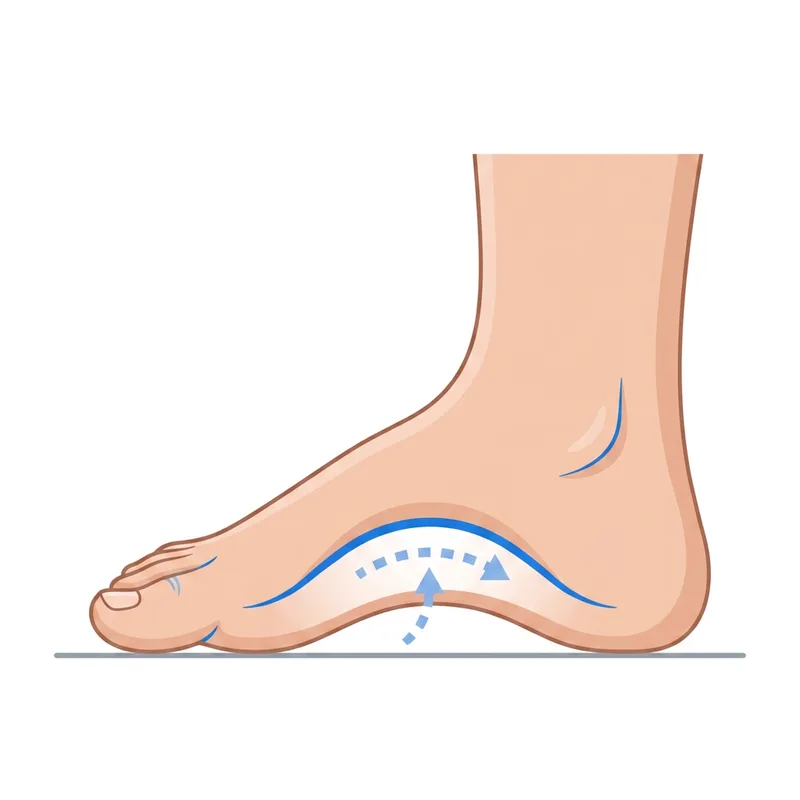
3.Short-foot (active arch)
Intrinsic muscle exercise; short-foot has not been shown to structurally correct juvenile hallux valgus.
"Shorten" foot creating dome with plantar arch without curling toes. Toes stay flat! The arch lifts. This exercise engages deep foot muscles, including abductor hallucis; it trains muscle control without promising correction of bony deviation.
10 reps × 5-10 second holds, twice daily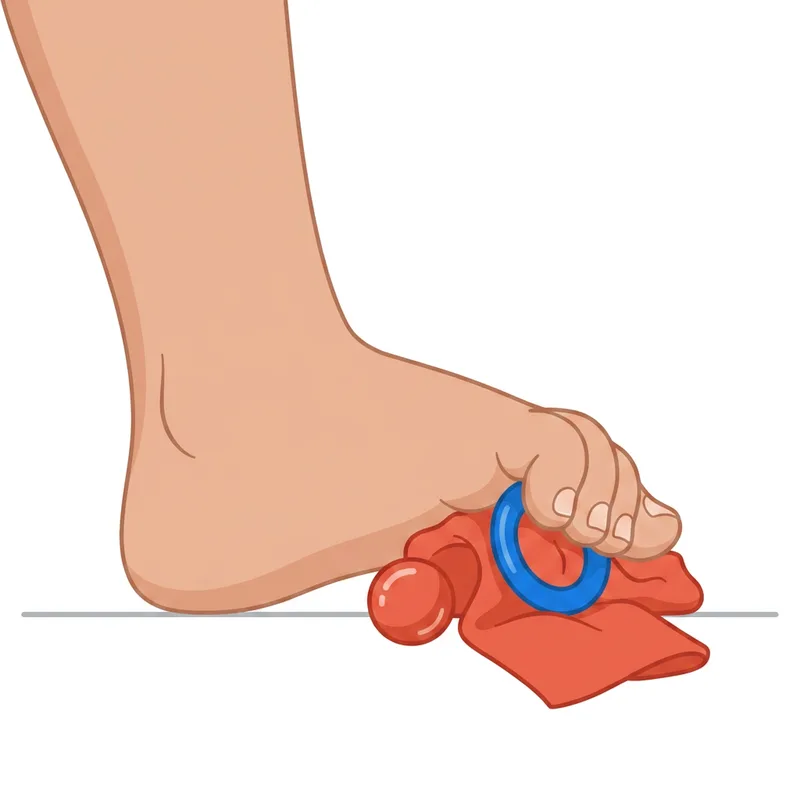
4.Object pick-up with big toe
Functional big toe grip strengthening
Scatter fabric pieces or socks on the floor. Pick them up using big toe and second toe as "pincers". This strengthens big toe grip and control of the foot muscles. Variation: roll up towel using only big toe and second toe. Use fabric pieces or socks large enough not to be swallowed, with adult supervision. Avoid marbles, coins, buttons and other small objects, including within reach of younger siblings.
10-15 objects per foot, once daily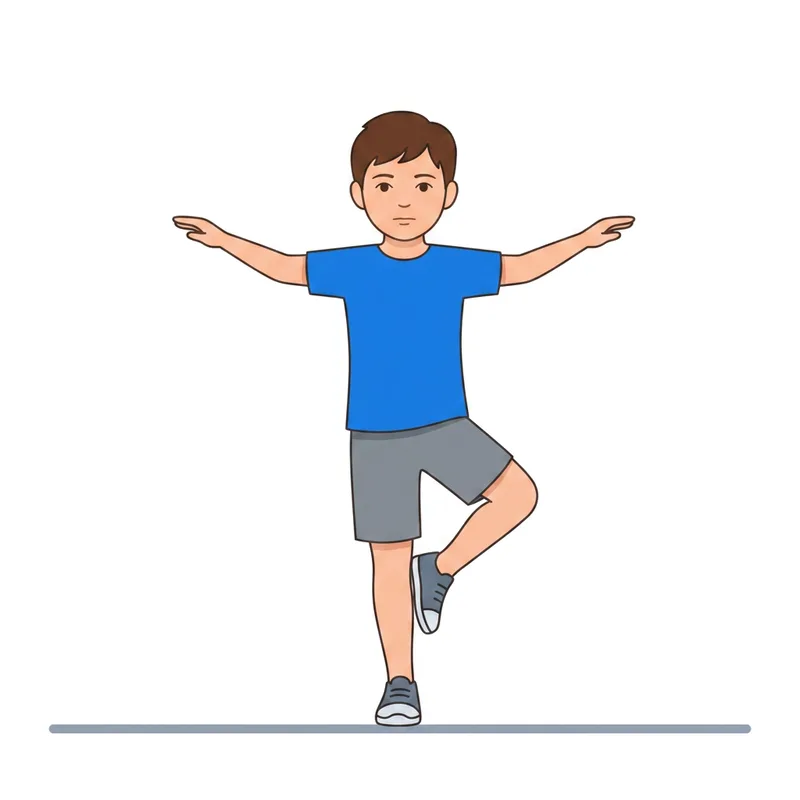
5.Single-leg balance with big toe focus
Activates big toe stabilization during loading
After clearance for weight bearing, start on firm ground with eyes open, next to a secure support and with adult supervision. Place the other foot down before losing balance. Progress to an unstable surface or eyes-closed work only under direct professional supervision; do not add these challenges independently. Stop for pain or instability.
3 × 30 seconds per foot, 1-2 times daily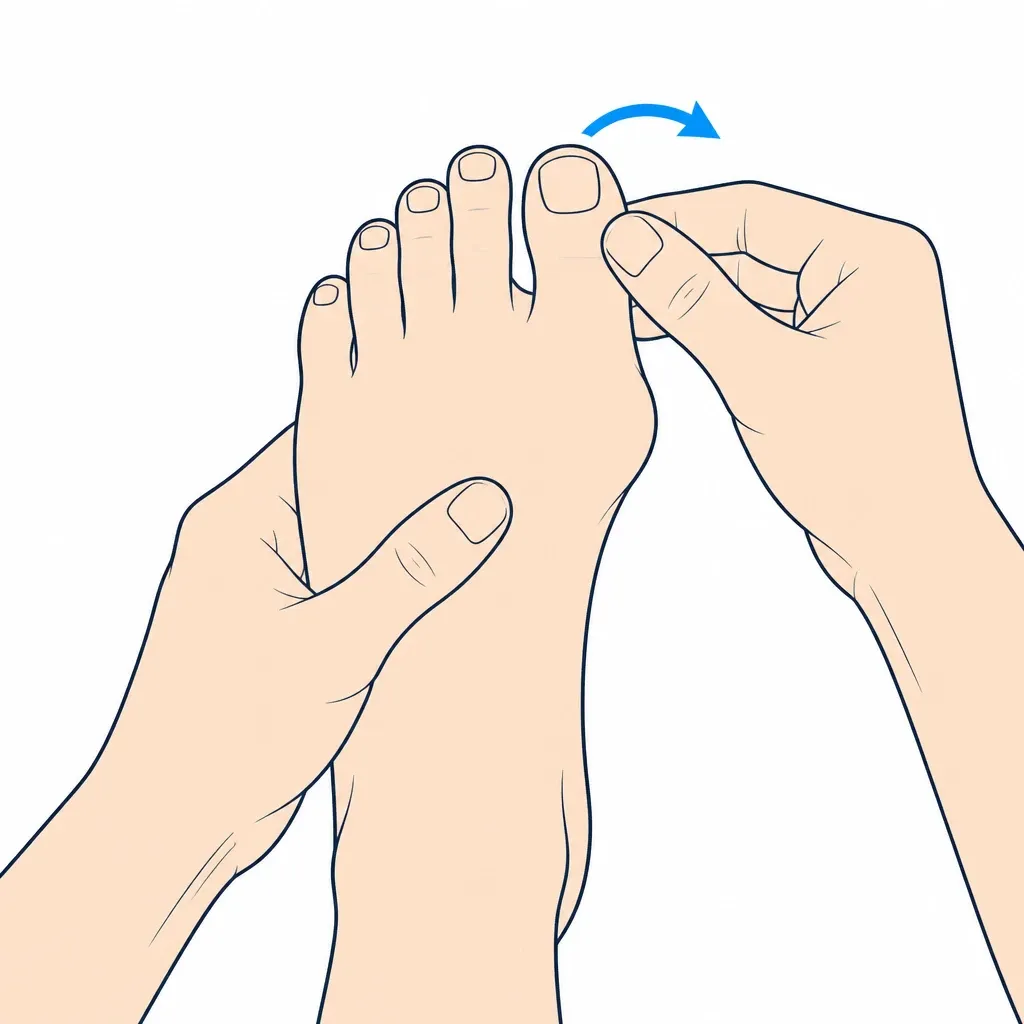
6.Manual big toe mobilization
Maintains joint mobility and counteracts lateral soft-tissue tightness
Only if mobilisation has been prescribed. Stabilise the forefoot without pressing the painful prominence and gently guide the great toe away from the second toe, towards the medial side of the foot. Do not push towards the second toe or force a stiff or painful joint. The physiotherapist should demonstrate the range and hand placement.
10 reps × 20 seconds, 1-2 times daily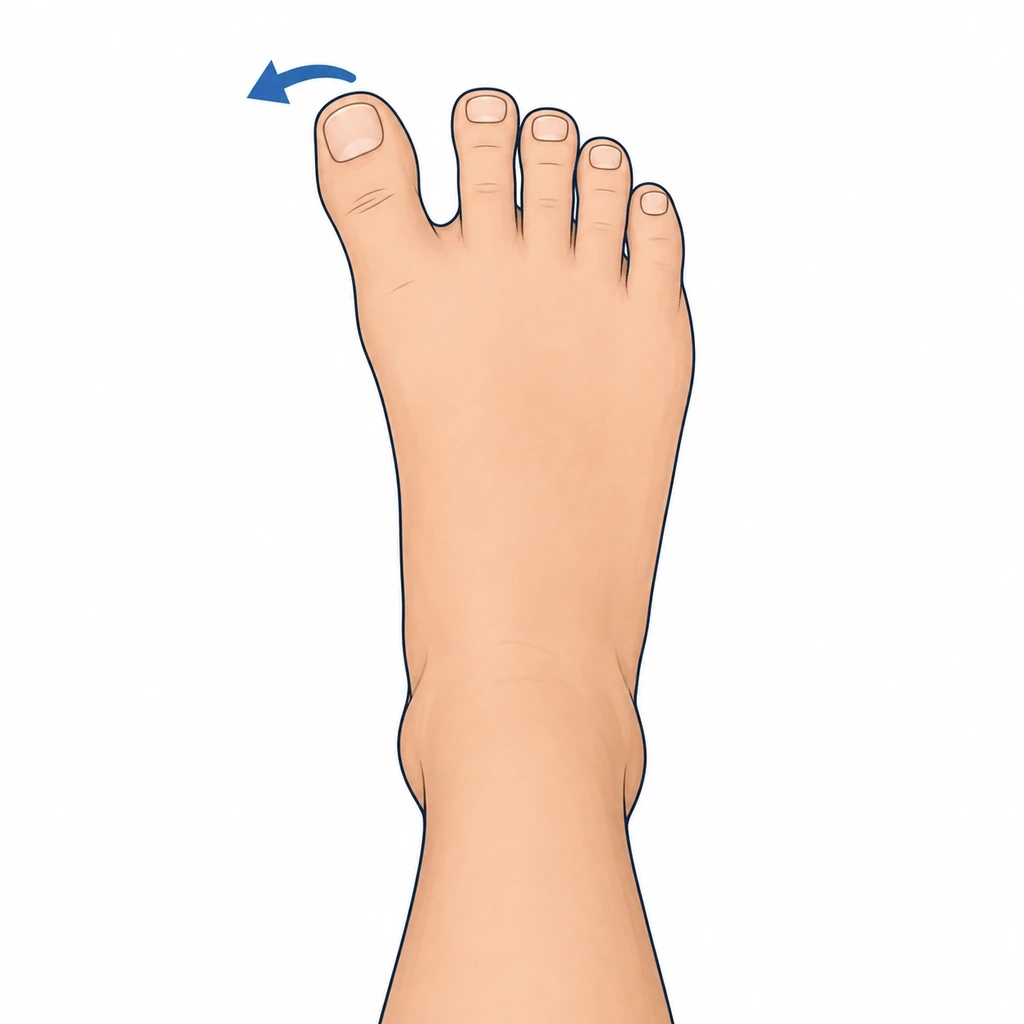
7.Active great-toe abduction without a band
Movement control, without a promise to correct the bone deformity.
Sit with the foot still and supported. Move the great toe away from the second toe, towards the medial side of that foot, without turning the whole foot or curling the toes. The movement may be small. Do not loop a band between the two great toes and pull them in opposite directions: this can encourage the opposite movement. Add resistance only after demonstration by the physiotherapist.
3 × 10-15 reps, once daily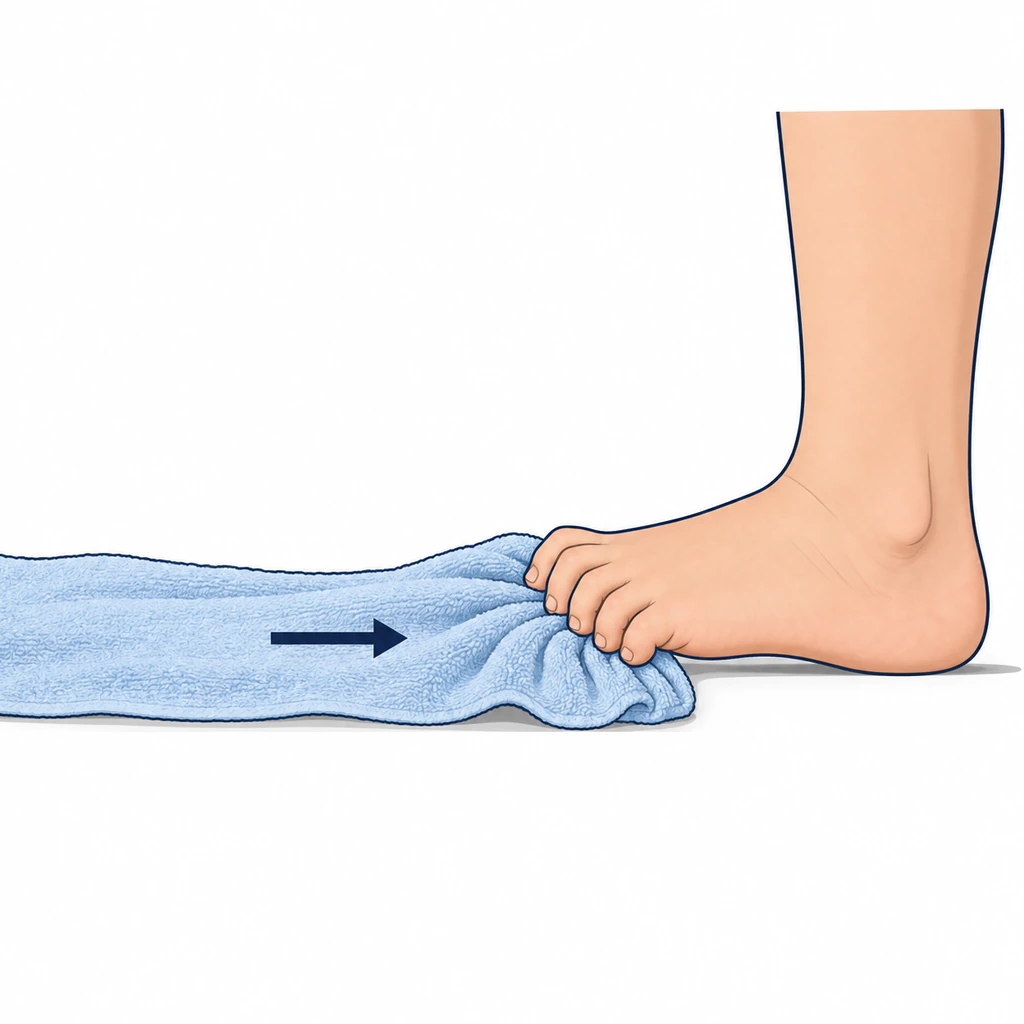
8.Towel curls (toe flexors)
Strengthens the plantar musculature supporting the forefoot
Seated, foot on a towel spread on the floor. Using only the toes, curl the towel toward you, then push it back by extending the toes. Keep the heel still on the floor. To progress, place a small weight (book) on the far end of the towel.
3 sets per foot, once daily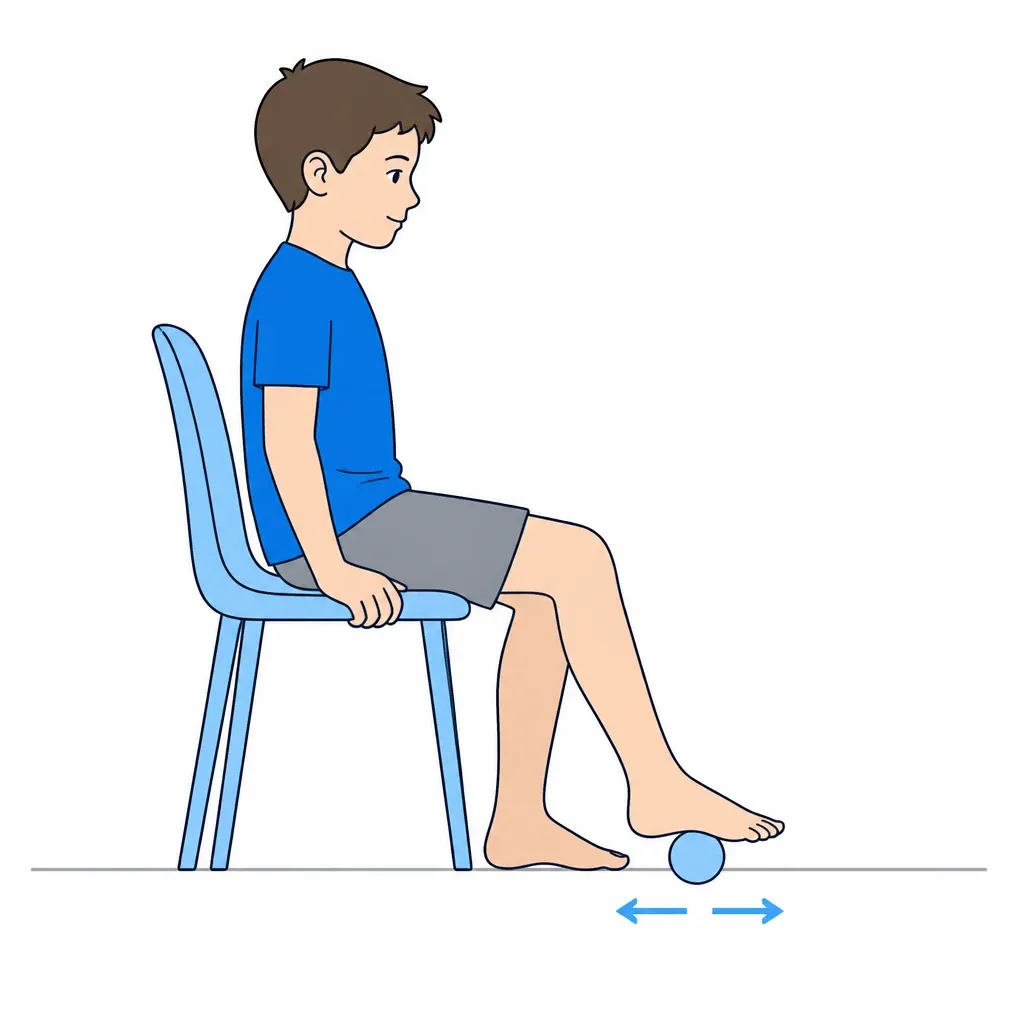
9.Plantar release with a ball
Reduces plantar fascia tension, often increased in hallux valgus
Seated, slowly roll a tennis ball (or small firm ball) under the sole, from heel to forefoot, for 2-3 minutes. Pause a few seconds on the tightest spots with tolerable pressure. Avoid pressing directly on the painful bump if tender.
2-3 minutes per foot, once daily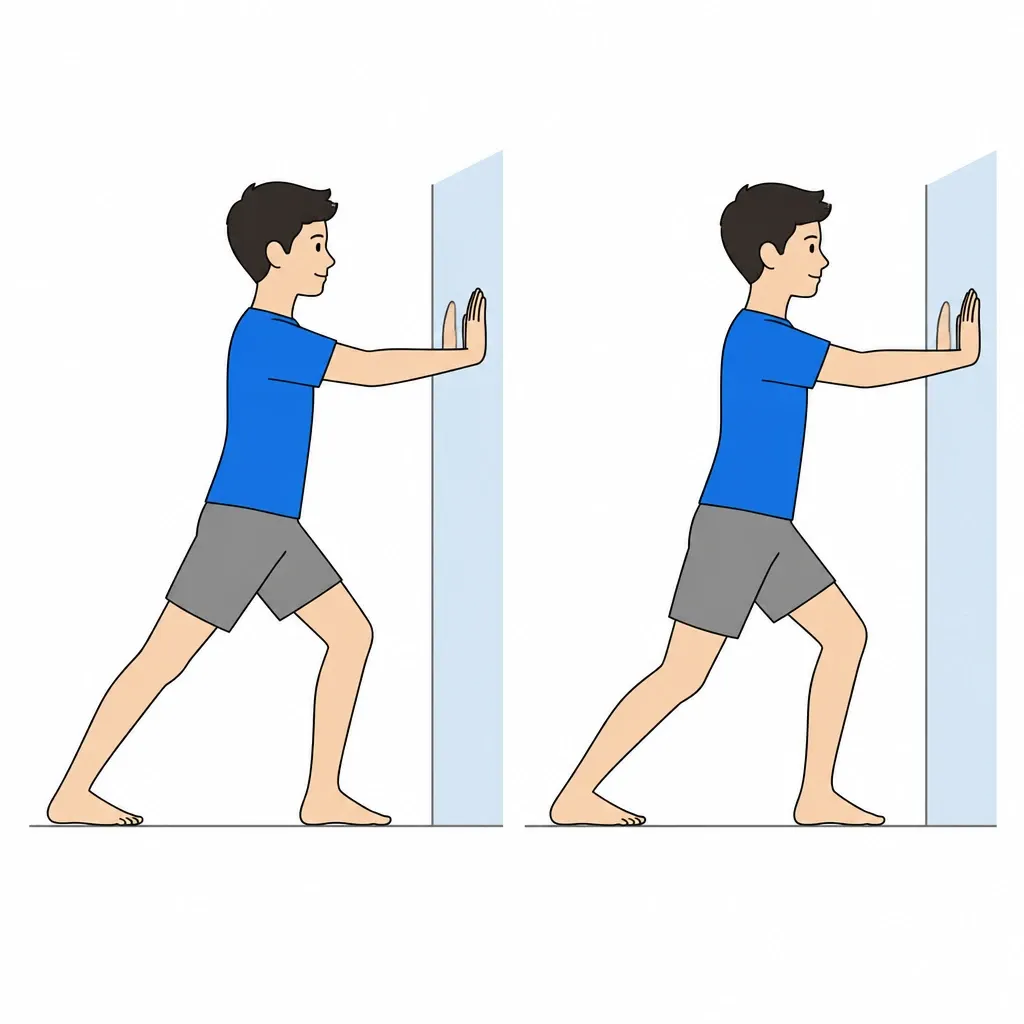
10.Calf stretch
A tight calf increases load and valgus thrust on the big toe
Facing a wall, leg to stretch behind with the heel firmly down and the toes pointing straight ahead. First version with a straight knee (gastrocnemius), second with a bent knee (soleus). Push the hips forward feeling the calf lengthen. Do not turn the foot outward to increase the stretch.
3 × 30 seconds per position, 1-2 times daily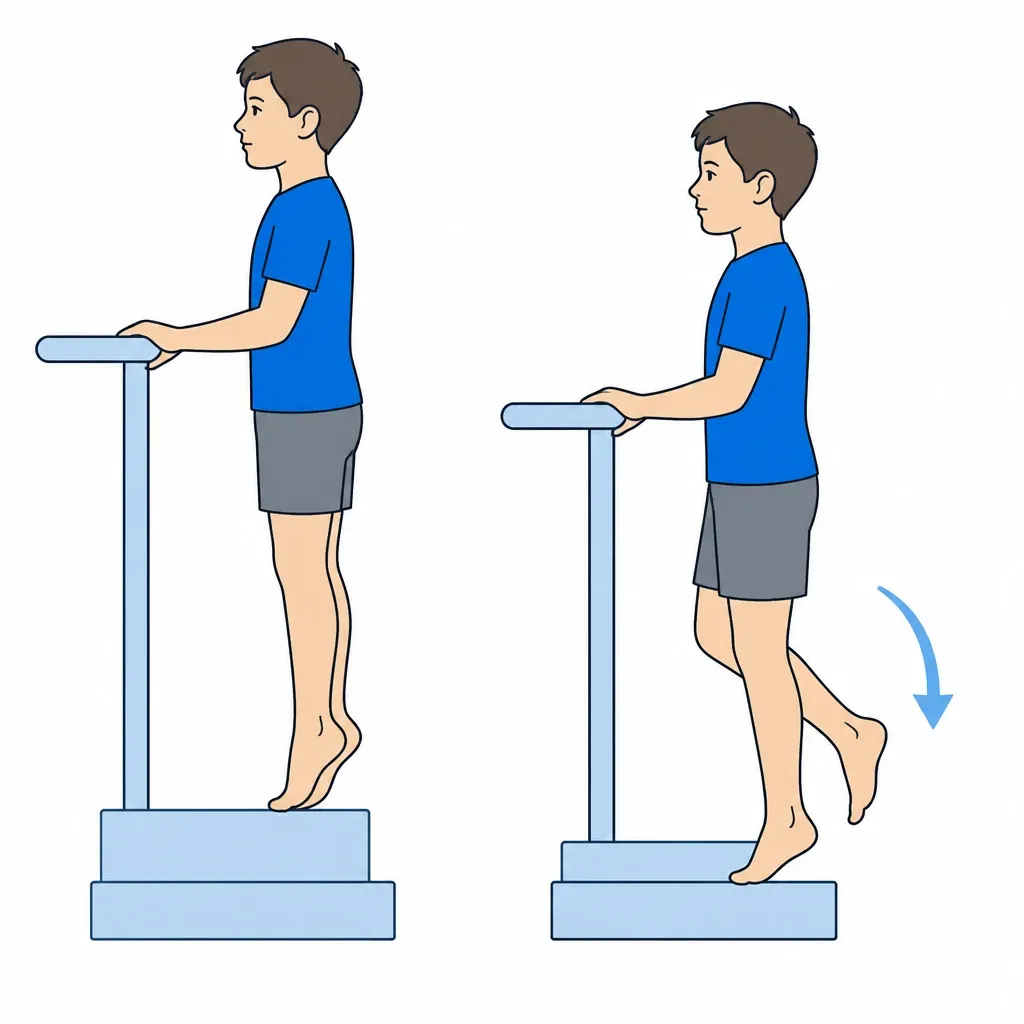
11.Calf raises with big toe control
Trains correct push-off through the big toe during gait
Standing, hands on the wall. Rise slowly onto the toes making sure weight passes through the BIG TOE and second toe, not the outer border of the foot. The ankles must not roll outward. Rise in 2 seconds, lower in 3-4 seconds. Check technique in a mirror or with a parent.
3 × 12 reps, once daily
RED FLAGS - When to stop and contact the doctor immediately
Stop the exercises immediately and contact the specialist (or go to the emergency department if severe) if any of the following occur:
- Acute or sudden pain during exercise
- Significant swelling after exercises
- Pain that progressively worsens over days
- Fever or general malaise
- Difficulty walking or using the limb after exercises
- Any neurological symptoms (tingling, numbness, sudden weakness)
- A red or hot joint, or inability to bear weight: seek prompt assessment; use emergency care if severe.
In case of doubt, always prefer a check-up over continuing the exercises.
Dott. Daniele Priano
Paediatric Orthopaedics - ASST Gaetano Pini-CTO
Content version: 21 September 2026
ortopediaevolutiva.com • Printed: 18/10/2026
 Full exercise sheet
https://ortopediaevolutiva.com/en/parents-kids/exercises/foot-ankle/hallux-valgus
Prepare the visit handout
Use the condition and phase indicated by your clinician. You can leave out individual exercises; instructions, illustrations and safety advice remain together.
Exclude exercises if needed
11 of 11 exercise cards included
The full web page remains available. Your selection is not saved or shared.
Before You Start
Who is this guide for?
Exercises for foot mobility and control if tolerated. They do not promise correction of bony deformity; avoid pulling the big toe towards the second toe.
What you need
A stable, clear surface, comfortable clothing and a secure support. Check resistance-band anchors. Adult supervision; avoid marbles and small objects if the child may put them in their mouth, using a towel instead.
Suggested frequency
Perform only the exercises selected during the visit. The listed dosages are examples to adapt: follow the dose, frequency, rest and progression prescribed for age, symptoms and phase. Do not automatically perform the whole list.
Common mistakes to avoid
- •Forcing a painful or unauthorised movement
- •Increasing load, resistance or frequency without the agreed rest periods
- •Doing balance exercises without stable support or supervision
⚠️ Red flags — when to stop and contact the doctor immediately
Stop exercises immediately and contact the specialist if any of the following occur:
- Acute or sudden pain during exercise
- Significant swelling after exercises
- Pain that progressively worsens over days
- Fever or general malaise
- Difficulty walking or using the limb after exercises
- Any neurological symptoms (tingling, numbness, sudden weakness)
- A red or hot joint, or inability to bear weight: seek prompt assessment; use emergency care if severe.
Detailed Exercises
- 1
Toe yoga (big toe control)
Trains great-toe control; it does not promise to stop deformity progression.
Seated or standing, foot flat on floor. FIRST MOVEMENT: lift ONLY big toe keeping other 4 toes pressed down. SECOND MOVEMENT: lower big toe and lift other 4 toes. Alternate with control. Focus on moving big toe INDEPENDENTLY from other toes.
15 reps per movement, 2-3 times daily - 2
Active toe spreading (toe spreads)
Trains active toe abduction; it does not by itself correct bony alignment.
Foot flat on floor. Try to SPREAD all toes as wide as possible, like a fan opening. Then relax. In particular, focus on moving big toe inward (away from other toes). Initially may be very difficult — brain needs to "re-learn" this movement. With consistent practice it improves significantly.
10-15 reps, 2-3 times daily - 3
Short-foot (active arch)
Intrinsic muscle exercise; short-foot has not been shown to structurally correct juvenile hallux valgus.
"Shorten" foot creating dome with plantar arch without curling toes. Toes stay flat! The arch lifts. This exercise engages deep foot muscles, including abductor hallucis; it trains muscle control without promising correction of bony deviation.
10 reps × 5-10 second holds, twice daily - 4
Object pick-up with big toe
Functional big toe grip strengthening
Scatter fabric pieces or socks on the floor. Pick them up using big toe and second toe as "pincers". This strengthens big toe grip and control of the foot muscles. Variation: roll up towel using only big toe and second toe. Use fabric pieces or socks large enough not to be swallowed, with adult supervision. Avoid marbles, coins, buttons and other small objects, including within reach of younger siblings.
10-15 objects per foot, once daily - 5
Single-leg balance with big toe focus
Activates big toe stabilization during loading
After clearance for weight bearing, start on firm ground with eyes open, next to a secure support and with adult supervision. Place the other foot down before losing balance. Progress to an unstable surface or eyes-closed work only under direct professional supervision; do not add these challenges independently. Stop for pain or instability.
3 × 30 seconds per foot, 1-2 times daily - 6
Manual big toe mobilization
Maintains joint mobility and counteracts lateral soft-tissue tightness
Only if mobilisation has been prescribed. Stabilise the forefoot without pressing the painful prominence and gently guide the great toe away from the second toe, towards the medial side of the foot. Do not push towards the second toe or force a stiff or painful joint. The physiotherapist should demonstrate the range and hand placement.
10 reps × 20 seconds, 1-2 times daily - 7
Active great-toe abduction without a band
Movement control, without a promise to correct the bone deformity.
Sit with the foot still and supported. Move the great toe away from the second toe, towards the medial side of that foot, without turning the whole foot or curling the toes. The movement may be small. Do not loop a band between the two great toes and pull them in opposite directions: this can encourage the opposite movement. Add resistance only after demonstration by the physiotherapist.
3 × 10-15 reps, once daily - 8
Towel curls (toe flexors)
Strengthens the plantar musculature supporting the forefoot
Seated, foot on a towel spread on the floor. Using only the toes, curl the towel toward you, then push it back by extending the toes. Keep the heel still on the floor. To progress, place a small weight (book) on the far end of the towel.
3 sets per foot, once daily - 9
Plantar release with a ball
Reduces plantar fascia tension, often increased in hallux valgus
Seated, slowly roll a tennis ball (or small firm ball) under the sole, from heel to forefoot, for 2-3 minutes. Pause a few seconds on the tightest spots with tolerable pressure. Avoid pressing directly on the painful bump if tender.
2-3 minutes per foot, once daily - 10
Calf stretch
A tight calf increases load and valgus thrust on the big toe
Facing a wall, leg to stretch behind with the heel firmly down and the toes pointing straight ahead. First version with a straight knee (gastrocnemius), second with a bent knee (soleus). Push the hips forward feeling the calf lengthen. Do not turn the foot outward to increase the stretch.
3 × 30 seconds per position, 1-2 times daily - 11
Calf raises with big toe control
Trains correct push-off through the big toe during gait
Standing, hands on the wall. Rise slowly onto the toes making sure weight passes through the BIG TOE and second toe, not the outer border of the foot. The ankles must not roll outward. Rise in 2 seconds, lower in 3-4 seconds. Check technique in a mirror or with a parent.
3 × 12 reps, once daily
Frequently Asked Questions
Can exercises correct hallux valgus in children?
Exercises can train foot strength and control and may help some children manage symptoms. They do not correct the bony deformity and have not been shown to slow progression of juvenile hallux valgus. The programme should address pain and function, alongside comfortable footwear and assessment when indicated.
Are toe spacers needed for hallux valgus in children?
A toe spacer or splint may be considered for comfort in selected cases, without promising lasting bony correction. It must not cause pain, pressure or skin injury. Shoes with enough toe room can reduce shoe pressure; none of these aids replaces assessment of persistent pain or progressive deformity.