Hindfoot Valgus in Children: Does the Tilted Heel Self-Correct?
Heel tilted outward, often together with flatfoot: relevant if rigid, painful or asymmetric.
Quick Answers
Is hindfoot valgus the same as flatfoot?
When should hindfoot valgus be a concern?
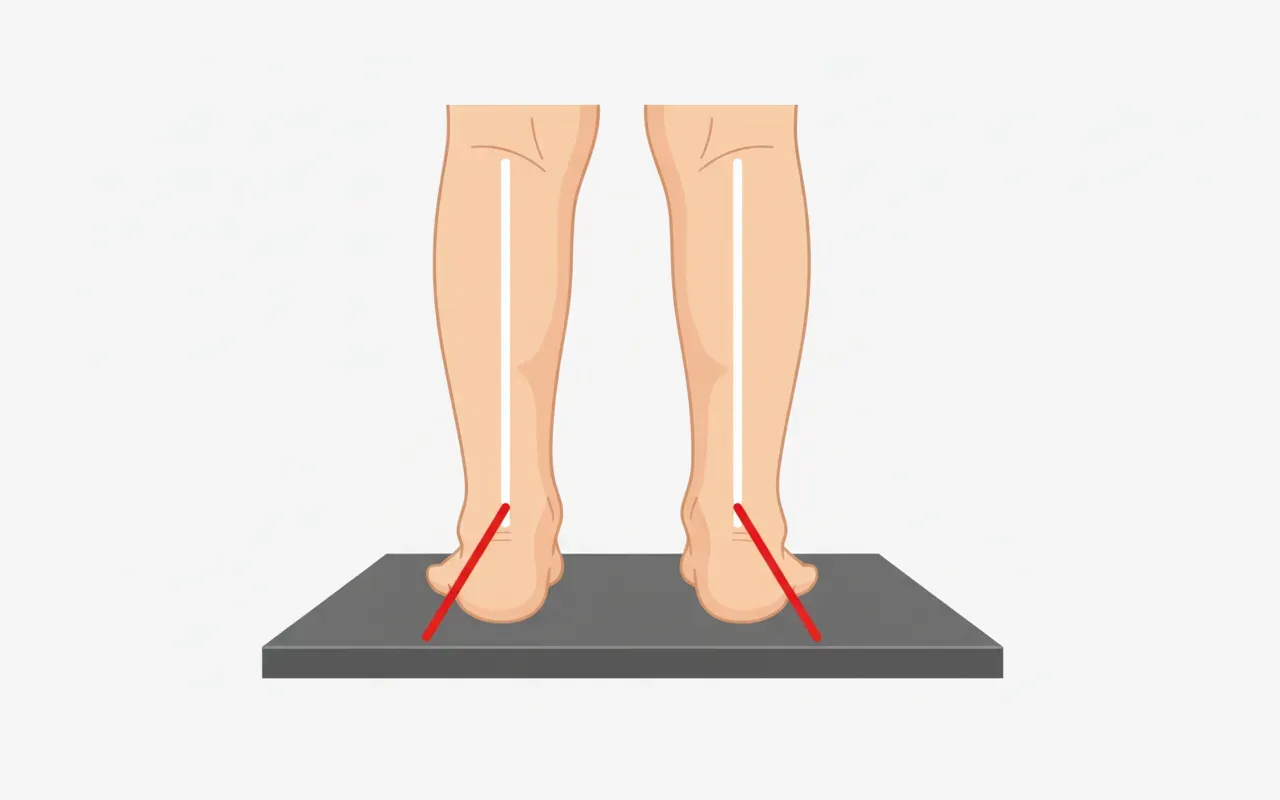
In hindfoot valgus, the heel is everted when viewed from behind: its lower part deviates outwards relative to the leg axis. The inward collapse of the ankle or arch often noticed by parents is a different aspect of pronation. Hindfoot valgus is frequently associated with flatfoot.
In the great majority of children it is a physiological posture: calcaneal valgus peaks around 2-4 years of age and then progressively reduces as the plantar arch develops and the stabilising muscles mature. It becomes a concern when it is particularly marked, asymmetric between the two sides, rigid (does not correct with manipulation or on tip-toe standing) or associated with pain.
Clinical assessment is central: I measure the hindfoot angle in weight-bearing, check subtalar mobility, look for Achilles tendon tightness and — crucially — rule out tarsal coalition, the main cause of rigid hindfoot valgus in adolescents. Treatment is conservative in most cases (observation, orthotics, physiotherapy); surgery is reserved for severe symptomatic cases.
Assessment and treatment
When to seek evaluation
- Marked or asymmetric hindfoot valgus
- Foot or ankle pain
- Fatigue during prolonged walking
- Asymmetric shoe wear
- Rigid hindfoot valgus
What is evaluated
- Weight-bearing hindfoot angle
- Subtalar mobility
- Correlation with flatfoot
- Foot X-rays when indicated
- Exclusion of tarsal coalition
Treatment options
- Observation in physiological cases
- Corrective orthotics in symptomatic cases
- Physiotherapy for muscle strengthening
- Arthroereisis or corrective surgery in selected cases
When Surgery Is Needed
Frequently Asked Questions
Is hindfoot valgus the same as flatfoot?▼
When should hindfoot valgus be a concern?▼
Are orthotics needed for hindfoot valgus?▼
Important Notice: The information on this page is for educational and informational purposes only and does not constitute medical advice. Each clinical case is unique: the appropriate treatment is determined during the specialist consultation, based on a thorough clinical examination and, where necessary, diagnostic imaging. For any doubts or concerns, please consult a specialist.