Septic Arthritis of the Hip: Orthopaedic Emergency
Possible joint infection: substantial pain, an unwell child or refusal to bear weight need urgent assessment, even without fever.
Quick Answers
How to distinguish septic arthritis from transient synovitis?
Why is it so important to act quickly?
⚠️ Medical Emergency - Go to ER Immediately
Septic arthritis requires immediate emergency care. Delays can cause permanent joint damage.
Red Flags - Seek Immediate Care:
- Fever + hip pain + limping or refusal to bear weight
- Severe pain with stiffness and limited motion
- Hip held in flexed and externally rotated position
- Rapid worsening of general condition
📞 Call 118 or go directly to the nearest Pediatric Emergency Department
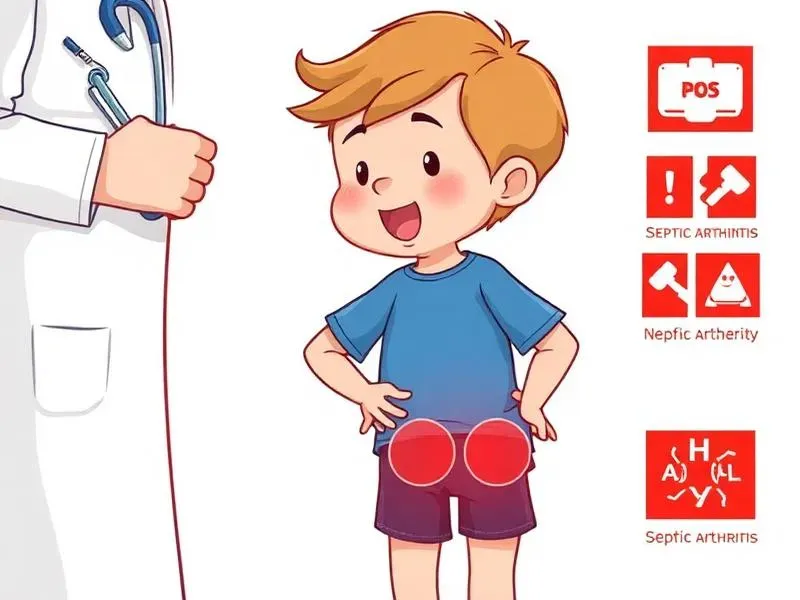
Septic arthritis of the hip is a joint infection that, especially in young children, represents a true orthopaedic emergency. Recognizing it and managing it quickly is essential to reduce the risk of permanent damage to the cartilage and to hip development. The typical picture combines fever, limping or refusal to bear weight, significant hip or groin pain, and a tendency for the child to hold the leg flexed and externally rotated in an antalgic position. The general condition can deteriorate rapidly. When these signs appear it is important to bring the child to urgent evaluation (pediatric emergency department): workup includes blood tests, hip ultrasound and, usually, joint fluid aspiration to confirm the diagnosis. Care always includes targeted antibiotic therapy and, in most cases, prompt surgical drainage of the joint.
Absence of fever does not exclude infection. A child who cannot bear weight, is unwell or has substantial joint pain needs urgent assessment without waiting for every typical sign to appear.
Assessment and treatment
When to seek evaluation
- Fever associated with limping or refusal to bear weight
- Severe hip pain with marked limitation
- Child holding the hip flexed and externally rotated
- Swelling or redness in the groin area
- Rapid worsening of general condition
What is evaluated
- General condition, fever, pain severity and ability to bear weight
- Examination of the hip and the whole limb, with attention to marked restriction of movement
- CRP at presentation and during follow-up; blood count and other tests according to the clinical picture
- Blood cultures before antibiotics when this can be done without delaying urgent treatment
- X-rays of the hip and adjacent structures as first-line imaging; ultrasound to identify an effusion
- Joint fluid aspiration for cell count, Gram stain, cultures and molecular tests when indicated
- MRI in selected cases, particularly when adjacent osteomyelitis, abscesses or an unclear diagnosis are suspected
Treatment options
- Urgent hospital assessment and treatment when clinical suspicion is significant
- Blood cultures before antibiotics when feasible without an unsafe delay
- In a child who is unwell, unstable or has rapidly progressive infection: immediate empirical antibiotics after blood cultures, if these can be obtained promptly
- In a clinically stable child: joint aspiration before starting antibiotics under close observation, when this can be arranged safely
- Empirical antibiotic cover for Staphylococcus aureus, adapted to age, local epidemiology, severity and microbiology results
- Aspiration, arthroscopic drainage or arthrotomy according to age, joint, severity, clinical response and the ability to achieve adequate source control
- Clinical and CRP monitoring to assess the response and guide subsequent care
Frequently Asked Questions
How to distinguish septic arthritis from transient synovitis?▼
Why is it so important to act quickly?▼
What happens after drainage?▼
What are the possible long-term consequences?▼
When should I take my child to the emergency room?▼
Important Notice: The information on this page is for educational and informational purposes only and does not constitute medical advice. Each clinical case is unique: the appropriate treatment is determined during the specialist consultation, based on a thorough clinical examination and, where necessary, diagnostic imaging. For any doubts or concerns, please consult a specialist.