Paediatric Orthopaedic Specialist
Plantar fasciitis
Home Exercise Program
Not every exercise listed here is suitable for every child: the selection is individual and is defined during the consultation.
For whom: Adolescents with diagnosed plantar fasciitis. Rare in pediatric age, requires specialist evaluation.
Dose and frequency: Perform only the exercises selected during the visit. The listed dosages are examples to adapt: follow the dose, frequency, rest and progression prescribed for age, symptoms and phase. Do not automatically perform the whole list.
Equipment and supervision: A stable, clear surface, comfortable clothing and a secure support. Check resistance-band anchors. Adult supervision; avoid marbles and small objects if the child may put them in their mouth, using a towel instead.
Avoid: Forcing a painful or unauthorised movement; Increasing load, resistance or frequency without the agreed rest periods; Doing balance exercises without stable support or supervision.
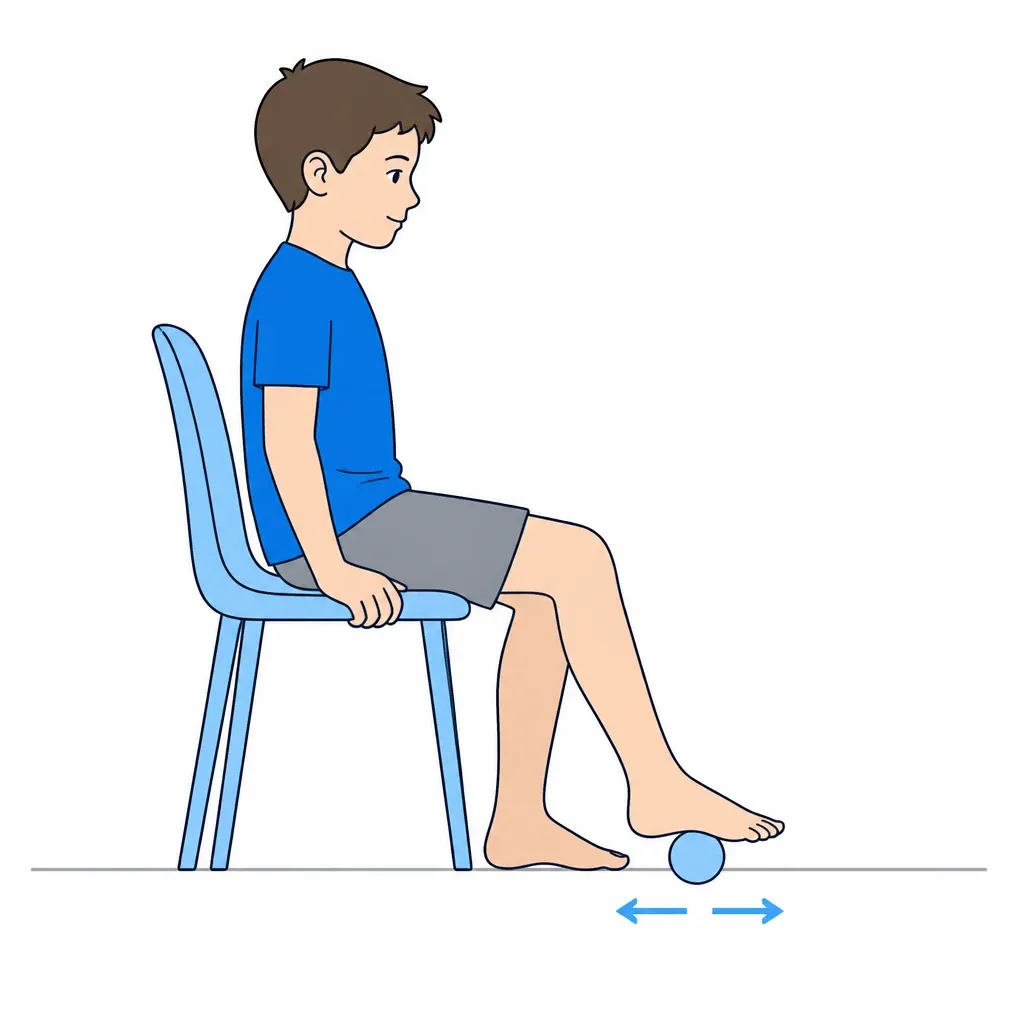
1.Ball massage (before getting up)
Optional self-massage for comfort, if tolerated.
Keep tennis ball (or specific massage ball) by bed. BEFORE GETTING UP: sit on bed edge and roll ball under sole for 2-3 minutes. Apply moderate pressure, focusing on arch and heel where fascia inserts. Then repeat during day. A protected cool ball or bottle may provide relief if comfortable. Wrap the cold object in a cloth, check the skin frequently and stop for discomfort, numbness or colour change. Avoid cold on skin with impaired sensation or circulation; it is for comfort, not a guaranteed anti-inflammatory treatment.
2-3 minutes in morning before getting up, then 2-3 minutes 2-3 times during day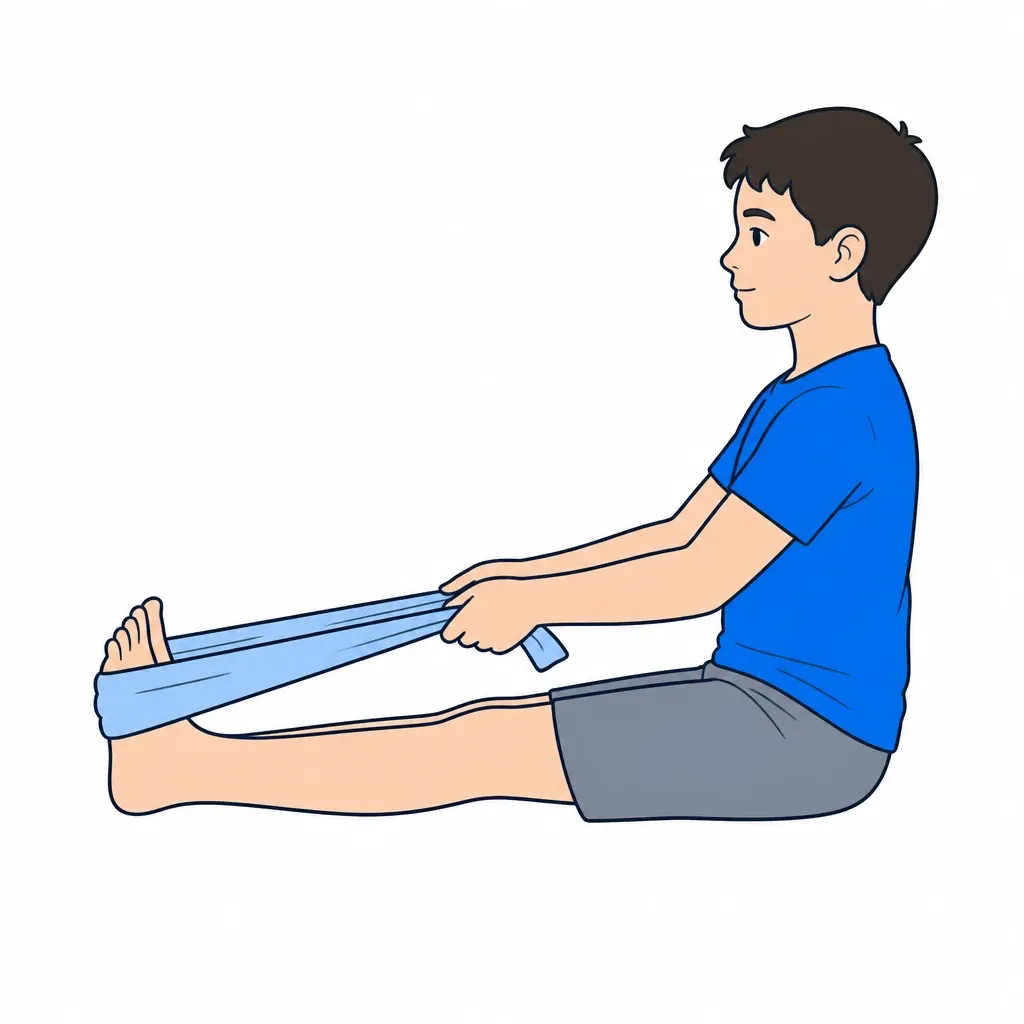
2.Plantar fascia stretch (with towel)
Gently stretches fascia even before putting weight on foot
In morning, still in bed, wrap towel around toe base. Gently pull towel toward you, bringing toes into dorsiflexion (toward shin). Keep knee straight. Feel stretch along sole. This prepares fascia for morning first steps that would otherwise be painful.
3 × 30 seconds per foot, before getting out of bed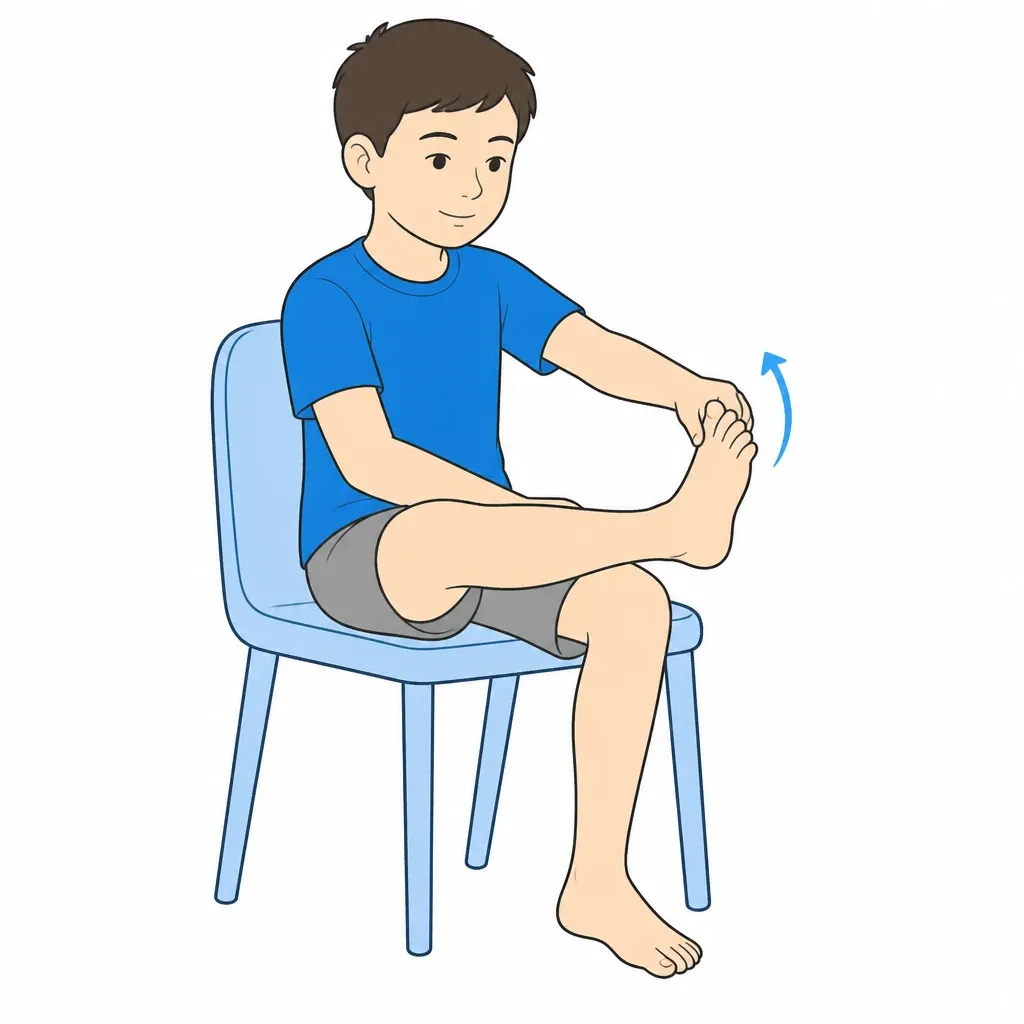
3.Plantar fascia stretch (manual)
Direct plantar fascia stretching
Sit and cross leg to treat over other. Grasp toe base with one hand and pull toward shin (dorsiflexion). With other hand palpate fascia under arch - feels like a tight cord. Hold stretch 30 seconds, breathing normally. Repeat several times daily, especially before standing after rest periods.
3 × 30 seconds, 3-4 times daily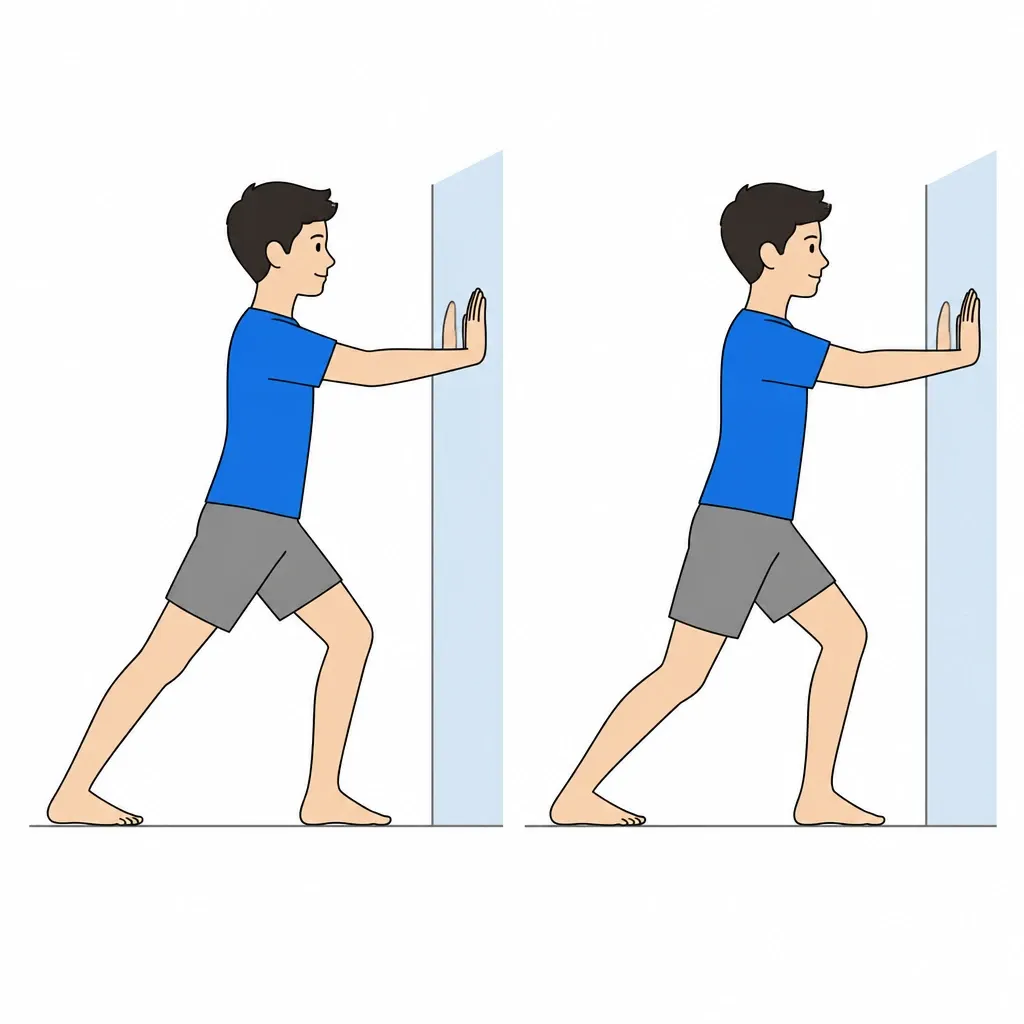
4.Calf stretch (gastrocnemius and soleus)
Tight calves increase tension on plantar fascia
Facing a wall with hands supported, place the leg to stretch behind and keep the heel down. Use the straight-knee and slightly bent-knee versions only as selected. Seek a mild calf stretch without heel pain: ankle mobility and plantar-fascia loading are related, but stretching does not guarantee an anatomical correction.
3 × 30 seconds per position, per leg. At least 2-3 times daily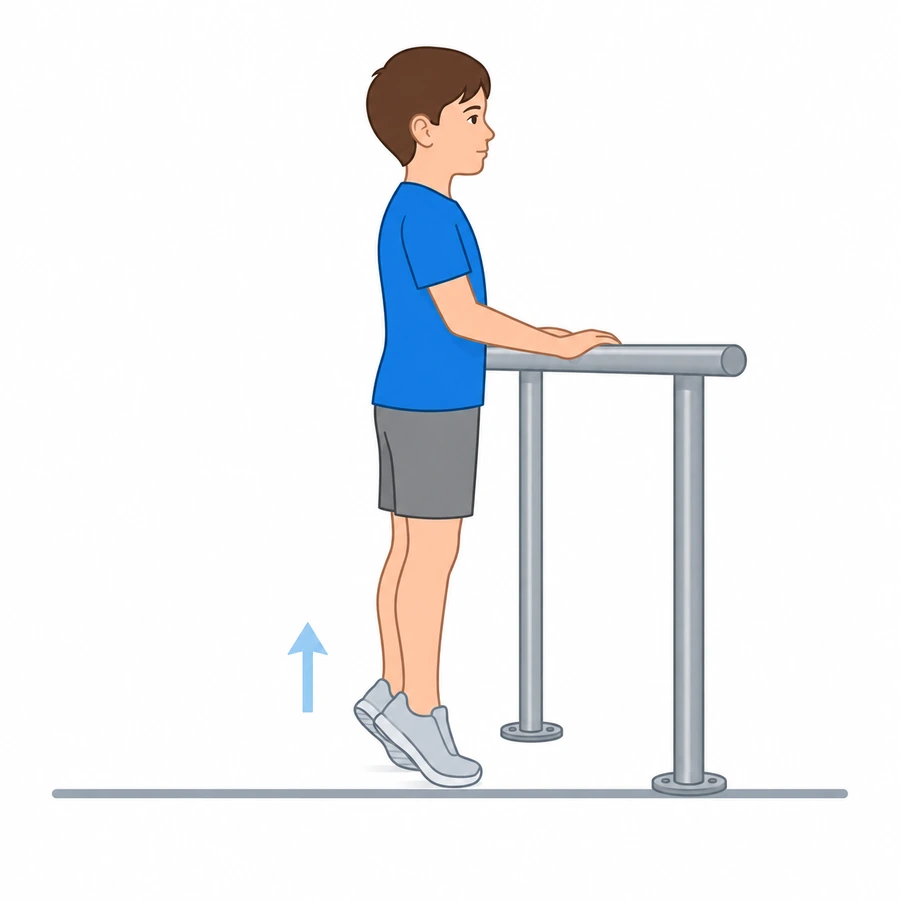
5.Heel raises with slow lowering
Strengthens calf-Achilles-fascia complex in controlled way
The figure shows a bilateral heel raise on the floor. Stay near a stable support and lower the heels slowly; a step and single-leg work require separate selection.
Only after selection and demonstration by the physiotherapist. Start on the floor near a stable support, raising the heels and lowering slowly with both legs. A step and single-leg work are separate, optional progressions. Stop for pain and agree changes to load or range; do not simply change legs and persist.
If prescribed: 2-3 × 10-15 repetitions using both legs, once daily; adapt to tolerance and the instructions received.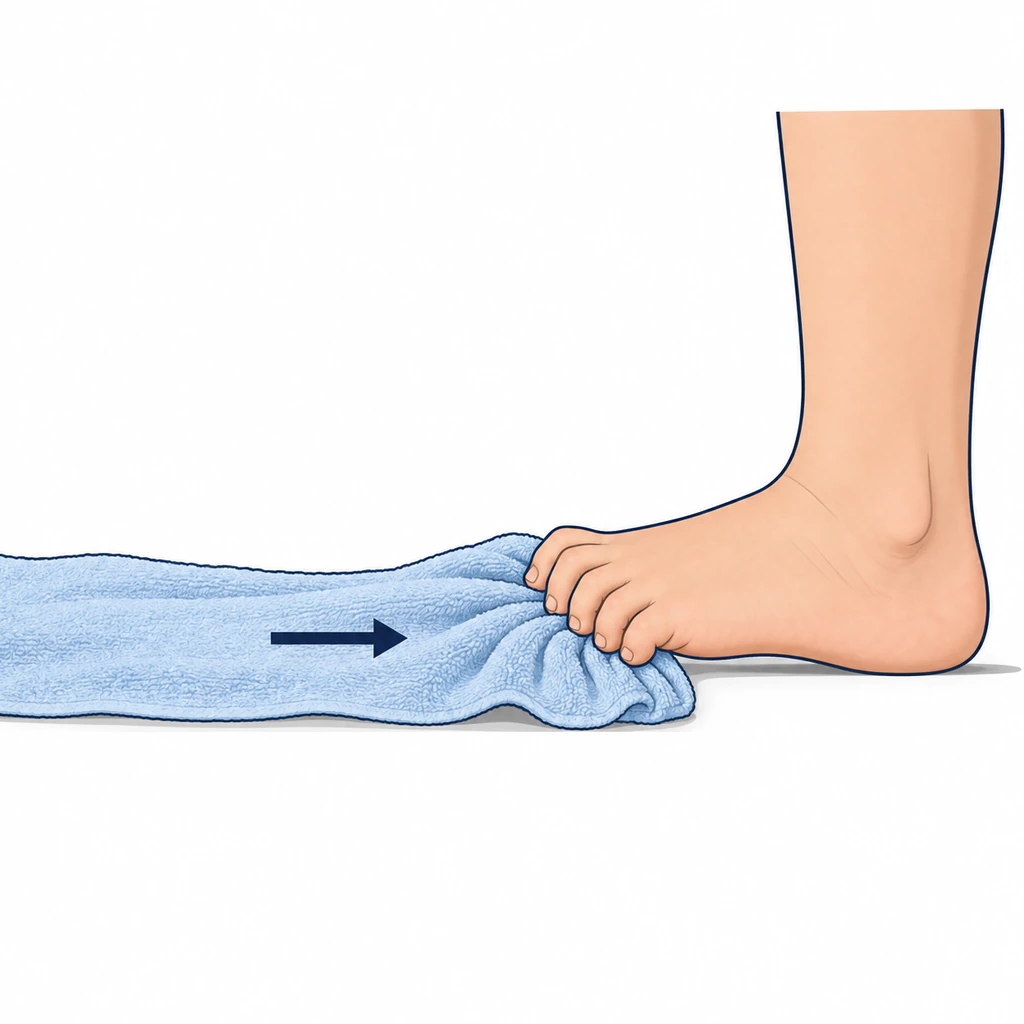
6.Intrinsic muscle strengthening (towel curls)
Strengthens muscles supporting the plantar arch
Sit with feet on towel spread on floor. Using only toes (without moving ankle), "curl" towel toward you, then release and repeat. Variation: instead of towel, pick up fabric pieces or socks with toes and place in container. These exercises strengthen deep muscles supporting arch. Use fabric pieces or socks large enough not to be swallowed, with adult supervision. Avoid marbles, coins, buttons and other small objects, including within reach of younger siblings.
3 × 10-15 reps, 1-2 times daily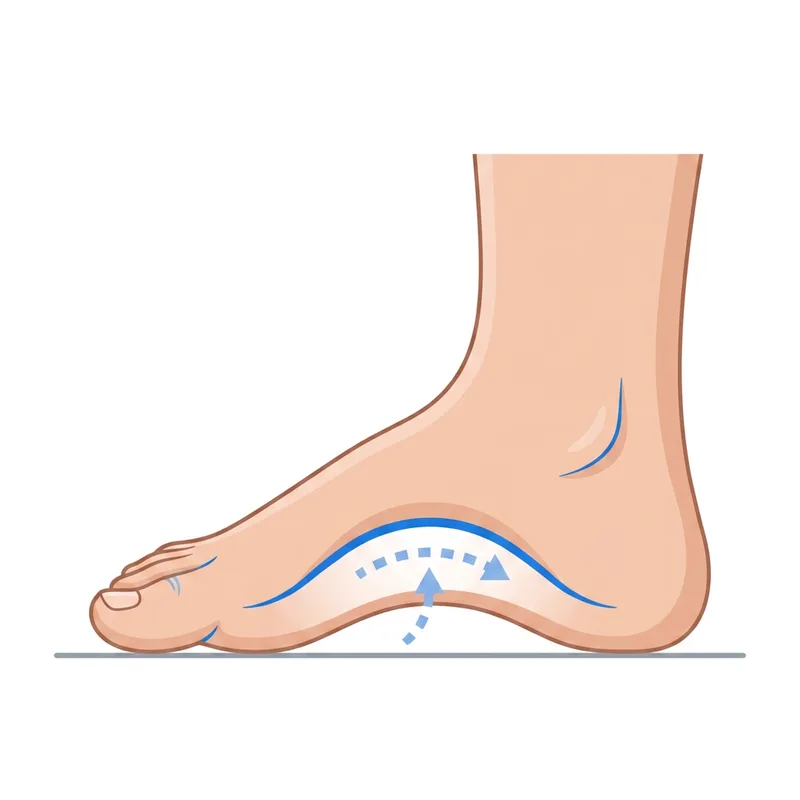
7.Short-foot
Activates plantar arch strengthening its support muscles
Standing or seated, foot on floor. Imagine "shortening" foot by bringing toe base toward heel, creating dome with arch. IMPORTANT: toes must stay flat on floor, not curled! Arch lifts, toes don't bend. Initially difficult to isolate this movement - practice brings improvement.
10 reps × 5-10 second holds, twice daily
RED FLAGS - When to stop and contact the doctor immediately
Stop the exercises immediately and contact the specialist (or go to the emergency department if severe) if any of the following occur:
- Acute or sudden pain during exercise
- Significant swelling after exercises
- Pain that progressively worsens over days
- Fever or general malaise
- Difficulty walking or using the limb after exercises
- Any neurological symptoms (tingling, numbness, sudden weakness)
- A red or hot joint, or inability to bear weight: seek prompt assessment; use emergency care if severe.
In case of doubt, always prefer a check-up over continuing the exercises.
Dott. Daniele Priano
Paediatric Orthopaedics - ASST Gaetano Pini-CTO
Content version: 21 September 2026
ortopediaevolutiva.com • Printed: 18/10/2026
 Full exercise sheet
https://ortopediaevolutiva.com/en/parents-kids/exercises/foot-ankle/plantar-fasciitis
Prepare the visit handout
Use the condition and phase indicated by your clinician. You can leave out individual exercises; instructions, illustrations and safety advice remain together.
Exclude exercises if needed
7 of 7 exercise cards included
The full web page remains available. Your selection is not saved or shared.
Before You Start
Who is this guide for?
Adolescents with diagnosed plantar fasciitis. Rare in pediatric age, requires specialist evaluation.
What you need
A stable, clear surface, comfortable clothing and a secure support. Check resistance-band anchors. Adult supervision; avoid marbles and small objects if the child may put them in their mouth, using a towel instead.
Suggested frequency
Perform only the exercises selected during the visit. The listed dosages are examples to adapt: follow the dose, frequency, rest and progression prescribed for age, symptoms and phase. Do not automatically perform the whole list.
Common mistakes to avoid
- •Forcing a painful or unauthorised movement
- •Increasing load, resistance or frequency without the agreed rest periods
- •Doing balance exercises without stable support or supervision
⚠️ Red flags — when to stop and contact the doctor immediately
Stop exercises immediately and contact the specialist if any of the following occur:
- Acute or sudden pain during exercise
- Significant swelling after exercises
- Pain that progressively worsens over days
- Fever or general malaise
- Difficulty walking or using the limb after exercises
- Any neurological symptoms (tingling, numbness, sudden weakness)
- A red or hot joint, or inability to bear weight: seek prompt assessment; use emergency care if severe.
Detailed Exercises
- 1
Ball massage (before getting up)
Optional self-massage for comfort, if tolerated.
Keep tennis ball (or specific massage ball) by bed. BEFORE GETTING UP: sit on bed edge and roll ball under sole for 2-3 minutes. Apply moderate pressure, focusing on arch and heel where fascia inserts. Then repeat during day. A protected cool ball or bottle may provide relief if comfortable. Wrap the cold object in a cloth, check the skin frequently and stop for discomfort, numbness or colour change. Avoid cold on skin with impaired sensation or circulation; it is for comfort, not a guaranteed anti-inflammatory treatment.
2-3 minutes in morning before getting up, then 2-3 minutes 2-3 times during day - 2
Plantar fascia stretch (with towel)
Gently stretches fascia even before putting weight on foot
In morning, still in bed, wrap towel around toe base. Gently pull towel toward you, bringing toes into dorsiflexion (toward shin). Keep knee straight. Feel stretch along sole. This prepares fascia for morning first steps that would otherwise be painful.
3 × 30 seconds per foot, before getting out of bed - 3
Plantar fascia stretch (manual)
Direct plantar fascia stretching
Sit and cross leg to treat over other. Grasp toe base with one hand and pull toward shin (dorsiflexion). With other hand palpate fascia under arch - feels like a tight cord. Hold stretch 30 seconds, breathing normally. Repeat several times daily, especially before standing after rest periods.
3 × 30 seconds, 3-4 times daily - 4
Calf stretch (gastrocnemius and soleus)
Tight calves increase tension on plantar fascia
Facing a wall with hands supported, place the leg to stretch behind and keep the heel down. Use the straight-knee and slightly bent-knee versions only as selected. Seek a mild calf stretch without heel pain: ankle mobility and plantar-fascia loading are related, but stretching does not guarantee an anatomical correction.
3 × 30 seconds per position, per leg. At least 2-3 times daily - 5
Heel raises with slow lowering
Strengthens calf-Achilles-fascia complex in controlled way
The figure shows a bilateral heel raise on the floor. Stay near a stable support and lower the heels slowly; a step and single-leg work require separate selection.
Only after selection and demonstration by the physiotherapist. Start on the floor near a stable support, raising the heels and lowering slowly with both legs. A step and single-leg work are separate, optional progressions. Stop for pain and agree changes to load or range; do not simply change legs and persist.
If prescribed: 2-3 × 10-15 repetitions using both legs, once daily; adapt to tolerance and the instructions received. - 6
Intrinsic muscle strengthening (towel curls)
Strengthens muscles supporting the plantar arch
Sit with feet on towel spread on floor. Using only toes (without moving ankle), "curl" towel toward you, then release and repeat. Variation: instead of towel, pick up fabric pieces or socks with toes and place in container. These exercises strengthen deep muscles supporting arch. Use fabric pieces or socks large enough not to be swallowed, with adult supervision. Avoid marbles, coins, buttons and other small objects, including within reach of younger siblings.
3 × 10-15 reps, 1-2 times daily - 7
Short-foot
Activates plantar arch strengthening its support muscles
Standing or seated, foot on floor. Imagine "shortening" foot by bringing toe base toward heel, creating dome with arch. IMPORTANT: toes must stay flat on floor, not curled! Arch lifts, toes don't bend. Initially difficult to isolate this movement - practice brings improvement.
10 reps × 5-10 second holds, twice daily
Frequently Asked Questions
How long does it take to heal from plantar fasciitis?
Recovery varies and symptoms may persist for months. In children, first confirm the diagnosis and distinguish other causes of heel pain. Individual load management and exercises may help but do not guarantee recovery within 2–3 months. Pain that is not improving needs reassessment.
Why is pain worse in the morning?
During night, plantar fascia "shortens" in rest position. In morning, first steps suddenly stretch it, causing pain. This is why stretching fascia before getting out of bed and using supportive footwear right away helps.
Can I continue sports with plantar fasciitis?
Depends on pain intensity. Low-impact activities (swimming, cycling) are generally tolerated. Running and jumping sports should be reduced or temporarily stopped. Gradual return to sport is possible when pain significantly decreases.