Paediatric Orthopaedic Specialist
After finger/toe cast or immobilization
Home Exercise Program
Not every exercise listed here is suitable for every child: the selection is individual and is defined during the consultation.
For whom: After cast removal and confirmation of healing: start only authorised movements. Loading, resistance and sport need fracture-specific instructions; avoid forced passive manoeuvres. Gradual daily activities are sufficient in many uncomplicated cases.
Dose and frequency: Perform only the exercises selected during the visit. The listed dosages are examples to adapt: follow the dose, frequency, rest and progression prescribed for age, symptoms and phase. Do not automatically perform the whole list.
Equipment and supervision: A stable, clear surface, comfortable clothing and a secure support. Check resistance-band anchors. Adult supervision; avoid marbles and small objects if the child may put them in their mouth, using a towel instead.
Avoid: Forcing a painful or unauthorised movement; Increasing load, resistance or frequency without the agreed rest periods; Doing balance exercises without stable support or supervision.
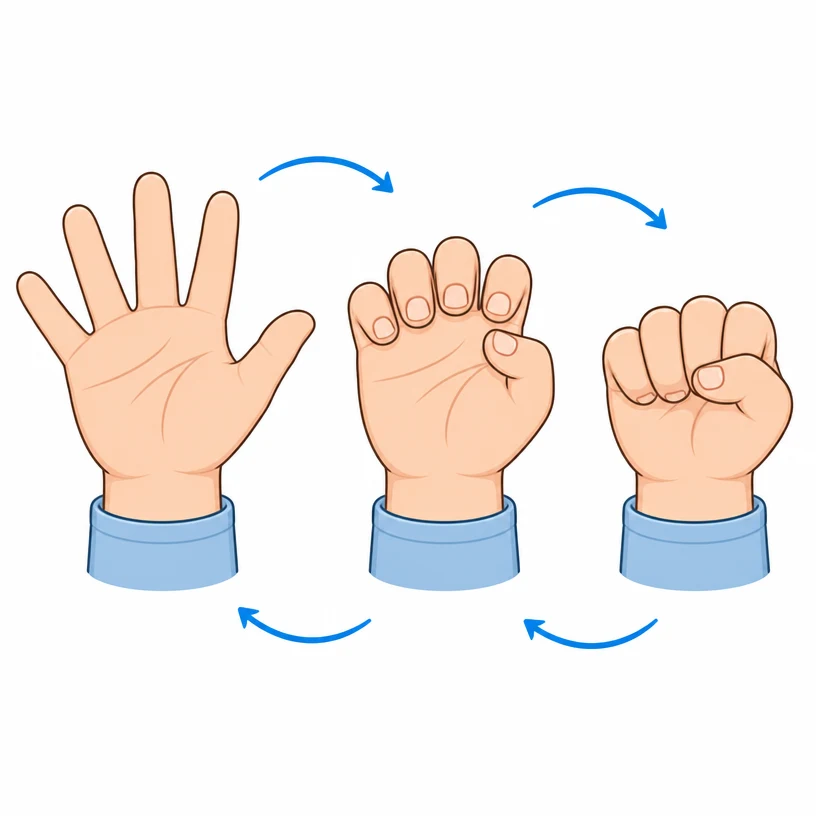
1.Active flexion and extension
Basic movement for permitted finger or toe joints
For permitted joints only: actively open and close the fingers or move the toes up and down. Use small comfortable movements; do not force maximum flexion or extension. Restrictions may continue after splint removal for some injuries.
Individual dose to complete with the clinician: repetitions or duration ___; sets ___; rest ___; times per day/week ___. Complete before using this sheet as an exercise programme.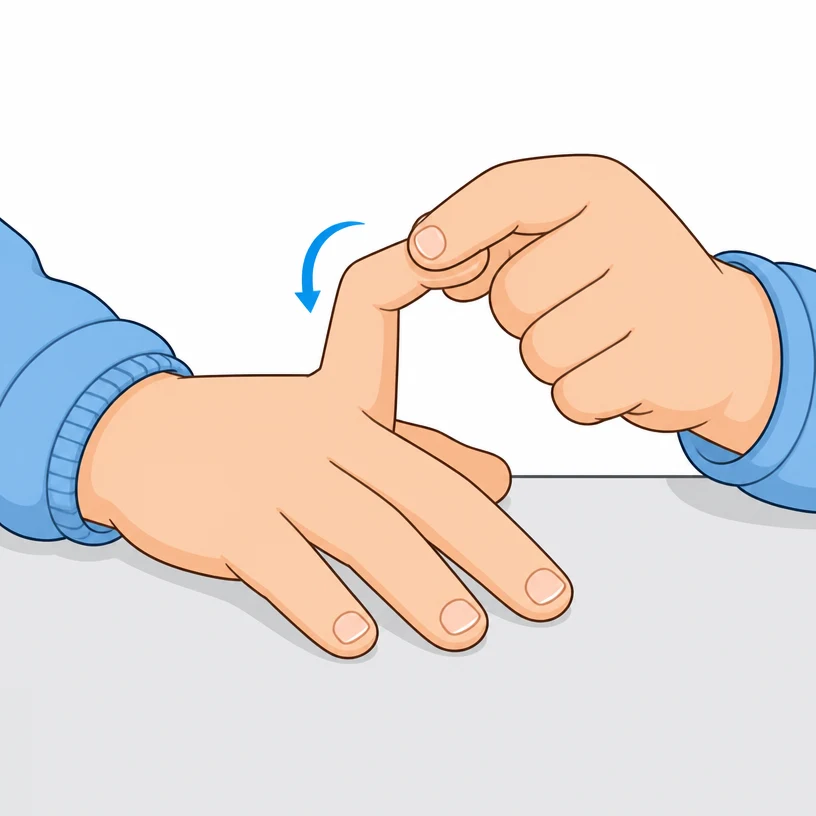
2.Move each finger or toe separately
Move one permitted finger or toe at a time, without forcing the injured one
Actively move one finger or toe at a time at permitted joints. Do not have the other hand or a parent bend or straighten it passively unless this was specifically prescribed and demonstrated. Do not push the injured digit if it hurts.
Individual dose to complete with the clinician: repetitions or duration ___; sets ___; rest ___; times per day/week ___. Complete before using this sheet as an exercise programme.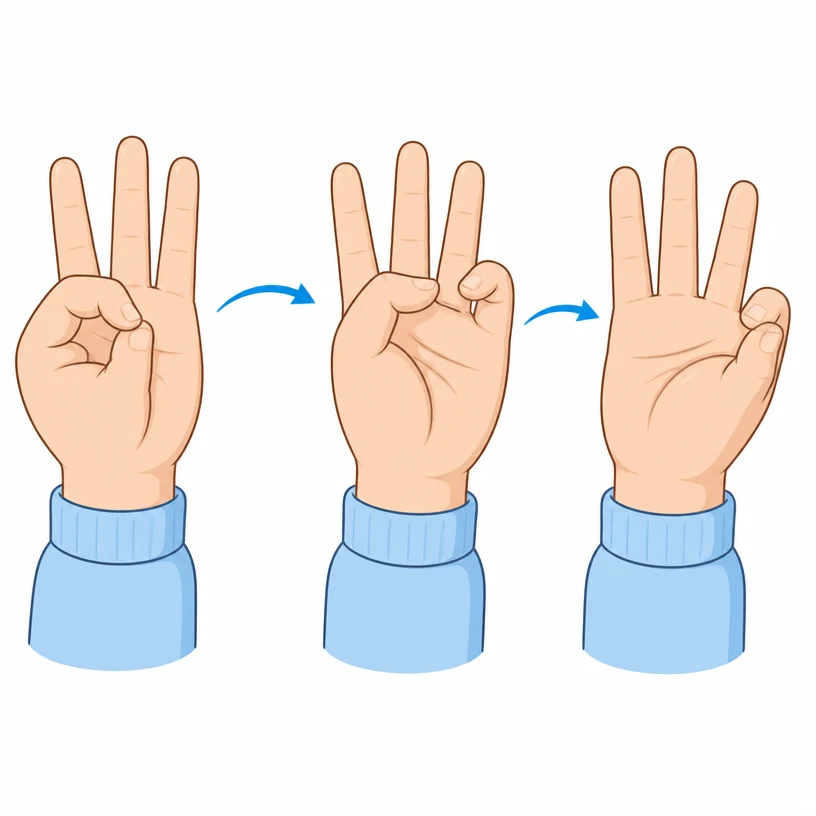
3.Thumb-to-finger opposition (for hand)
Recovers coordination and fine grip of hand
If permitted, slowly touch each fingertip with the thumb and then reverse. Stay within easy movement: if a finger cannot reach the thumb, do not pull or push it.
Individual dose to complete with the clinician: repetitions or duration ___; sets ___; rest ___; times per day/week ___. Complete before using this sheet as an exercise programme.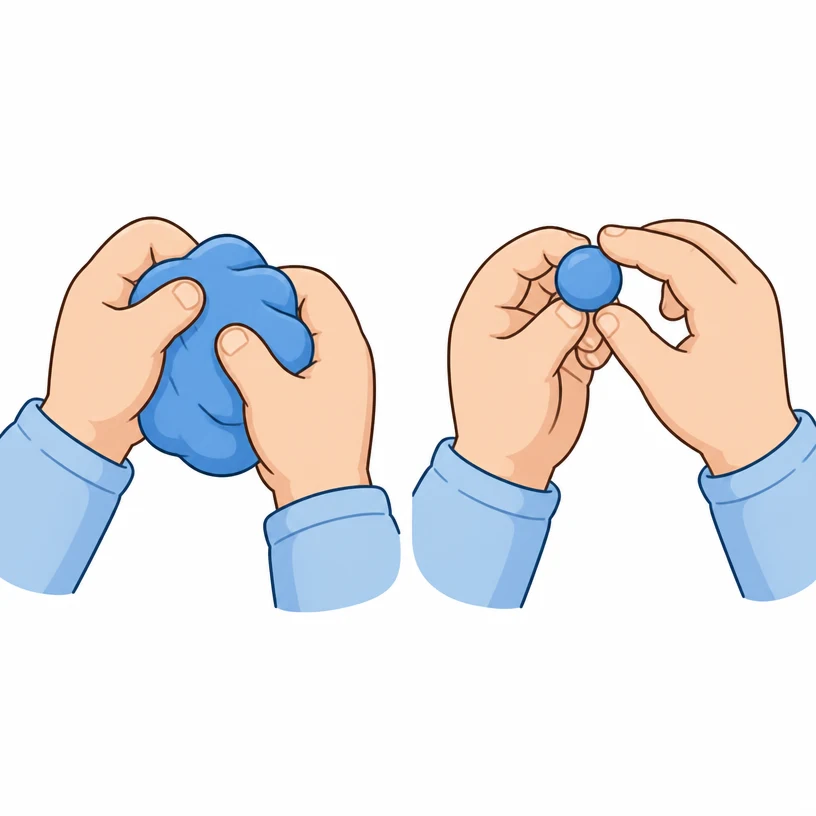
4.Putty/playdough exercises (for hand)
Gradual playful grip strengthening
Only if resisted grip is authorised, play with soft modelling dough: squeeze, pinch or roll without pain. Firmness and progression depend on the injury; ordinary hand play may be sufficient.
Individual dose to complete with the clinician: repetitions or duration ___; sets ___; rest ___; times per day/week ___. Complete before using this sheet as an exercise programme.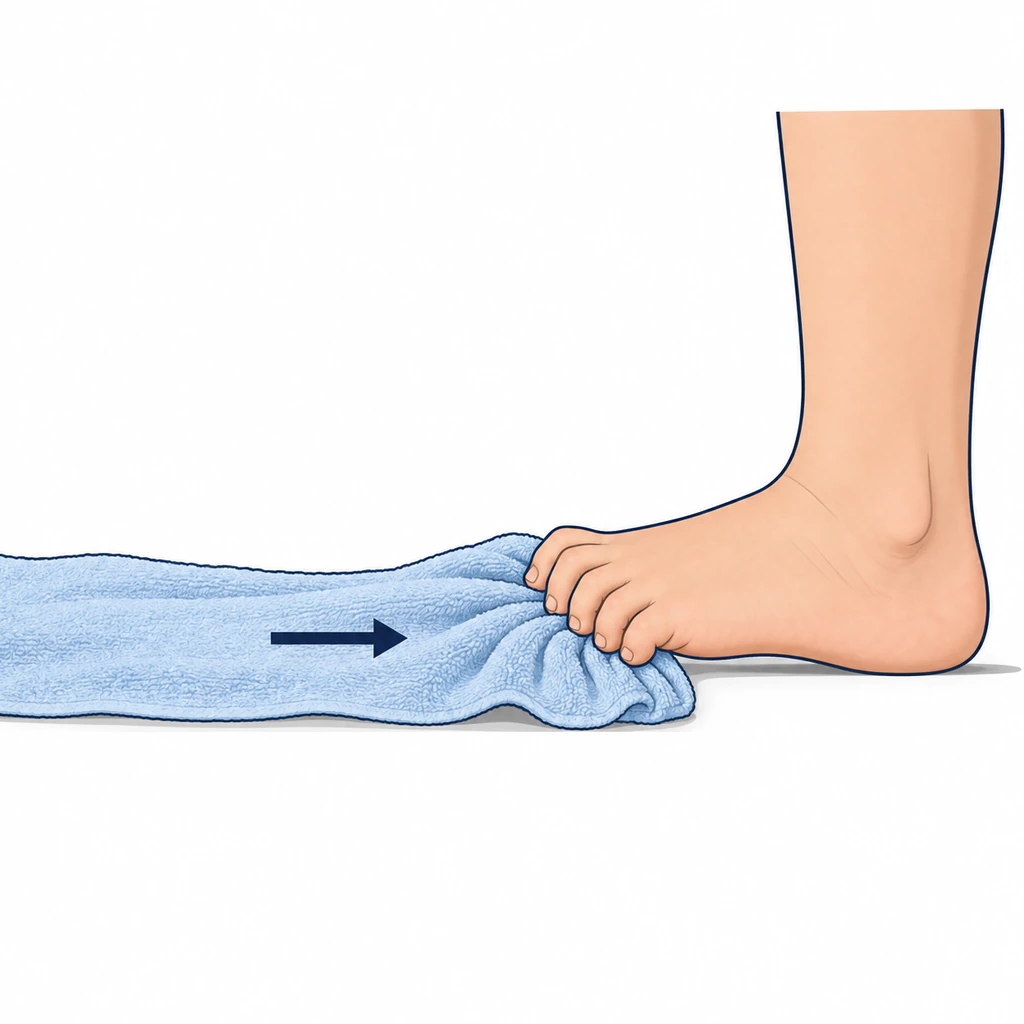
5.Scrunch a towel with the toes
Toe movement with a soft towel, if authorised
Only if the treating clinician permits this movement and any resistance for the injury. While seated, place the foot on a large soft towel and scrunch it towards you with the toes, then release without forcing. Do this with adult supervision. Avoid coins and other small objects a child or younger sibling could swallow. Stop if a toe is painful.
Individual dose to complete with the clinician: repetitions or duration ___; sets ___; rest ___; times per day/week ___. Complete before using this sheet as an exercise programme.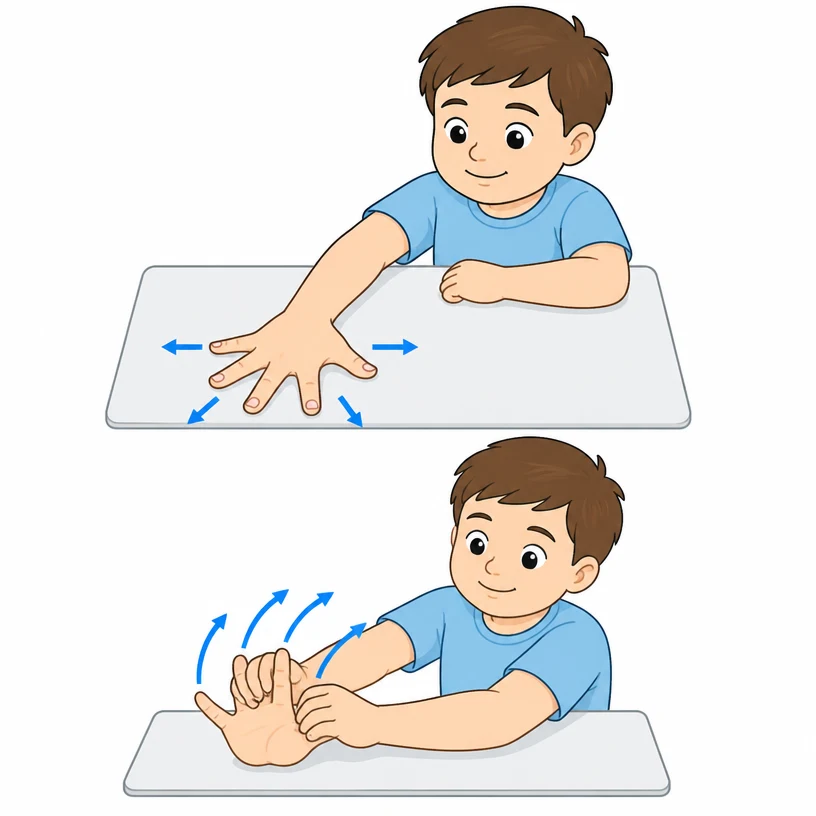
6.Finger or toe stretching, only if prescribed
Passive stretch only when individually prescribed
Passive stretching is not routine after finger or toe immobilisation. Use it only if prescribed and demonstrated for the specific injury, respecting permitted joints and range; do not pull or force a stiff digit.
Individual dose to complete with the clinician: repetitions or duration ___; sets ___; rest ___; times per day/week ___. Complete before using this sheet as an exercise programme.
RED FLAGS - When to stop and contact the doctor immediately
Stop the exercises immediately and contact the specialist (or go to the emergency department if severe) if any of the following occur:
- Acute or sudden pain during exercise
- Significant swelling after exercises
- Pain that progressively worsens over days
- Fever or general malaise
- Difficulty walking or using the limb after exercises
- Any neurological symptoms (tingling, numbness, sudden weakness)
- A red or hot joint, or inability to bear weight: seek prompt assessment; use emergency care if severe.
In case of doubt, always prefer a check-up over continuing the exercises.
Dott. Daniele Priano
Paediatric Orthopaedics - ASST Gaetano Pini-CTO
Content version: 24 September 2026
ortopediaevolutiva.com • Printed: 18/10/2026
 Full sheet and videos
https://ortopediaevolutiva.com/en/parents-kids/exercises/post-cast/after-finger-cast
Prepare the visit handout
Use the condition and phase indicated by your clinician. You can leave out individual exercises; instructions, illustrations and safety advice remain together.
Exclude exercises if needed
6 of 6 exercise cards included
The full web page remains available. Your selection is not saved or shared.
Before You Start
Who is this guide for?
After cast removal and confirmation of healing: start only authorised movements. Loading, resistance and sport need fracture-specific instructions; avoid forced passive manoeuvres. Gradual daily activities are sufficient in many uncomplicated cases.
What you need
A stable, clear surface, comfortable clothing and a secure support. Check resistance-band anchors. Adult supervision; avoid marbles and small objects if the child may put them in their mouth, using a towel instead.
Suggested frequency
Perform only the exercises selected during the visit. The listed dosages are examples to adapt: follow the dose, frequency, rest and progression prescribed for age, symptoms and phase. Do not automatically perform the whole list.
Common mistakes to avoid
- •Forcing a painful or unauthorised movement
- •Increasing load, resistance or frequency without the agreed rest periods
- •Doing balance exercises without stable support or supervision
⚠️ Red flags — when to stop and contact the doctor immediately
Stop exercises immediately and contact the specialist if any of the following occur:
- Acute or sudden pain during exercise
- Significant swelling after exercises
- Pain that progressively worsens over days
- Fever or general malaise
- Difficulty walking or using the limb after exercises
- Any neurological symptoms (tingling, numbness, sudden weakness)
- A red or hot joint, or inability to bear weight: seek prompt assessment; use emergency care if severe.
Detailed Exercises
- 1
Active flexion and extension
Basic movement for permitted finger or toe joints
For permitted joints only: actively open and close the fingers or move the toes up and down. Use small comfortable movements; do not force maximum flexion or extension. Restrictions may continue after splint removal for some injuries.
Individual dose to complete with the clinician: repetitions or duration ___; sets ___; rest ___; times per day/week ___. Complete before using this sheet as an exercise programme. - 2
Move each finger or toe separately
Move one permitted finger or toe at a time, without forcing the injured one
Actively move one finger or toe at a time at permitted joints. Do not have the other hand or a parent bend or straighten it passively unless this was specifically prescribed and demonstrated. Do not push the injured digit if it hurts.
Individual dose to complete with the clinician: repetitions or duration ___; sets ___; rest ___; times per day/week ___. Complete before using this sheet as an exercise programme. - 3
Thumb-to-finger opposition (for hand)
Recovers coordination and fine grip of hand
If permitted, slowly touch each fingertip with the thumb and then reverse. Stay within easy movement: if a finger cannot reach the thumb, do not pull or push it.
Individual dose to complete with the clinician: repetitions or duration ___; sets ___; rest ___; times per day/week ___. Complete before using this sheet as an exercise programme. - 4
Putty/playdough exercises (for hand)
Gradual playful grip strengthening
Only if resisted grip is authorised, play with soft modelling dough: squeeze, pinch or roll without pain. Firmness and progression depend on the injury; ordinary hand play may be sufficient.
Individual dose to complete with the clinician: repetitions or duration ___; sets ___; rest ___; times per day/week ___. Complete before using this sheet as an exercise programme.Divide soft putty
Press Play to load the video. Follow the instructions and precautions on this exercise sheet.
Shows only dividing soft putty in the approved version; it does not demonstrate all grip activities in the exercise sheet. Abrupt separation of the pieces is a disclosed, retained limitation.
- 5
Scrunch a towel with the toes
Toe movement with a soft towel, if authorised
Only if the treating clinician permits this movement and any resistance for the injury. While seated, place the foot on a large soft towel and scrunch it towards you with the toes, then release without forcing. Do this with adult supervision. Avoid coins and other small objects a child or younger sibling could swallow. Stop if a toe is painful.
Individual dose to complete with the clinician: repetitions or duration ___; sets ___; rest ___; times per day/week ___. Complete before using this sheet as an exercise programme. - 6
Finger or toe stretching, only if prescribed
Passive stretch only when individually prescribed
Passive stretching is not routine after finger or toe immobilisation. Use it only if prescribed and demonstrated for the specific injury, respecting permitted joints and range; do not pull or force a stiff digit.
Individual dose to complete with the clinician: repetitions or duration ___; sets ___; rest ___; times per day/week ___. Complete before using this sheet as an exercise programme.
Frequently Asked Questions
Why are fingers or toes so stiff after immobilisation?
Stiffness and difficulty moving the fingers or toes may follow immobilisation. Resume only movements authorised for that injury: cast removal does not automatically permit passive stretching or resistance. Increasing pain, swelling or locking requires review.
How long does it take to recover finger or toe movement?
Timing depends on the injury, treatment and progress. Many children recover gradually with permitted daily use and movement; not everyone needs physiotherapy. The treating clinician plans follow-up and reassesses persistent or worsening stiffness, without one deadline for everyone.