In-toeing: When the Child Walks with Feet Turned In
Walking with feet turned inward and frequent tripping: in most cases a torsional pattern that improves with growth.
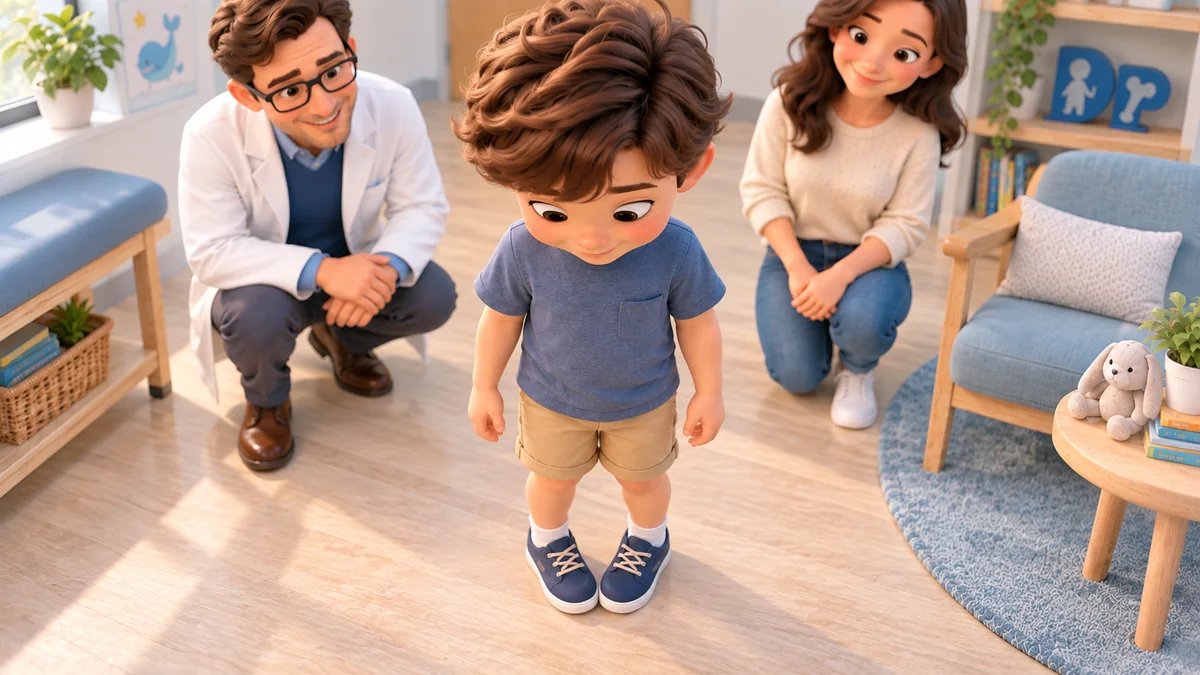
Feet pointing inward
In-toeing can arise from the foot, shinbone or thighbone. In children it is often a developmental variation.
Read all the illustrated explanations →Walking with feet turned in is very common and almost always due to a normal anatomical variant of the femur or tibia.
In the great majority of cases it corrects spontaneously by 8–10 years of age. We assess whether monitoring is needed or, rarely, intervention.

👟Why Does My Child Walk with Feet Turned In?
In-toeing gait has three possible causes at different levels: foot (metatarsus adductus), tibia (internal tibial torsion), or femur (femoral anteversion). In the vast majority of cases, it corrects spontaneously with growth. During the visit, I identify the origin and assess if the child needs only monitoring or intervention.
Assessment and treatment
When to seek evaluation
- Marked in-toeing causing frequent trips
- Persistence beyond 8–10 years of age
- Significant asymmetry between the two sides
- Difficulty with sports activities
- Parental concern
What is evaluated
- Rotational profile of the lower limbs
- Internal and external hip rotation
- Thigh-foot angle (tibial torsion)
- Gait pattern analysis
- Exclusion of neurological or bone conditions
Treatment options
- Reassurance and observation in most cases
- Suggest alternatives to prolonged W-sitting in young children (cross-legged, side-sitting), without turning it into a strict ban
- Periodic clinical follow-up during growth
- Physical therapy in selected cases
- Derotational osteotomy only in exceptionally severe cases
Frequently Asked Questions
At what age does in-toeing self-correct?▼
Are corrective shoes or braces useful?▼
Should W-sitting be avoided?▼
Why does my child trip so often?▼
When is surgery considered?▼
Important Notice: The information on this page is for educational and informational purposes only and does not constitute medical advice. Each clinical case is unique: the appropriate treatment is determined during the specialist consultation, based on a thorough clinical examination and, where necessary, diagnostic imaging. For any doubts or concerns, please consult a specialist.