Paediatric Orthopaedic Specialist
Symptomatic flatfoot / hindfoot valgus
Home Exercise Program
Not every exercise listed here is suitable for every child: the selection is individual and is defined during the consultation.
For whom: Children with symptomatic flexible flatfoot after assessment. Asymptomatic flexible flatfoot does not require corrective exercises; exercise does not guarantee arch formation.
Dose and frequency: Perform only the exercises selected during the visit. The listed dosages are examples to adapt: follow the dose, frequency, rest and progression prescribed for age, symptoms and phase. Do not automatically perform the whole list.
Equipment and supervision: A stable, clear surface, comfortable clothing and a secure support. Check resistance-band anchors. Adult supervision; avoid marbles and small objects if the child may put them in their mouth, using a towel instead.
Avoid: Forcing a painful or unauthorised movement; Increasing load, resistance or frequency without the agreed rest periods; Doing balance exercises without stable support or supervision.
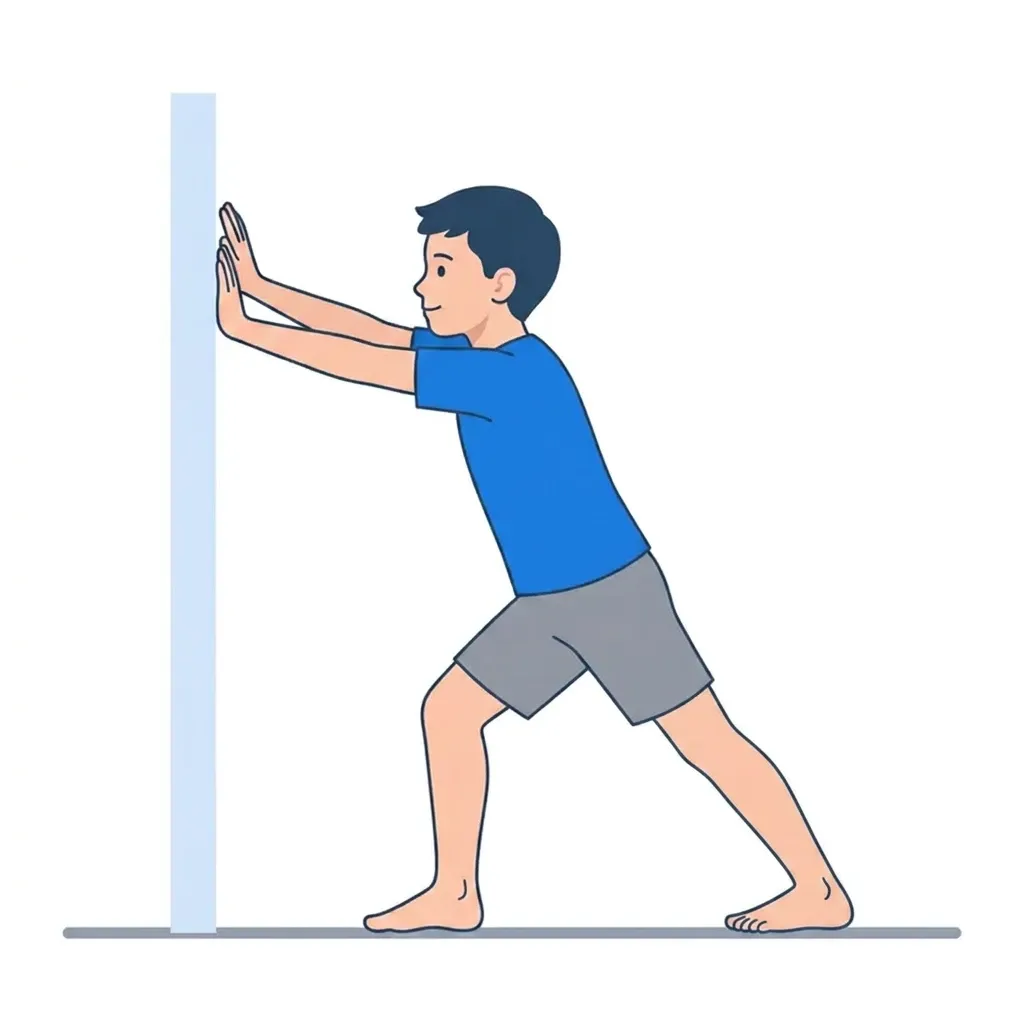
1.Calf stretch, when tight
Useful when dorsiflexion is limited; it does not create the foot arch by itself.
Stand facing a wall with hands at shoulder height. Bring the leg to stretch behind, keeping the heel firmly on the ground and toes pointing forward. Keep knee completely straight to stretch gastrocnemius, then slightly bend for soleus. Gently push hips forward until you feel a pleasant tension (not pain!) in the back of the leg. Hold position while breathing normally.
3 sets × 30 seconds each side, twice daily (morning and evening)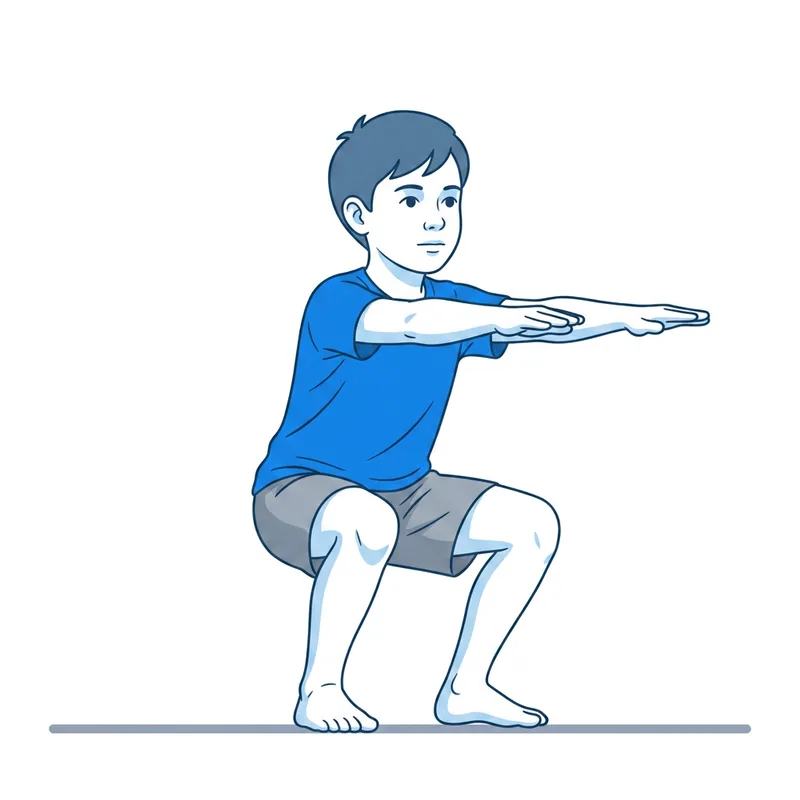
2.Heel-down squat (heels-down squat)
Improves ankle dorsiflexion and overall lower limb mobility
Stand with feet shoulder-width apart. Slowly squat down trying to keep both heels completely on the ground. If needed, hold onto stable support (chair, table, wall) for balance. Go down as far as possible while keeping heels grounded - it's okay if you can't go very deep initially. Mobility will improve over time. Rise slowly.
10 slow repetitions, 2-3 sets. If difficult, start by holding position for 10 seconds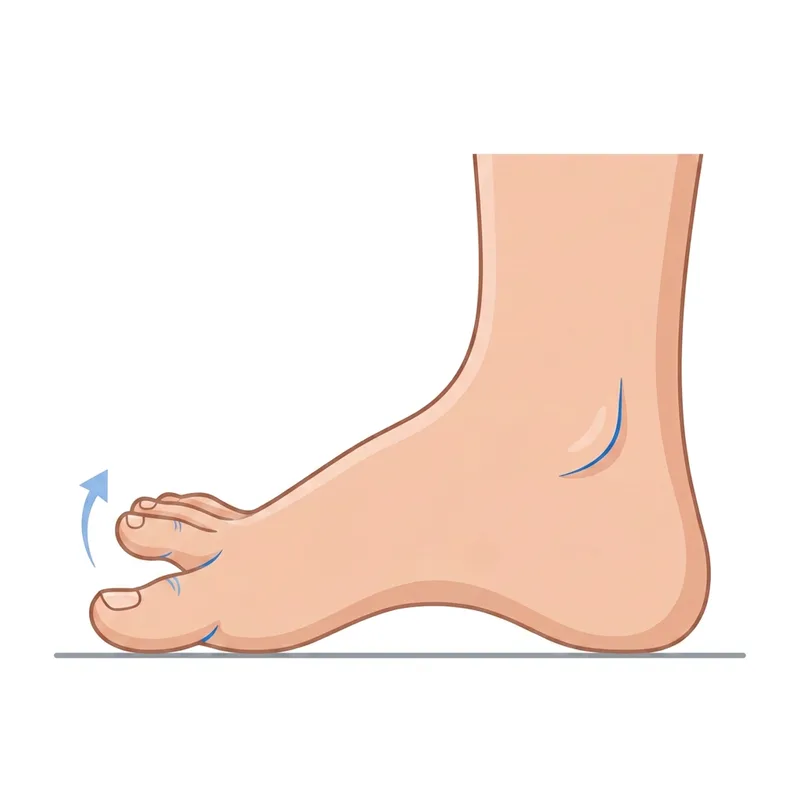
3.Toe yoga (toe control)
Improves neuromuscular control and intrinsic foot muscle strength
Sit on a chair with feet flat on the floor. First movement: lift ONLY the big toe while keeping the other 4 toes pressed down. Second movement: reverse - lower big toe and lift other 4 toes. Alternate with control, without rushing. Initially it may be difficult and toes might not respond as desired - that's normal! With practice, control will significantly improve.
10 repetitions per movement, twice daily. Start seated, then try standing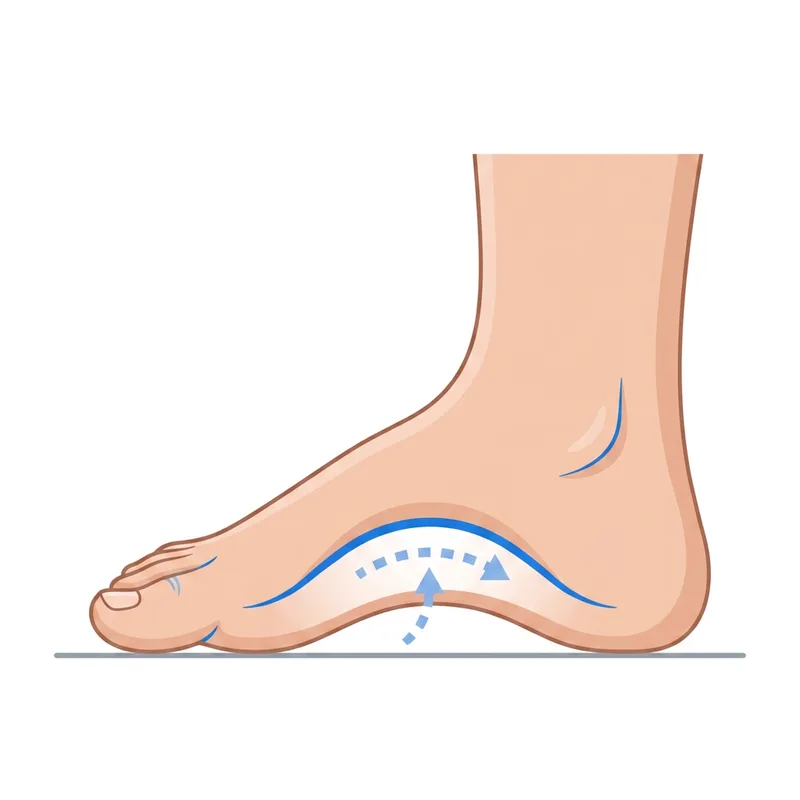
4.Short-foot (active arch)
Key exercise to activate and strengthen the plantar arch without using toes
Standing or seated, with foot flat on floor. Imagine "shortening" the foot by bringing the toe base toward the heel, creating a dome with the arch. IMPORTANT: toes must stay flat and relaxed, not curled! The arch lifts, toes don't bend. If the toes curl, reduce the effort and ask for help finding the movement. Initially isolating this movement is difficult - be patient.
10 reps × 5-10 second holds, 2-3 times daily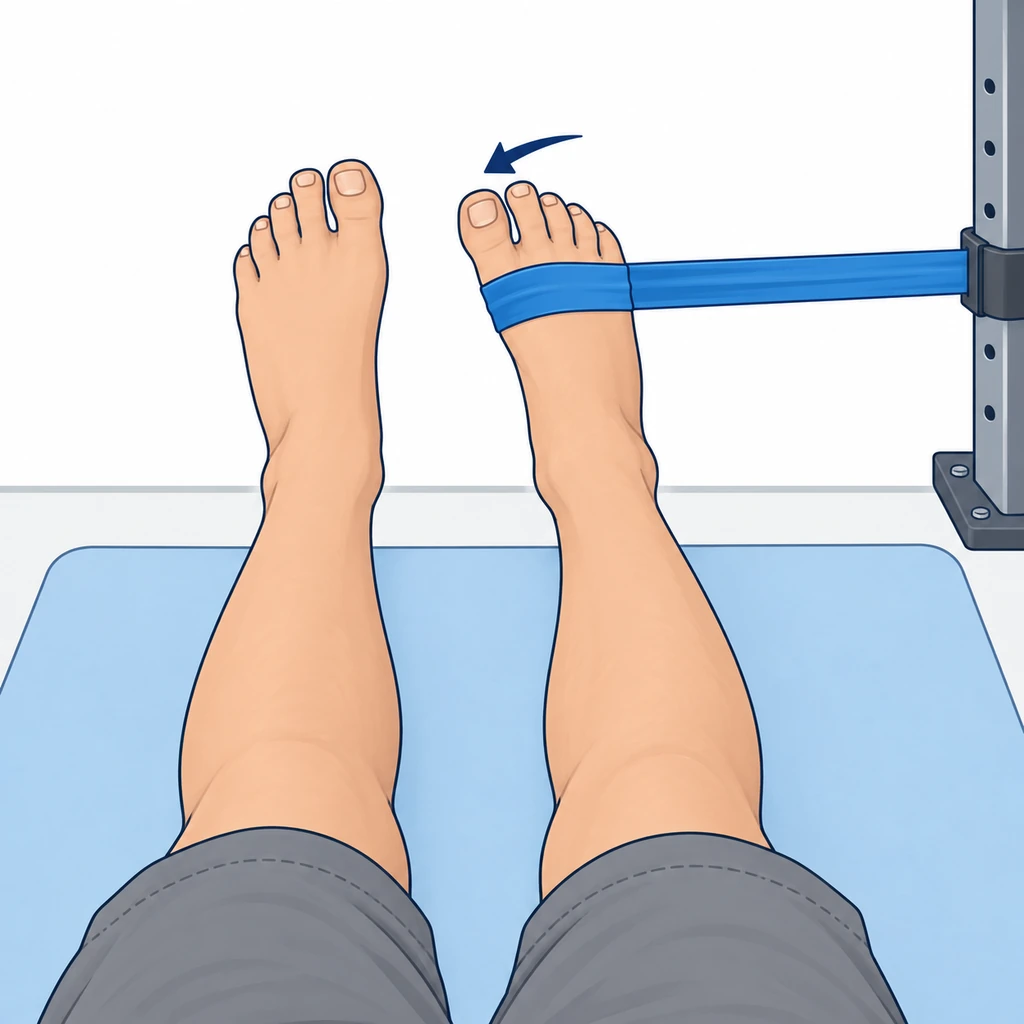
5.Posterior tibial strengthening (inversion with band)
Selective inversion strengthening: tibialis posterior contributes to foot control but is not the only support for the arch.
Sit with legs extended. Wrap band around forefoot, securing other end to a lateral fixed point (table leg, or hold with other hand outward). Foot starts in neutral. Rotate foot INWARD (inversion) against band resistance, then slowly return to start. Movement comes from ankle, not knee or hip.
15 reps × 3 sets per foot. Use appropriate resistance band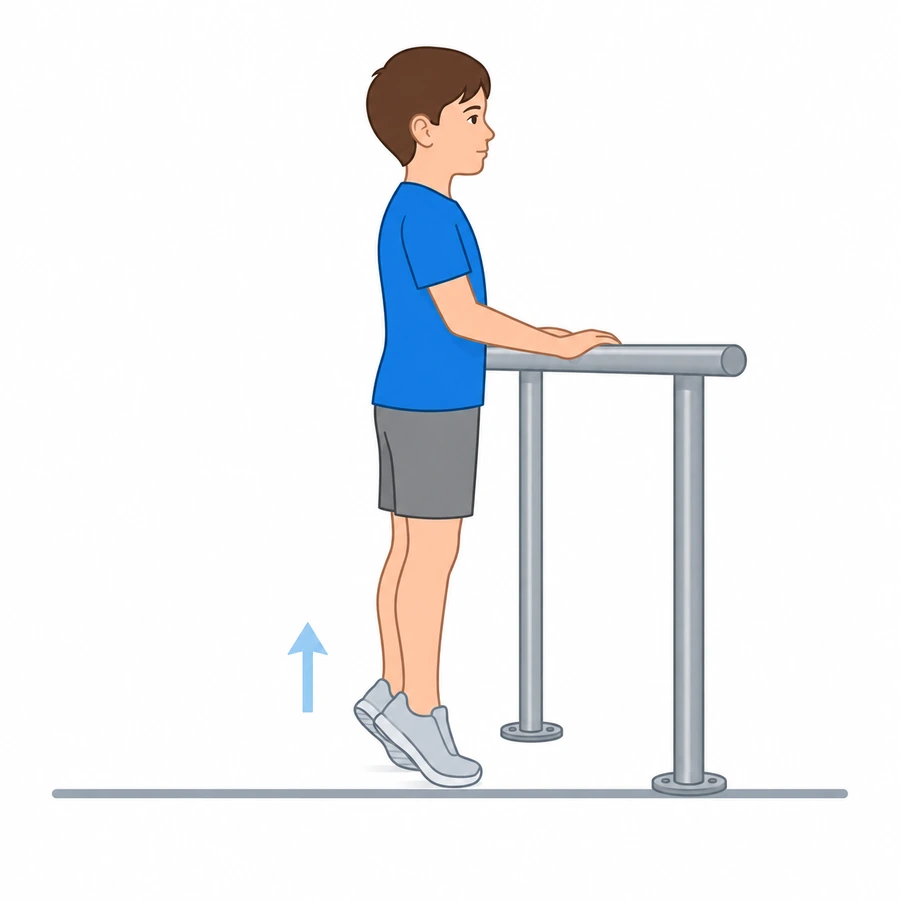
6.Calf raises (heel raises)
Strengthens calf muscles and improves ankle stability
Stand, lightly supported for balance. Slowly rise onto toes, going as high as possible. Hold top position for 2 seconds, then lower with control (lowering phase is as important as rising!). Start with both feet. When easy (3 sets of 20 without fatigue), progress to single leg.
Start: 15-20 reps × 3 sets (bilateral). Progress: 10-15 × 3 sets (single leg)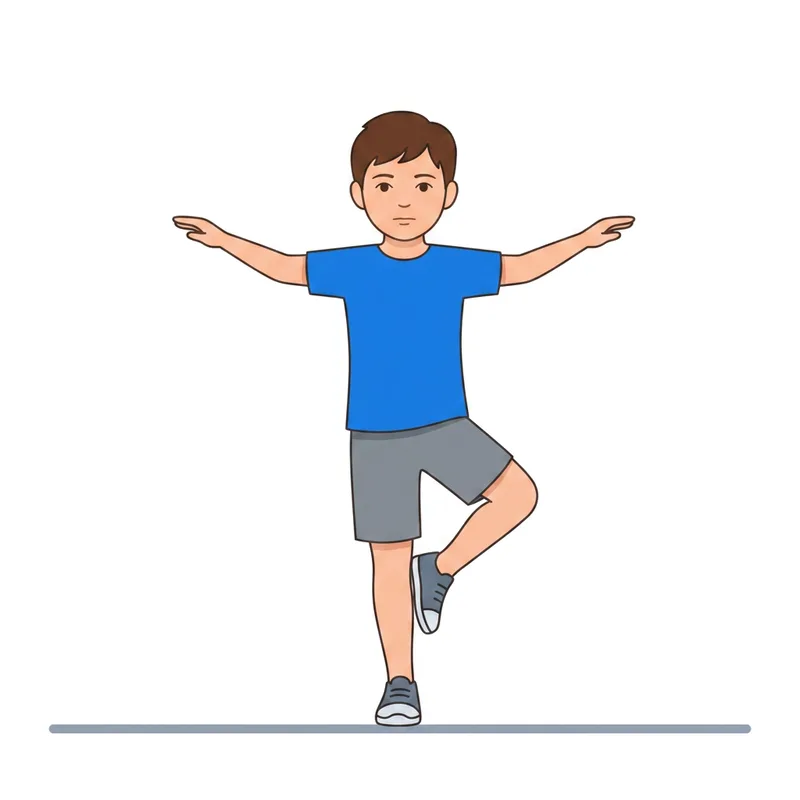
7.Single-leg balance (proprioception)
Improves proprioception and postural control, essential for foot stability
After clearance for weight bearing, start on firm ground with eyes open, next to a secure support and with adult supervision. Place the other foot down before losing balance. Progress to an unstable surface or eyes-closed work only under direct professional supervision; do not add these challenges independently. Stop for pain or instability.
30-60 seconds each side × 3 sets. Progress when stable for 60 sec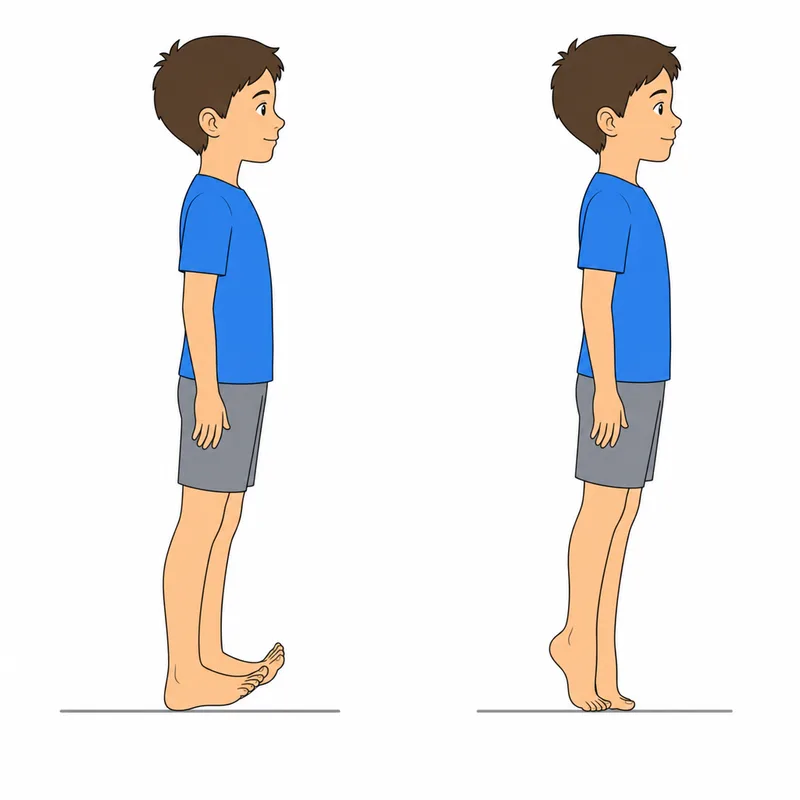
8.Heel and toe walking
Strengthens leg muscles and improves gait control
HEEL WALKING: Lift toes and walk only on heels for 10-15 meters. Keep toes up throughout. TOE WALKING: Rise onto toes and walk for 10-15 meters without lowering heels. In both cases: maintain good upright posture, look ahead (not at feet), take small controlled steps.
2-3 laps of 10-15 meters each type, once daily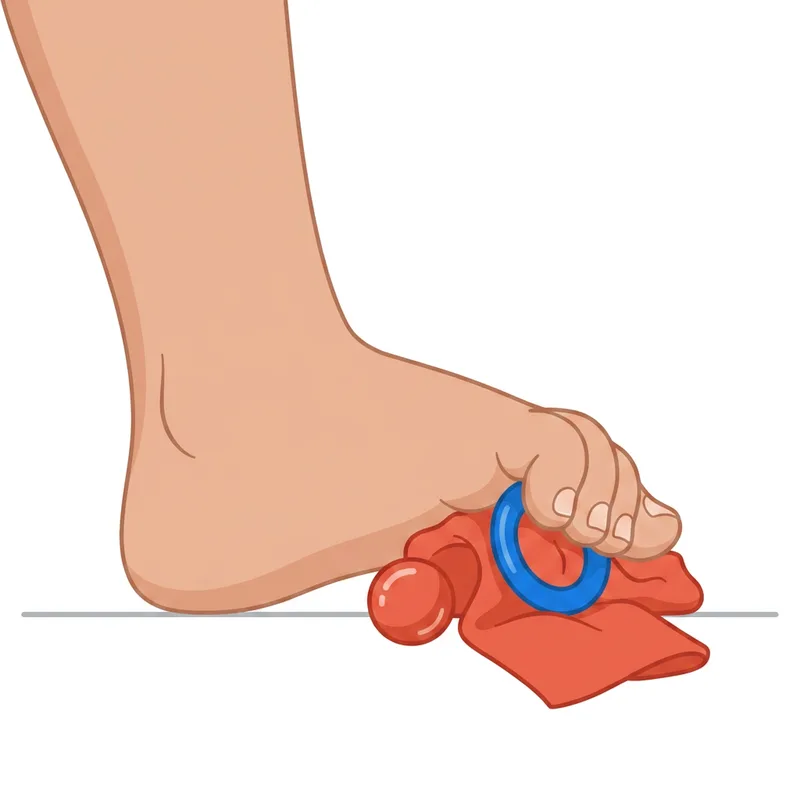
9.Toe pick-up exercise
Strengthens intrinsic foot muscles through functional movements
Scatter fabric pieces or socks on the floor. Standing (or seated initially), pick up objects one by one using ONLY toes. Place them in a container or move to another area. Focus on actively curling toes to grasp. Variation: try passing object from one foot to the other. Fun exercise ideal for children. Use fabric pieces or socks large enough not to be swallowed, with adult supervision. Avoid marbles, coins, buttons and other small objects, including within reach of younger siblings.
10-15 objects per foot, 1-2 times daily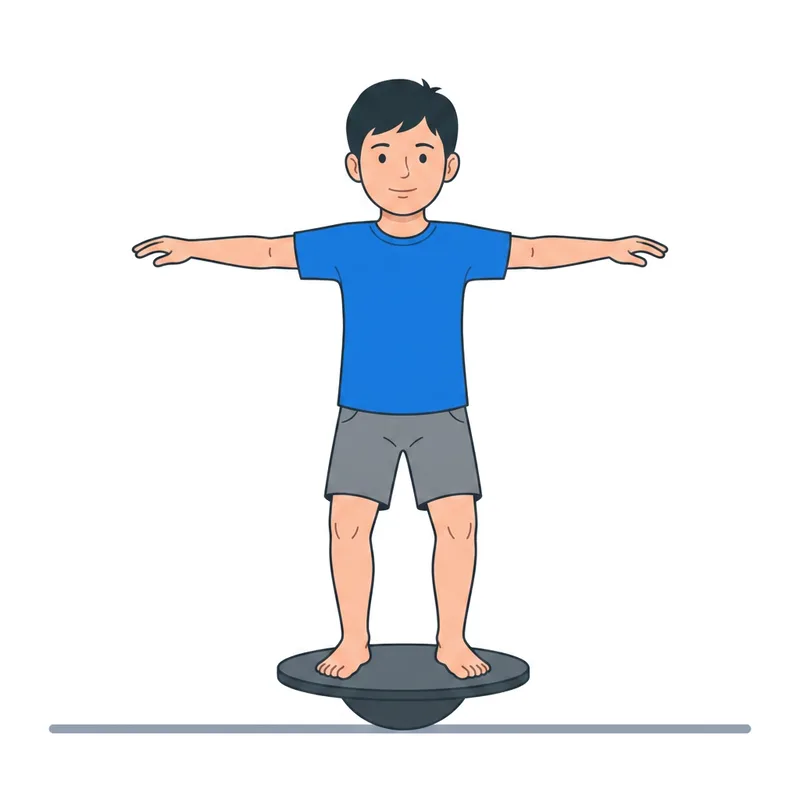
10.Balance board training
Improves proprioception and dynamic balance, engaging foot stabilizer muscles
Stand on a balance board (wobble board) or alternatively an unstable cushion. Maintain balance trying to keep board parallel to floor. PROGRESSION: Level 1 - with support (wall or chair). Level 2 - no support, feet parallel. Level 3 - slowly move board forward-backward and sideways. Level 4 - single-leg balance on board. Always near safety support.
3-5 minutes, twice daily. Progress when stable for 2 consecutive minutes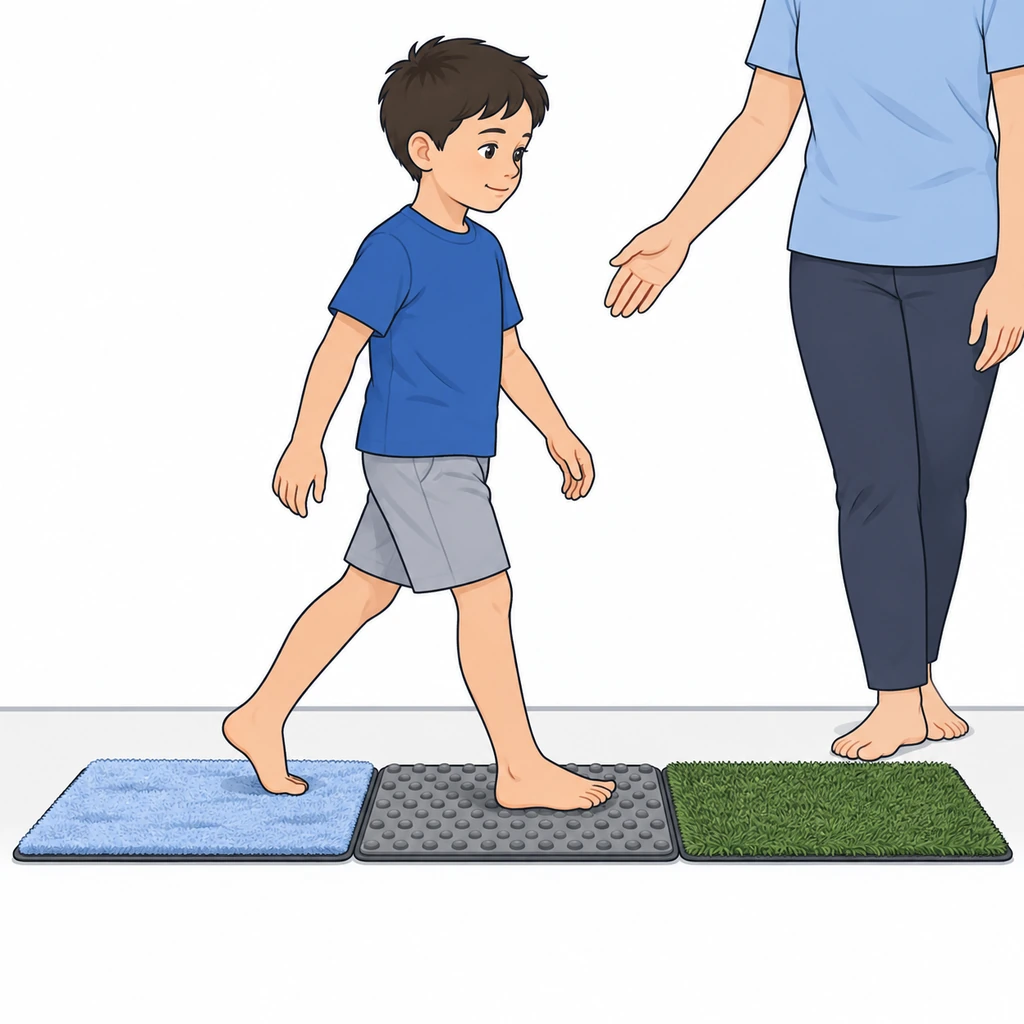
11.Uneven surface walking
Optional sensory and motor activity; barefoot walking is not required to correct flatfoot.
Have child walk barefoot on different surfaces: grass, sand, smooth pebbles, textured rugs, soft mats. Create a "sensory path" at home with cushions, rolled towels, mats of different textures. Walk slowly, feeling the ground underfoot. This stimulates plantar receptors and improves foot awareness.
If enjoyable and safe: a few minutes on suitable surfaces; this is not a mandatory therapeutic dose.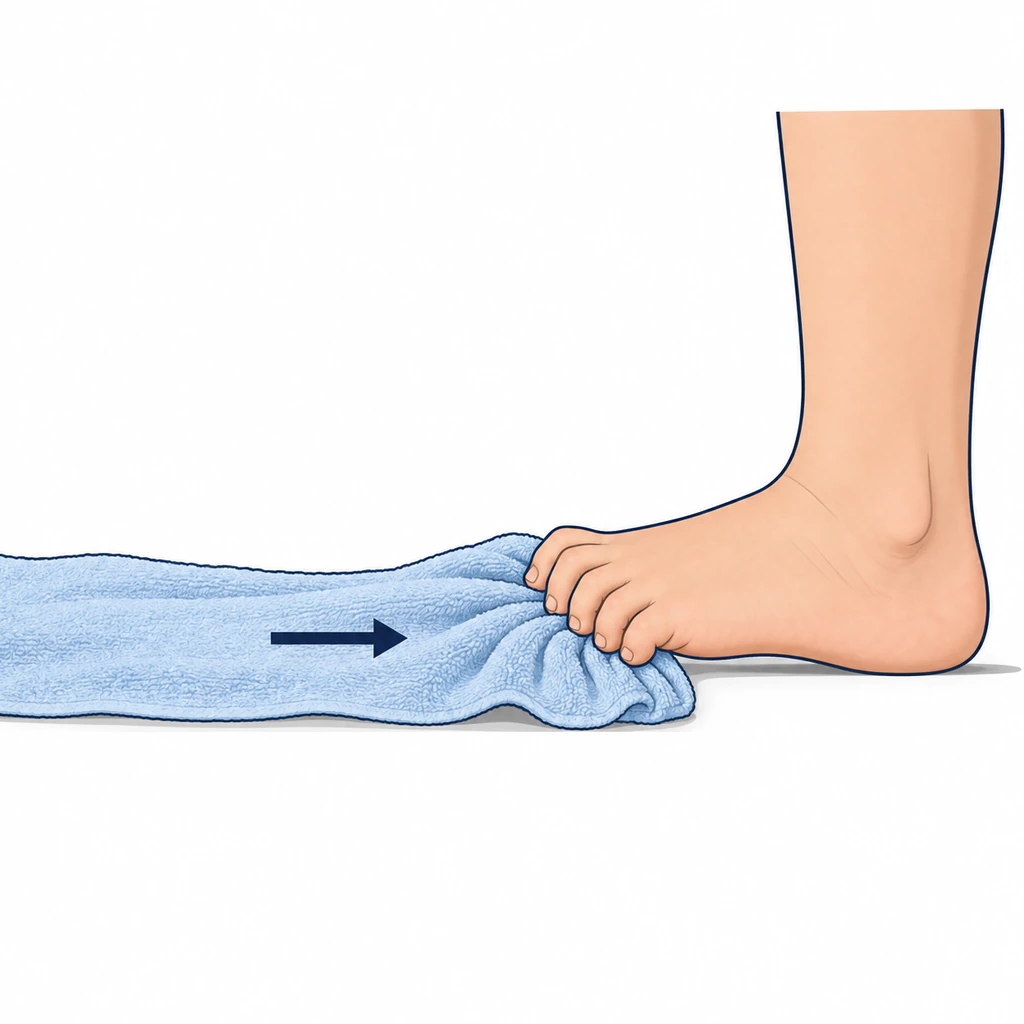
12.Towel scrunches (towel curls)
Strengthens toe flexors and intrinsic foot muscles in a simple, fun way
Lay a small towel flat on the floor. Place foot on the nearest part of towel. Using only toes, "scrunch" towel pulling it toward you, then flatten and restart. Keep heel firmly on ground throughout. When easy, add light weight (water bottle) on towel end.
3 complete sets (pull entire towel) per foot, once daily
RED FLAGS - When to stop and contact the doctor immediately
Stop the exercises immediately and contact the specialist (or go to the emergency department if severe) if any of the following occur:
- Acute or sudden pain during exercise
- Significant swelling after exercises
- Pain that progressively worsens over days
- Fever or general malaise
- Difficulty walking or using the limb after exercises
- Any neurological symptoms (tingling, numbness, sudden weakness)
- A red or hot joint, or inability to bear weight: seek prompt assessment; use emergency care if severe.
In case of doubt, always prefer a check-up over continuing the exercises.
Dott. Daniele Priano
Paediatric Orthopaedics - ASST Gaetano Pini-CTO
Content version: 21 September 2026
ortopediaevolutiva.com • Printed: 18/10/2026
 Full sheet and videos
https://ortopediaevolutiva.com/en/parents-kids/exercises/foot-ankle/flatfoot
Prepare the visit handout
Use the condition and phase indicated by your clinician. You can leave out individual exercises; instructions, illustrations and safety advice remain together.
Exclude exercises if needed
12 of 12 exercise cards included
The full web page remains available. Your selection is not saved or shared.
Before You Start
Who is this guide for?
Children with symptomatic flexible flatfoot after assessment. Asymptomatic flexible flatfoot does not require corrective exercises; exercise does not guarantee arch formation.
What you need
A stable, clear surface, comfortable clothing and a secure support. Check resistance-band anchors. Adult supervision; avoid marbles and small objects if the child may put them in their mouth, using a towel instead.
Suggested frequency
Perform only the exercises selected during the visit. The listed dosages are examples to adapt: follow the dose, frequency, rest and progression prescribed for age, symptoms and phase. Do not automatically perform the whole list.
Common mistakes to avoid
- •Forcing a painful or unauthorised movement
- •Increasing load, resistance or frequency without the agreed rest periods
- •Doing balance exercises without stable support or supervision
⚠️ Red flags — when to stop and contact the doctor immediately
Stop exercises immediately and contact the specialist if any of the following occur:
- Acute or sudden pain during exercise
- Significant swelling after exercises
- Pain that progressively worsens over days
- Fever or general malaise
- Difficulty walking or using the limb after exercises
- Any neurological symptoms (tingling, numbness, sudden weakness)
- A red or hot joint, or inability to bear weight: seek prompt assessment; use emergency care if severe.
Detailed Exercises
- 1
Calf stretch, when tight
Useful when dorsiflexion is limited; it does not create the foot arch by itself.
Stand facing a wall with hands at shoulder height. Bring the leg to stretch behind, keeping the heel firmly on the ground and toes pointing forward. Keep knee completely straight to stretch gastrocnemius, then slightly bend for soleus. Gently push hips forward until you feel a pleasant tension (not pain!) in the back of the leg. Hold position while breathing normally.
3 sets × 30 seconds each side, twice daily (morning and evening)Wall calf stretch straight knee
Illustrated video with a synthetic voice and English text in the film. Press Play to load YouTube. Follow the instructions and precautions on this exercise sheet. Open on YouTube
Wall calf stretch bent knee
Illustrated video with a synthetic voice and English text in the film. Press Play to load YouTube. Follow the instructions and precautions on this exercise sheet. Open on YouTube
- 2
Heel-down squat (heels-down squat)
Improves ankle dorsiflexion and overall lower limb mobility
Stand with feet shoulder-width apart. Slowly squat down trying to keep both heels completely on the ground. If needed, hold onto stable support (chair, table, wall) for balance. Go down as far as possible while keeping heels grounded - it's okay if you can't go very deep initially. Mobility will improve over time. Rise slowly.
10 slow repetitions, 2-3 sets. If difficult, start by holding position for 10 secondsSquat with heels down
Illustrated video with a synthetic voice and English text in the film. Press Play to load YouTube. Follow the instructions and precautions on this exercise sheet. Open on YouTube
- 3
Toe yoga (toe control)
Improves neuromuscular control and intrinsic foot muscle strength
Sit on a chair with feet flat on the floor. First movement: lift ONLY the big toe while keeping the other 4 toes pressed down. Second movement: reverse - lower big toe and lift other 4 toes. Alternate with control, without rushing. Initially it may be difficult and toes might not respond as desired - that's normal! With practice, control will significantly improve.
10 repetitions per movement, twice daily. Start seated, then try standingToe yoga
Illustrated video with a synthetic voice and English text in the film. Press Play to load YouTube. Follow the instructions and precautions on this exercise sheet. Open on YouTube
- 4
Short-foot (active arch)
Key exercise to activate and strengthen the plantar arch without using toes
Standing or seated, with foot flat on floor. Imagine "shortening" the foot by bringing the toe base toward the heel, creating a dome with the arch. IMPORTANT: toes must stay flat and relaxed, not curled! The arch lifts, toes don't bend. If the toes curl, reduce the effort and ask for help finding the movement. Initially isolating this movement is difficult - be patient.
10 reps × 5-10 second holds, 2-3 times dailyShort foot exercise
Illustrated video with a synthetic voice and English text in the film. Press Play to load YouTube. Follow the instructions and precautions on this exercise sheet. Open on YouTube
- 5
Posterior tibial strengthening (inversion with band)
Selective inversion strengthening: tibialis posterior contributes to foot control but is not the only support for the arch.
Sit with legs extended. Wrap band around forefoot, securing other end to a lateral fixed point (table leg, or hold with other hand outward). Foot starts in neutral. Rotate foot INWARD (inversion) against band resistance, then slowly return to start. Movement comes from ankle, not knee or hip.
15 reps × 3 sets per foot. Use appropriate resistance bandAnkle inversion with a resistance band
Illustrated video with a synthetic voice and English text in the film. Press Play to load YouTube. Follow the instructions and precautions on this exercise sheet. Open on YouTube
- 6
Calf raises (heel raises)
Strengthens calf muscles and improves ankle stability
Stand, lightly supported for balance. Slowly rise onto toes, going as high as possible. Hold top position for 2 seconds, then lower with control (lowering phase is as important as rising!). Start with both feet. When easy (3 sets of 20 without fatigue), progress to single leg.
Start: 15-20 reps × 3 sets (bilateral). Progress: 10-15 × 3 sets (single leg)Double leg heel raises
Illustrated video with a synthetic voice and English text in the film. Press Play to load YouTube. Follow the instructions and precautions on this exercise sheet. Open on YouTube
- 7
Single-leg balance (proprioception)
Improves proprioception and postural control, essential for foot stability
After clearance for weight bearing, start on firm ground with eyes open, next to a secure support and with adult supervision. Place the other foot down before losing balance. Progress to an unstable surface or eyes-closed work only under direct professional supervision; do not add these challenges independently. Stop for pain or instability.
30-60 seconds each side × 3 sets. Progress when stable for 60 secSingle leg balance
Illustrated video with a synthetic voice and English text in the film. Press Play to load YouTube. Follow the instructions and precautions on this exercise sheet. Open on YouTube
- 8
Heel and toe walking
Strengthens leg muscles and improves gait control
HEEL WALKING: Lift toes and walk only on heels for 10-15 meters. Keep toes up throughout. TOE WALKING: Rise onto toes and walk for 10-15 meters without lowering heels. In both cases: maintain good upright posture, look ahead (not at feet), take small controlled steps.
2-3 laps of 10-15 meters each type, once dailyHeel walking
Illustrated video with a synthetic voice and English text in the film. Press Play to load YouTube. Follow the instructions and precautions on this exercise sheet. Open on YouTube
Toe walking
Illustrated video with a synthetic voice and English text in the film. Press Play to load YouTube. Follow the instructions and precautions on this exercise sheet. Open on YouTube
- 9
Toe pick-up exercise
Strengthens intrinsic foot muscles through functional movements
Scatter fabric pieces or socks on the floor. Standing (or seated initially), pick up objects one by one using ONLY toes. Place them in a container or move to another area. Focus on actively curling toes to grasp. Variation: try passing object from one foot to the other. Fun exercise ideal for children. Use fabric pieces or socks large enough not to be swallowed, with adult supervision. Avoid marbles, coins, buttons and other small objects, including within reach of younger siblings.
10-15 objects per foot, 1-2 times dailyPicking up a large sock with your toes
Illustrated video with a synthetic voice and English text in the film. Press Play to load YouTube. Follow the instructions and precautions on this exercise sheet. Open on YouTube
- 10
Balance board training
Improves proprioception and dynamic balance, engaging foot stabilizer muscles
Stand on a balance board (wobble board) or alternatively an unstable cushion. Maintain balance trying to keep board parallel to floor. PROGRESSION: Level 1 - with support (wall or chair). Level 2 - no support, feet parallel. Level 3 - slowly move board forward-backward and sideways. Level 4 - single-leg balance on board. Always near safety support.
3-5 minutes, twice daily. Progress when stable for 2 consecutive minutesSupported balance board exercise
Illustrated video with a synthetic voice and English text in the film. Press Play to load YouTube. Follow the instructions and precautions on this exercise sheet. Open on YouTube
- 11
Uneven surface walking
Optional sensory and motor activity; barefoot walking is not required to correct flatfoot.
Have child walk barefoot on different surfaces: grass, sand, smooth pebbles, textured rugs, soft mats. Create a "sensory path" at home with cushions, rolled towels, mats of different textures. Walk slowly, feeling the ground underfoot. This stimulates plantar receptors and improves foot awareness.
If enjoyable and safe: a few minutes on suitable surfaces; this is not a mandatory therapeutic dose.Walking on a sensory path
Illustrated video with a synthetic voice and English text in the film. Press Play to load YouTube. Follow the instructions and precautions on this exercise sheet. Open on YouTube
- 12
Towel scrunches (towel curls)
Strengthens toe flexors and intrinsic foot muscles in a simple, fun way
Lay a small towel flat on the floor. Place foot on the nearest part of towel. Using only toes, "scrunch" towel pulling it toward you, then flatten and restart. Keep heel firmly on ground throughout. When easy, add light weight (water bottle) on towel end.
3 complete sets (pull entire towel) per foot, once dailyTowel curls
Illustrated video with a synthetic voice and English text in the film. Press Play to load YouTube. Follow the instructions and precautions on this exercise sheet. Open on YouTube
Frequently Asked Questions
How long does it take to see improvements with flatfoot exercises?
Selected exercises may improve strength, control and activity tolerance, but response and timing vary. They do not promise to create a foot arch. Review the programme according to symptoms and function, without a universal deadline.
Can my child do sports with flatfoot?
Flexible, painless flatfoot generally does not limit sport. Pain, stiffness, marked asymmetry or difficulty with activities require assessment. For symptomatic flatfoot, agree tolerated activities and loading; after surgery, follow the surgeon’s restrictions.
Are orthotics needed along with flatfoot exercises?
The decision to combine orthotics with exercises depends on the clinical evaluation of each case. Orthotics may help if there's pain or fatigue. The optimal therapeutic strategy is defined during the specialist visit.
Short-foot exercises are difficult: is this normal?
Yes: this fine movement can be difficult to learn. Start seated, with little effort and relaxed toes. The physiotherapist can check the technique and choose an easier version; do not persist through pain, and there is no guaranteed learning time.