Paediatric Orthopaedic Specialist
Achilles tendon tightness
Home Exercise Program
Not every exercise listed here is suitable for every child: the selection is individual and is defined during the consultation.
For whom: After assessment of dorsiflexion and the cause of tightness. Stretching is a possible part of an individual programme; it is not needed for every child who walks on tiptoes.
Dose and frequency: Perform only the exercises selected during the visit. The listed dosages are examples to adapt: follow the dose, frequency, rest and progression prescribed for age, symptoms and phase. Do not automatically perform the whole list.
Equipment and supervision: A stable, clear surface, comfortable clothing and a secure support. Check resistance-band anchors. Adult supervision; avoid marbles and small objects if the child may put them in their mouth, using a towel instead.
Avoid: Forcing a painful or unauthorised movement; Increasing load, resistance or frequency without the agreed rest periods; Doing balance exercises without stable support or supervision.
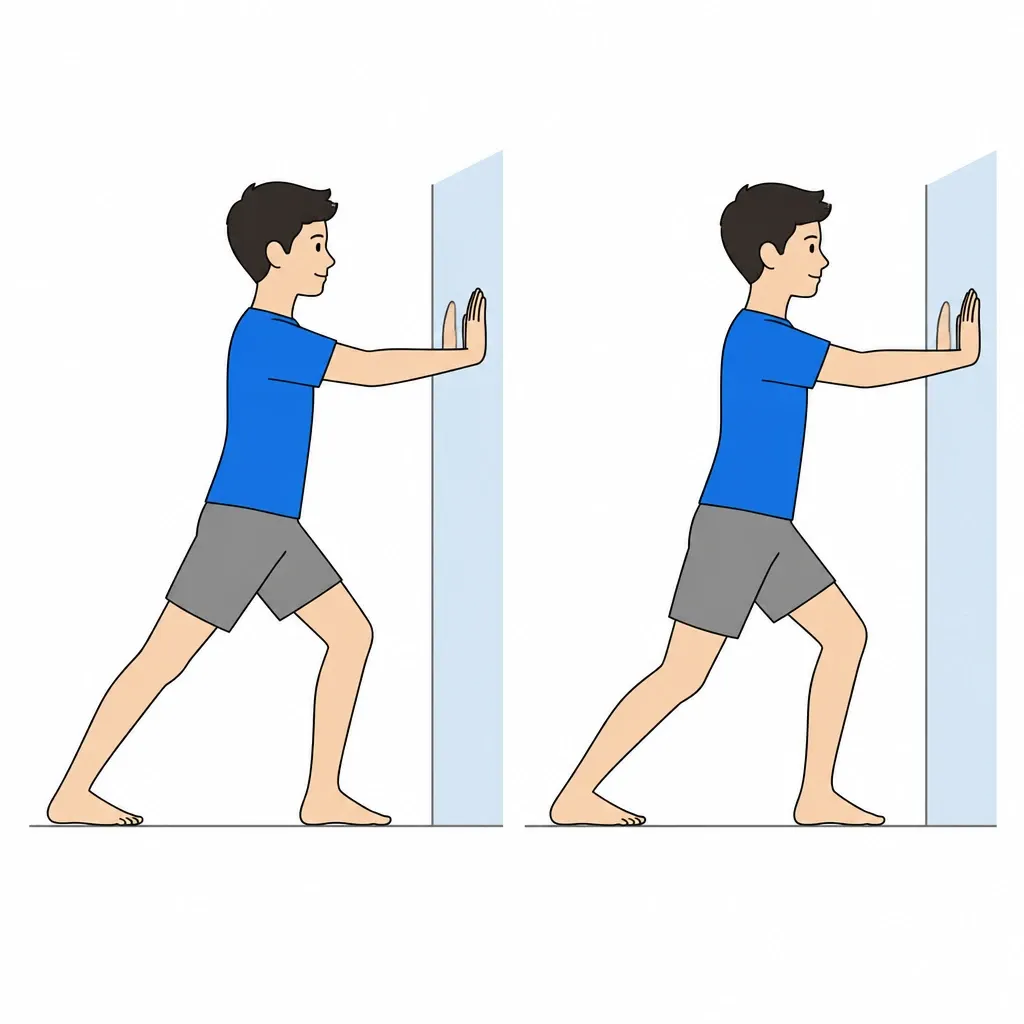
1.Wall stretch (straight + bent knee)
Two different positions to stretch both calf muscles
POSITION 1 - GASTROCNEMIUS: Facing wall, leg to stretch behind with STRAIGHT knee, heel pressed down. Push hips forward. Hold 30 seconds. POSITION 2 - SOLEUS: Same position but now BEND the knee of back leg keeping heel down. This stretches deeper muscle (soleus). Heel must ALWAYS stay on ground in both positions.
3 × 30 seconds per position, each side. At least twice daily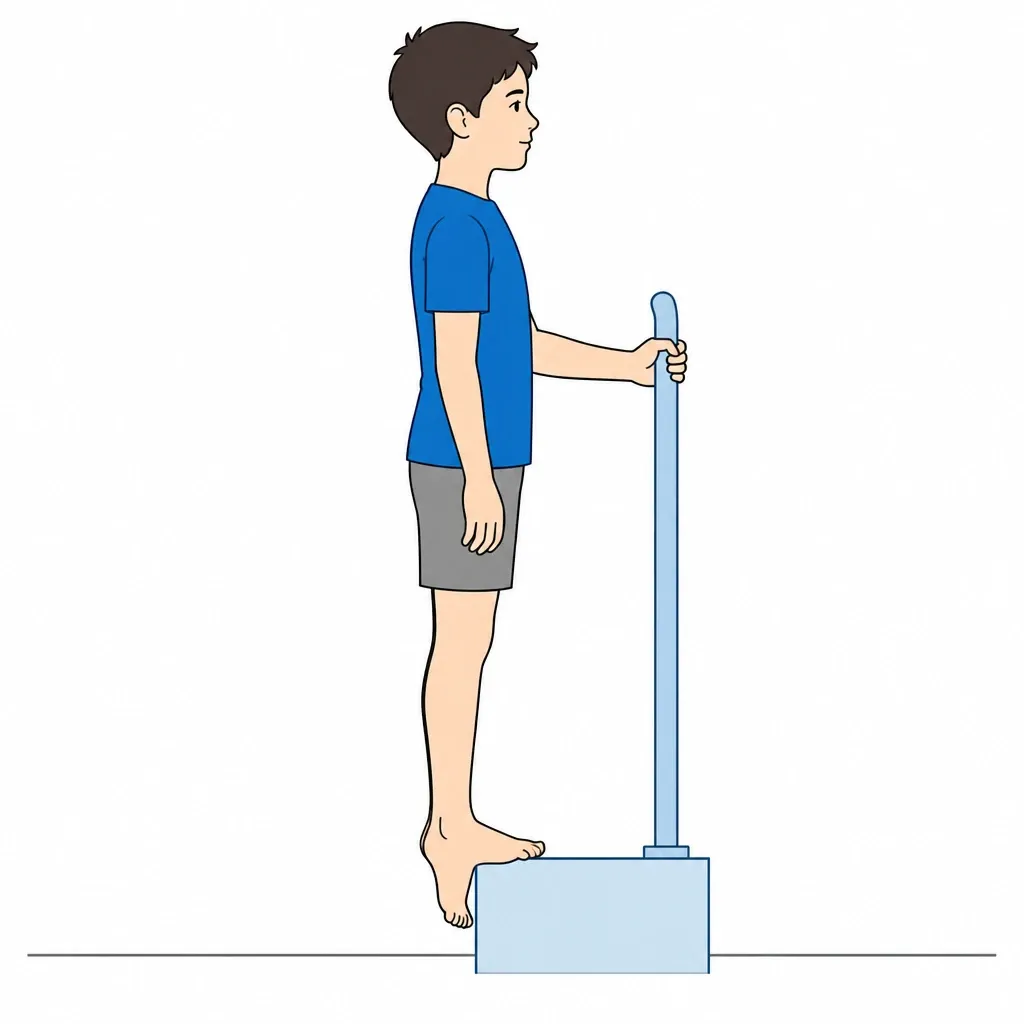
2.Static calf stretch on a step
More intense stretch, only if child is stable and coordinated
Stand on edge of step with front of foot on step, heels hanging off. ALWAYS hold railing or stable support. Slowly let heels drop below step level until feeling calf stretch. Don't bounce, hold position. CAUTION: requires good balance. If child is unsure, wall stretch is better.
3 × 30 seconds, always with secure support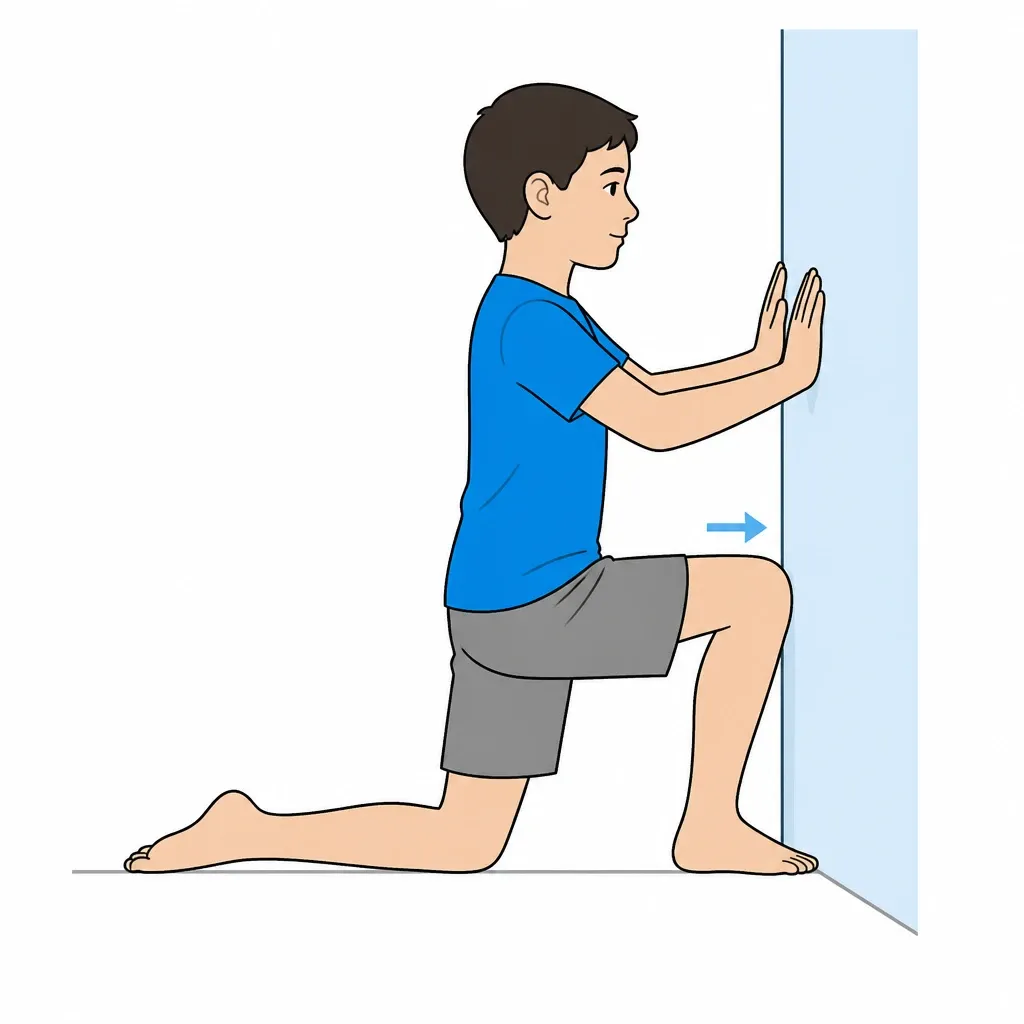
3.Ankle mobility "knee to wall"
Test and exercise to improve ankle dorsiflexion
Place foot about 10 cm from wall (measure with ruler). Keeping heel firmly planted, bend knee forward trying to touch wall with kneecap. If easy, move foot 1 cm further and retry. If heel lifts, bring foot closer. Goal is to find maximum distance where you can touch wall without lifting heel. This is also a great test to monitor progress!
10-15 reps each side, slowly and controlled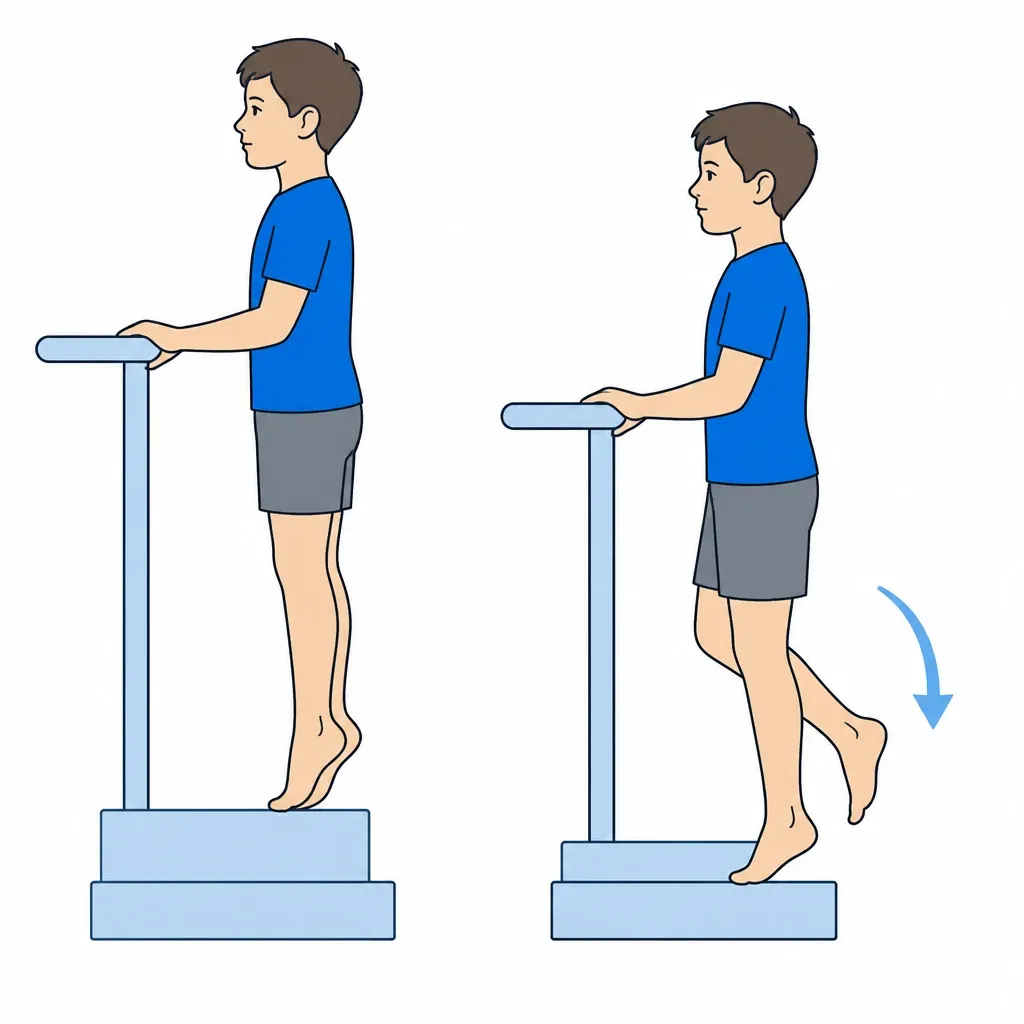
4.Eccentric calf raises
Eccentric tendon strengthening - only for older children
On a step, hold railing. Rise onto toes with BOTH feet. Then transfer weight to ONE leg and SLOWLY LOWER (counting to 5) on that leg alone. The lowering phase is the important part! Rise again with both feet and repeat. NOTE: this is advanced, suitable for children over 8-10 with good coordination.
3 × 10 reps per leg. Only if indicated and supervised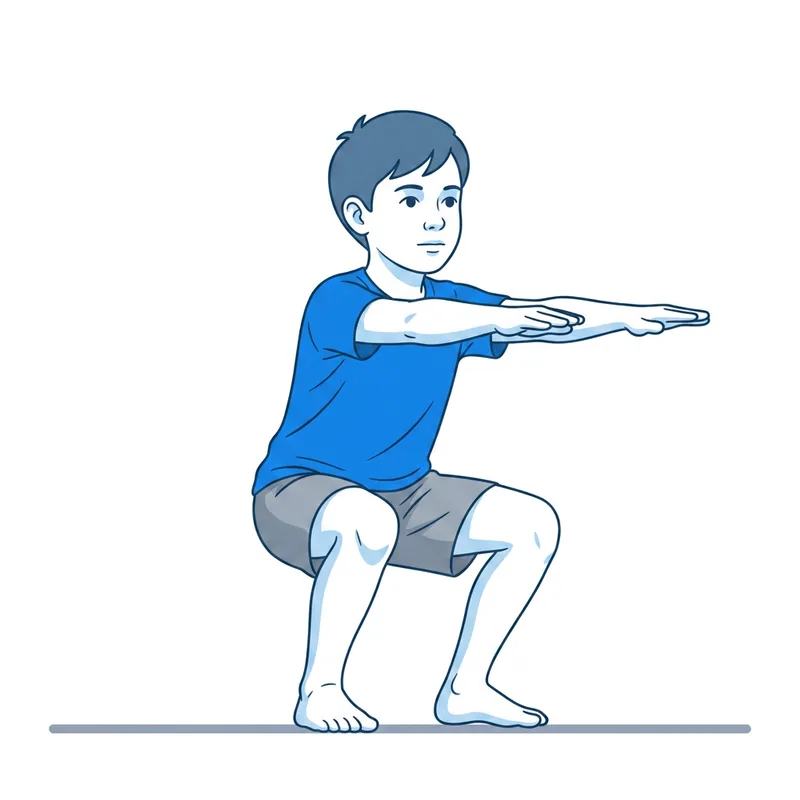
5.Deep heel-down squat
Global mobilization to improve posterior chain flexibility
Squat as deeply as possible keeping BOTH heels on ground. Hold support if needed. If heels lift, place small raise (book, rolled towel) under heels and gradually work to reduce it. Stay in squat position breathing normally, trying to relax into position.
10 reps with 10-second pause at bottom, or hold 30-60 seconds
RED FLAGS - When to stop and contact the doctor immediately
Stop the exercises immediately and contact the specialist (or go to the emergency department if severe) if any of the following occur:
- Acute or sudden pain during exercise
- Significant swelling after exercises
- Pain that progressively worsens over days
- Fever or general malaise
- Difficulty walking or using the limb after exercises
- Any neurological symptoms (tingling, numbness, sudden weakness)
- A red or hot joint, or inability to bear weight: seek prompt assessment; use emergency care if severe.
In case of doubt, always prefer a check-up over continuing the exercises.
Dott. Daniele Priano
Paediatric Orthopaedics - ASST Gaetano Pini-CTO
Content version: 21 September 2026
ortopediaevolutiva.com • Printed: 18/10/2026
 Full sheet and videos
https://ortopediaevolutiva.com/en/parents-kids/exercises/foot-ankle/achilles-tightness
Prepare the visit handout
Use the condition and phase indicated by your clinician. You can leave out individual exercises; instructions, illustrations and safety advice remain together.
Exclude exercises if needed
5 of 5 exercise cards included
The full web page remains available. Your selection is not saved or shared.
Before You Start
Who is this guide for?
After assessment of dorsiflexion and the cause of tightness. Stretching is a possible part of an individual programme; it is not needed for every child who walks on tiptoes.
What you need
A stable, clear surface, comfortable clothing and a secure support. Check resistance-band anchors. Adult supervision; avoid marbles and small objects if the child may put them in their mouth, using a towel instead.
Suggested frequency
Perform only the exercises selected during the visit. The listed dosages are examples to adapt: follow the dose, frequency, rest and progression prescribed for age, symptoms and phase. Do not automatically perform the whole list.
Common mistakes to avoid
- •Forcing a painful or unauthorised movement
- •Increasing load, resistance or frequency without the agreed rest periods
- •Doing balance exercises without stable support or supervision
⚠️ Red flags — when to stop and contact the doctor immediately
Stop exercises immediately and contact the specialist if any of the following occur:
- Acute or sudden pain during exercise
- Significant swelling after exercises
- Pain that progressively worsens over days
- Fever or general malaise
- Difficulty walking or using the limb after exercises
- Any neurological symptoms (tingling, numbness, sudden weakness)
- A red or hot joint, or inability to bear weight: seek prompt assessment; use emergency care if severe.
Detailed Exercises
- 1
Wall stretch (straight + bent knee)
Two different positions to stretch both calf muscles
POSITION 1 - GASTROCNEMIUS: Facing wall, leg to stretch behind with STRAIGHT knee, heel pressed down. Push hips forward. Hold 30 seconds. POSITION 2 - SOLEUS: Same position but now BEND the knee of back leg keeping heel down. This stretches deeper muscle (soleus). Heel must ALWAYS stay on ground in both positions.
3 × 30 seconds per position, each side. At least twice dailyWall calf stretch straight knee
Illustrated video with a synthetic voice and English text in the film. Press Play to load YouTube. Follow the instructions and precautions on this exercise sheet. Open on YouTube
Wall calf stretch bent knee
Illustrated video with a synthetic voice and English text in the film. Press Play to load YouTube. Follow the instructions and precautions on this exercise sheet. Open on YouTube
- 2
Static calf stretch on a step
More intense stretch, only if child is stable and coordinated
Stand on edge of step with front of foot on step, heels hanging off. ALWAYS hold railing or stable support. Slowly let heels drop below step level until feeling calf stretch. Don't bounce, hold position. CAUTION: requires good balance. If child is unsure, wall stretch is better.
3 × 30 seconds, always with secure supportStatic calf stretch on a step
Illustrated video with a synthetic voice and English text in the film. Press Play to load YouTube. Follow the instructions and precautions on this exercise sheet. Open on YouTube
- 3
Ankle mobility "knee to wall"
Test and exercise to improve ankle dorsiflexion
Place foot about 10 cm from wall (measure with ruler). Keeping heel firmly planted, bend knee forward trying to touch wall with kneecap. If easy, move foot 1 cm further and retry. If heel lifts, bring foot closer. Goal is to find maximum distance where you can touch wall without lifting heel. This is also a great test to monitor progress!
10-15 reps each side, slowly and controlledKnee to wall ankle mobility
Illustrated video with a synthetic voice and English text in the film. Press Play to load YouTube. Follow the instructions and precautions on this exercise sheet. Open on YouTube
- 4
Eccentric calf raises
Eccentric tendon strengthening - only for older children
On a step, hold railing. Rise onto toes with BOTH feet. Then transfer weight to ONE leg and SLOWLY LOWER (counting to 5) on that leg alone. The lowering phase is the important part! Rise again with both feet and repeat. NOTE: this is advanced, suitable for children over 8-10 with good coordination.
3 × 10 reps per leg. Only if indicated and supervisedSingle leg eccentric heel lowering
Illustrated video with a synthetic voice and English text in the film. Press Play to load YouTube. Follow the instructions and precautions on this exercise sheet. Open on YouTube
- 5
Deep heel-down squat
Global mobilization to improve posterior chain flexibility
Squat as deeply as possible keeping BOTH heels on ground. Hold support if needed. If heels lift, place small raise (book, rolled towel) under heels and gradually work to reduce it. Stay in squat position breathing normally, trying to relax into position.
10 reps with 10-second pause at bottom, or hold 30-60 secondsSquat with heels down
Illustrated video with a synthetic voice and English text in the film. Press Play to load YouTube. Follow the instructions and precautions on this exercise sheet. Open on YouTube
Frequently Asked Questions
How do I know if my child has a tight Achilles tendon?
Difficulty keeping the heels down or limited dorsiflexion may suggest reduced mobility, but a squat or knee-to-wall test does not diagnose an Achilles contracture by itself. Assessment distinguishes possible causes and compares movement with the knee straight and bent.
How long does it take to lengthen the Achilles tendon with exercises?
Dorsiflexion may improve with a suitable programme, but timing and outcome depend on the cause, degree of tightness and growth. A fixed contracture may need other treatment. Dose stretching after assessment, without promising tendon lengthening within a set number of weeks.
Can Achilles tendon tightness cause problems if untreated?
Limited dorsiflexion can be associated with compensations in gait or foot loading, but does not automatically explain every foot or knee pain. Stretching, when indicated for tightness, may help mobility; it does not guarantee prevention of all these conditions.