Paediatric Orthopaedic Specialist
After Pavlik harness / abduction brace
Home Exercise Program
Not every exercise listed here is suitable for every child: the selection is individual and is defined during the consultation.
For whom: Care and play activities for hip dysplasia within the team’s instructions. Do not passively move the hips, test abduction or clicks, or adjust or remove the harness without permission. Tummy time only awake and supervised; sleep supine.
Dose and frequency: Perform only the exercises selected during the visit. The listed dosages are examples to adapt: follow the dose, frequency, rest and progression prescribed for age, symptoms and phase. Do not automatically perform the whole list.
Equipment and supervision: A stable, clear surface, an adult continuously present and an age-appropriate toy. The baby should be awake and calm; place them on their back for sleep. Follow the cast or harness programme.
Avoid: Forcing the head or a limb, persisting through crying or provoking joint clicks; Repeating manoeuvres not demonstrated with your baby; Changing straps, brace settings or wearing time without instructions.
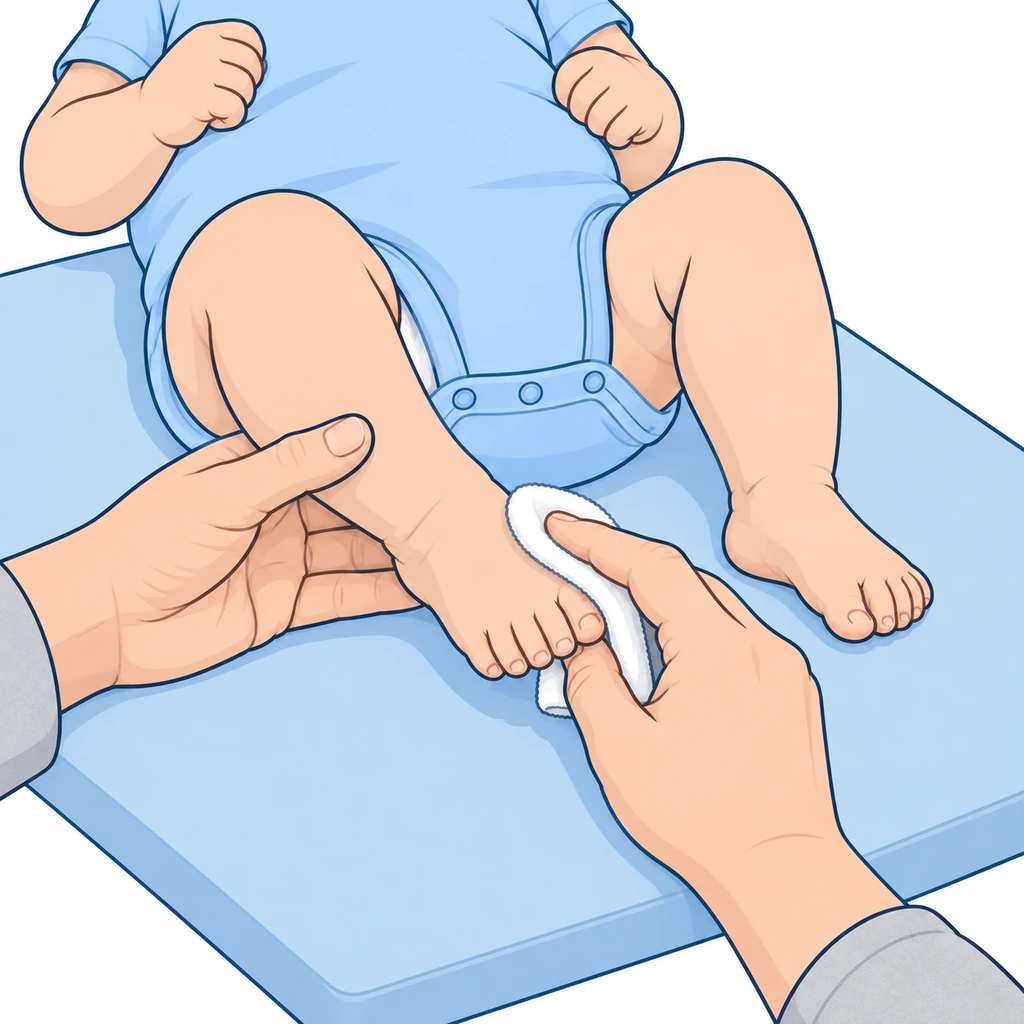
1.Skin care and pressure-point checks
Skin checks at harness contact areas
Care without the harness is only allowed when authorised or after it has been discontinued. Do not loosen straps to copy the picture.
At each change, inspect the accessible groin creases, backs of the knees, shoulders and tops of the feet. Clean as taught by the team and dry gently; do not loosen or remove the harness to reach an area without permission. Promptly report broken skin, persistent redness, an unusual smell or pain on contact. Do not apply creams under the straps without advice or change the settings yourself.
At every diaper change and before sleep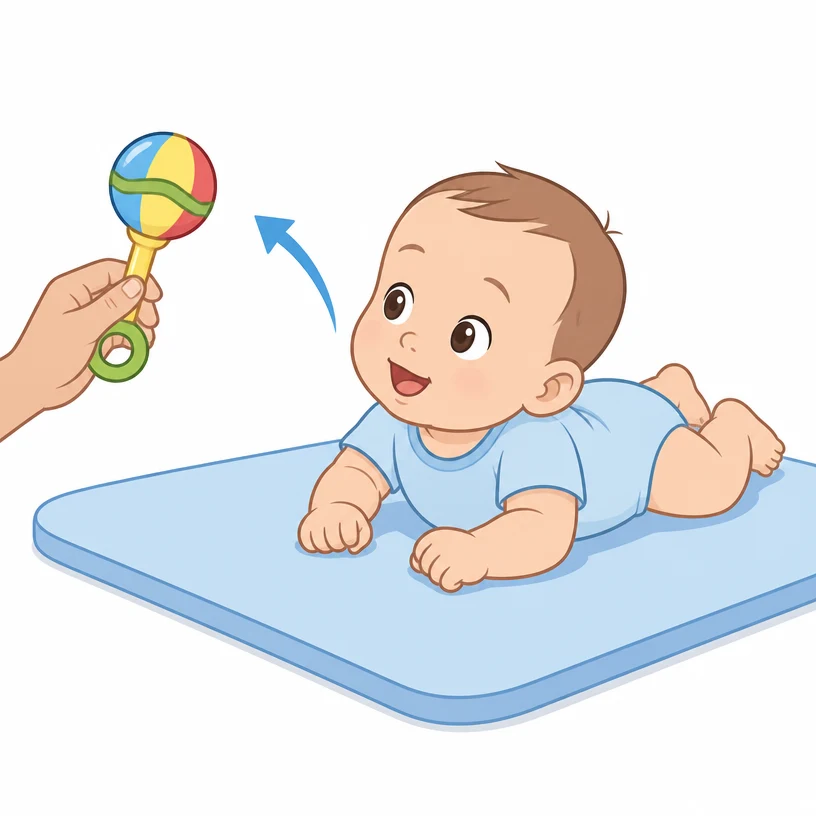
2.Free movement on the floor
Free play after authorised harness removal.
Only during authorised periods without the harness, offer mat play with an adult present: kicking, reaching for a toy or rolling according to the baby’s abilities. Let the baby initiate movement; do not pull the legs or impose positions. Continue hip follow-up even if movement appears normal.
Repeated short sessions suited to age and tolerance.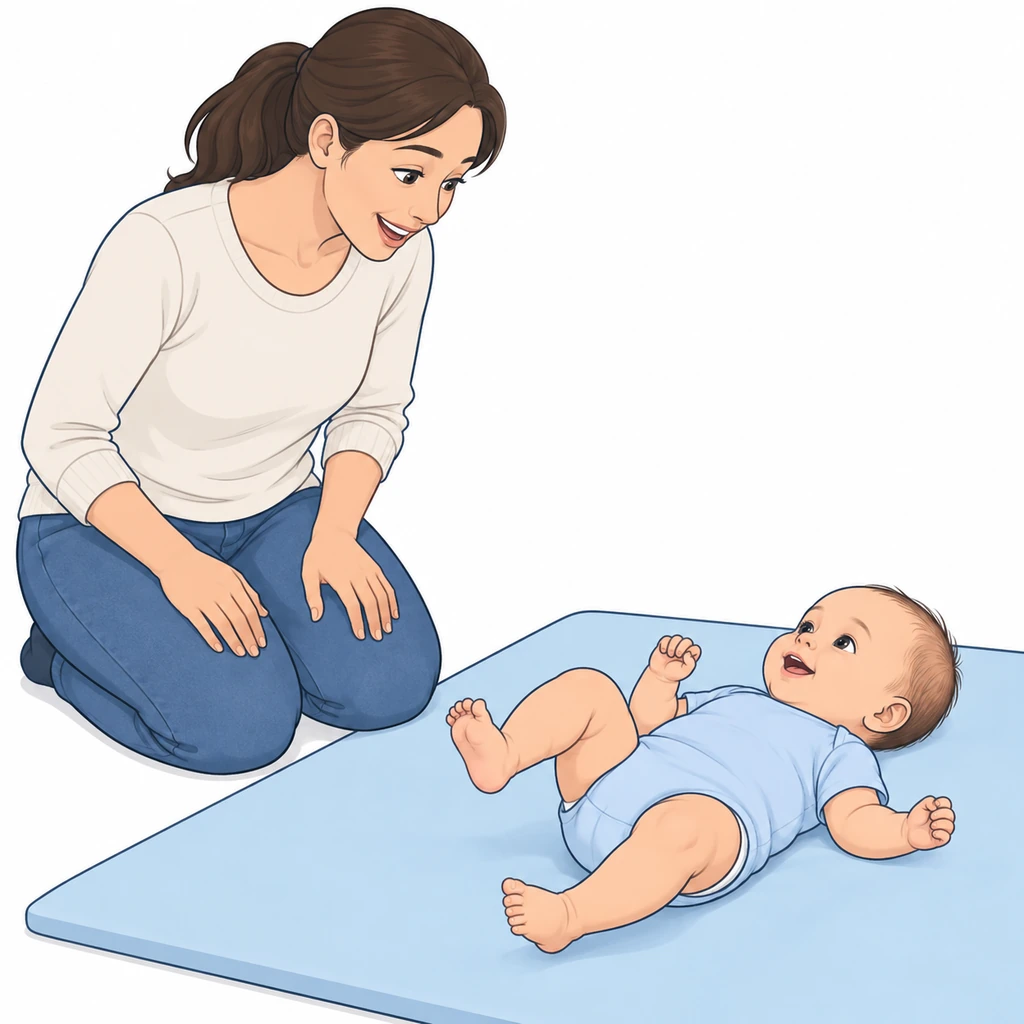
3.Spontaneous leg movement
Hand-guided movement is not a standard home treatment for hip dysplasia.
The figure shows a harness-free interval: follow authorised breaks or the prescribed discontinuation plan.
With the baby awake on a safe mat, allow free leg movement within the permitted positions. Do not perform passive cycling, pull the legs down or force extension. If a harness is in use, follow its schedule and settings; temporary removal requires instructions from the treating team.
Short periods of play suited to age and tolerance, following the harness restrictions.4.Observe movement without testing the hips
Comparing passive hip opening is a professional examination.
Observe without moving the hips by hand. If the harness is still prescribed, keep it on according to your instructions.
During care, observe whether the baby moves both legs spontaneously. Report a new reduction in movement, pain or persistent difficulty. Do not passively spread the knees to look for asymmetry or clicks and do not perform hip stability tests at home.
Observe during care; no repeated passive hip opening.5.Tummy time and motor milestone stimulation
Restores trunk strength and coordination after immobilization
Awake play with continuous supervision; do not remove the harness for this activity without permission.
Offer tummy time only while awake, continuously supervised and in positions compatible with hip treatment. The treating team must confirm how to do it if the harness is still in use. Do not remove or adjust the harness for this activity. For sleep, use the back position on a clear, flat surface.
Short sessions according to tolerance and the instructions received.
RED FLAGS - When to stop and contact the doctor immediately
Stop the exercises immediately and contact the specialist (or go to the emergency department if severe) if any of the following occur:
- Persistent crying, pain or resistance during handling: stop and contact the treating clinician.
- Fever, malaise, swelling or redness: seek prompt assessment.
- Sudden reduction of limb movement, cold or discoloured toes, or a compressive cast or harness: urgent assessment.
- Sudden head tilt, especially after injury or with fever, unusual eye movements or weakness: do not stretch and seek assessment.
In case of doubt, always prefer a check-up over continuing the exercises.
Dott. Daniele Priano
Paediatric Orthopaedics - ASST Gaetano Pini-CTO
Content version: 21 September 2026
ortopediaevolutiva.com • Printed: 18/10/2026
 Full sheet and videos
https://ortopediaevolutiva.com/en/parents-kids/exercises/hip/post-pavlik
Prepare the visit handout
Use the condition and phase indicated by your clinician. You can leave out individual exercises; instructions, illustrations and safety advice remain together.
Exclude exercises if needed
5 of 5 exercise cards included
The full web page remains available. Your selection is not saved or shared.
Before You Start
Who is this guide for?
Care and play activities for hip dysplasia within the team’s instructions. Do not passively move the hips, test abduction or clicks, or adjust or remove the harness without permission. Tummy time only awake and supervised; sleep supine.
What you need
A stable, clear surface, an adult continuously present and an age-appropriate toy. The baby should be awake and calm; place them on their back for sleep. Follow the cast or harness programme.
Suggested frequency
Perform only the exercises selected during the visit. The listed dosages are examples to adapt: follow the dose, frequency, rest and progression prescribed for age, symptoms and phase. Do not automatically perform the whole list.
Common mistakes to avoid
- •Forcing the head or a limb, persisting through crying or provoking joint clicks
- •Repeating manoeuvres not demonstrated with your baby
- •Changing straps, brace settings or wearing time without instructions
⚠️ Red flags — when to stop and contact the doctor immediately
Stop exercises immediately and contact the specialist if any of the following occur:
- Persistent crying, pain or resistance during handling: stop and contact the treating clinician.
- Fever, malaise, swelling or redness: seek prompt assessment.
- Sudden reduction of limb movement, cold or discoloured toes, or a compressive cast or harness: urgent assessment.
- Sudden head tilt, especially after injury or with fever, unusual eye movements or weakness: do not stretch and seek assessment.
Detailed Exercises
- 1
Skin care and pressure-point checks
Skin checks at harness contact areas
Care without the harness is only allowed when authorised or after it has been discontinued. Do not loosen straps to copy the picture.
At each change, inspect the accessible groin creases, backs of the knees, shoulders and tops of the feet. Clean as taught by the team and dry gently; do not loosen or remove the harness to reach an area without permission. Promptly report broken skin, persistent redness, an unusual smell or pain on contact. Do not apply creams under the straps without advice or change the settings yourself.
At every diaper change and before sleep - 2
Free movement on the floor
Free play after authorised harness removal.
Only during authorised periods without the harness, offer mat play with an adult present: kicking, reaching for a toy or rolling according to the baby’s abilities. Let the baby initiate movement; do not pull the legs or impose positions. Continue hip follow-up even if movement appears normal.
Repeated short sessions suited to age and tolerance. - 3
Spontaneous leg movement
Hand-guided movement is not a standard home treatment for hip dysplasia.
The figure shows a harness-free interval: follow authorised breaks or the prescribed discontinuation plan.
With the baby awake on a safe mat, allow free leg movement within the permitted positions. Do not perform passive cycling, pull the legs down or force extension. If a harness is in use, follow its schedule and settings; temporary removal requires instructions from the treating team.
Short periods of play suited to age and tolerance, following the harness restrictions.Spontaneous leg movement
Press Play to load the video. Follow the instructions and precautions on this exercise sheet.
Brief shared illustration of spontaneous leg movements while awake and lying on the back. Breaks from the harness only when authorised by the treating team; do not change its settings. No passive or forced movement and no therapeutic dose is shown.
- 4
Observe movement without testing the hips
Comparing passive hip opening is a professional examination.
Observe without moving the hips by hand. If the harness is still prescribed, keep it on according to your instructions.
During care, observe whether the baby moves both legs spontaneously. Report a new reduction in movement, pain or persistent difficulty. Do not passively spread the knees to look for asymmetry or clicks and do not perform hip stability tests at home.
Observe during care; no repeated passive hip opening. - 5
Tummy time and motor milestone stimulation
Restores trunk strength and coordination after immobilization
Awake play with continuous supervision; do not remove the harness for this activity without permission.
Offer tummy time only while awake, continuously supervised and in positions compatible with hip treatment. The treating team must confirm how to do it if the harness is still in use. Do not remove or adjust the harness for this activity. For sleep, use the back position on a clear, flat surface.
Short sessions according to tolerance and the instructions received.
Frequently Asked Questions
Will my child be delayed in walking after the brace?
Motor milestones should be assessed individually. The harness can affect opportunities for movement during treatment, but does not predict when a child will start walking. After authorised removal, encourage play and spontaneous movement in permitted positions and attend scheduled follow-up. Report loss of previously acquired skills or persistently reduced movement to the treating clinician.
Do the legs stay stiff after removal?
After authorised removal, allow the baby to move their legs spontaneously during play. Do not pull them, force them straight or use passive mobilisation to speed recovery. Recovery does not follow one timetable for every baby: pain, marked stiffness or one leg moving less require review by the treating team.