Paediatric Orthopaedic Specialist
Perthes disease (recovery phase and sequelae)
Home Exercise Program
Not every exercise listed here is suitable for every child: the selection is individual and is defined during the consultation.
For whom: Children recovering from Perthes disease. Exercises vary greatly depending on disease stage.
Dose and frequency: Perform only the exercises selected during the visit. The listed dosages are examples to adapt: follow the dose, frequency, rest and progression prescribed for age, symptoms and phase. Do not automatically perform the whole list.
Equipment and supervision: A stable, clear surface, comfortable clothing and a secure support. Check resistance-band anchors. Adult supervision; avoid marbles and small objects if the child may put them in their mouth, using a towel instead.
Avoid: Forcing a painful or unauthorised movement; Increasing load, resistance or frequency without the agreed rest periods; Doing balance exercises without stable support or supervision.
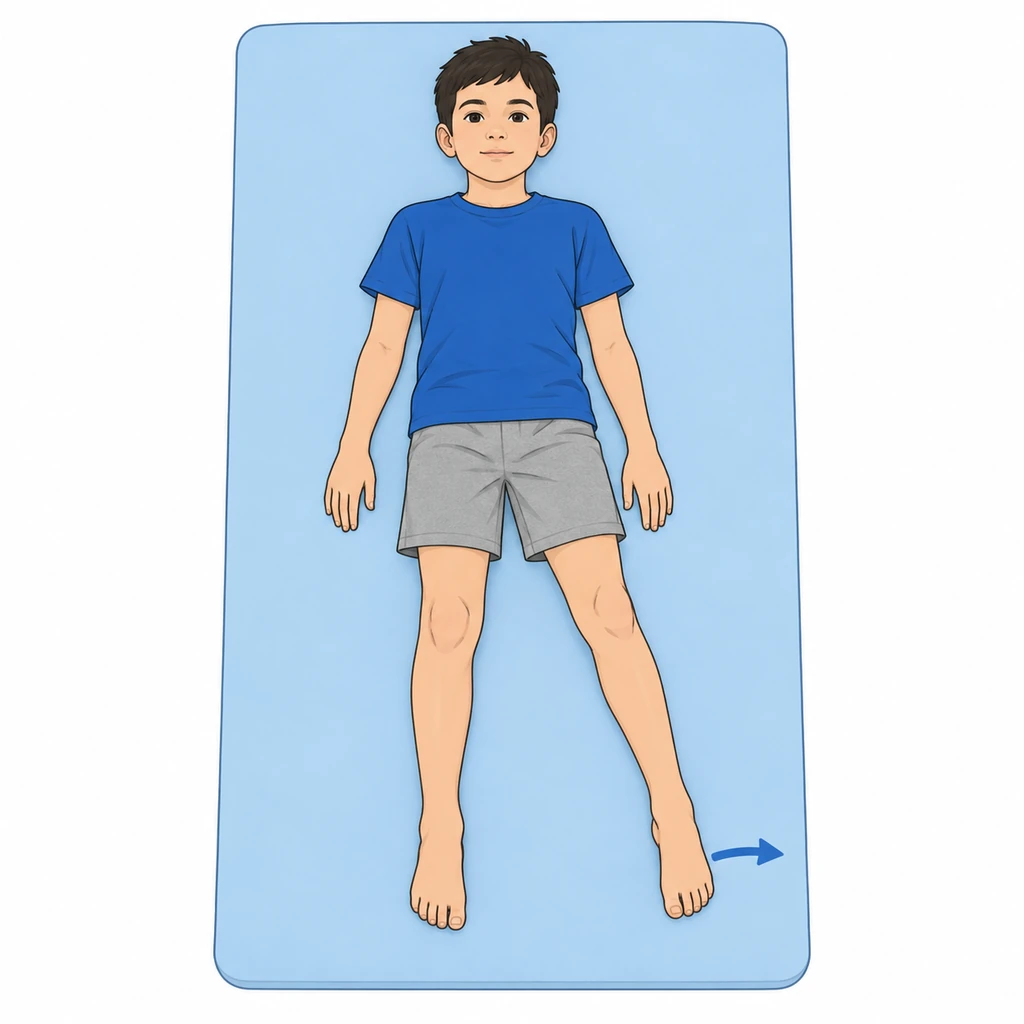
1.Hip abduction mobility, if prescribed
Abduction is one movement monitored in Perthes disease; goals and range depend on stage and the containment plan.
Only within the specialist’s plan for this stage of Perthes and any surgery, including movement and weight-bearing limits. Do not force a painful or blocked hip. Child supine on a firm surface, legs straight and pelvis level (not tilted). Slide the affected leg outward along the surface, keeping the kneecap pointing up, to the pain-free limit. An adult can guide the movement supporting the thigh. Always compare range with the healthy side.
10 repetitions with 10-20 second holds, twice daily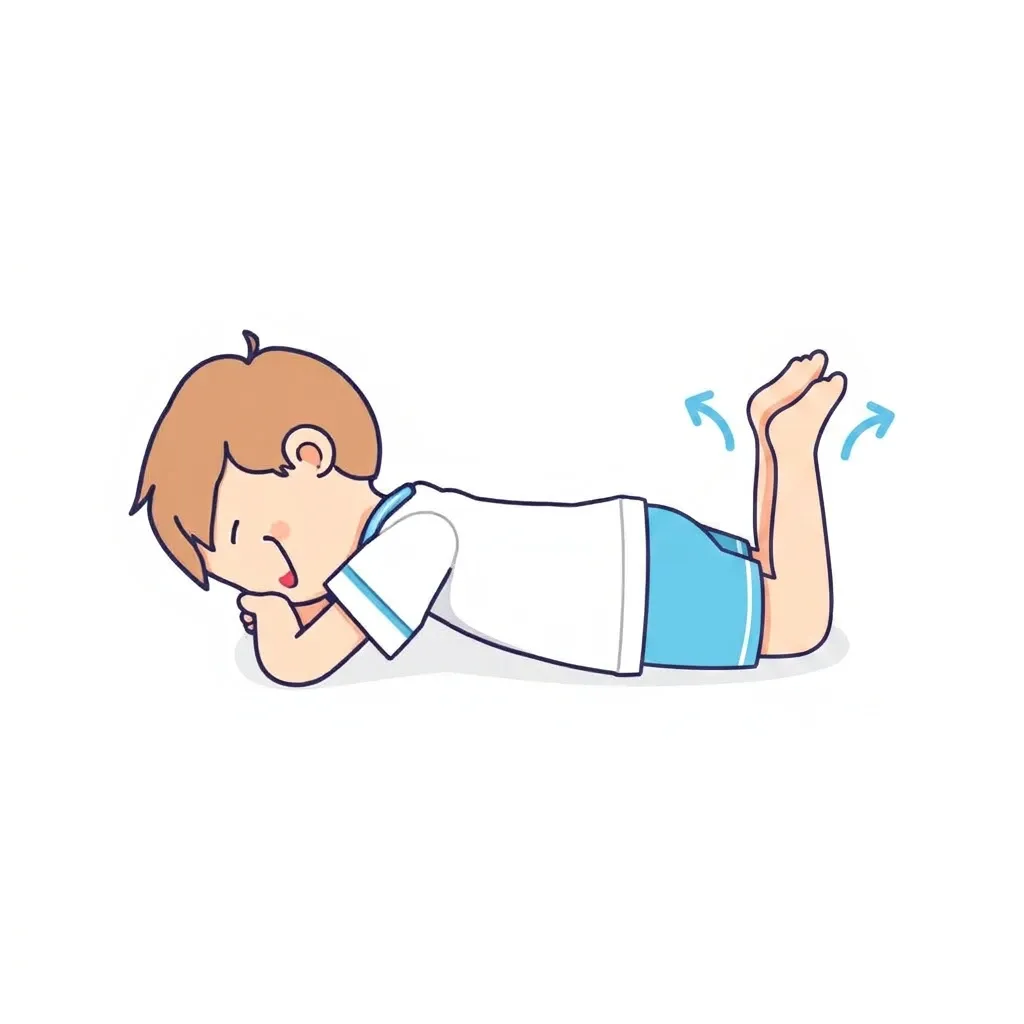
2.Prone internal rotation
Restores internal rotation, often limited in active phases
Only within the specialist’s plan for this stage of Perthes and any surgery, including movement and weight-bearing limits. Do not force a painful or blocked hip. Child prone with knees bent to 90°. Let the legs fall slowly outward (feet moving apart): this produces internal rotation of the hips. Hold the position while breathing calmly. The pelvis stays flat on the surface.
3 × 30 seconds, once or twice daily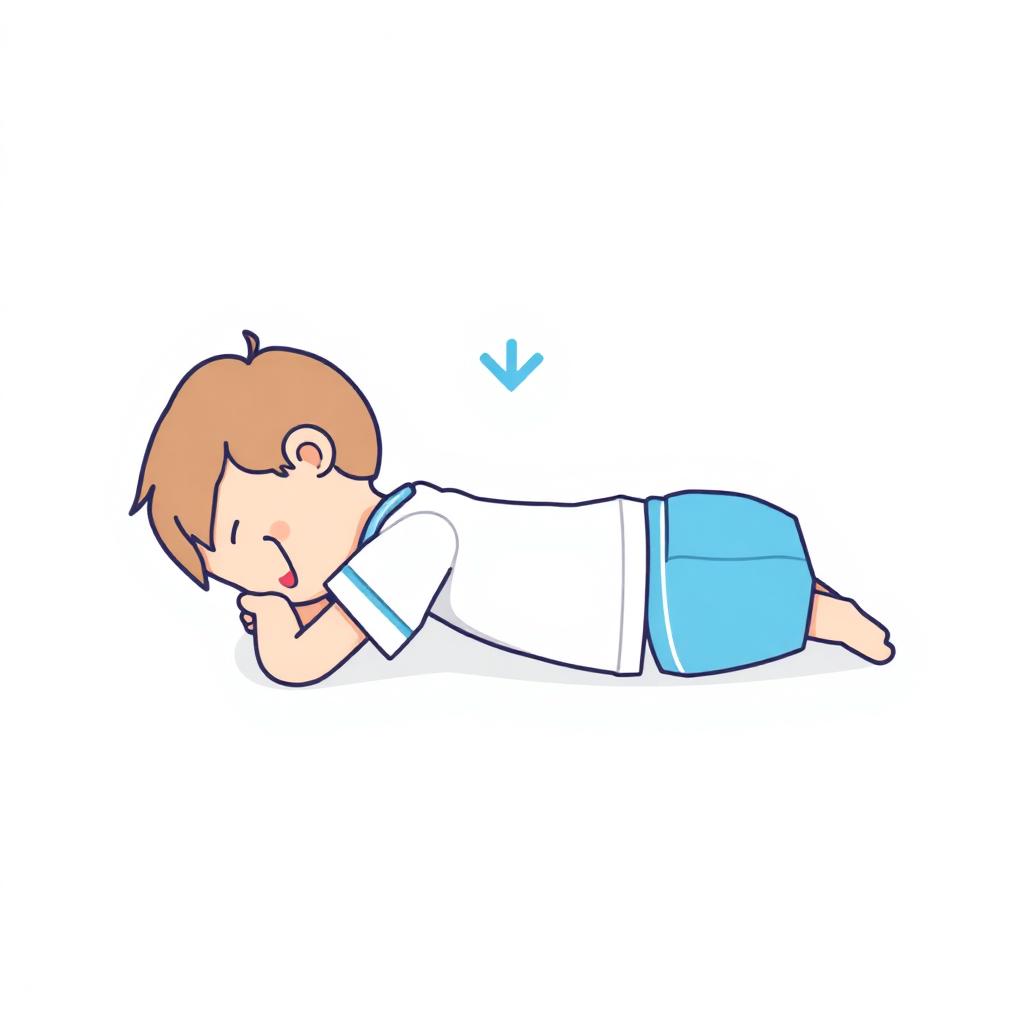
3.Prone lying for the hip flexors
Counteracts hip flexion contracture
Only if prone lying is allowed in the individual plan. The child lies on their tummy on a stable surface with a comfortable pelvis and back, without forcing hip extension. Do not add pillows under the ankles to increase leverage. The physiotherapist selects any supports, duration and version, especially after surgery; stop for pain.
15-20 minutes, once or twice daily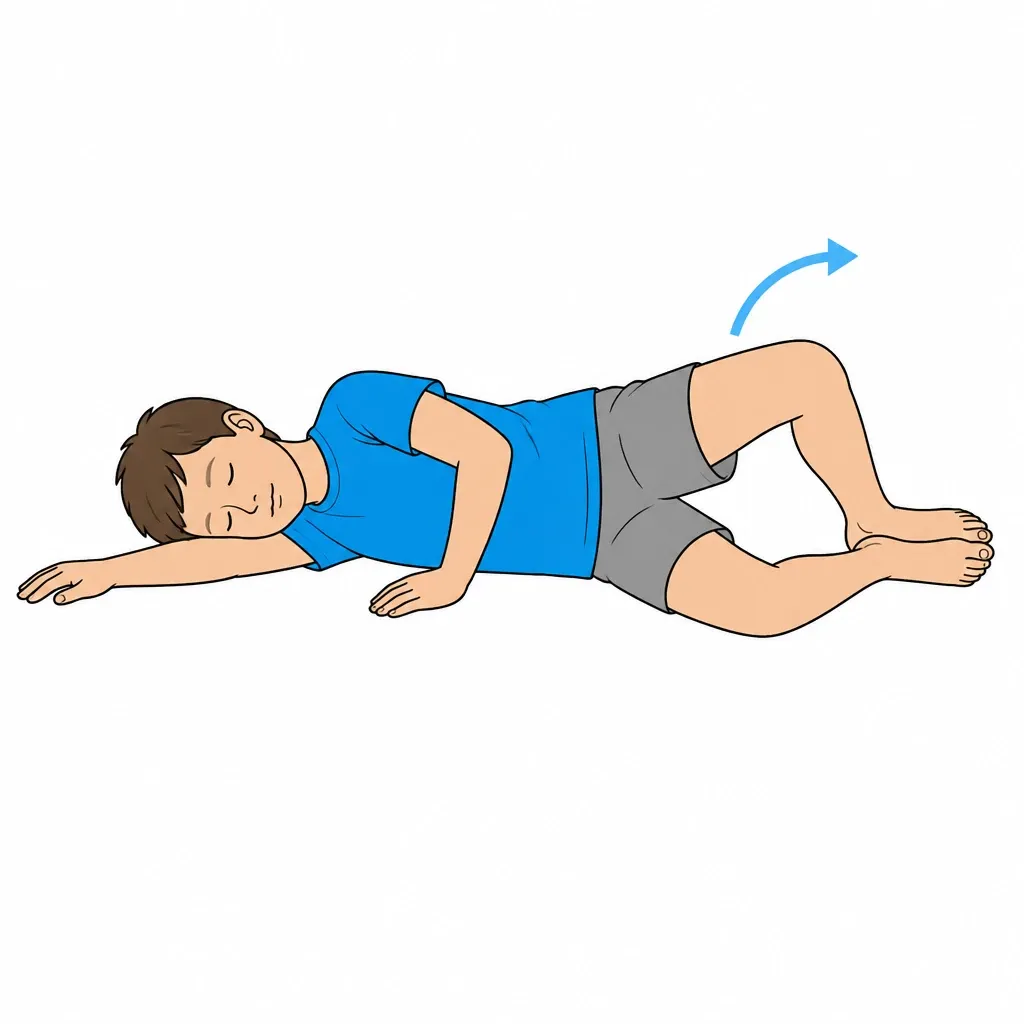
4.Abductor strengthening (clam and side-lying abduction)
Strengthens gluteus medius to reduce Trendelenburg limp
Only within the specialist’s plan for this stage of Perthes and any surgery, including movement and weight-bearing limits. Do not force a painful or blocked hip. Lying on the healthy side, hips and knees flexed, heels together: lift the top knee (clam) without rolling the pelvis backward. Progress with the leg straight, lifting the affected limb 30-40 cm keeping the toes pointing forward. Slow, controlled movement, with no groin pain.
2-3 sets of 10-12 repetitions, every other day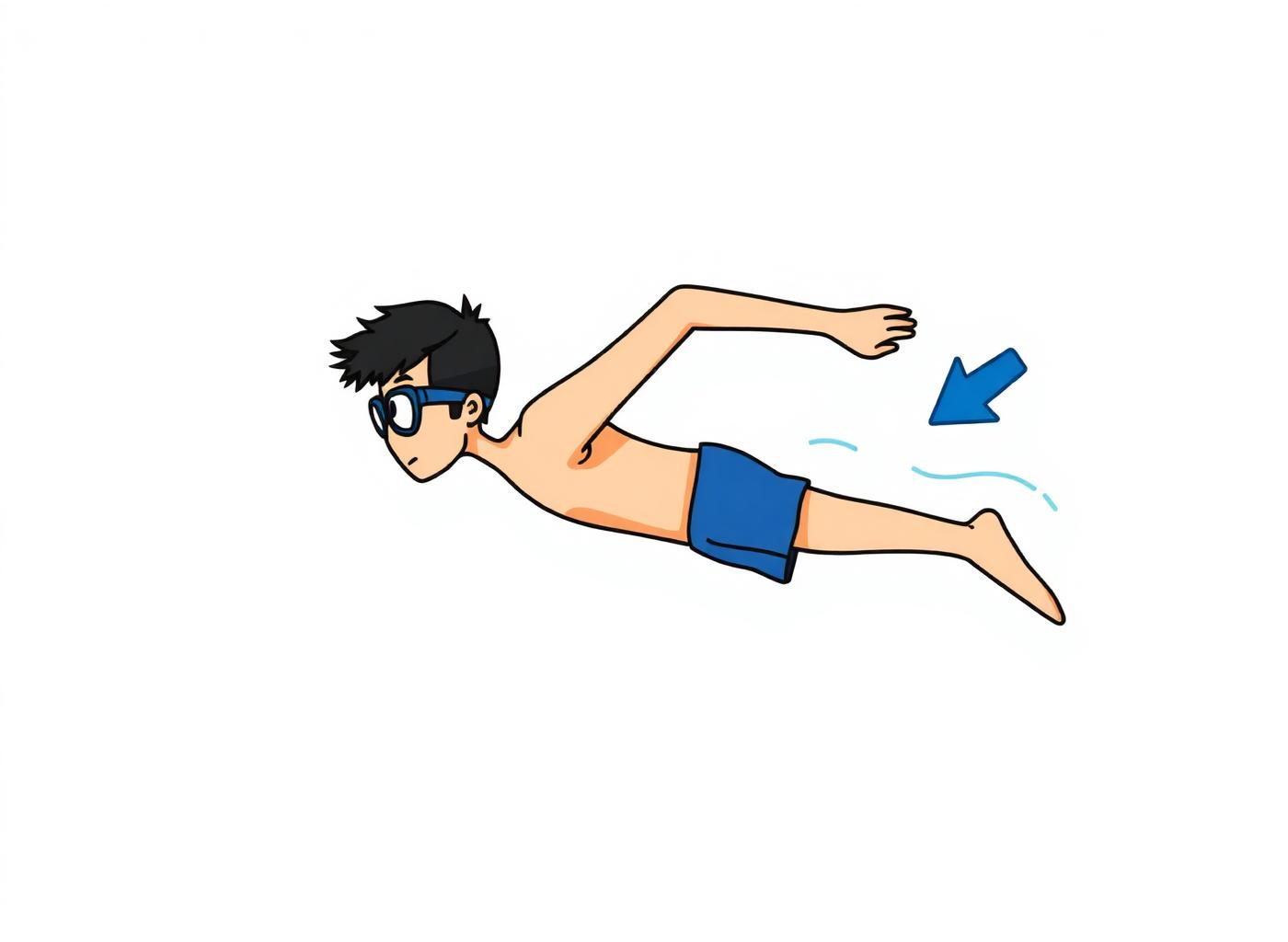
5.Swimming and low-impact activity
Low-impact activity according to stage, pain and permitted loading; low impact does not mean no load on the femoral head.
Only within the specialist’s plan for this stage of Perthes and any surgery, including movement and weight-bearing limits. Do not force a painful or blocked hip. Swimming (freestyle and backstroke; avoid breaststroke in active phases because of forced abduction load) and stationary cycling with a high saddle and low resistance are the activities of choice. Avoid running, jumping and contact sports until the specialist allows them.
2-3 sessions per week, 20-30 minutes
RED FLAGS - When to stop and contact the doctor immediately
Stop the exercises immediately and contact the specialist (or go to the emergency department if severe) if any of the following occur:
- Acute or sudden pain during exercise
- Significant swelling after exercises
- Pain that progressively worsens over days
- Fever or general malaise
- Difficulty walking or using the limb after exercises
- Any neurological symptoms (tingling, numbness, sudden weakness)
- A red or hot joint, or inability to bear weight: seek prompt assessment; use emergency care if severe.
- Hip or groin pain during exercises
- Worsening limp
- Progressive limitation of hip movements
In case of doubt, always prefer a check-up over continuing the exercises.
Dott. Daniele Priano
Paediatric Orthopaedics - ASST Gaetano Pini-CTO
Content version: 21 September 2026
ortopediaevolutiva.com • Printed: 18/10/2026
 Full sheet and videos
https://ortopediaevolutiva.com/en/parents-kids/exercises/hip/perthes-sequelae
Prepare the visit handout
Use the condition and phase indicated by your clinician. You can leave out individual exercises; instructions, illustrations and safety advice remain together.
Exclude exercises if needed
5 of 5 exercise cards included
The full web page remains available. Your selection is not saved or shared.
Before You Start
Who is this guide for?
Children recovering from Perthes disease. Exercises vary greatly depending on disease stage.
What you need
A stable, clear surface, comfortable clothing and a secure support. Check resistance-band anchors. Adult supervision; avoid marbles and small objects if the child may put them in their mouth, using a towel instead.
Suggested frequency
Perform only the exercises selected during the visit. The listed dosages are examples to adapt: follow the dose, frequency, rest and progression prescribed for age, symptoms and phase. Do not automatically perform the whole list.
Common mistakes to avoid
- •Forcing a painful or unauthorised movement
- •Increasing load, resistance or frequency without the agreed rest periods
- •Doing balance exercises without stable support or supervision
⚠️ Red flags — when to stop and contact the doctor immediately
Stop exercises immediately and contact the specialist if any of the following occur:
- Acute or sudden pain during exercise
- Significant swelling after exercises
- Pain that progressively worsens over days
- Fever or general malaise
- Difficulty walking or using the limb after exercises
- Any neurological symptoms (tingling, numbness, sudden weakness)
- A red or hot joint, or inability to bear weight: seek prompt assessment; use emergency care if severe.
- Hip or groin pain during exercises
- Worsening limp
- Progressive limitation of hip movements
Detailed Exercises
- 1
Hip abduction mobility, if prescribed
Abduction is one movement monitored in Perthes disease; goals and range depend on stage and the containment plan.
Only within the specialist’s plan for this stage of Perthes and any surgery, including movement and weight-bearing limits. Do not force a painful or blocked hip. Child supine on a firm surface, legs straight and pelvis level (not tilted). Slide the affected leg outward along the surface, keeping the kneecap pointing up, to the pain-free limit. An adult can guide the movement supporting the thigh. Always compare range with the healthy side.
10 repetitions with 10-20 second holds, twice daily - 2
Prone internal rotation
Restores internal rotation, often limited in active phases
Only within the specialist’s plan for this stage of Perthes and any surgery, including movement and weight-bearing limits. Do not force a painful or blocked hip. Child prone with knees bent to 90°. Let the legs fall slowly outward (feet moving apart): this produces internal rotation of the hips. Hold the position while breathing calmly. The pelvis stays flat on the surface.
3 × 30 seconds, once or twice daily - 3
Prone lying for the hip flexors
Counteracts hip flexion contracture
Only if prone lying is allowed in the individual plan. The child lies on their tummy on a stable surface with a comfortable pelvis and back, without forcing hip extension. Do not add pillows under the ankles to increase leverage. The physiotherapist selects any supports, duration and version, especially after surgery; stop for pain.
15-20 minutes, once or twice daily - 4
Abductor strengthening (clam and side-lying abduction)
Strengthens gluteus medius to reduce Trendelenburg limp
Only within the specialist’s plan for this stage of Perthes and any surgery, including movement and weight-bearing limits. Do not force a painful or blocked hip. Lying on the healthy side, hips and knees flexed, heels together: lift the top knee (clam) without rolling the pelvis backward. Progress with the leg straight, lifting the affected limb 30-40 cm keeping the toes pointing forward. Slow, controlled movement, with no groin pain.
2-3 sets of 10-12 repetitions, every other day - 5
Swimming and low-impact activity
Low-impact activity according to stage, pain and permitted loading; low impact does not mean no load on the femoral head.
Only within the specialist’s plan for this stage of Perthes and any surgery, including movement and weight-bearing limits. Do not force a painful or blocked hip. Swimming (freestyle and backstroke; avoid breaststroke in active phases because of forced abduction load) and stationary cycling with a high saddle and low resistance are the activities of choice. Avoid running, jumping and contact sports until the specialist allows them.
2-3 sessions per week, 20-30 minutesLow-resistance stationary cycling
Press Play to load the video. Follow the instructions and precautions on this exercise sheet.
Only stationary cycling within the specialist’s programme; swimming and other activities are not demonstrated. Resistance, individual saddle fit and dose cannot be measured from the video.
Frequently Asked Questions
Why are abduction and internal rotation so important?
In Perthes disease the goal is to keep the femoral head well contained in the acetabulum (containment principle). Abduction and internal rotation are the first movements to be lost: keeping them free favours a spherical remodelling of the femoral head.
Can the child play sports?
Permitted activities depend on stage, pain, mobility and loading instructions, including after surgery. Swimming or cycling may be useful if authorised, but low impact does not mean no femoral-head loading. Agree exercises, sport and progression during the visit.