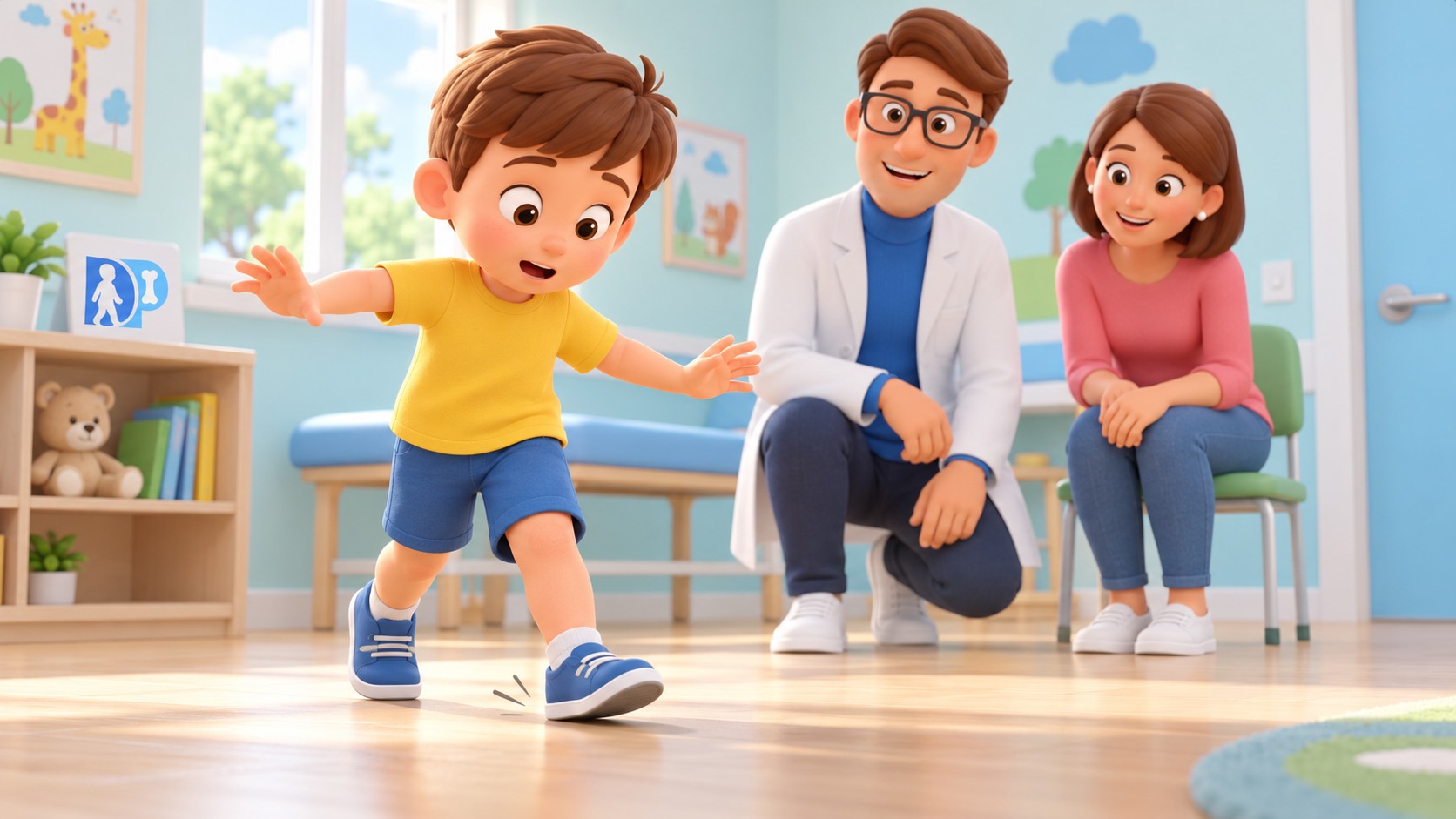
Falls can be part of learning to walk. Frequent tripping still needs some context: how long has it been happening? Is the child learning to walk, or have falls started after a period of walking confidently?
Age alone does not answer the question. Changes over time, pain and what the child can manage in everyday life all matter.
When a child is still learning to walk
Early steps are less steady: children often keep their feet apart and use their arms to help them balance. These are features of a walking pattern that is still developing. 1
Notice whether the child becomes more confident with practice and continues to acquire skills. One stumble during play tells us little; a difficulty that is getting worse or preventing participation in games tells us much more.
Four things to notice
Some details help when describing the problem to a paediatrician:
- When it happens: only while running, or also when walking slowly on a level floor?
- How it has changed: has it always been this way, or have falls started recently or become more frequent?
- Whether the sides differ: does the same foot seem to catch, drag or avoid taking weight?
- What limits activity: pain, unusual tiredness, difficulty keeping up with other children or avoiding games?
These questions are not a set of tests to carry out at home. They help describe a particular situation. Balance and coordination difficulties may become apparent in the activities a child avoids or struggles with. 2, 6
If the feet point inwards
In-toeing can relate to the shape of the foot or the rotation of the shinbone and thighbone during growth. Many of these variations improve naturally. They may be associated with tripping in some children, but inward-pointing feet do not automatically explain every fall. 3
Corrective shoes, braces and exercises have not been shown to correct common developmental tibial torsion and femoral anteversion. Coordination difficulties may need specific support: this depends on an assessment of function. 2, 3
Pain, swelling or limping alongside the foot position should be assessed. 3
When to seek an assessment
Speak to the paediatrician if tripping persists, increases or interferes with play, walking and sport. The same applies to a clear difference between the sides or wider movement difficulties. Assessment also helps identify the right professional to involve: falls do not always have an orthopaedic cause. 4, 6
A sudden change in walking needs urgent medical assessment. If the child can no longer walk or bear weight, develops new weakness, or has significant pain or fever with a limp, seek medical help immediately; a paediatric emergency department may be appropriate. Do not wait for a scheduled appointment. 4, 5
Loss of previously acquired skills, such as no longer managing movements that used to be familiar, also calls for prompt contact with the paediatrician and further assessment. 4
Tripping should be distinguished from a sudden limp: with a limp, the child changes their walking pattern, often because of pain, and the assessment may follow a different course.
What can help while waiting?
If the child is well and there are no warning signs, they can continue moving and playing in a safe environment, with activities suited to their abilities. Repeatedly testing them or telling them to “walk properly” is not helpful. An activity they can enjoy managing is more useful than a challenge that leaves them struggling. 2
Check that shoes fit comfortably and stay secure on the feet. 1 Before buying insoles or starting exercises “to stop the falls”, clarify what needs to be treated.
Bring the shoes the child usually wears to the appointment. If the difficulty is not always apparent, a short video of their natural walking may help. There is no need to provoke a fall to show the doctor.
For an orthopaedic assessment, read how a paediatric visit in Milan works and what to bring.
References
-
East Lancashire Hospitals NHS Trust. Balance and Coordination.
-
American Academy of Orthopaedic Surgeons, OrthoInfo. Intoeing.
-
The Royal Children’s Hospital Melbourne. The limping or non-weight bearing child.
-
NHS. Developmental co-ordination disorder in children — symptoms.
This information is educational and does not replace an individual medical assessment.