When a Paediatric Orthopaedic Assessment May Be Useful During Growth
Preventive orthopaedic evaluation at key stages of growth.
Quick Answers
How often is an orthopaedic check-up useful?
My child seems fine: is a preventive visit really necessary?
Start with paediatric checks
Growth, development and symptoms guide follow-up. The need for orthopaedic assessment is individual.
Read all the illustrated explanations →Most children grow without ever needing a dedicated orthopaedic visit. An orthopaedic assessment can be useful, however, in specific circumstances: when there is a doubt raised by parents or the paediatrician, a specific referral, an asymmetry, persistent pain, a gait change, or before/after sport-related injuries.
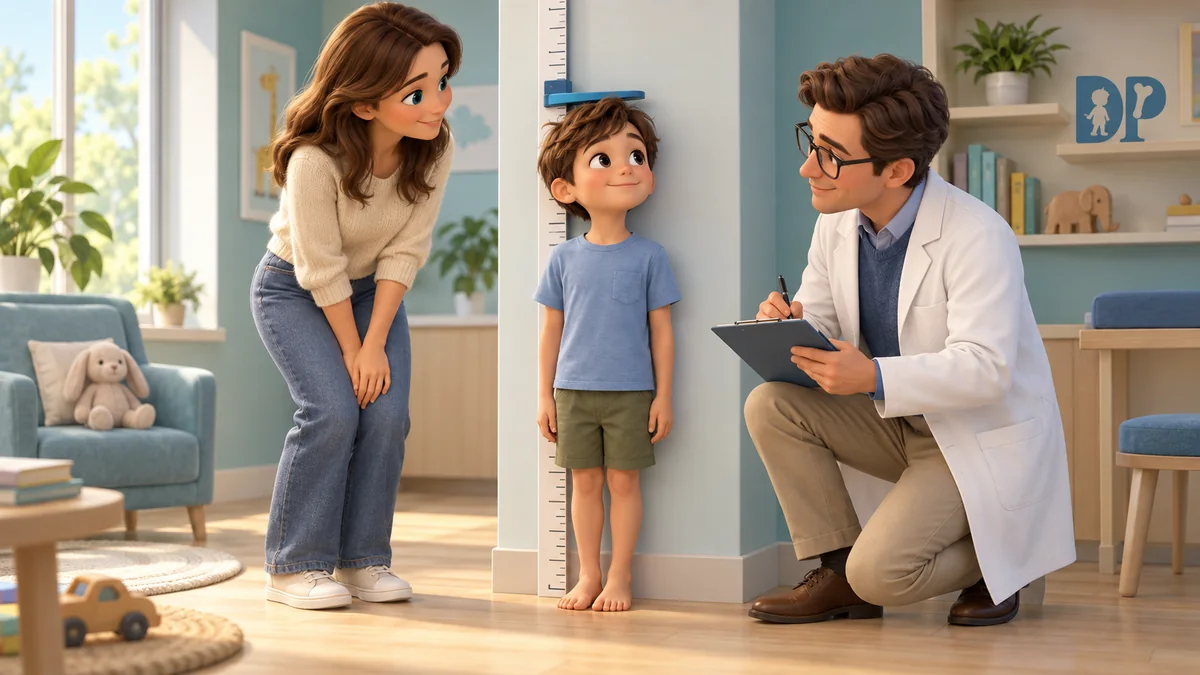
During the visit we look at lower limb alignment, foot shape and weight-bearing, pelvic and shoulder symmetry, the spine, and how the child walks and runs. It is also an opportunity to discuss with parents sport, footwear, posture, school backpacks, and daily activity management in a way that fits the child's age and individual features.
There is no mandatory schedule of visits for healthy children. Ages such as school start, the pre-pubertal phase, or the start of a demanding sport can be indicative occasions to consider an evaluation, particularly if a doubt, asymmetry, pain, gait change, or a paediatrician's referral is present.

📋Assessment when there is a clinical reason
A concern raised by the paediatrician, a risk factor, pain, asymmetry or a change in walking can justify assessment. Healthy children without symptoms do not need a universal schedule of specialist orthopaedic visits. Routine paediatric care and specific pathways, such as infant hip screening, remain important; further orthopaedic reviews depend on the findings.
Assessment and treatment
When to seek evaluation
- A paediatrician's referral or specific concern
- Asymmetry, persistent pain, or a gait change noticed by parents
- Before competitive sport, only if there is pain, asymmetry, a previous injury, a functional limitation, or a doubt raised by the paediatrician or sports-medicine physician
- After a sports injury requiring reassessment
- Family history of scoliosis or other conditions, if there is doubt
What is evaluated
- Lower limb axis
- Feet and plantar arch
- Spine and scoliosis screening
- General posture
- Limb length equality
Treatment options
- Reassurance and no further action if findings are normal variants
- Monitoring if mild findings
- Specific treatment if pathologies detected
- Exercise and activity recommendations
- Follow-up only when clinically indicated
Frequently Asked Questions
How often is an orthopaedic check-up useful?▼
My child seems fine: is a preventive visit really necessary?▼
Is a check-up useful before competitive sports?▼
Important Notice: The information on this page is for educational and informational purposes only and does not constitute medical advice. Each clinical case is unique: the appropriate treatment is determined during the specialist consultation, based on a thorough clinical examination and, where necessary, diagnostic imaging. For any doubts or concerns, please consult a specialist.