Paediatric Orthopaedic Specialist
Anterior knee pain / patellofemoral syndrome
Home Exercise Program
Not every exercise listed here is suitable for every child: the selection is individual and is defined during the consultation.
For whom: Adolescents with anterior knee pain (patellofemoral syndrome). Quadriceps strengthening and movement control are essential.
Dose and frequency: Perform only the exercises selected during the visit. The listed dosages are examples to adapt: follow the dose, frequency, rest and progression prescribed for age, symptoms and phase. Do not automatically perform the whole list.
Equipment and supervision: A stable, clear surface, comfortable clothing and a secure support. Check resistance-band anchors. Adult supervision; avoid marbles and small objects if the child may put them in their mouth, using a towel instead.
Avoid: Forcing a painful or unauthorised movement; Increasing load, resistance or frequency without the agreed rest periods; Doing balance exercises without stable support or supervision; Exercises that increase patella load (deep squats, lunges); Neglecting hip stabilizer strengthening; Not following gradual progression.
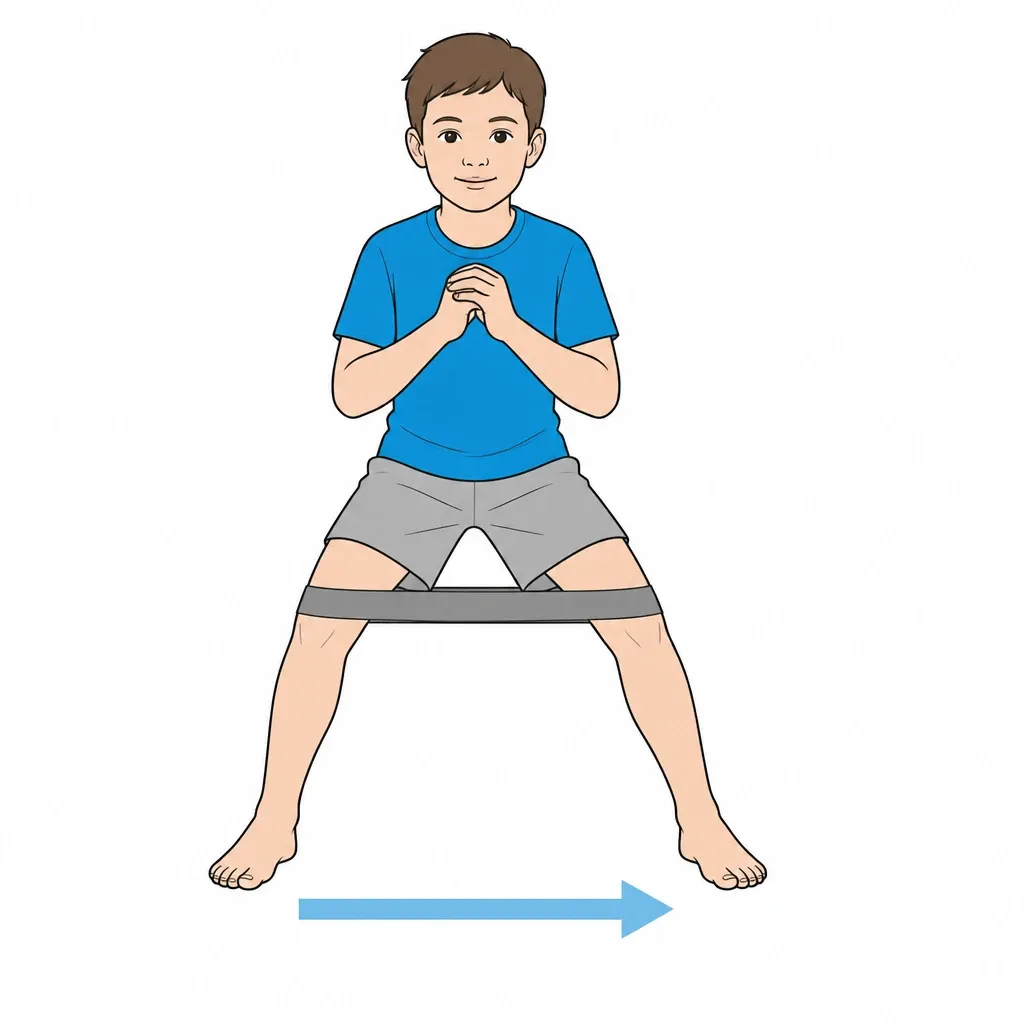
1.Gluteus medius strengthening (clamshell and side-steps)
Gluteus medius controls the knee - strengthening it reduces patellar pain
CLAMSHELL: Lying on side, knees bent 90°, feet together. Open knees like a clamshell keeping feet together. Movement comes from hip, not back! SIDE-STEPS: With band above knees, walk sideways in small steps keeping knees slightly bent. 10 steps each direction.
Clamshell: 3 × 15 each side. Side-steps: 2 × 10 steps each direction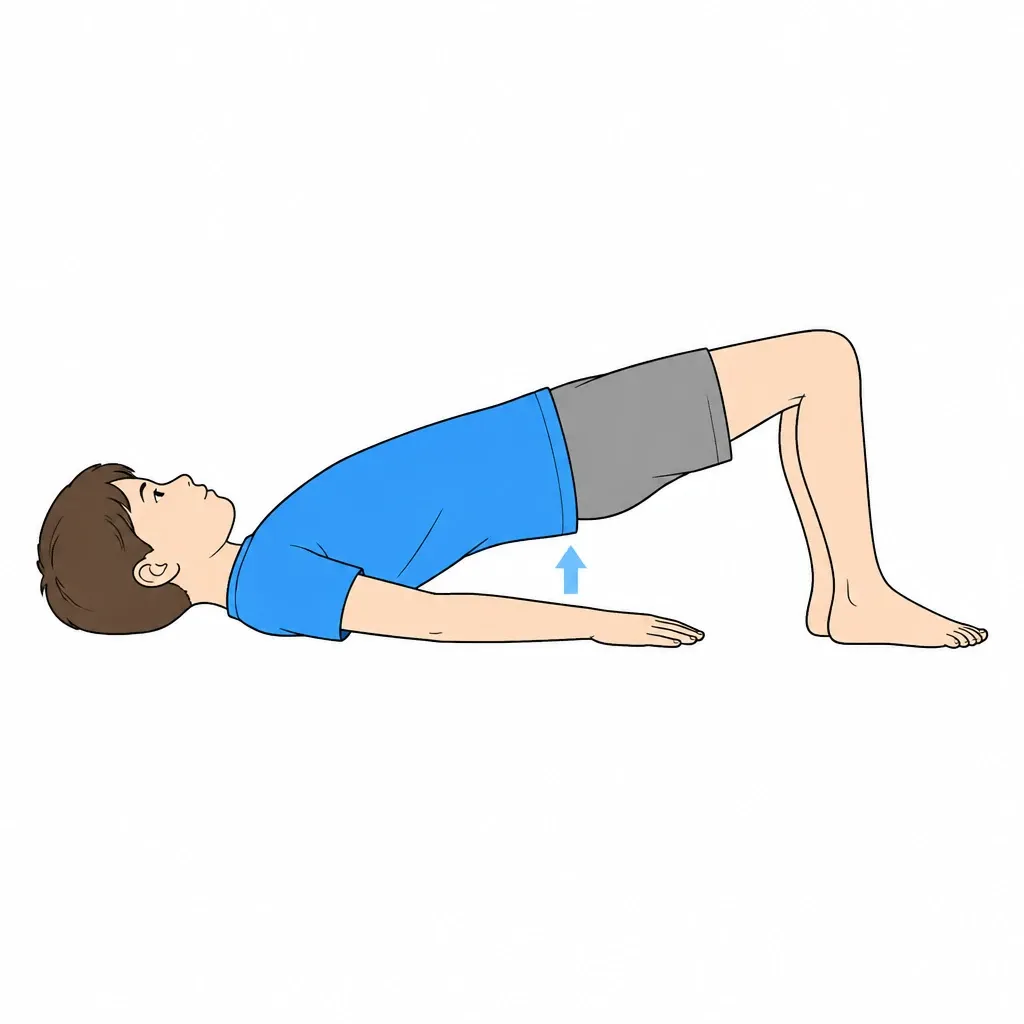
2.Glute bridge
Strengthens glutes and hamstrings, essential for the knee
Lying on back, knees bent, feet hip-width on floor. Squeeze glutes and lift pelvis from floor until forming straight line from shoulders to knees. Hold 2 seconds at top squeezing glutes, then lower slowly. Don't arch back! PROGRESSION: when 20 reps become easy, try single leg.
3 × 15-20 reps. Progression: 3 × 10-12 single leg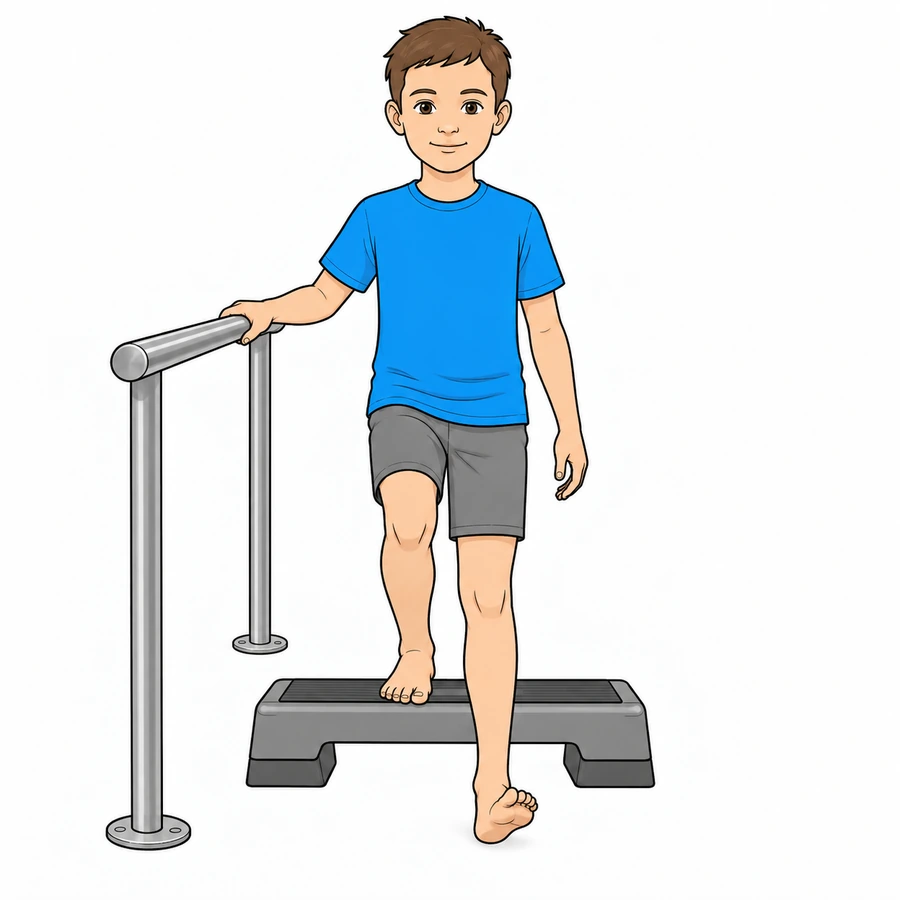
3.Controlled step-down
Key exercise to learn knee control during movement
Standing on low step (10-15 cm), leg to train on step, other leg hanging. SLOWLY lower bending leg on step until touching floor with other heel. IMPORTANT: knee must stay ALIGNED with foot, must not "collapse" inward! Rise up. If knee collapses, use mirror to correct or reduce step height.
3 × 10 per leg, slowly (3-4 seconds to lower)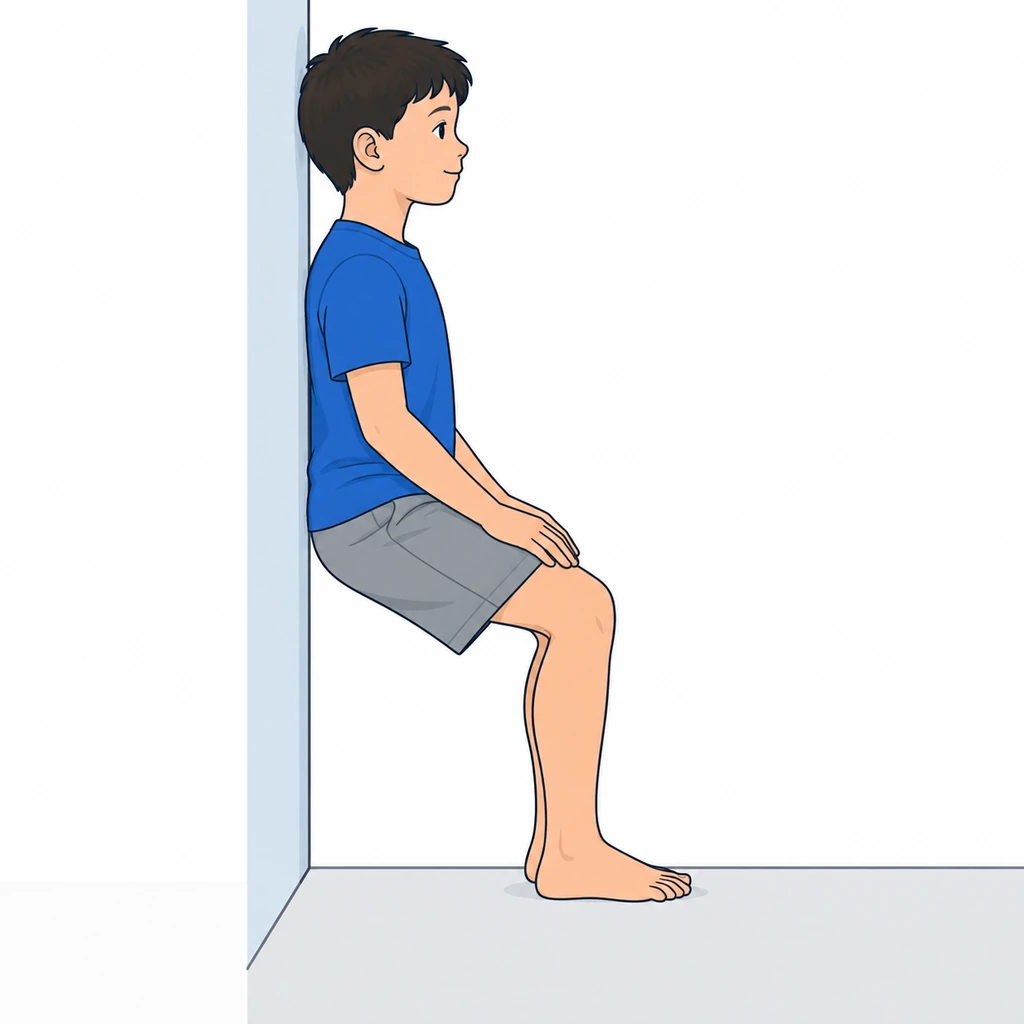
4.Wall sit / wall squat
Quadriceps isometric at a tolerated angle; safety does not depend on keeping the knee behind the toes.
With the back against a wall and feet stable, lower to the knee-bend angle selected by the physiotherapist, initially shallow. Hold while breathing normally and rise with control. Range and duration depend on tolerance: keeping the knee behind the toes is not a universal safety rule. For pain, reduce loading as instructed or stop.
3 × 30-45 seconds. Alternative: chair sit-to-stand 3 × 10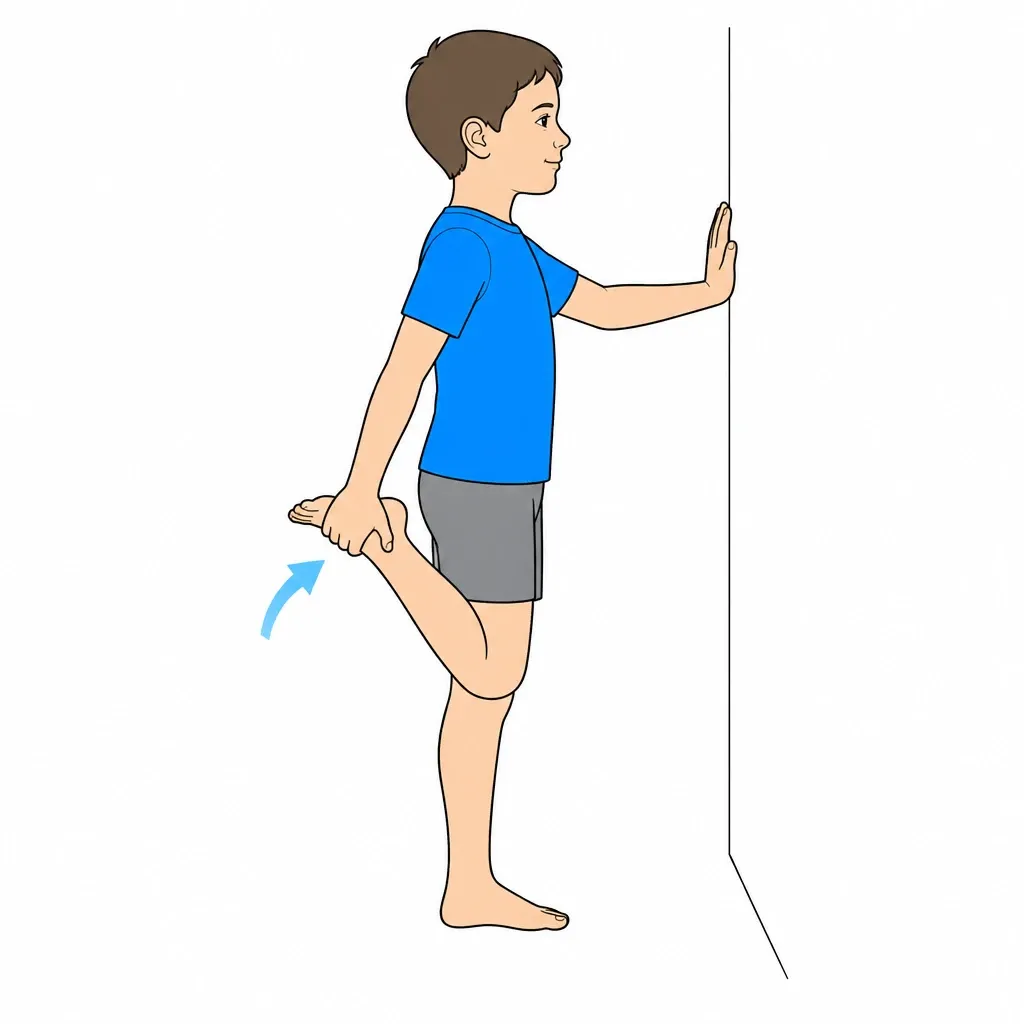
5.Quadriceps and hip flexor stretch
Tight muscles contribute to patellar pain - stretching is important
QUADRICEPS: Standing (supported for balance), bend knee and pull heel toward buttock with hand. Keep knees together, don't spread. HIP FLEXORS: Lunge with back knee on cushion. Push hips forward feeling stretch in front of back leg's hip.
3 × 30 seconds each side, per muscle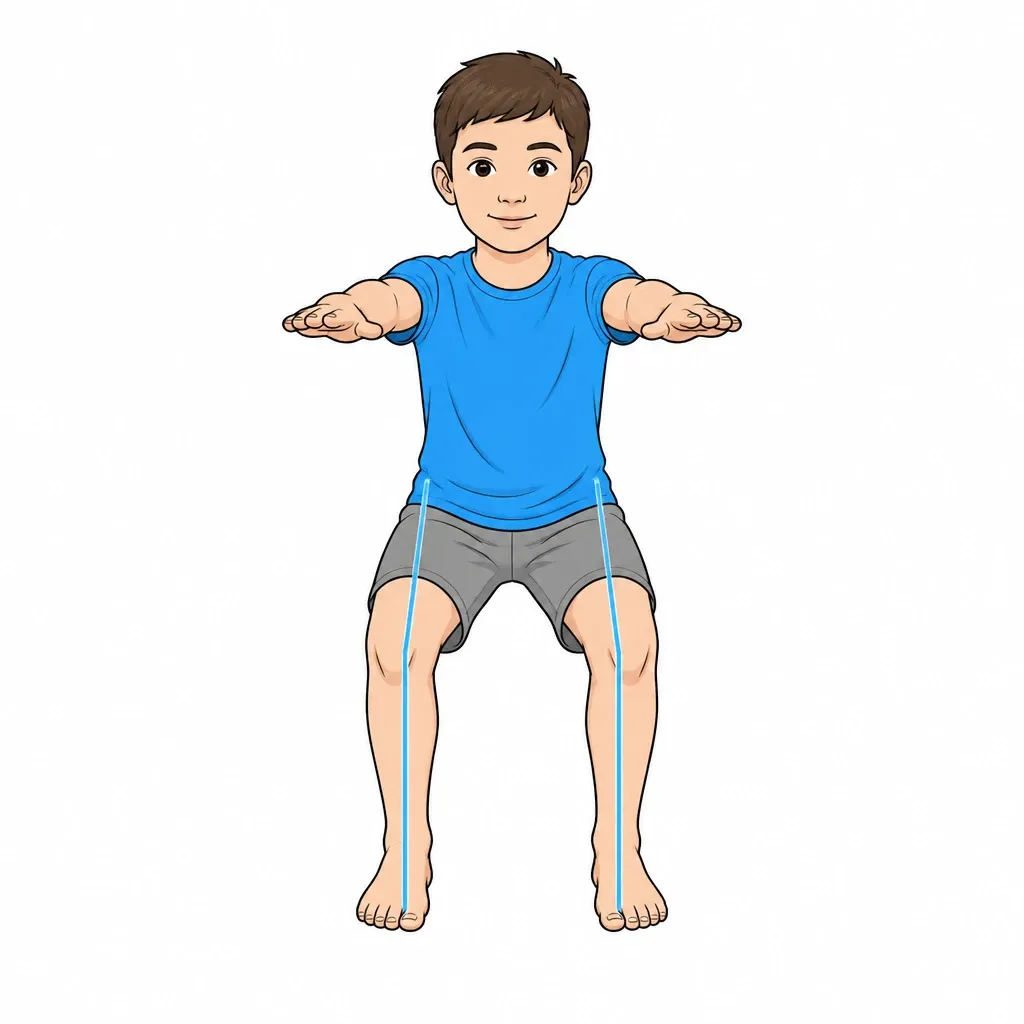
6.Dynamic valgus control
Learning not to let knee "collapse" inward during movements
In front of mirror, do squat or step-down. OBSERVE knees: must stay aligned over 2nd-3rd toe, not collapse inward. Video recording can help see any errors. Actively correct using glutes to "push" knees outward.
10 reps with visual feedback, 1-2 times daily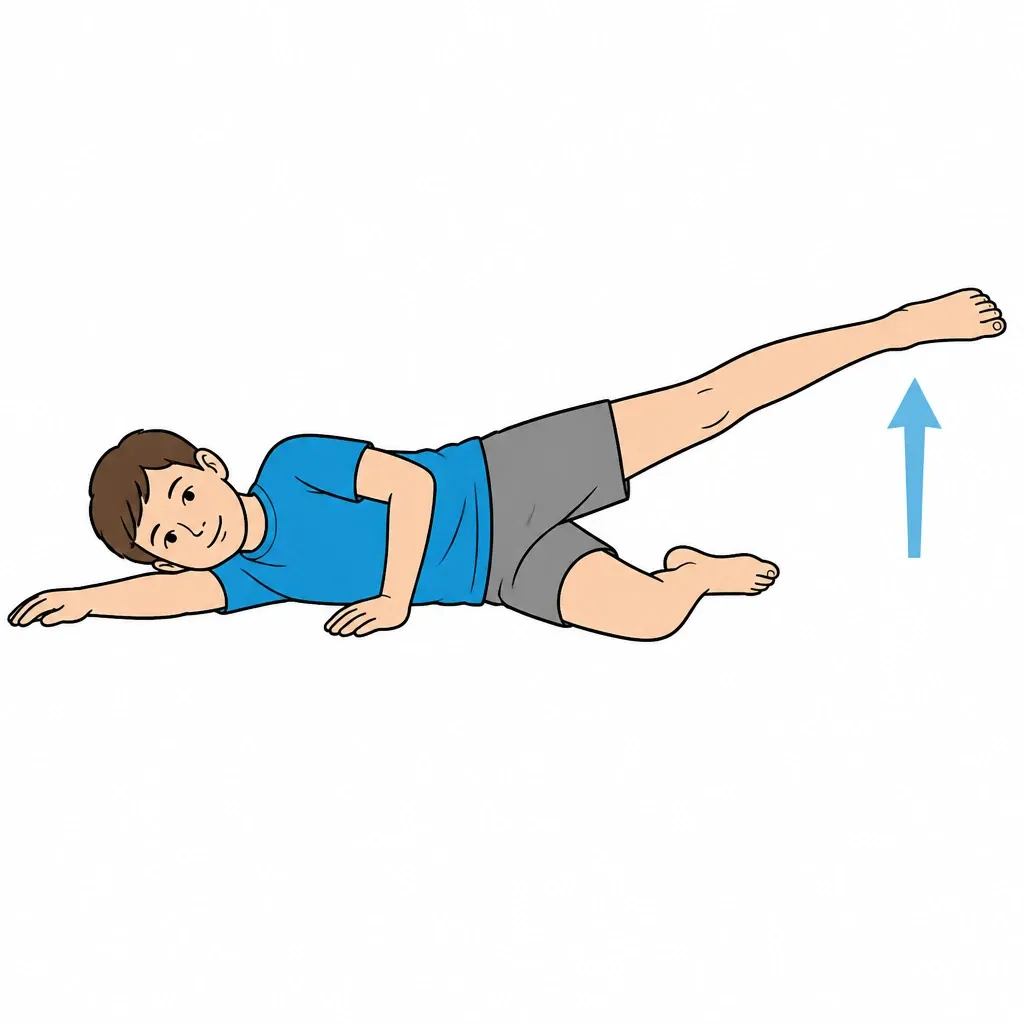
7.Side-lying hip abduction
Hip abductor strengthening as part of a combined hip-and-knee programme; no single muscle is universally the “most associated”.
Lie on your side with the lower leg bent and pelvis still. Slowly raise the straight upper leg within the taught range and lower with control. Do not roll the pelvis to gain height. Hip strengthening may form part of a hip-and-knee programme; response and timing of improvement are individual.
3 × 12-15 each side, 3 times a week (then with 0.5-1 kg ankle weight)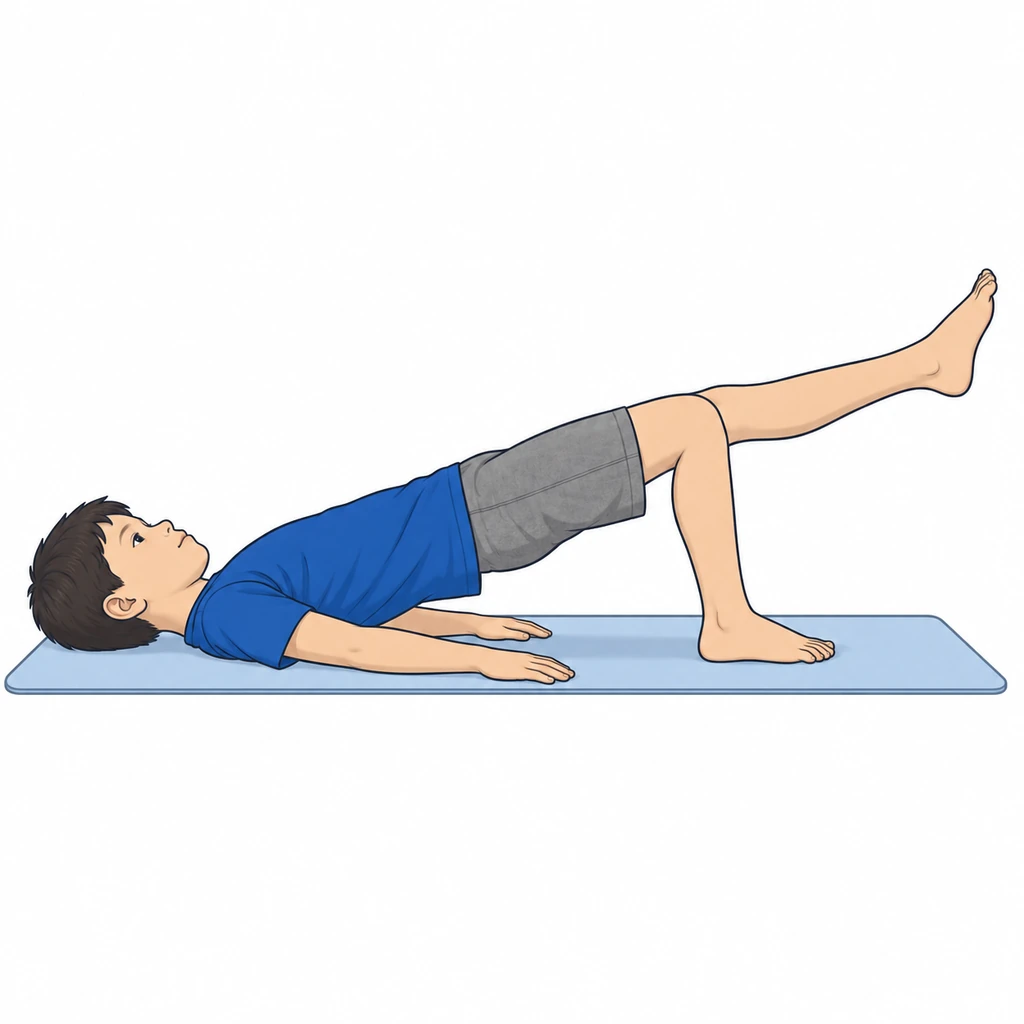
8.Single-leg glute bridge
Bridge progression: strengthens glutes and hamstrings and stabilises the pelvis
Lying on your back, one foot on the floor, the other leg extended or hip flexed to 90°. Lift the pelvis using only the support leg, keeping the pelvis perfectly level. Hold 2 seconds, lower in 3 seconds. If the pelvis tilts, go back to the double-leg bridge.
3 × 8-12 each side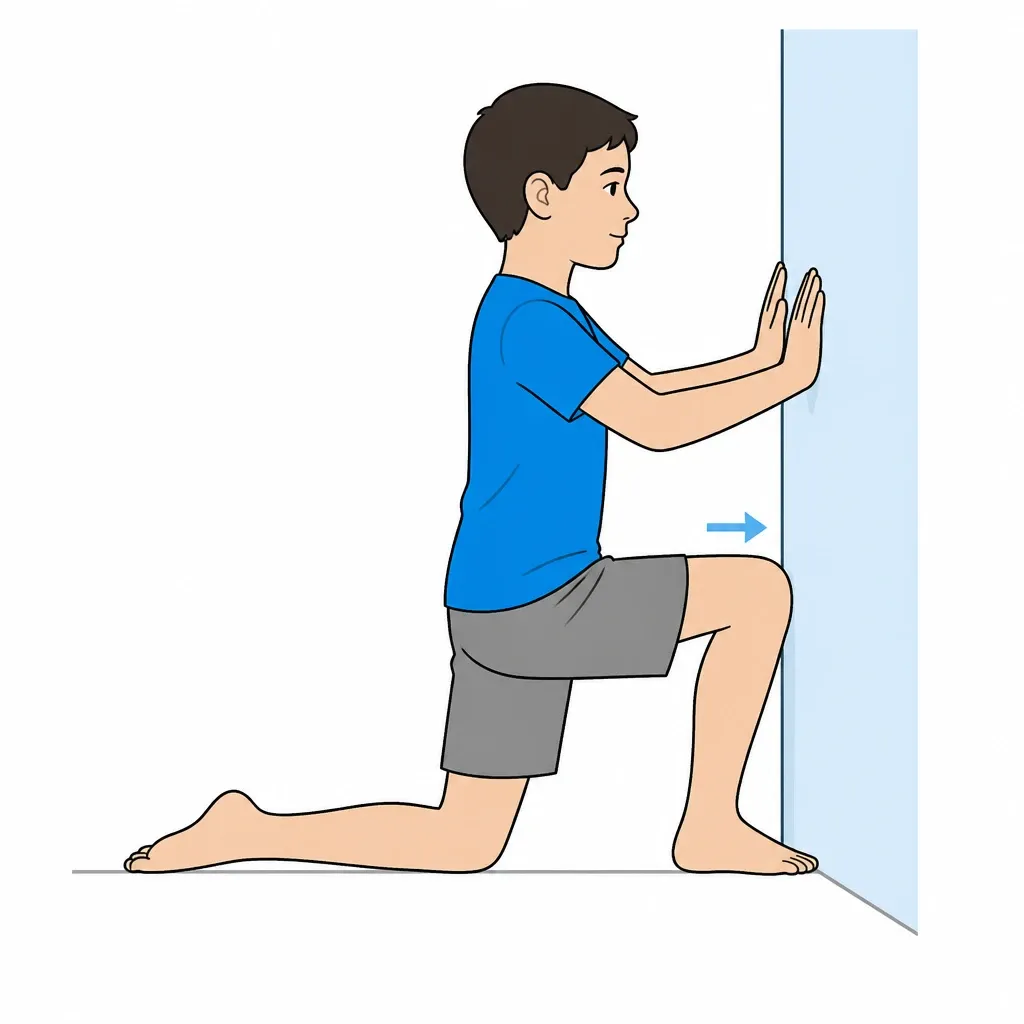
9.Ankle mobility (knee-to-wall)
Dorsiflexion mobility when limited and clinically relevant; a stiff ankle is not automatically the cause of patellofemoral pain.
If ankle mobility is a programme goal, keep the heel down and bring the knee towards a wall within a comfortable range. Adjust foot distance without aiming for one value for everyone. The physiotherapist interprets side-to-side differences alongside the examination; a difference alone does not establish the cause of knee pain.
10-15 reps each side, daily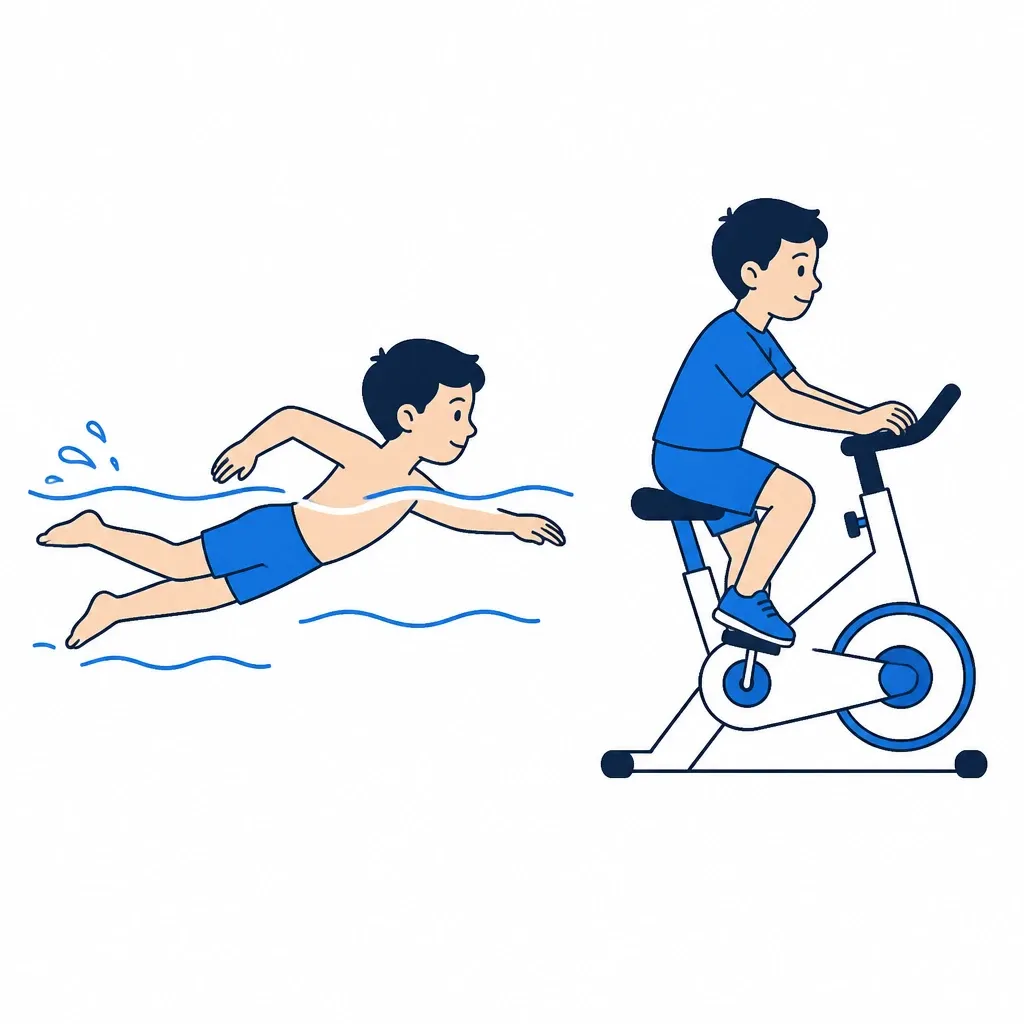
10.Load management and low-impact activity
Patellofemoral pain improves by modulating load, not with complete rest
Agree with the physiotherapist which activities to maintain and which pain response is acceptable for the individual. If pain, swelling or difficulty increase or persist the following morning, reduce load and reassess. Do not apply automatic weekly percentage increases. Choose tolerated activities and respect recovery days.
Daily pain monitoring (0-10 scale); weekly progression
RED FLAGS - When to stop and contact the doctor immediately
Stop the exercises immediately and contact the specialist (or go to the emergency department if severe) if any of the following occur:
- Acute or sudden pain during exercise
- Significant swelling after exercises
- Pain that progressively worsens over days
- Fever or general malaise
- Difficulty walking or using the limb after exercises
- Any neurological symptoms (tingling, numbness, sudden weakness)
- A red or hot joint, or inability to bear weight: seek prompt assessment; use emergency care if severe.
In case of doubt, always prefer a check-up over continuing the exercises.
Dott. Daniele Priano
Paediatric Orthopaedics - ASST Gaetano Pini-CTO
Content version: 21 September 2026
ortopediaevolutiva.com • Printed: 18/10/2026
 Full sheet and videos
https://ortopediaevolutiva.com/en/parents-kids/exercises/knee/anterior-knee-pain
Prepare the visit handout
Use the condition and phase indicated by your clinician. You can leave out individual exercises; instructions, illustrations and safety advice remain together.
Exclude exercises if needed
10 of 10 exercise cards included
The full web page remains available. Your selection is not saved or shared.
Before You Start
Who is this guide for?
Adolescents with anterior knee pain (patellofemoral syndrome). Quadriceps strengthening and movement control are essential.
What you need
A stable, clear surface, comfortable clothing and a secure support. Check resistance-band anchors. Adult supervision; avoid marbles and small objects if the child may put them in their mouth, using a towel instead.
Suggested frequency
Perform only the exercises selected during the visit. The listed dosages are examples to adapt: follow the dose, frequency, rest and progression prescribed for age, symptoms and phase. Do not automatically perform the whole list.
Common mistakes to avoid
- •Forcing a painful or unauthorised movement
- •Increasing load, resistance or frequency without the agreed rest periods
- •Doing balance exercises without stable support or supervision
- •Exercises that increase patella load (deep squats, lunges)
- •Neglecting hip stabilizer strengthening
- •Not following gradual progression
⚠️ Red flags — when to stop and contact the doctor immediately
Stop exercises immediately and contact the specialist if any of the following occur:
- Acute or sudden pain during exercise
- Significant swelling after exercises
- Pain that progressively worsens over days
- Fever or general malaise
- Difficulty walking or using the limb after exercises
- Any neurological symptoms (tingling, numbness, sudden weakness)
- A red or hot joint, or inability to bear weight: seek prompt assessment; use emergency care if severe.
Detailed Exercises
- 1
Gluteus medius strengthening (clamshell and side-steps)
Gluteus medius controls the knee - strengthening it reduces patellar pain
CLAMSHELL: Lying on side, knees bent 90°, feet together. Open knees like a clamshell keeping feet together. Movement comes from hip, not back! SIDE-STEPS: With band above knees, walk sideways in small steps keeping knees slightly bent. 10 steps each direction.
Clamshell: 3 × 15 each side. Side-steps: 2 × 10 steps each direction - 2
Glute bridge
Strengthens glutes and hamstrings, essential for the knee
Lying on back, knees bent, feet hip-width on floor. Squeeze glutes and lift pelvis from floor until forming straight line from shoulders to knees. Hold 2 seconds at top squeezing glutes, then lower slowly. Don't arch back! PROGRESSION: when 20 reps become easy, try single leg.
3 × 15-20 reps. Progression: 3 × 10-12 single legGlute bridge
Press Play to load the video. Follow the instructions and precautions on this exercise sheet.
Shows the bridge with both feet supported only. The single-leg progression and full exercise dose are not demonstrated.
- 3
Controlled step-down
Key exercise to learn knee control during movement
Standing on low step (10-15 cm), leg to train on step, other leg hanging. SLOWLY lower bending leg on step until touching floor with other heel. IMPORTANT: knee must stay ALIGNED with foot, must not "collapse" inward! Rise up. If knee collapses, use mirror to correct or reduce step height.
3 × 10 per leg, slowly (3-4 seconds to lower) - 4
Wall sit / wall squat
Quadriceps isometric at a tolerated angle; safety does not depend on keeping the knee behind the toes.
With the back against a wall and feet stable, lower to the knee-bend angle selected by the physiotherapist, initially shallow. Hold while breathing normally and rise with control. Range and duration depend on tolerance: keeping the knee behind the toes is not a universal safety rule. For pain, reduce loading as instructed or stop.
3 × 30-45 seconds. Alternative: chair sit-to-stand 3 × 10Shallow wall squat | OrtopediaEvolutiva
Illustrated video with a synthetic voice and English text in the film. Press Play to load YouTube. Follow the instructions and precautions on this exercise sheet. Open on YouTube
Chair sit-to-stand
Press Play to load the video. Follow the instructions and precautions on this exercise sheet.
Shows one cycle of the chair sit-to-stand alternative, without hand assistance. It does not demonstrate the wall sit or prescribe an individual dose.
- 5
Quadriceps and hip flexor stretch
Tight muscles contribute to patellar pain - stretching is important
QUADRICEPS: Standing (supported for balance), bend knee and pull heel toward buttock with hand. Keep knees together, don't spread. HIP FLEXORS: Lunge with back knee on cushion. Push hips forward feeling stretch in front of back leg's hip.
3 × 30 seconds each side, per muscleStanding thigh stretch | OrtopediaEvolutiva
Illustrated video with a synthetic voice and English text in the film. Press Play to load YouTube. Follow the instructions and precautions on this exercise sheet. Open on YouTube
Half-kneeling hip stretch | OrtopediaEvolutiva
Illustrated video with a synthetic voice and English text in the film. Press Play to load YouTube. Follow the instructions and precautions on this exercise sheet. Open on YouTube
- 6
Dynamic valgus control
Learning not to let knee "collapse" inward during movements
In front of mirror, do squat or step-down. OBSERVE knees: must stay aligned over 2nd-3rd toe, not collapse inward. Video recording can help see any errors. Actively correct using glutes to "push" knees outward.
10 reps with visual feedback, 1-2 times daily - 7
Side-lying hip abduction
Hip abductor strengthening as part of a combined hip-and-knee programme; no single muscle is universally the “most associated”.
Lie on your side with the lower leg bent and pelvis still. Slowly raise the straight upper leg within the taught range and lower with control. Do not roll the pelvis to gain height. Hip strengthening may form part of a hip-and-knee programme; response and timing of improvement are individual.
3 × 12-15 each side, 3 times a week (then with 0.5-1 kg ankle weight)Side-lying leg raise | OrtopediaEvolutiva
Illustrated video with a synthetic voice and English text in the film. Press Play to load YouTube. Follow the instructions and precautions on this exercise sheet. Open on YouTube
- 8
Single-leg glute bridge
Bridge progression: strengthens glutes and hamstrings and stabilises the pelvis
Lying on your back, one foot on the floor, the other leg extended or hip flexed to 90°. Lift the pelvis using only the support leg, keeping the pelvis perfectly level. Hold 2 seconds, lower in 3 seconds. If the pelvis tilts, go back to the double-leg bridge.
3 × 8-12 each side - 9
Ankle mobility (knee-to-wall)
Dorsiflexion mobility when limited and clinically relevant; a stiff ankle is not automatically the cause of patellofemoral pain.
If ankle mobility is a programme goal, keep the heel down and bring the knee towards a wall within a comfortable range. Adjust foot distance without aiming for one value for everyone. The physiotherapist interprets side-to-side differences alongside the examination; a difference alone does not establish the cause of knee pain.
10-15 reps each side, daily - 10
Load management and low-impact activity
Patellofemoral pain improves by modulating load, not with complete rest
Agree with the physiotherapist which activities to maintain and which pain response is acceptable for the individual. If pain, swelling or difficulty increase or persist the following morning, reduce load and reassess. Do not apply automatic weekly percentage increases. Choose tolerated activities and respect recovery days.
Daily pain monitoring (0-10 scale); weekly progression
Frequently Asked Questions
Does anterior knee pain go away on its own?
It may improve, but patellofemoral pain can persist for months or recur: growth does not guarantee recovery. Load management and individualised hip-and-knee exercises may help, without guaranteeing that symptoms will not return. Persistent or changing pain, swelling, locking or a limp warrants reassessment of the diagnosis and programme.
Which sports to avoid with anterior knee pain?
In the acute phase, limit activities with repetitive load on the patella: jumping, downhill running, stairs, deep squats. Prefer swimming, cycling and low-impact activities. Sport is not forbidden, but should be adapted to pain intensity.
My knee "cracks" when I bend: is it serious?
Joint noises (crepitus) without pain are very common and generally harmless, especially in adolescence. They become relevant only if associated with pain, swelling or joint locking. In that case, specialist evaluation is recommended.