Knee Pain in Children and Adolescents
Anterior knee pain in adolescents rarely has a single cause: sports overload, imperfect neuromuscular control and rapid growth often combine.
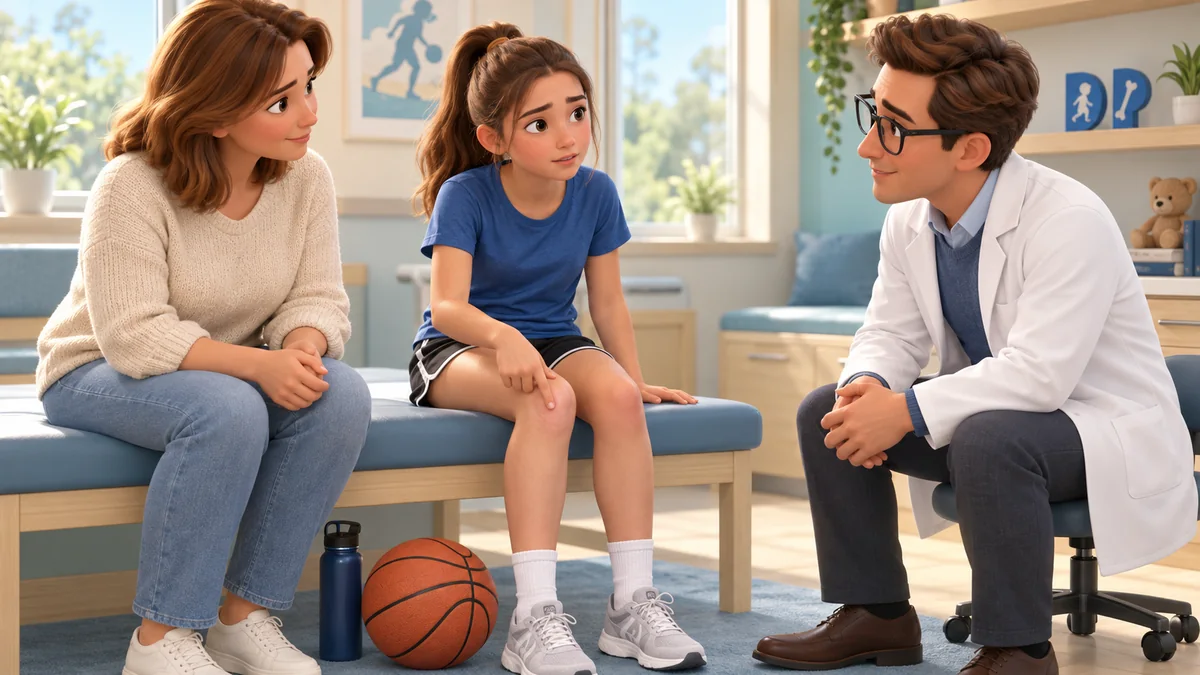
One area, different causes
Pain at the front of the knee is not a single diagnosis. Location, activity and examination help distinguish the causes.
Read all the illustrated explanations →Anterior knee pain is one of the most common reasons for orthopaedic evaluation in children and adolescents, especially those who play sports. It typically appears around or behind the kneecap and may show up during activity, after exertion, going up or down stairs, or after prolonged sitting.
Causes are multiple and often combined: functional overload, rapid growth phases, muscular imbalances (in particular between quadriceps and posterior thigh muscles), peculiarities of lower limb alignment, patellar tracking patterns. In most cases these are benign and reversible pictures that respond well to a conservative path.
A careful clinical evaluation distinguishes functional forms from those requiring further investigation, and helps rule out pain referred from the hip, a possibility always to consider in pediatric age. On this basis we build a personalized plan with the family that combines sports load management, muscular work and — when indicated — physiotherapy support.

🏃The Young Athlete Pain
Anterior knee pain in teenagers is often related to Osgood-Schlatter syndrome or patellofemoral syndrome, benign conditions linked to growth and sports activity. X-rays aren't needed in most cases: a good clinical evaluation and a stretching/strengthening program solve the problem.
Assessment and treatment
When to seek evaluation
- Pain in the anterior region of the knee
- Pain that worsens going up/down stairs
- Pain after prolonged sitting
- Sense of giving-way or patellar instability
- Recurrent swelling or joint effusion
What is evaluated
- Patellar alignment assessment
- Specific tests for instability and patellofemoral pain
- Muscle balance analysis (quadriceps, hamstrings)
- Lower limb axis evaluation
- Imaging (X-ray, MRI) only in selected cases
Treatment options
- Targeted physical therapy: global quadriceps recovery, hip strength and neuromuscular control
- Specific muscular stretching
- Temporary sports activity modification
- Patellar taping or braces in selected cases
- Surgical treatment rarely needed
Frequently Asked Questions
Is knee pain in children always concerning?▼
What if the knee hurts going down stairs?▼
Can knee pain come from the hip?▼
Should my child stop sports?▼
Are X-rays or MRI needed?▼
How long does it take to feel better?▼
Important Notice: The information on this page is for educational and informational purposes only and does not constitute medical advice. Each clinical case is unique: the appropriate treatment is determined during the specialist consultation, based on a thorough clinical examination and, where necessary, diagnostic imaging. For any doubts or concerns, please consult a specialist.