Paediatric Orthopaedic Specialist
Valgus/varus knee (functional)
Home Exercise Program
Not every exercise listed here is suitable for every child: the selection is individual and is defined during the consultation.
For whom: Children with knee angular deviation beyond physiological limits for age. Exercises support but don't replace any treatment needed.
Dose and frequency: Perform only the exercises selected during the visit. The listed dosages are examples to adapt: follow the dose, frequency, rest and progression prescribed for age, symptoms and phase. Do not automatically perform the whole list.
Equipment and supervision: A stable, clear surface, comfortable clothing and a secure support. Check resistance-band anchors. Adult supervision; avoid marbles and small objects if the child may put them in their mouth, using a towel instead.
Avoid: Forcing a painful or unauthorised movement; Increasing load, resistance or frequency without the agreed rest periods; Doing balance exercises without stable support or supervision.
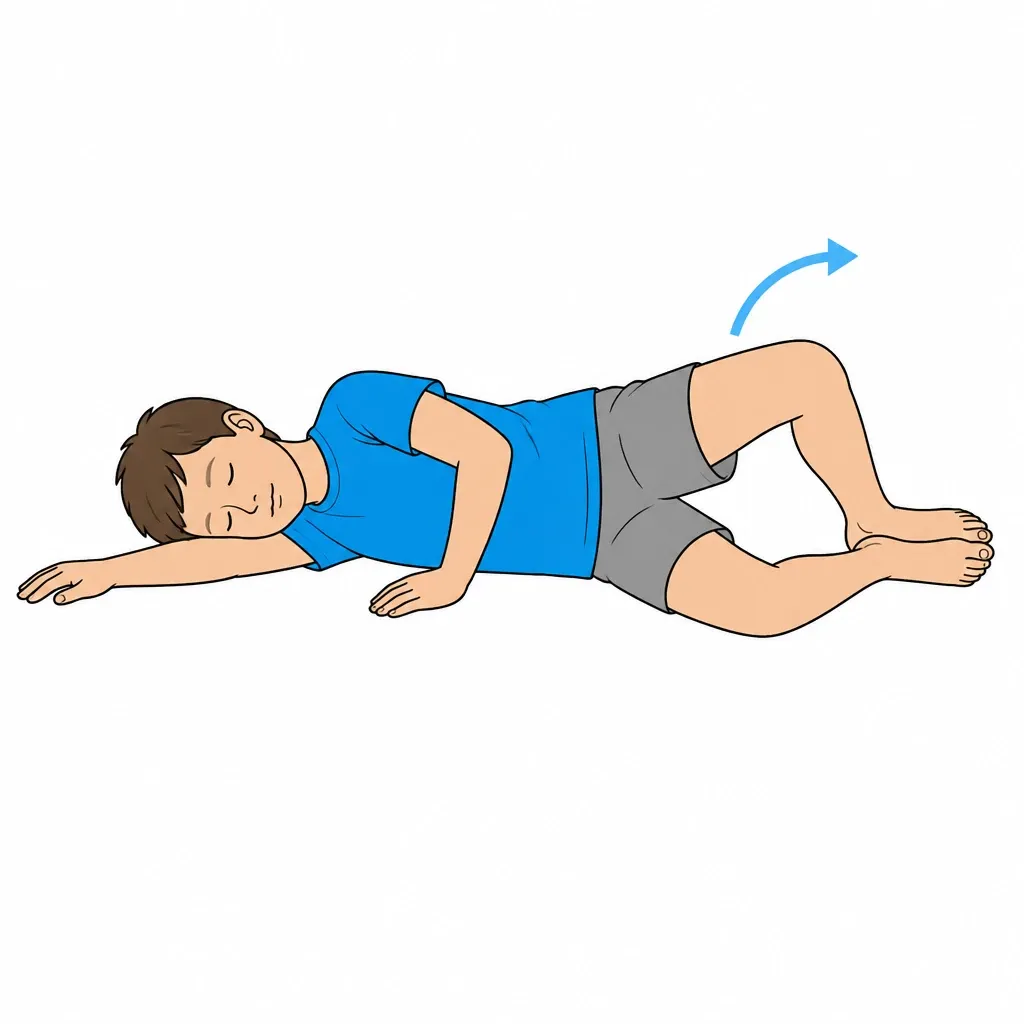
1.Clamshell
Strengthens hip external rotators that control knee position
Lying on side, knees bent 90°, feet together. Open top knee like clamshell opening, keeping feet in contact. DON'T rotate pelvis backward. Hold 2-3 seconds at top. To increase difficulty, use band above knees.
3 × 15 reps each side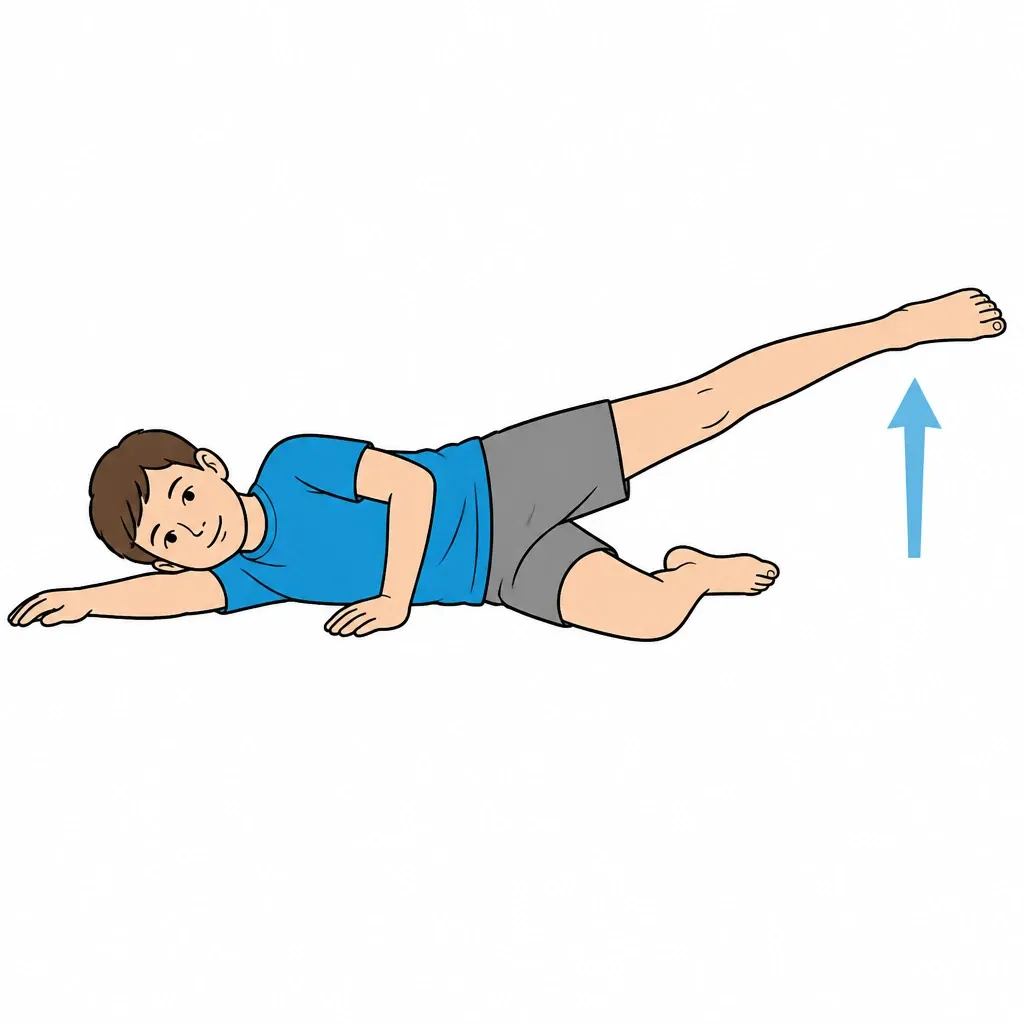
2.Side-lying hip abduction
Strengthens gluteus medius, essential hip stabilizer
Lying on side, bottom leg bent for stability. Lift top leg straight toward ceiling, keeping it in line with body (don't bring forward). Toe slightly rotated down. Lower with control. To progress, add light ankle weight.
3 × 15 reps each side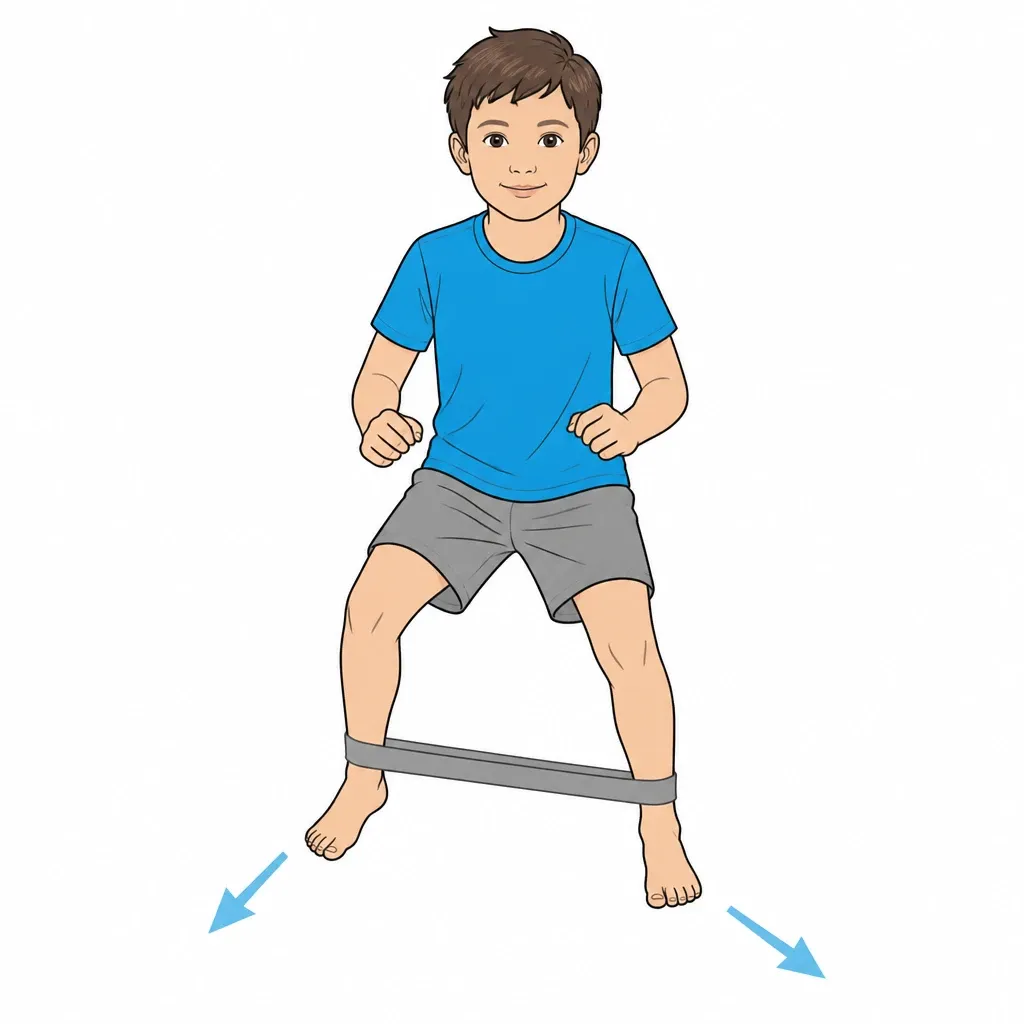
3.Monster walks with band
Dynamic glute activation during movement
With band above knees (or at ankles for more difficulty). Semi-squat position, feet shoulder-width. Walk sideways in small steps, maintaining constant band tension. Then walk in other direction. Knees must stay over feet, not collapse inward.
10-15 steps each direction × 2-3 sets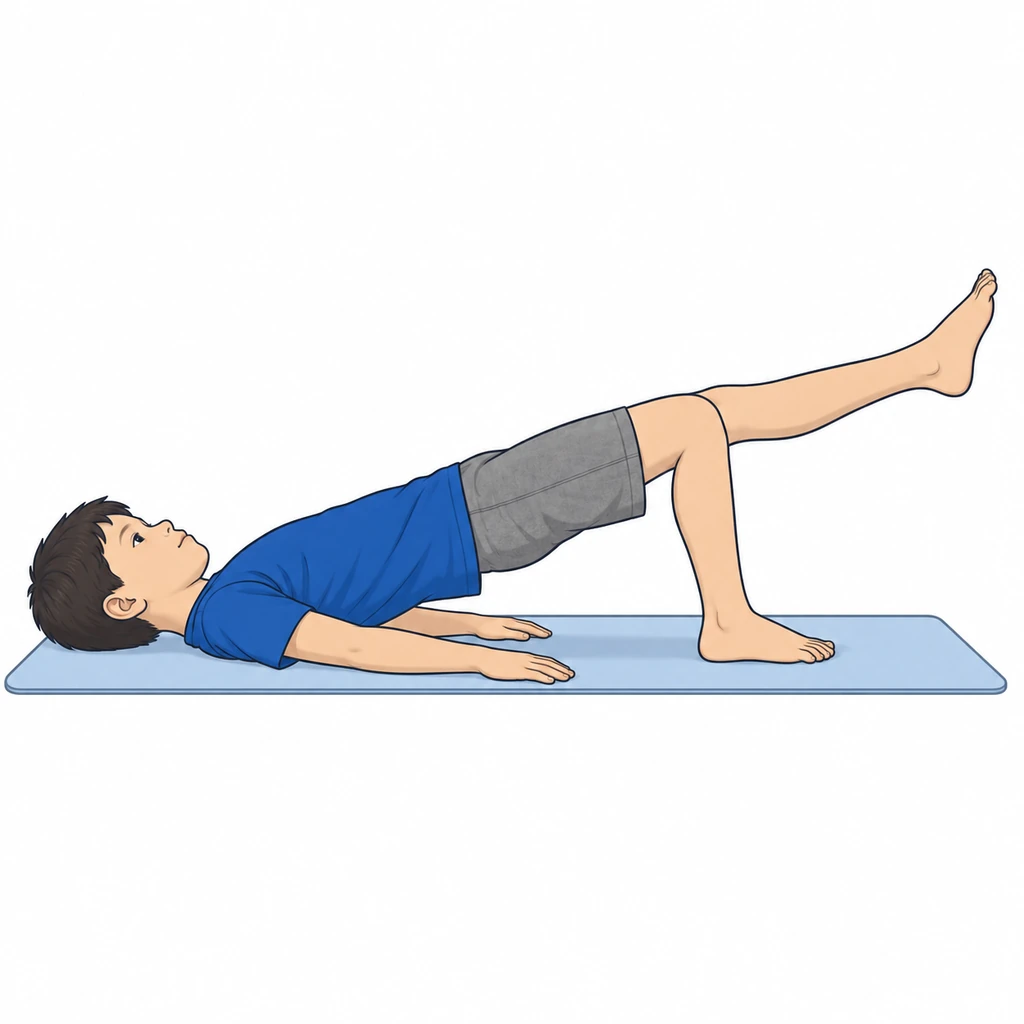
4.Single-leg glute bridge
Advanced glute strengthening with pelvis control
Supine, knees bent. Extend one leg. Lift pelvis using only support leg, keeping pelvis LEVEL (don't let unsupported side drop). This exercise requires gluteus medius control and strength besides gluteus maximus.
3 × 10-12 reps each side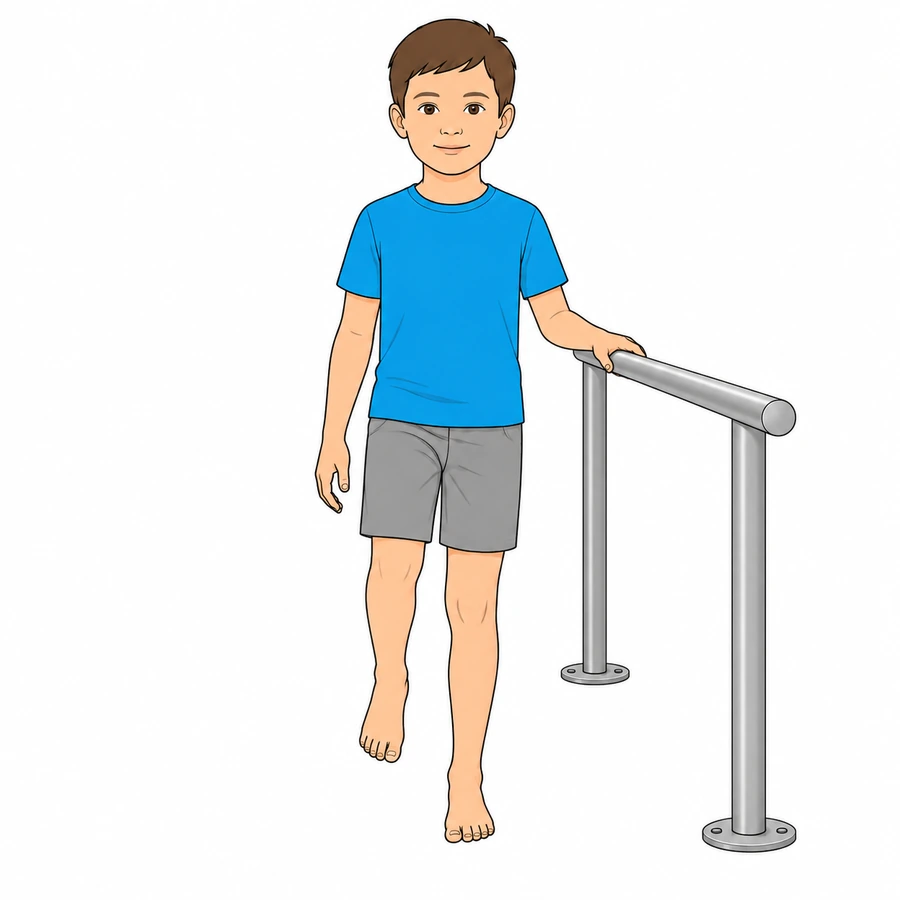
5.Motor control (single-leg stance)
Trains balance and dynamic control; it does not straighten structural bony varus or valgus.
Near a stable support, try standing on one leg with a controlled pelvis and eyes open. Use a mirror to repeat the taught movement without forcing the hip, knee and ankle into a perfectly vertical line. Respect the child’s structural alignment: this trains control, not bony straightening. Put the other foot down before losing balance.
3 × 30 seconds per leg focusing on alignment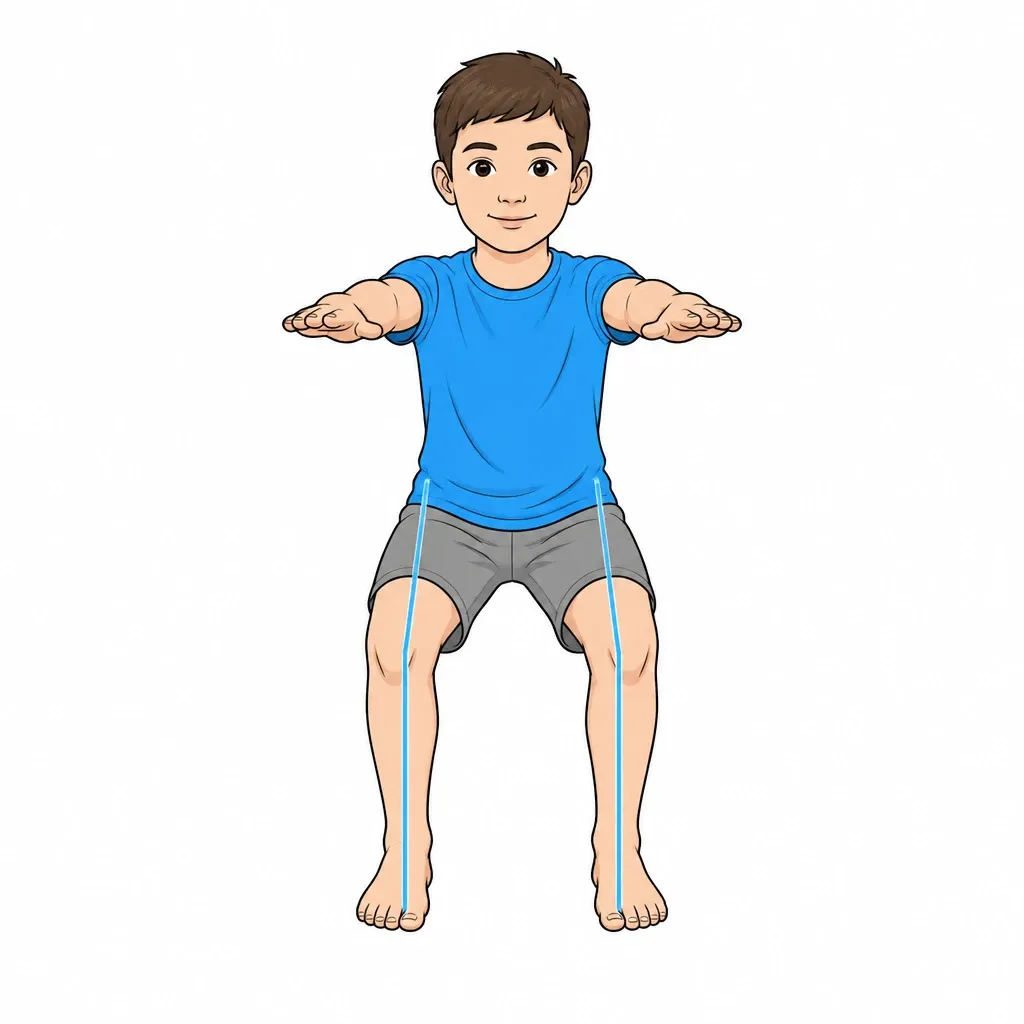
6.Mirror-controlled squat
Squat practice with visual feedback; it does not correct the bony knee axis.
Select a comfortable foot position and squat depth with the physiotherapist. In front of a mirror, lower and rise slowly with control, without forcing the knees in or out to change their shape. Reduce range or stop for pain or loss of control.
3 × 10 focusing on correct technique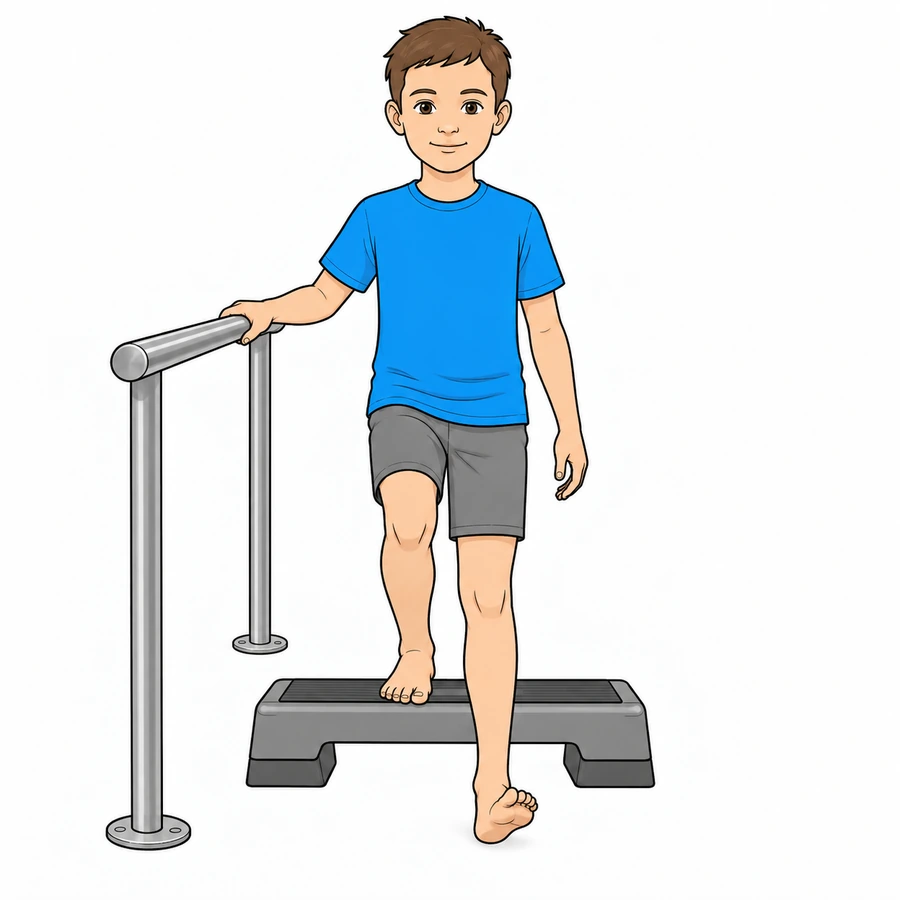
7.Controlled step-down
Functional exercise for dynamic valgus control
Standing on step, facing mirror. Slowly lower with one leg touching floor with heel, then rise. Observe that support leg knee stays aligned and doesn't collapse inward. If knee gives way, lower step height.
3 × 10 per leg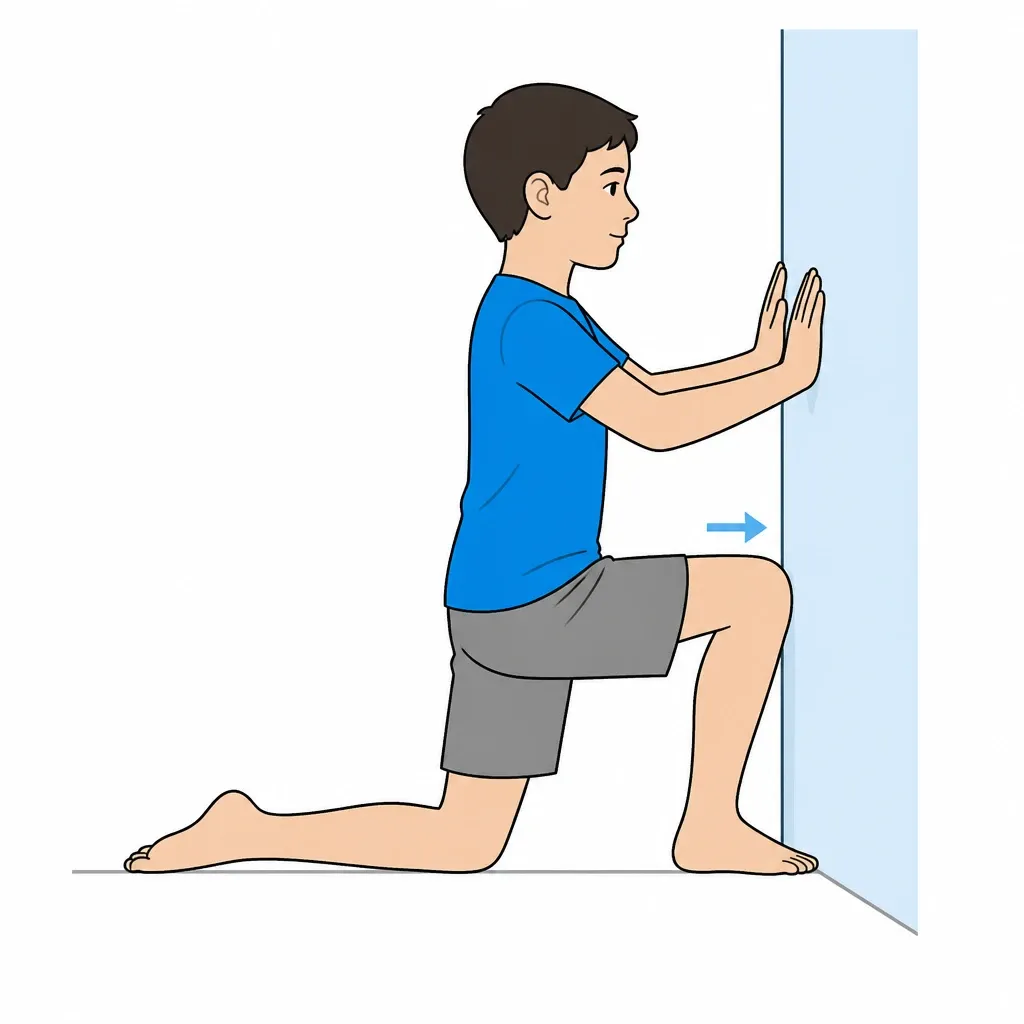
8.Ankle mobility (knee-to-wall)
Stiff ankle can cause knee compensations
Foot 10 cm from wall. Bend knee trying to touch wall with kneecap, heel firmly planted. If easy, move foot further. If heel lifts, bring closer. Often limited dorsiflexion causes knee "collapse" during squat.
10-15 reps each side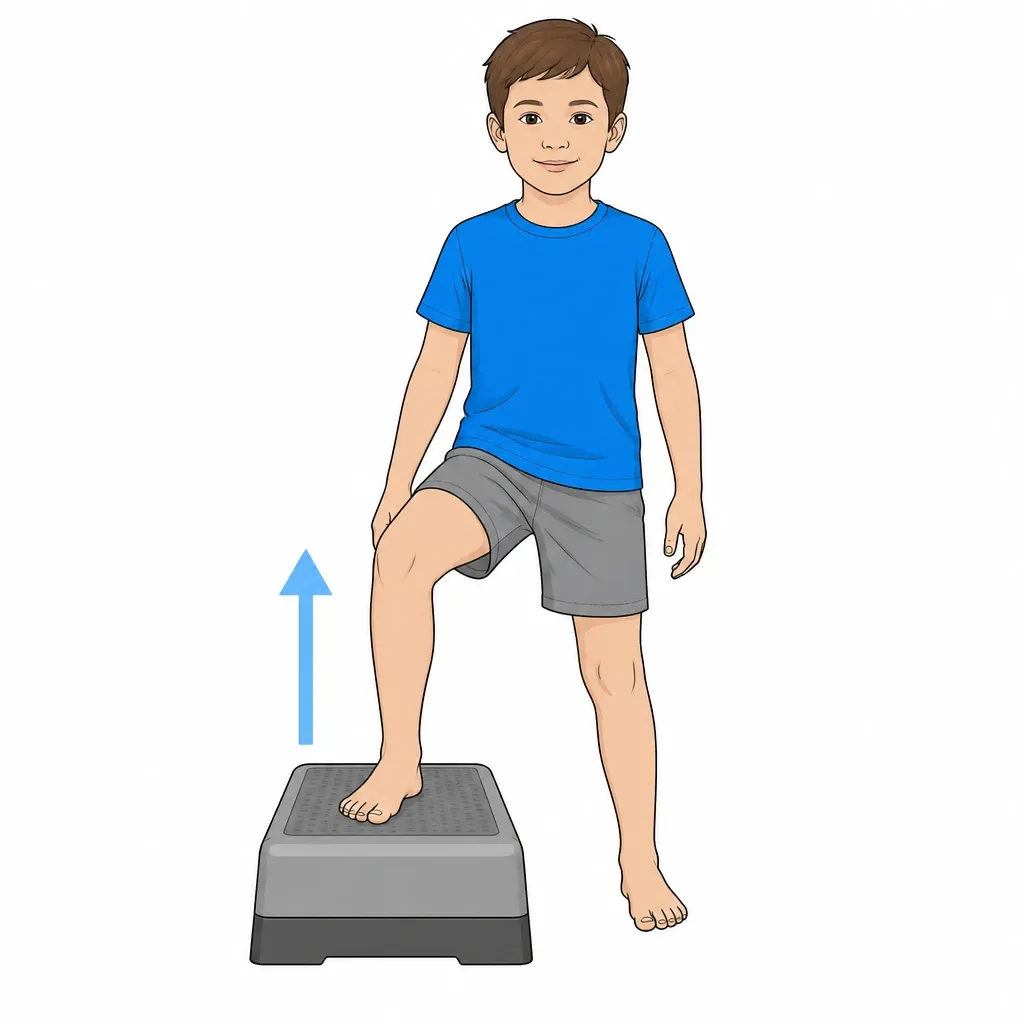
9.Lateral step-up with pelvic control
Functional weight-bearing glute strengthening with alignment feedback
Standing sideways to a low step (10-15 cm), step up with the leg on the step pushing through the heel, without pushing off with the other foot. Watch two things: the knee must stay over the foot and the pelvis must stay level. Lower in 3 seconds. Increase height only when alignment is perfect for all reps.
3 × 10 per leg, progressive height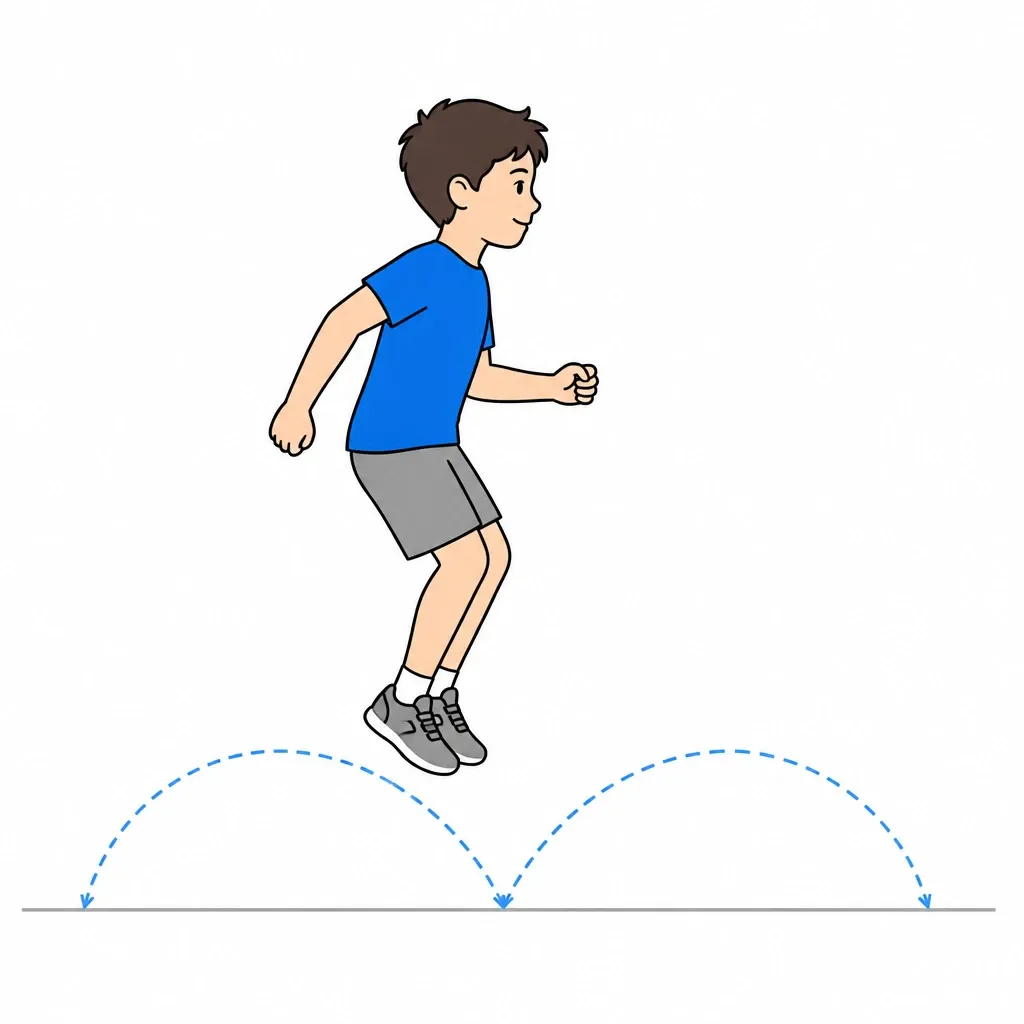
10.Controlled landing (drop jump)
Trains the knee not to collapse inward during fast sporting movements
Standing on a low step, step down (do not jump) and land on both feet at the same time, absorbing with soft hips and knees, silently, knees aligned over the feet. Filming the landing with a phone helps a lot: if the knees move toward each other, lower the height and focus on technique. Neuromuscular training programmes including these exercises significantly reduce knee injuries in young athletes.
3 × 8 landings, 2-3 times a week
RED FLAGS - When to stop and contact the doctor immediately
Stop the exercises immediately and contact the specialist (or go to the emergency department if severe) if any of the following occur:
- Acute or sudden pain during exercise
- Significant swelling after exercises
- Pain that progressively worsens over days
- Fever or general malaise
- Difficulty walking or using the limb after exercises
- Any neurological symptoms (tingling, numbness, sudden weakness)
- A red or hot joint, or inability to bear weight: seek prompt assessment; use emergency care if severe.
In case of doubt, always prefer a check-up over continuing the exercises.
Dott. Daniele Priano
Paediatric Orthopaedics - ASST Gaetano Pini-CTO
Content version: 21 September 2026
ortopediaevolutiva.com • Printed: 18/10/2026
 Full exercise sheet
https://ortopediaevolutiva.com/en/parents-kids/exercises/knee/knock-knees-bow-legs
Prepare the visit handout
Use the condition and phase indicated by your clinician. You can leave out individual exercises; instructions, illustrations and safety advice remain together.
Exclude exercises if needed
10 of 10 exercise cards included
The full web page remains available. Your selection is not saved or shared.
Before You Start
Who is this guide for?
Children with knee angular deviation beyond physiological limits for age. Exercises support but don't replace any treatment needed.
What you need
A stable, clear surface, comfortable clothing and a secure support. Check resistance-band anchors. Adult supervision; avoid marbles and small objects if the child may put them in their mouth, using a towel instead.
Suggested frequency
Perform only the exercises selected during the visit. The listed dosages are examples to adapt: follow the dose, frequency, rest and progression prescribed for age, symptoms and phase. Do not automatically perform the whole list.
Common mistakes to avoid
- •Forcing a painful or unauthorised movement
- •Increasing load, resistance or frequency without the agreed rest periods
- •Doing balance exercises without stable support or supervision
⚠️ Red flags — when to stop and contact the doctor immediately
Stop exercises immediately and contact the specialist if any of the following occur:
- Acute or sudden pain during exercise
- Significant swelling after exercises
- Pain that progressively worsens over days
- Fever or general malaise
- Difficulty walking or using the limb after exercises
- Any neurological symptoms (tingling, numbness, sudden weakness)
- A red or hot joint, or inability to bear weight: seek prompt assessment; use emergency care if severe.
Detailed Exercises
- 1
Clamshell
Strengthens hip external rotators that control knee position
Lying on side, knees bent 90°, feet together. Open top knee like clamshell opening, keeping feet in contact. DON'T rotate pelvis backward. Hold 2-3 seconds at top. To increase difficulty, use band above knees.
3 × 15 reps each side - 2
Side-lying hip abduction
Strengthens gluteus medius, essential hip stabilizer
Lying on side, bottom leg bent for stability. Lift top leg straight toward ceiling, keeping it in line with body (don't bring forward). Toe slightly rotated down. Lower with control. To progress, add light ankle weight.
3 × 15 reps each side - 3
Monster walks with band
Dynamic glute activation during movement
With band above knees (or at ankles for more difficulty). Semi-squat position, feet shoulder-width. Walk sideways in small steps, maintaining constant band tension. Then walk in other direction. Knees must stay over feet, not collapse inward.
10-15 steps each direction × 2-3 sets - 4
Single-leg glute bridge
Advanced glute strengthening with pelvis control
Supine, knees bent. Extend one leg. Lift pelvis using only support leg, keeping pelvis LEVEL (don't let unsupported side drop). This exercise requires gluteus medius control and strength besides gluteus maximus.
3 × 10-12 reps each side - 5
Motor control (single-leg stance)
Trains balance and dynamic control; it does not straighten structural bony varus or valgus.
Near a stable support, try standing on one leg with a controlled pelvis and eyes open. Use a mirror to repeat the taught movement without forcing the hip, knee and ankle into a perfectly vertical line. Respect the child’s structural alignment: this trains control, not bony straightening. Put the other foot down before losing balance.
3 × 30 seconds per leg focusing on alignment - 6
Mirror-controlled squat
Squat practice with visual feedback; it does not correct the bony knee axis.
Select a comfortable foot position and squat depth with the physiotherapist. In front of a mirror, lower and rise slowly with control, without forcing the knees in or out to change their shape. Reduce range or stop for pain or loss of control.
3 × 10 focusing on correct technique - 7
Controlled step-down
Functional exercise for dynamic valgus control
Standing on step, facing mirror. Slowly lower with one leg touching floor with heel, then rise. Observe that support leg knee stays aligned and doesn't collapse inward. If knee gives way, lower step height.
3 × 10 per leg - 8
Ankle mobility (knee-to-wall)
Stiff ankle can cause knee compensations
Foot 10 cm from wall. Bend knee trying to touch wall with kneecap, heel firmly planted. If easy, move foot further. If heel lifts, bring closer. Often limited dorsiflexion causes knee "collapse" during squat.
10-15 reps each side - 9
Lateral step-up with pelvic control
Functional weight-bearing glute strengthening with alignment feedback
Standing sideways to a low step (10-15 cm), step up with the leg on the step pushing through the heel, without pushing off with the other foot. Watch two things: the knee must stay over the foot and the pelvis must stay level. Lower in 3 seconds. Increase height only when alignment is perfect for all reps.
3 × 10 per leg, progressive height - 10
Controlled landing (drop jump)
Trains the knee not to collapse inward during fast sporting movements
Standing on a low step, step down (do not jump) and land on both feet at the same time, absorbing with soft hips and knees, silently, knees aligned over the feet. Filming the landing with a phone helps a lot: if the knees move toward each other, lower the height and focus on technique. Neuromuscular training programmes including these exercises significantly reduce knee injuries in young athletes.
3 × 8 landings, 2-3 times a week