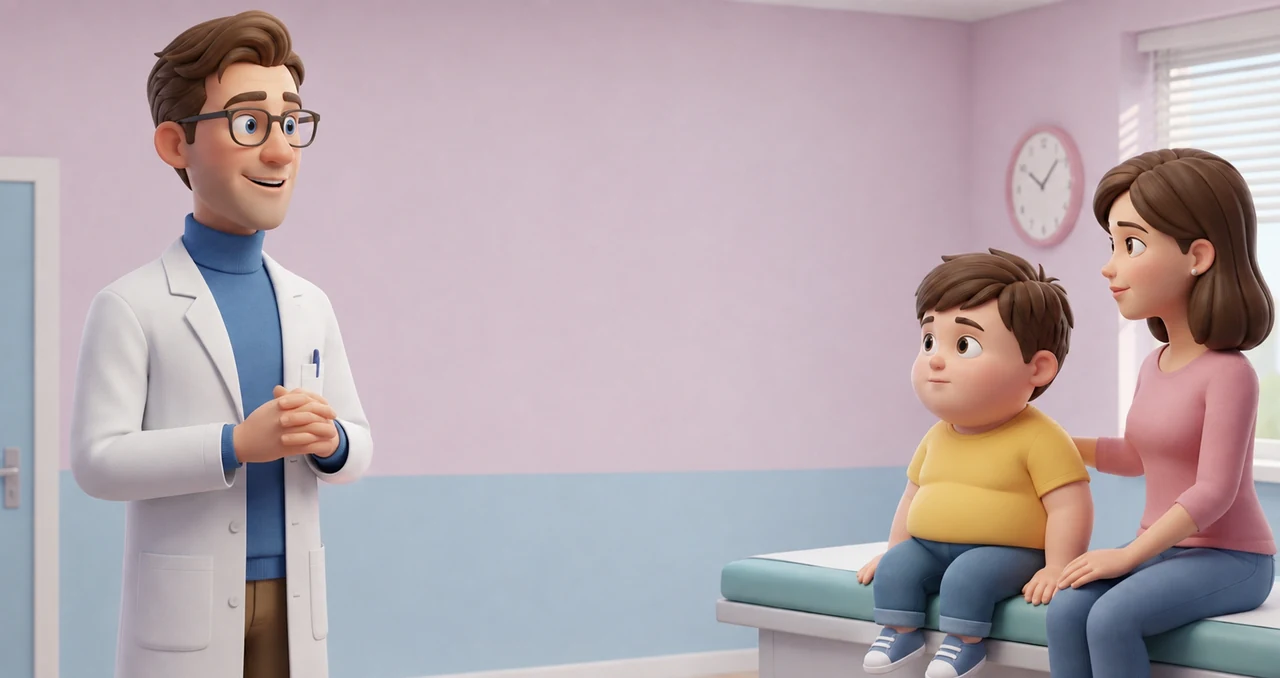
The OKkio alla SALUTE 2023 data report that among Italian children aged 8–9 years, 19.0% are overweight and 9.8% are obese; severe obesity affects approximately 2.6%. The situation has improved compared to the first surveys, especially for overweight, but prevalences remain high and vary significantly between regions. [1][2]
For pediatric orthopedics, weight plays a role in several ways: limb alignment, pain, joint load, physical activity, and fracture management.
Knee and Foot Alignment
A systematic review with meta-analysis of 73 studies, involving over 1.7 million children and adolescents, found an association between overweight/obesity and various alignment alterations. The most consistent signals concerned genu valgum and flat feet; associations with hyperlordosis and other malalignments were also reported. [4]
Weight is not the sole cause of these deformities. Age, growth, laxity, family history, and limb morphology remain determining factors. However, increased load can make an already present condition more symptomatic.
Musculoskeletal Pain
A longitudinal study based on general practice records showed that children with obesity consult more frequently for musculoskeletal symptoms during childhood, with a particularly evident association in females. [5]
An association with elevated BMI also exists for low back pain. A 2024 meta-analysis confirms this, despite heterogeneity among studies. [6]
This does not allow for automatically attributing pain to weight. In a child with persistent symptoms, other causes appropriate for age, location, and activity should still be considered.
Trauma and Fractures
Orthopedic reviews describe differences in injury profiles and the management of certain fractures in children with obesity. Immobilization, mobilization, and conservative treatment can be more challenging in specific contexts. [3]
A study on upper limb fractures also found different characteristics of fractures in children who were overweight or obese. [7]
The relationship between weight and bone health is complex. Greater body mass does not necessarily equate to stronger bone: bone quality, physical activity, vitamin D, and metabolic factors all contribute together. [8]
How Weight Factors into an Orthopedic Visit
When a child presents with lower limb pain, genu valgum, symptomatic flat feet, or low back pain, I consider weight as one of the factors in the overall picture. The same applies during recovery from certain traumas or surgeries.
Counselling works best when it remains concrete. The orthopedic symptom should be treated for what it is; when excess weight contributes to the load or recovery, it can be helpful to also work on physical activity, daily habits, and progressive weight management, avoiding making it the sole explanation for the problem.
Disclaimer
This content is for informational purposes only and does not replace an individual clinical evaluation.
References
[1] Istituto Superiore di Sanità. Rapporto ISTISAN 25/3: Stato ponderale e stili di vita di bambine e bambini. Risultati di OKkio alla SALUTE 2023.
[2] Istituto Superiore di Sanità / Epicentro. National OKkio alla SALUTE 2023 survey: national data.
https://www.epicentro.iss.it/okkioallasalute/indagine-2023-dati
[3] Tisano B, Anigian K, Kantorek N, et al. The Insidious Effects of Childhood Obesity on Orthopedic Injuries and Deformities. Orthop Clin North Am. 2022;53(4):461-472. doi:10.1016/j.ocl.2022.06.008.
PubMed: https://pubmed.ncbi.nlm.nih.gov/36208888/
[4] Molina-Garcia P, Miranda-Aparicio D, Ubago-Guisado E, et al. The Impact of Childhood Obesity on Joint Alignment: A Systematic Review and Meta-Analysis. Phys Ther. 2021;101(7):pzab066. doi:10.1093/ptj/pzab066.
PubMed: https://pubmed.ncbi.nlm.nih.gov/33580953/
[5] Firman N, Homer K, Harper G, Robson J, Dezateux C. Are children living with obesity more likely to experience musculoskeletal symptoms during childhood? A linked longitudinal cohort study using primary care records. Arch Dis Child. 2024;109(5):414-421. doi:10.1136/archdischild-2023-326407.
PubMed: https://pubmed.ncbi.nlm.nih.gov/38471744/
[6] García-Moreno JM, Calvo-Muñoz I, Gómez-Conesa A, López-López JA. Obesity and overweight as risk factors for low back pain in children and adolescents: a meta-analysis. Int J Obes (Lond). 2024;48(5):612-625. doi:10.1038/s41366-024-01475-w.
PubMed: https://pubmed.ncbi.nlm.nih.gov/38273033/
[7] Nhan DT, Leet AI, Lee RJ. Associations of childhood overweight and obesity with upper-extremity fracture characteristics. Medicine (Baltimore). 2021;100(18):e25302. doi:10.1097/MD.0000000000025302.
PubMed: https://pubmed.ncbi.nlm.nih.gov/33950919/
[8] Beck JJ, Mahan ST, Nowicki P, Schreiber VM, Minkowitz B. What Is New in Pediatric Bone Health. J Pediatr Orthop. 2021;41(8):e594-e599. doi:10.1097/BPO.0000000000001896.