Paediatric Orthopaedic Specialist
Postural kyphosis / rounded back
Home Exercise Program
Not every exercise listed here is suitable for every child: the selection is individual and is defined during the consultation.
For whom: Adolescents with postural kyphosis (not structural). For Scheuermann's disease, consult specialist.
Dose and frequency: Perform only the exercises selected during the visit. The listed dosages are examples to adapt: follow the dose, frequency, rest and progression prescribed for age, symptoms and phase. Do not automatically perform the whole list.
Equipment and supervision: A stable, clear surface, comfortable clothing and a secure support. Check resistance-band anchors. Adult supervision; avoid marbles and small objects if the child may put them in their mouth, using a towel instead.
Avoid: Forcing a painful or unauthorised movement; Increasing load, resistance or frequency without the agreed rest periods; Doing balance exercises without stable support or supervision; Focusing only on back while ignoring core and hips; Prolonged incorrect postures during study/gaming; Occasional exercises instead of daily.
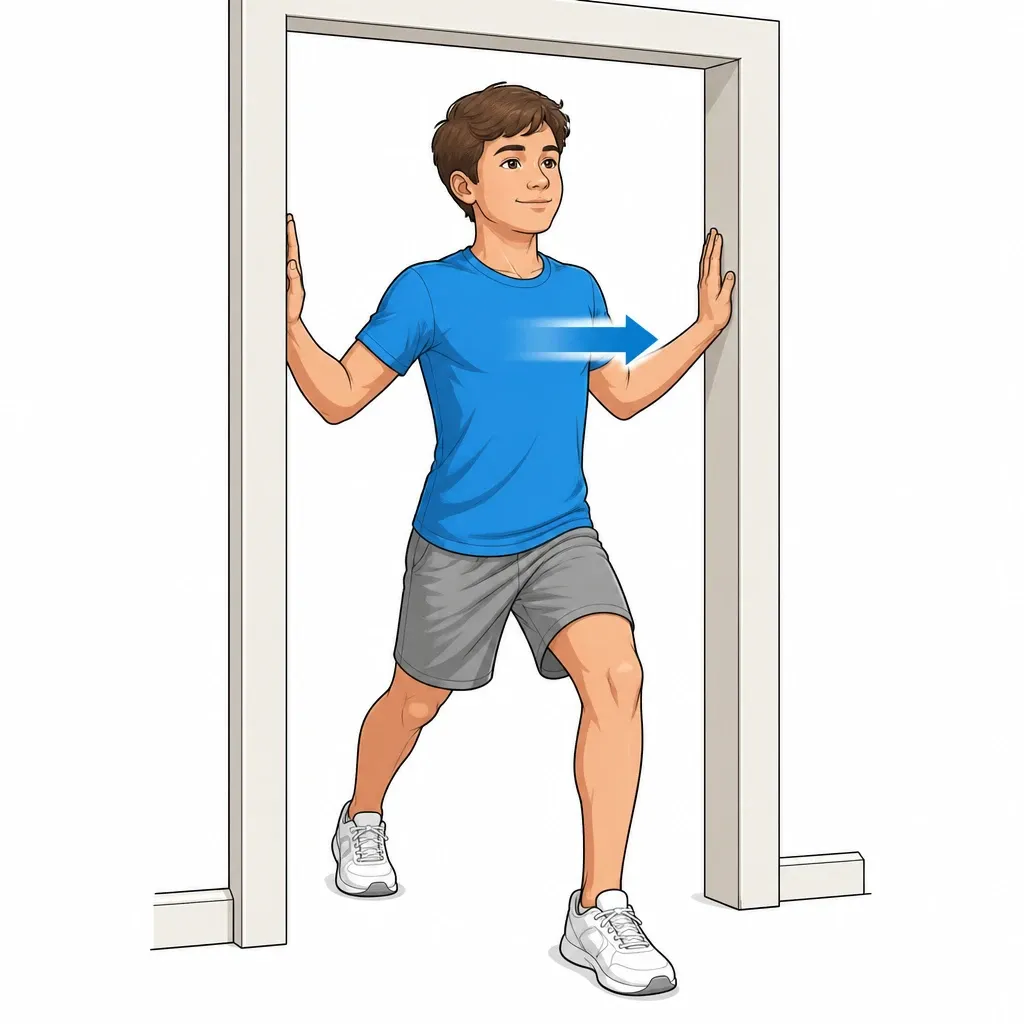
1.Doorway chest stretch
Stretches anterior muscles that pull the shoulders forward
Standing in a doorway, forearms on both sides with elbows at shoulder height. Step forward bringing the chest through until a stretch is felt at the front of the shoulders. Hold while breathing deeply, without arching the lower back.
3 × 30 seconds, twice daily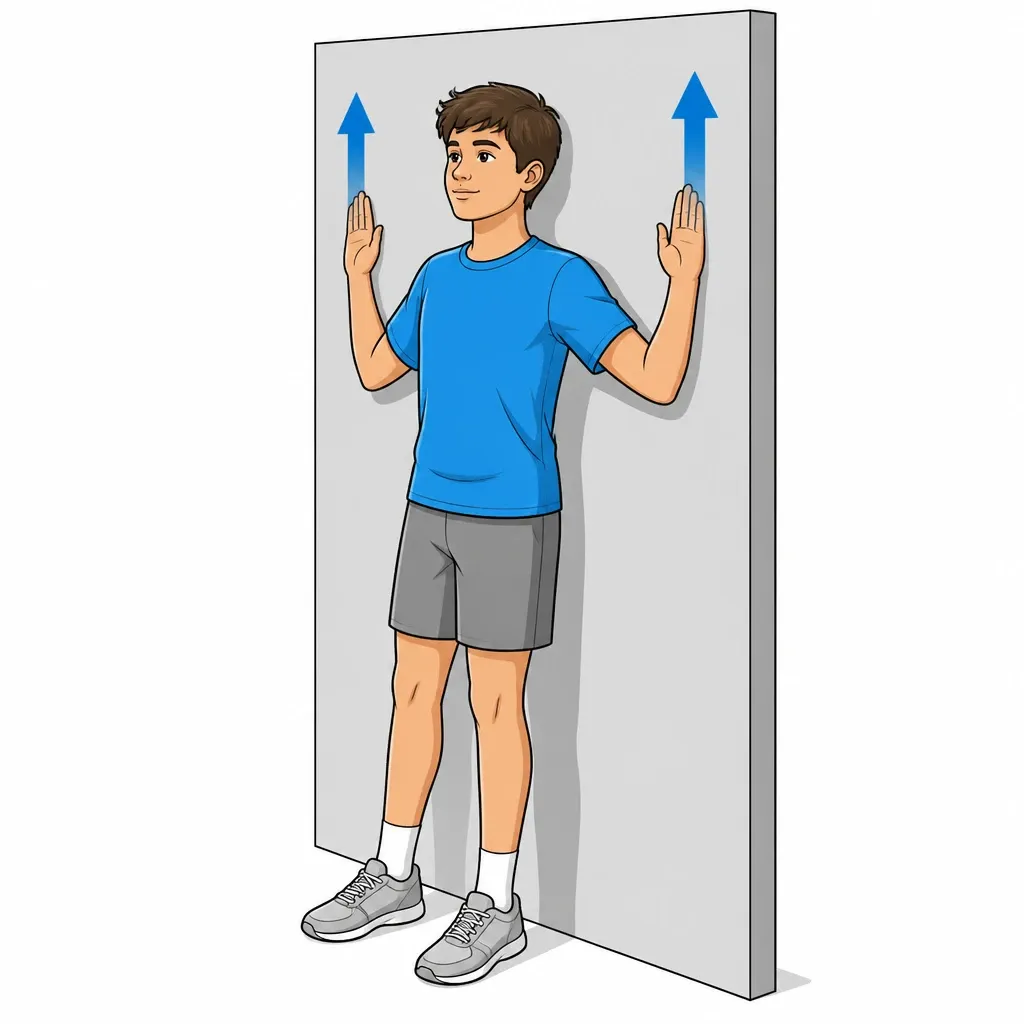
2.Wall angels
Shoulder mobility and scapular stabiliser activation
Back against the wall, feet slightly forward, lower back in contact. Arms at 90° with elbows and backs of the hands touching the wall. Slide the arms upward keeping contact, then return. If the hands lift off, stop earlier: that is the current limit.
3 × 10 slow reps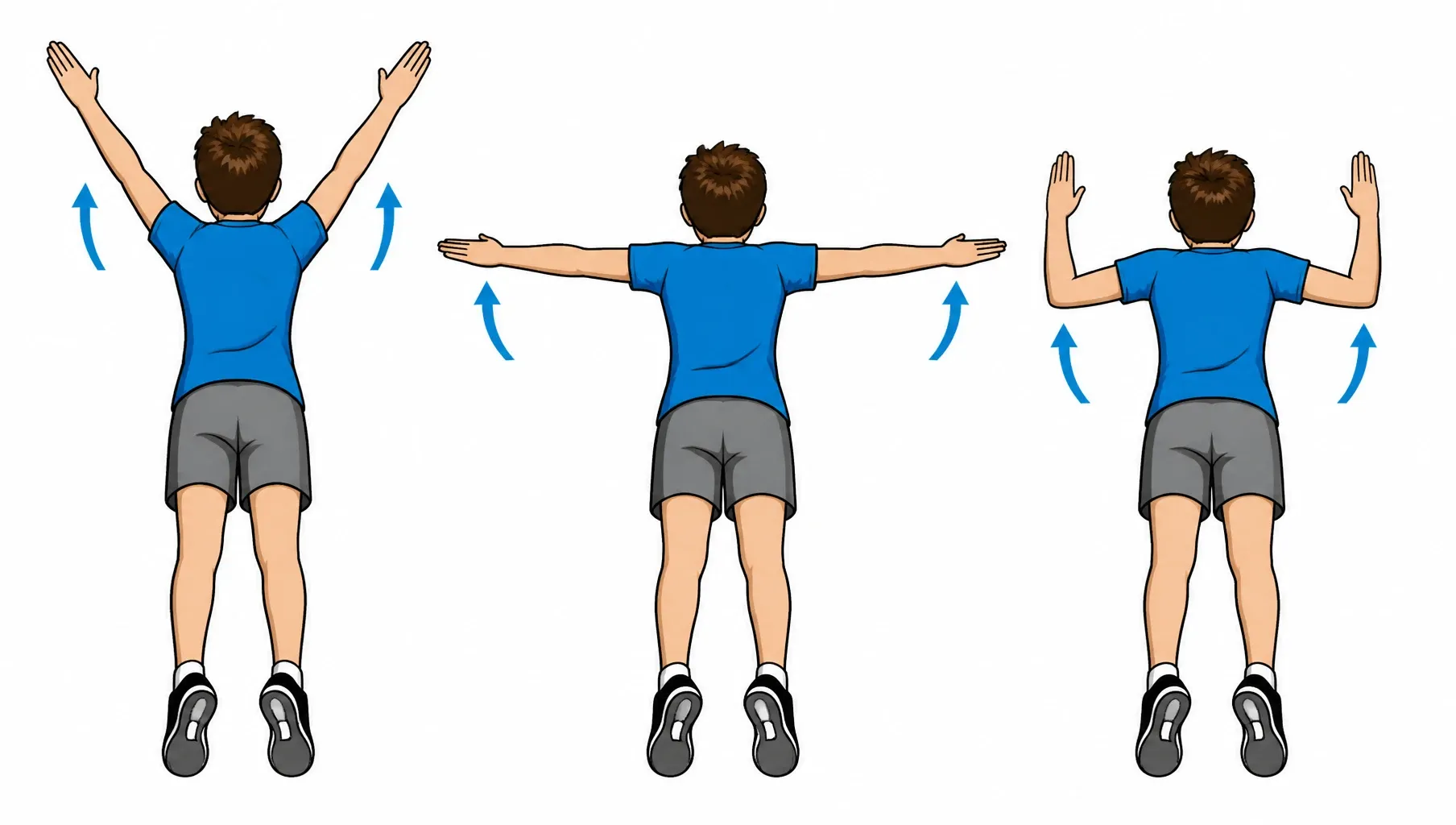
3.Prone Y-T-W
Strengthens the back, lower trapezius and rhomboids
Prone on the floor, forehead resting down. Lift the arms forming first a Y (arms up and open), then a T (arms out to the side), then a W (elbows bent close to the body). Squeeze the shoulder blades in each position, holding 3 seconds. Keep the neck long, do not lift the head.
3 sets of 8-10 reps per position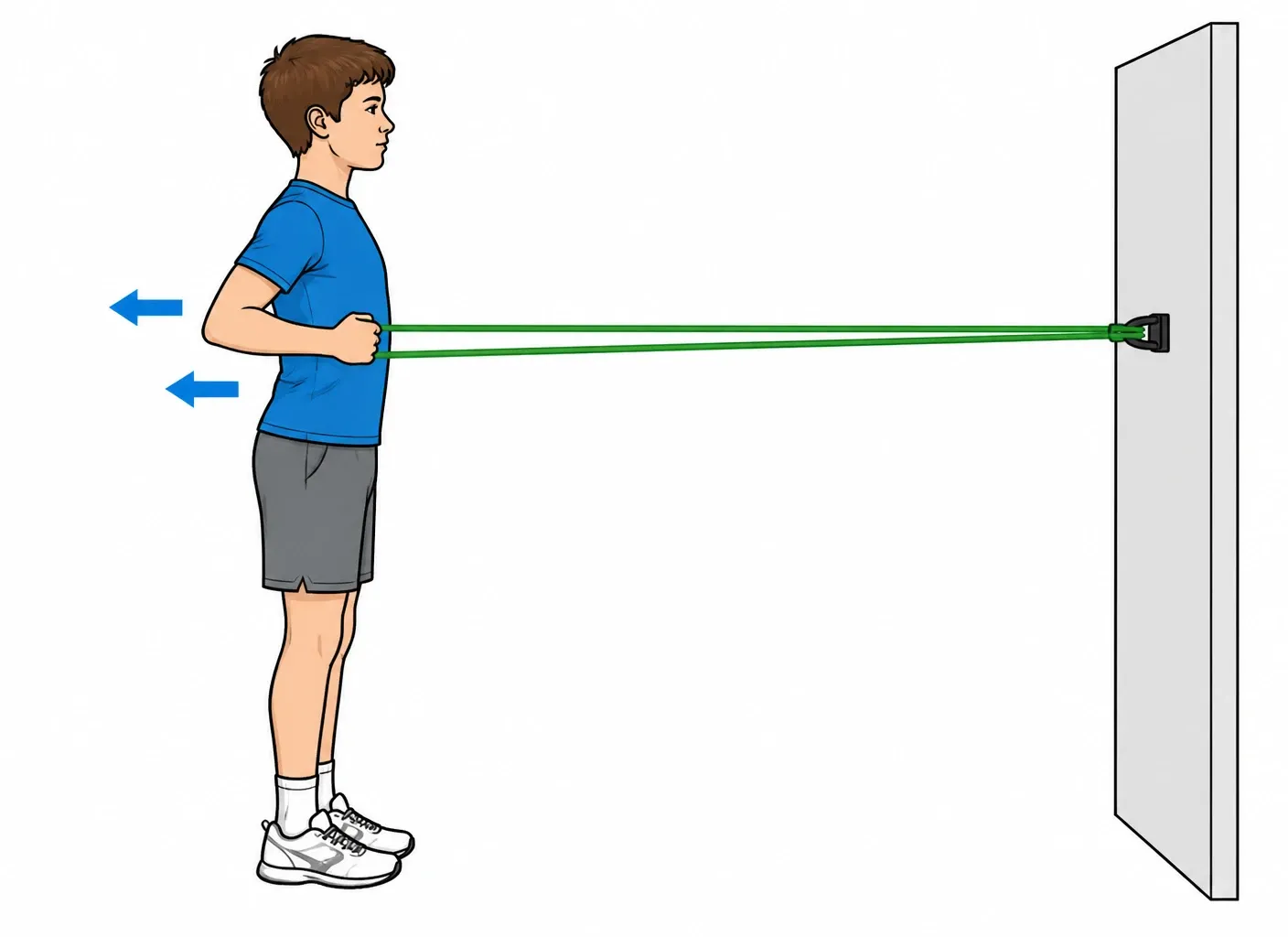
4.Resistance band row
Pulling strength for the back muscles
Use a band with a stable anchor at the indicated height, checked by an adult and demonstrated by the physiotherapist; do not improvise a door-handle attachment. Draw the elbows back near the trunk without arching the back, then return slowly. Use light resistance, breathe freely and avoid pain.
3 × 12-15 reps, 3 times per week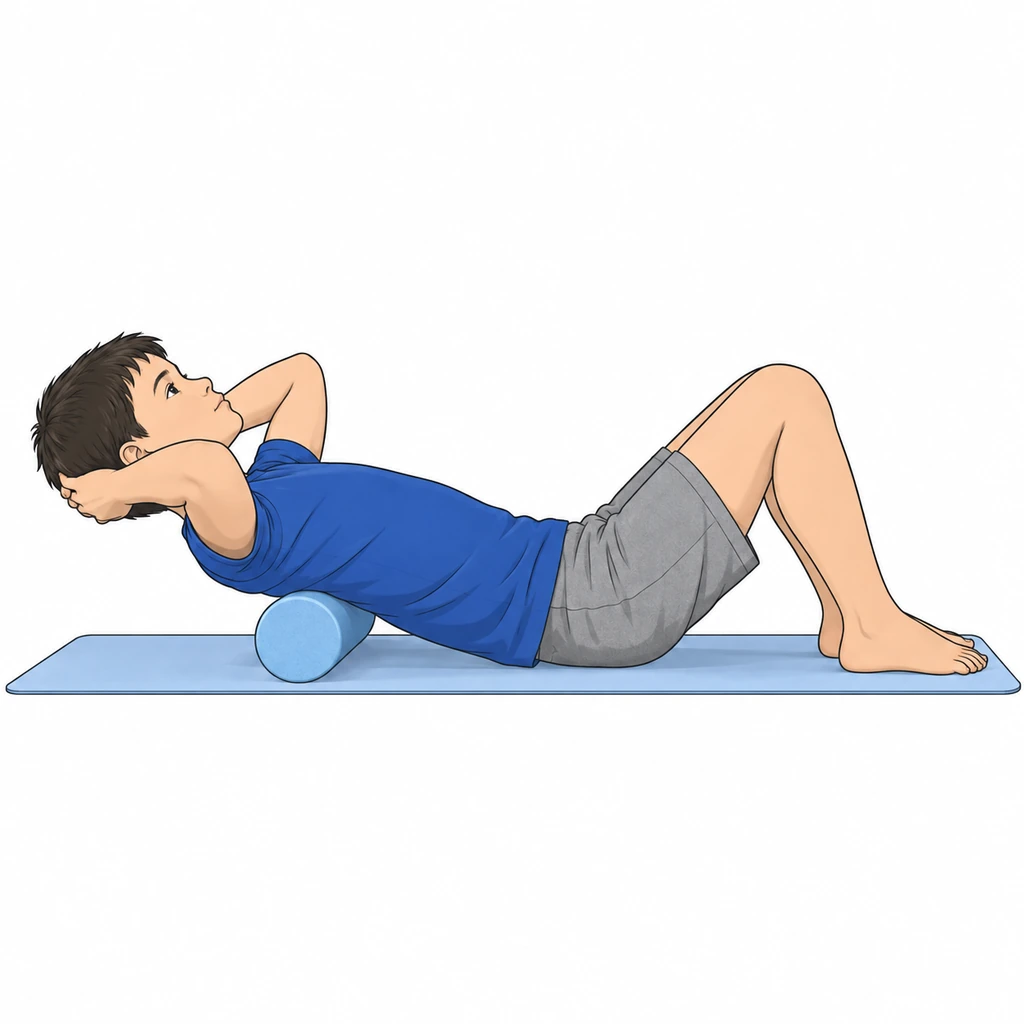
5.Thoracic extension over a foam roller
Restores extension of the thoracic spine
Lie with the foam roller placed across the upper back, knees bent and hands behind the head supporting it. Gently extend backward over the roller, then come up. Move the roller a few centimetres and repeat over 3-4 levels. Never force the lower back.
2 × 8 extensions per level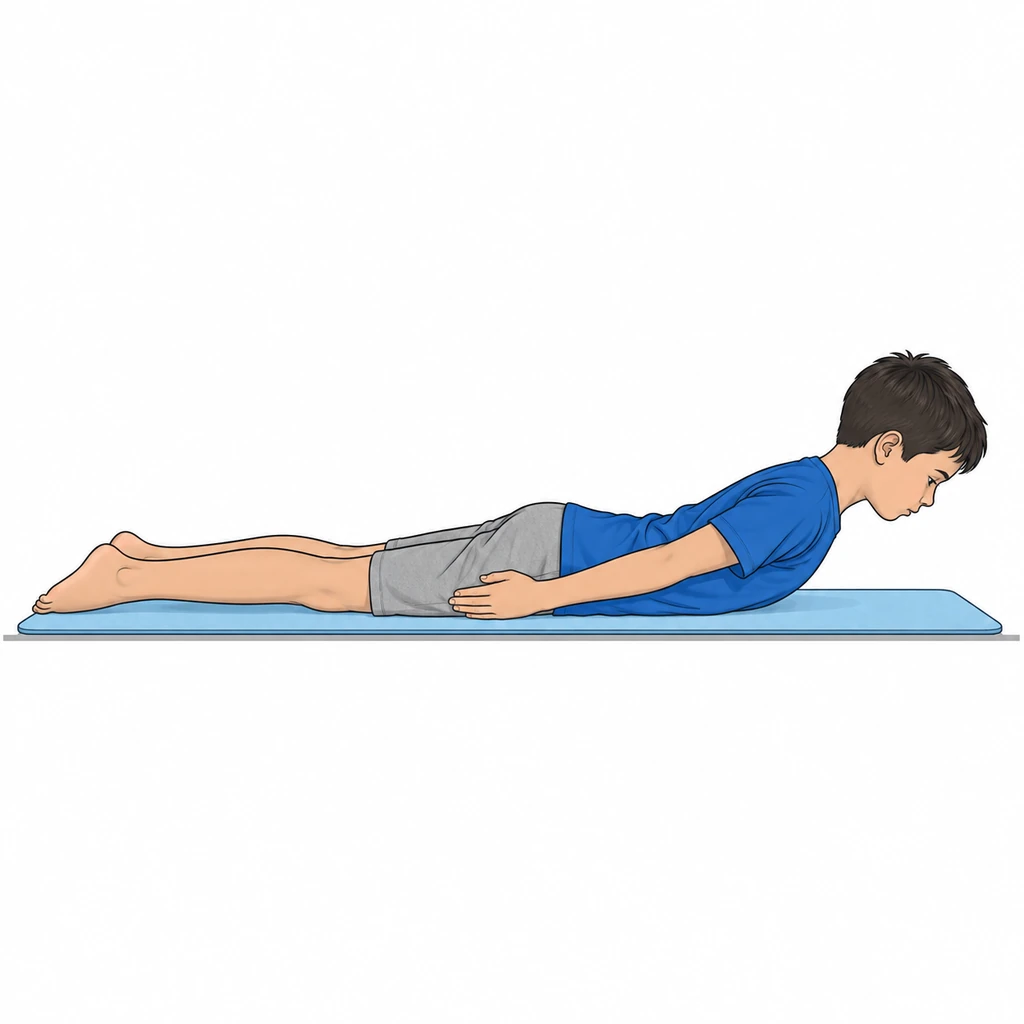
6.Trunk extension: selecting the exercise version
Do not improvise a Sorensen hold on a household table.
To train the extensors, use the floor-based version taught by the physiotherapist. Do not suspend the trunk over the edge of a table or bed with a family member holding the ankles. The Sorensen test requires appropriate equipment and supervision.
Use the version and dosage prescribed by the physiotherapist.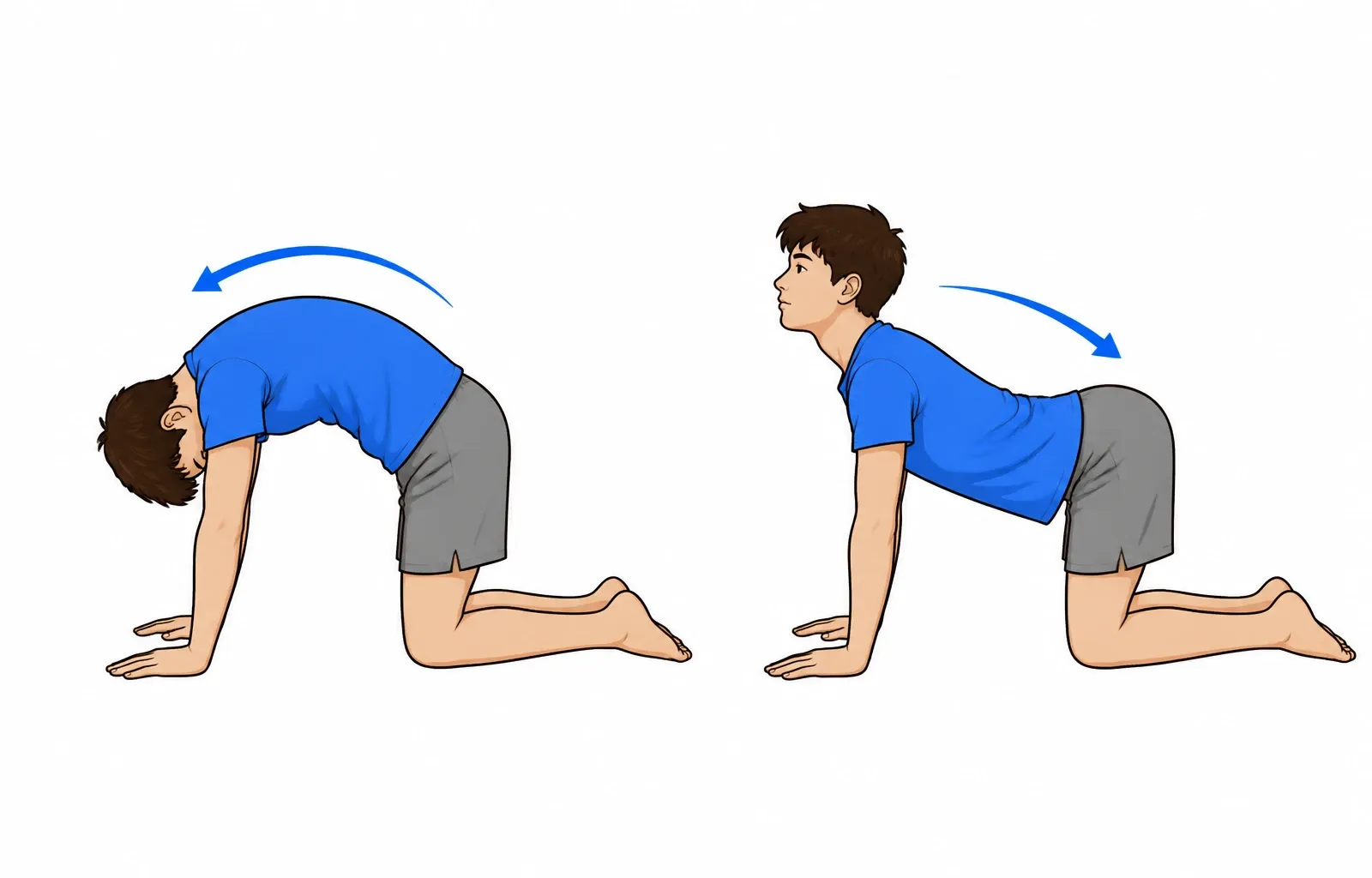
7.Cat-cow with extension focus
Gentle mobility and thoracic spine awareness
On all fours, hands under shoulders and knees under hips. Alternate arching up (cat) and extending (cow), focusing on the thoracic region during the extension phase: open the chest forward rather than only dropping the lower back.
2 × 10 slow reps
8.Chin tuck
Counteracts forward head posture (text neck)
From 1 to 2: gently move the head backwards while keeping the gaze level. Do not lift or lower the chin and do not force the neck.
Seated or standing with a straight back. Draw the chin straight back, as if making a "double chin", lengthening the back of the neck upward. Do not bend the head down: the movement is a backward translation. Hold 5 seconds and release.
3 × 10 reps, several times daily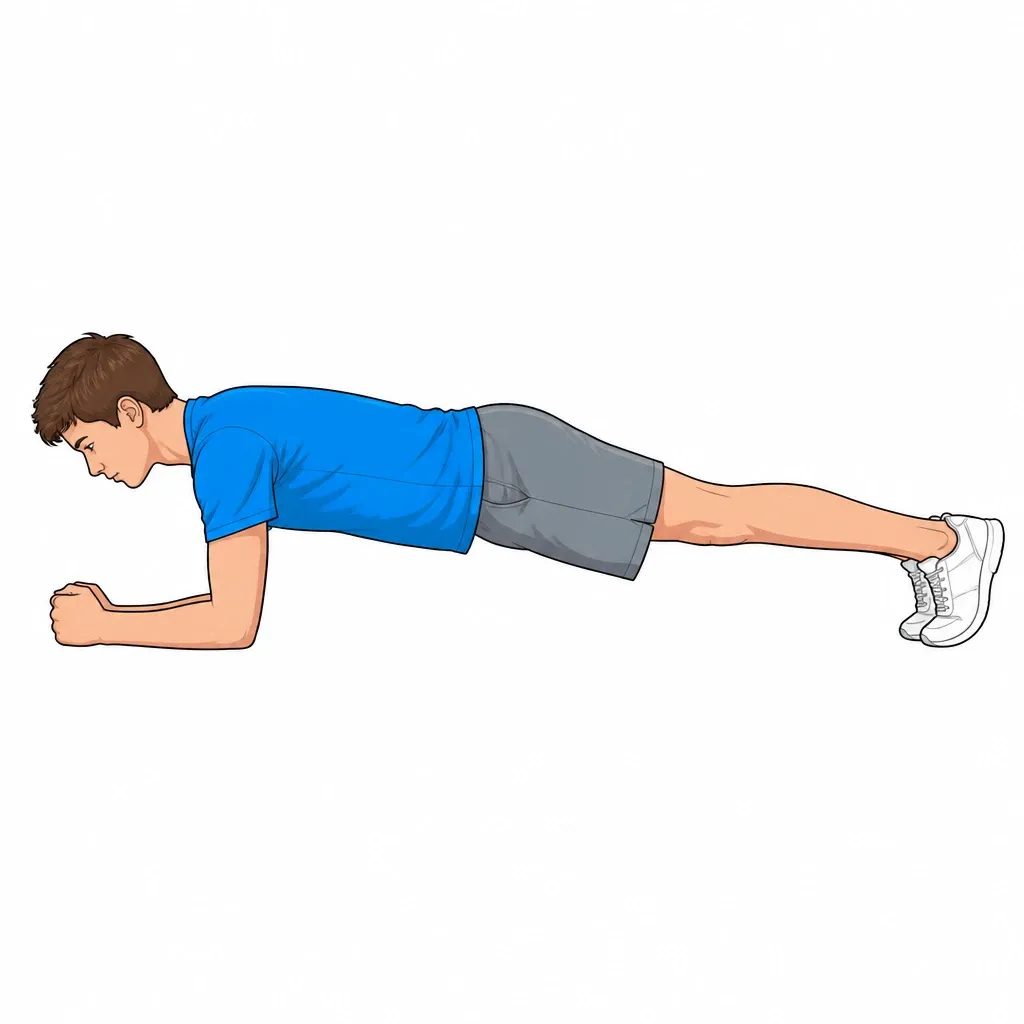
9.Front plank
Trunk stability supporting upright posture
Prone on forearms with elbows under the shoulders, body in line from head to heels. Start with knees on the floor and progress to the toes once the hold is stable. Engage the abdominals and glutes, avoiding the pelvis sagging.
3 × 20-40 seconds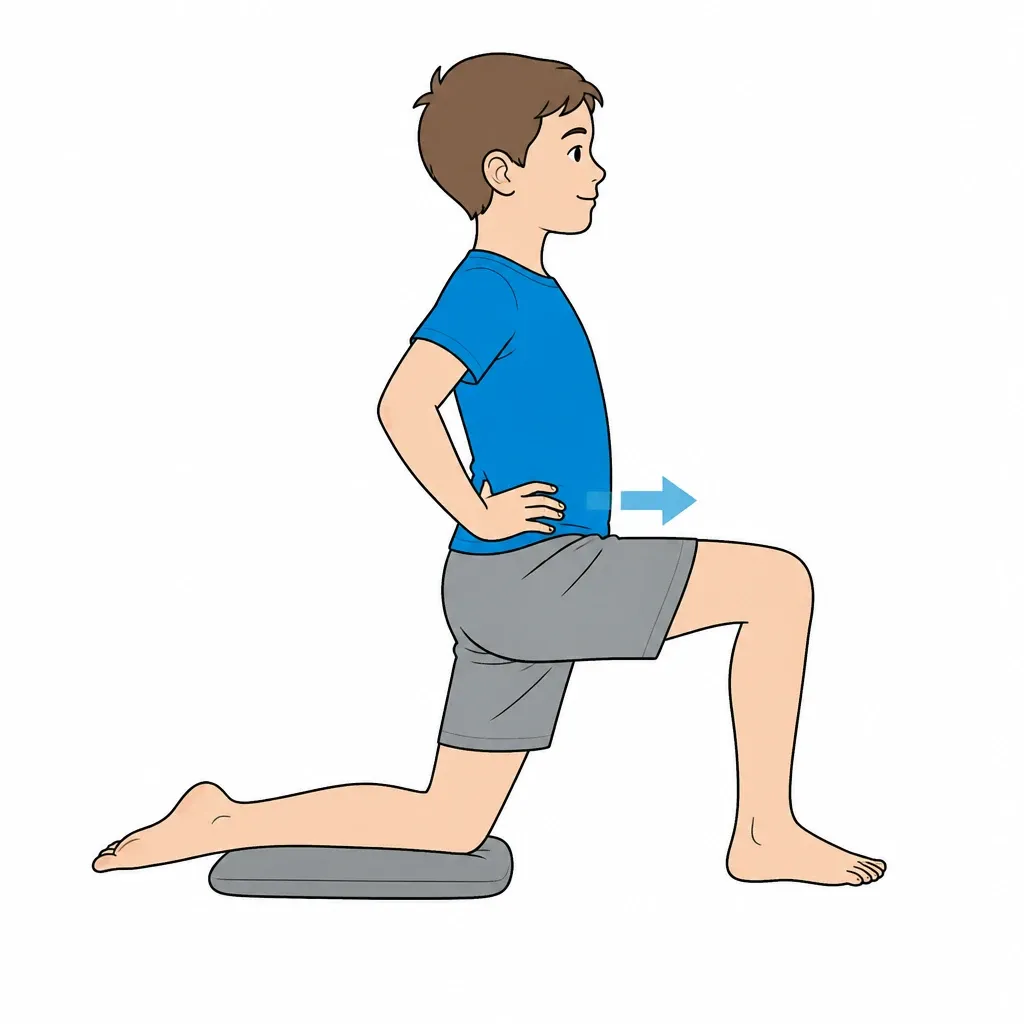
10.Hip flexor (iliopsoas) stretch
Stiff hip flexors alter pelvic and spinal alignment
Lunge with the back knee on a cushion. First squeeze the glute of the back leg to tilt the pelvis posteriorly, then gently push the hips forward. Keep the back straight: if it arches, the stretch is lost.
3 × 30 seconds each side, daily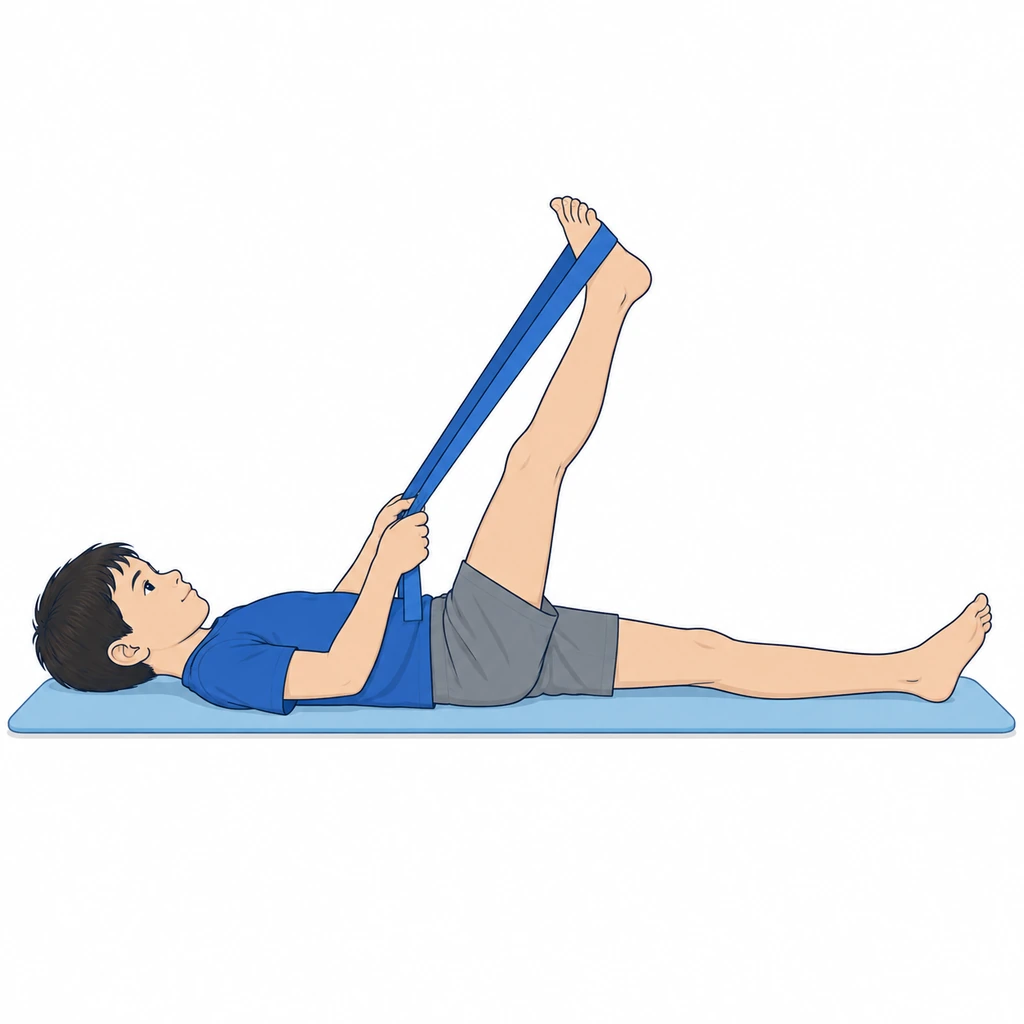
11.Hamstring stretching
Short hamstrings favour trunk collapse into flexion
Supine, one leg extended and the other lifted with a strap around the foot. Straighten the knee until tension is felt behind the thigh, keeping the lower back on the floor. Stop at the first tension, without pain.
3 × 30 seconds each side, daily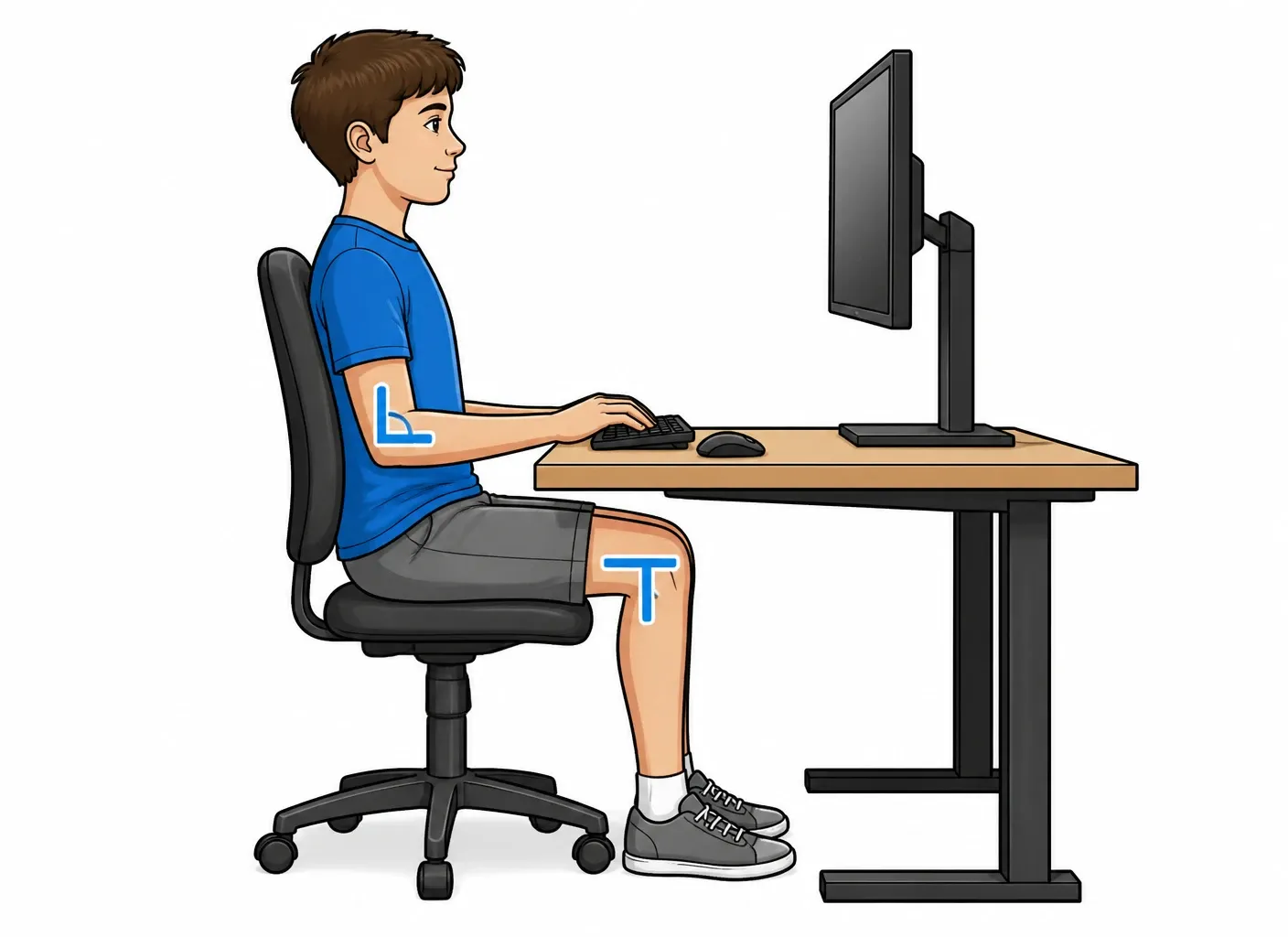
12.Posture at the desk and with screens
Postural education for daily activities
Set up the workstation: monitor at eye level, backrest supporting the back, feet flat on the floor, elbows and knees at 90°. Breaks every 20-30 minutes to stand and move. With a smartphone, bring it to eye level instead of bending the head down.
Every day, breaks every 20-30 minutes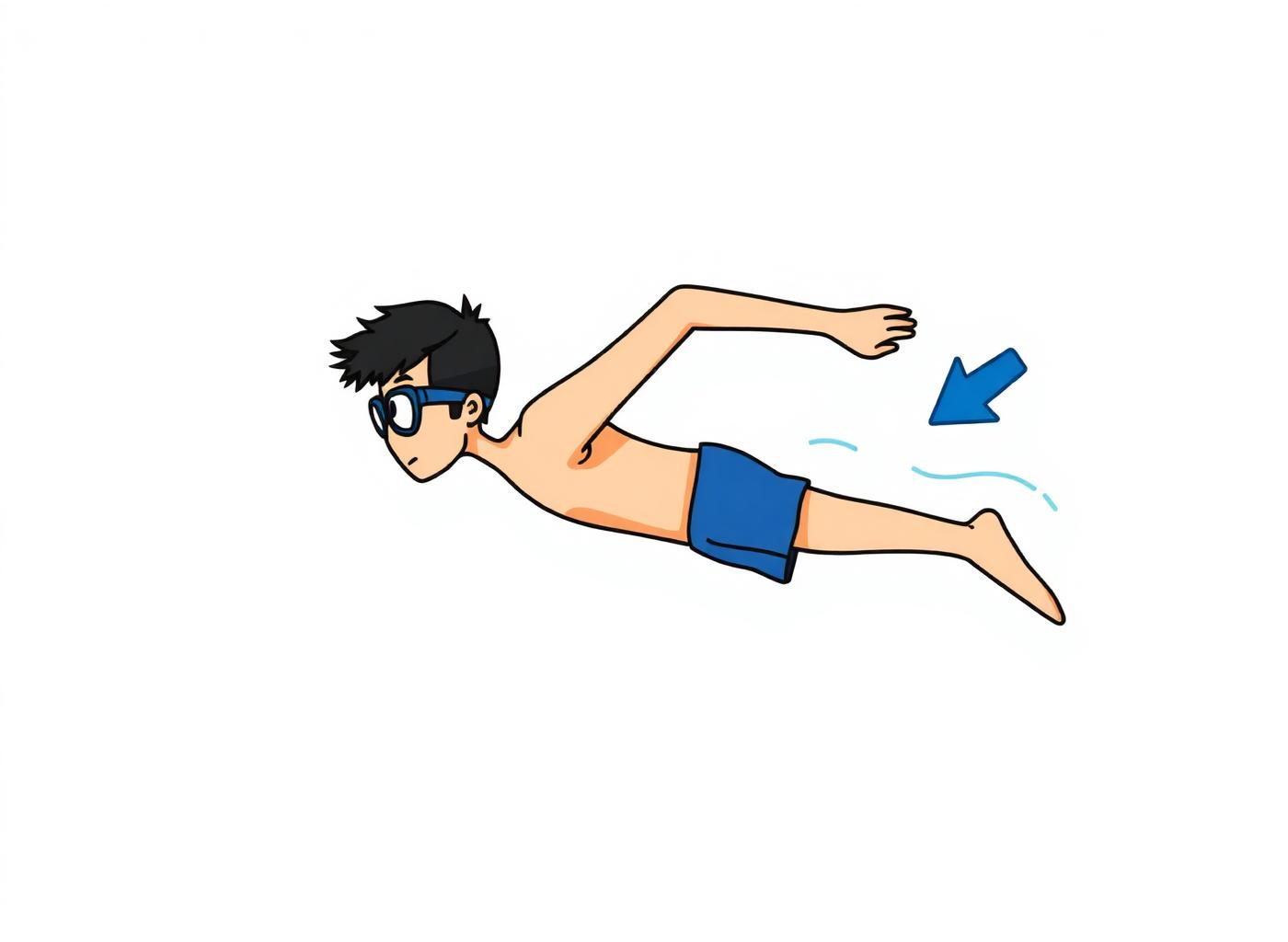
13.Regular physical activity
Sport supports health and physical capacity, but no sport has been shown to be “best” for correcting postural kyphosis.
Choose enjoyable, tolerated activities that encourage regular movement. Swimming, dance, climbing and other sports are options, not superior treatments for straightening the spine. Adapt activity and any specific exercises to symptoms, age and clinical assessment.
2-3 sessions per week
RED FLAGS - When to stop and contact the doctor immediately
Stop the exercises immediately and contact the specialist (or go to the emergency department if severe) if any of the following occur:
- Acute or sudden pain during exercise
- Significant swelling after exercises
- Pain that progressively worsens over days
- Fever or general malaise
- Difficulty walking or using the limb after exercises
- Any neurological symptoms (tingling, numbness, sudden weakness)
- A red or hot joint, or inability to bear weight: seek prompt assessment; use emergency care if severe.
In case of doubt, always prefer a check-up over continuing the exercises.
Dott. Daniele Priano
Paediatric Orthopaedics - ASST Gaetano Pini-CTO
Content version: 21 September 2026
ortopediaevolutiva.com • Printed: 18/10/2026
 Full sheet and videos
https://ortopediaevolutiva.com/en/parents-kids/exercises/spine-posture/postural-kyphosis
Prepare the visit handout
Use the condition and phase indicated by your clinician. You can leave out individual exercises; instructions, illustrations and safety advice remain together.
Exclude exercises if needed
13 of 13 exercise cards included
The full web page remains available. Your selection is not saved or shared.
Before You Start
Who is this guide for?
Adolescents with postural kyphosis (not structural). For Scheuermann's disease, consult specialist.
What you need
A stable, clear surface, comfortable clothing and a secure support. Check resistance-band anchors. Adult supervision; avoid marbles and small objects if the child may put them in their mouth, using a towel instead.
Suggested frequency
Perform only the exercises selected during the visit. The listed dosages are examples to adapt: follow the dose, frequency, rest and progression prescribed for age, symptoms and phase. Do not automatically perform the whole list.
Common mistakes to avoid
- •Forcing a painful or unauthorised movement
- •Increasing load, resistance or frequency without the agreed rest periods
- •Doing balance exercises without stable support or supervision
- •Focusing only on back while ignoring core and hips
- •Prolonged incorrect postures during study/gaming
- •Occasional exercises instead of daily
⚠️ Red flags — when to stop and contact the doctor immediately
Stop exercises immediately and contact the specialist if any of the following occur:
- Acute or sudden pain during exercise
- Significant swelling after exercises
- Pain that progressively worsens over days
- Fever or general malaise
- Difficulty walking or using the limb after exercises
- Any neurological symptoms (tingling, numbness, sudden weakness)
- A red or hot joint, or inability to bear weight: seek prompt assessment; use emergency care if severe.
Detailed Exercises
- 1
Doorway chest stretch
Stretches anterior muscles that pull the shoulders forward
Standing in a doorway, forearms on both sides with elbows at shoulder height. Step forward bringing the chest through until a stretch is felt at the front of the shoulders. Hold while breathing deeply, without arching the lower back.
3 × 30 seconds, twice dailyDoorway chest stretch
Press Play to load the video. Follow the instructions and precautions on this exercise sheet.
Brief demonstration of the approved movement; follow the individual dose and limits in the exercise sheet. The video does not replace the full programme.
- 2
Wall angels
Shoulder mobility and scapular stabiliser activation
Back against the wall, feet slightly forward, lower back in contact. Arms at 90° with elbows and backs of the hands touching the wall. Slide the arms upward keeping contact, then return. If the hands lift off, stop earlier: that is the current limit.
3 × 10 slow repsWall angels
Press Play to load the video. Follow the instructions and precautions on this exercise sheet.
Brief demonstration of the approved movement; follow the individual dose and limits in the exercise sheet. The video does not replace the full programme.
- 3
Prone Y-T-W
Strengthens the back, lower trapezius and rhomboids
Prone on the floor, forehead resting down. Lift the arms forming first a Y (arms up and open), then a T (arms out to the side), then a W (elbows bent close to the body). Squeeze the shoulder blades in each position, holding 3 seconds. Keep the neck long, do not lift the head.
3 sets of 8-10 reps per position - 4
Resistance band row
Pulling strength for the back muscles
Use a band with a stable anchor at the indicated height, checked by an adult and demonstrated by the physiotherapist; do not improvise a door-handle attachment. Draw the elbows back near the trunk without arching the back, then return slowly. Use light resistance, breathe freely and avoid pain.
3 × 12-15 reps, 3 times per weekResistance band row
Press Play to load the video. Follow the instructions and precautions on this exercise sheet.
Brief demonstration of the approved movement; follow the individual dose and limits in the exercise sheet. The video does not replace the full programme.
- 5
Thoracic extension over a foam roller
Restores extension of the thoracic spine
Lie with the foam roller placed across the upper back, knees bent and hands behind the head supporting it. Gently extend backward over the roller, then come up. Move the roller a few centimetres and repeat over 3-4 levels. Never force the lower back.
2 × 8 extensions per levelThoracic extension over a foam roller
Press Play to load the video. Follow the instructions and precautions on this exercise sheet.
Shows thoracic extension over a roller at one level only. It does not demonstrate moving the roller between levels or the full exercise dose.
- 6
Trunk extension: selecting the exercise version
Do not improvise a Sorensen hold on a household table.
To train the extensors, use the floor-based version taught by the physiotherapist. Do not suspend the trunk over the edge of a table or bed with a family member holding the ankles. The Sorensen test requires appropriate equipment and supervision.
Use the version and dosage prescribed by the physiotherapist. - 7
Cat-cow with extension focus
Gentle mobility and thoracic spine awareness
On all fours, hands under shoulders and knees under hips. Alternate arching up (cat) and extending (cow), focusing on the thoracic region during the extension phase: open the chest forward rather than only dropping the lower back.
2 × 10 slow repsCat-cow
Press Play to load the video. Follow the instructions and precautions on this exercise sheet.
Brief demonstration of the approved movement; follow the individual dose and limits in the exercise sheet. The video does not replace the full programme.
- 8
Chin tuck
Counteracts forward head posture (text neck)
From 1 to 2: gently move the head backwards while keeping the gaze level. Do not lift or lower the chin and do not force the neck.
Seated or standing with a straight back. Draw the chin straight back, as if making a "double chin", lengthening the back of the neck upward. Do not bend the head down: the movement is a backward translation. Hold 5 seconds and release.
3 × 10 reps, several times daily - 9
Front plank
Trunk stability supporting upright posture
Prone on forearms with elbows under the shoulders, body in line from head to heels. Start with knees on the floor and progress to the toes once the hold is stable. Engage the abdominals and glutes, avoiding the pelvis sagging.
3 × 20-40 seconds - 10
Hip flexor (iliopsoas) stretch
Stiff hip flexors alter pelvic and spinal alignment
Lunge with the back knee on a cushion. First squeeze the glute of the back leg to tilt the pelvis posteriorly, then gently push the hips forward. Keep the back straight: if it arches, the stretch is lost.
3 × 30 seconds each side, daily - 11
Hamstring stretching
Short hamstrings favour trunk collapse into flexion
Supine, one leg extended and the other lifted with a strap around the foot. Straighten the knee until tension is felt behind the thigh, keeping the lower back on the floor. Stop at the first tension, without pain.
3 × 30 seconds each side, dailyHamstring stretch with a strap
Press Play to load the video. Follow the instructions and precautions on this exercise sheet.
Brief demonstration of the approved movement; follow the individual dose and limits in the exercise sheet. The video does not replace the full programme.
- 12
Posture at the desk and with screens
Postural education for daily activities
Set up the workstation: monitor at eye level, backrest supporting the back, feet flat on the floor, elbows and knees at 90°. Breaks every 20-30 minutes to stand and move. With a smartphone, bring it to eye level instead of bending the head down.
Every day, breaks every 20-30 minutes - 13
Regular physical activity
Sport supports health and physical capacity, but no sport has been shown to be “best” for correcting postural kyphosis.
Choose enjoyable, tolerated activities that encourage regular movement. Swimming, dance, climbing and other sports are options, not superior treatments for straightening the spine. Adapt activity and any specific exercises to symptoms, age and clinical assessment.
2-3 sessions per week
Frequently Asked Questions
Is rounded back permanent or can it be corrected?
A flexible curve may improve with awareness and selected activities, but the ability to straighten up alone does not distinguish postural from structural kyphosis. Pain, stiffness or progressive deformity require assessment; in Scheuermann disease the programme also depends on the bony component.
Do smartphones and video games cause rounded back?
Screen use and prolonged positions may be associated with neck or back discomfort, but do not by themselves establish a structural deformity. Varying position, taking breaks and setting the screen comfortably may help. Do not automatically attribute persistent pain or stiffness to a phone.
Which sport is best for rounded back?
No sport has been shown to be best for correcting postural kyphosis. Choose an enjoyable, age-appropriate and tolerated activity; any specific exercises are selected after assessment. Pain or structural kyphosis requires individual guidance.